This review was difficult to write for one main reason, and that is because ‘Animal Joy’ is such an amazing record. How could I fill out a review with words like ‘WOW’ and ‘Record of the Year’, which was all I could utter on my first few listens through? Even though this is an accurate assessment of Shearwater‘s latest opus it is not enough to try and convey the quality of the songs Jonathan Meiburg has written here in their debut for Sub Pop Records.

‘Animal Joy’ is a departure from the previous albums and Shearwater takes their sound, as they describe themselves, into a more ‘rock’ arena than the previous ‘Island Arc’. The additional sonic use of feedback guitars and the drumming of Thor Harris certainly move the style towards a rock feel, but Meiburg’s vocals hit home in a way that I haven’t heard since Mark Hollis. Their intimacy set against the large expanse of the music can be both claustrophobic and exhilarating in equal measures. The music builds and develops from song to song setting a story of a journey, migration and transition creating reverb-drenched visions of black and white tones and shades.

It is hard to pick any stand-out tracks but the trio of ‘Dread Sovereign’, ‘You as You Were’ and ‘Insolence’ highlight the genius of this album. The spine-tingling simple guitar of ‘Dread Sovereign’ and desperation in the vocal help raise this track to soaring heights. “You as You Were’, with its driving piano and muted build-up of the drums, sets a pace of elation; of love, a life passed and joys remembered. The disembodied industrial percussion matched against the haunting vocal set the backdrop of a damning piece of reflection where you can feel the frustration rising to its heart-ripping crescendo on ‘Insolence’.

Shearwater have definitely moved on with this album, and this could easily be a ‘break-through album’, with both anthemic songs and great song-writing; the live shows are going to be a joy and will raise them up to the forefront of music where, on the evidence of ‘Animal Joy’, they fully deserve to be. It’s early in 2012, and this is an amazing start to the musical year. This will be at the top of a lot of end-of-year lists and fully deserves to be.

Animal Joy is released on February 27th through Sub Pop Records

Posted by Chris Hughes


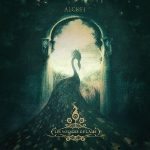
I’ve played a lot of air guitar these last couple of weeks. And a lot of air drums. In fact I went through one set of air strings and two pairs of air drum sticks listening to the latest album from Alcest. It’s times like these I wish I had kept my long hair all those years ago.

When I first heard Alcest‘s music, it really stirred something in me and redefined what I listen to. It’s only the fourth big musical revelation in my life. It was beautiful, loud and dynamic. Songs told stories I could understand in a language I don’t speak (see our recent interview with Neige for more on this – Ed). Delicate arpeggios took a breath before majestic reverberating guitar and thumping bass and drums took over in songs double the length of what I was listening to.

Songs like “Souvenirs D’un Autre Monde”, “Les Iris” and from the next album “Écailles de Lune” (parts 1 and 2) defined the Alcest sound. Tremolo and reverb guitar alongside or combined with rolling arpeggio and melody. Dynamic drumming from Winterhalter spanning delicate use of cymbals to furious blast beats. Then there were the delicate pulled-back vocals of Neige with the occasional scream. These songs are so intensely uplifting and joyous, so painfully beautiful. It’s a blend of metal, post rock and indie rock sounds with progressive temperament.

Despite the highs, neither of the first two albums was without some less impressive tracks and were packages that could have been better structured. The high points were simply too high. With this history in mind, I was interested to see what this latest record, “Les Voyages De L’Âme”, would offer.

I was a little disappointed on first listen. Missing was the archetypal Alcest track that I was waiting for. Oh, the ingredients were all there, but there was no immediate killer blow this time. By the third listen, though, I had cast aside my preconceptions and heard the record for what it is. With more consistency to the feel and sound than previous efforts, the record maintains your interest throughout, despite coming in at around 50 minutes.

Apart from greater consistency, this record has a rather different mix. Neige’s vocals are still pulled back, but clearer and straighter. The blast beats are softer than before and your mind needs to coax them out, while the reverb guitar sections are not as stark in their contrast with the quieter passages of tremolo and arpeggio. Whereas the earlier records needed respite from the assault at the start, a sacrifice is made, and it makes this record better overall. Besides, you can always go back and play the first three songs from the other albums to get your fix.

As I write this, however, I can’t help thinking that by describing the sound I’ve missed the point.

The reason Alcest exists, and the songs they sing, have one purpose, and one topic. They are the tools by which Neige hopes to convey what he felt and saw through visions he had as a child. The visions were of a place not of this earth and they can’t be described in words.

I spoke with Neige and you can read my story about that interview here. I look into this more deeply, along with the reactions from some of the metal community, so I won’t repeat myself now. What I will do instead, is offer my opinion, not based on the technical aspects of Alcest‘s music, but simply on whether it helps me understand Neige’s visions.

Alas, I’m not there. I’m not even sure how I will know when I do understand what Neige saw as a child. What I do know is that I’ve given this over 20 spins now, and it takes me somewhere special that I like going.

Released on 09 January through Prophecy

Posted by Gilbert Potts


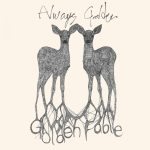
There’s an electronic rumbling emanating from the hills of North Wales. Accompanying this is a voice which is almost angelic in its delivery. Who is this sound? Where has it come from? There are certain pockets around the country who have fallen in love with this music…welcome to the music of Golden Fable…you will not be disappointed! (you really, really won’t – Ed)

Rather than go into some mass diatribe about how good this band are and how they have changed my life (does music do this? Maybe in some small way perhaps) I’ll let Tim McIver tell you. As you read, click on the link and listen to their music…all will soon become clear that we may be in the presence of something really special.

Can you tell me about your background, how did you get together? What are your main influences?

“I’ve been writing songs for as long as I can remember, but only really started to take things seriously once I started university. I started writing acoustic guitar based instrumentals in my bedroom, recording on very basic equipment. Without much thought, I uploaded a couple of demos onto Myspace and before I knew it we were played by Steve Lamacq on his 6music show and getting offered gigs.

Unable to play the songs live on my own, I turned to my friends to do gigs and we became Tim and Sam’s Tim and the Sam Band with Tim and Sam. Sometimes there were seven of us, sometimes just two, but we all had lots of fun and had some amazing experiences. Highlights included touring with Cherry Ghost, 6music sessions, Latitude, Bestival and eventually the release of our debut album, Life Stream in 2010.

As time went on we started getting jobs and moving to different parts of the country so it became increasingly difficult to get together to write material. Becca (keyboard and clarinettist in Tim and Sam) and I therefore decided to create a side project. It initially started as a way to experiment with different sounds, but we soon ended up writing lots of material and wanting to release what we’d created. So here we are!”

How has all this (influences and background) affected the type of music you make?

“Four years of being in a band has definitely had a big influence on Golden Fable. There’s a sense of having served an apprenticeship; we’re more mature, measured and focussed than we were in the early days of Tim and Sam, so the whole approach is more thought out.

We’ve always been very much influenced by our lifestyle. We’re not pretending to be mysterious rock stars – we like walking in the mountains and really soaked up the Welsh countryside when writing the album. A pastoral influence was always very apparent in Tim and Sam and it’s something we’ve tried to keep going with Golden Fable.

Our new line-up also had a real bearing on the sound. Neither of us play drums, or have the equipment to record them, so we used our knowledge picked up from recording Life Stream to create new sounds. Often we’d record individual parts of a drum kit, radiators, tables, ping pong balls etc and paste them together. We’d then manipulate them for hours to get the right sound. It was all very much learning and creating as we went along, but it was a hugely liberating experience.”

How does the music transform into the live arena? Being electronica style I’d imagine there are certain problems inherent in this? Do you concentrate solely on the electronica sound or mix it in with acoustic sessions.

“We use a laptop to play the drums, Becca sings/ plays piano/synth/organ and I play guitar and sing. We always try to include a couple of tracks without drums however, and play on tracks completely unplugged in the middle of the crowd, just with acoustic guitar and vocals. We’d love to have a drummer to trigger the samples live, but at the moment it just isn’t practical.”

(talking of acoustic sessions…Motorcycle Emptiness belies the chilled out music you make…was this on purpose or do you like to subvert music in this way…how about a version of You Love Us?)

“We chose to do the cover as part of some acoustic sessions we recorded, which will be making their way on to Youtube over the coming weeks. We have a passion for music like James Yorkston/ Nick Drake/ Bert Jansch, so used the videos as an opportunity to show that side to our music. If we find time this year we’d like to record an album of material in a similar vein.

We love doing covers that are very different from the original, but as a rule we only cover one song per band. Therefore it’s unlikely we’ll do You Love Us, but who knows? The choice of cover is usually dictated by a particular chord sequence that lends itself to reinterpretation, so if a Manics song jumps out at us we’ll give it a go.”

Adam Walton is a big fan of your music…how as radio play affected your fortunes. Do you see this as a stepping stone to further success?

“Adam Walton, BBC Introducing and new music radio shows across the board have been so important to us. It has led to live sessions, festival appearances, gigs, interviews, meeting great people and a lot of new fans. Virtually every highlight of our history in both Tim and Sam and Golden Fable is thanks to radio, so we are always hugely grateful and appreciative of their support.”

What are your plans for 2012…upcoming gigs? new music?

“We’ve just announced the release of our new single, ‘Always Golden’ (streaming above). It’s out on March 5th, but you can get it right now from our Bandcamp.

We’re on tour in March and play the excellent Focus Wales event in Wrexham on April 21st.

We’re also hoping to release our album later in the year. It’s all recorded, we’re just in the process of finalizing the track listing. We’re extremely proud of it and can’t wait to release it. Keep your eyes peeled!”

And there we have it…right in our midst we have a band who are not afraid to try something different and in doing so have created a sublime noise. Objectivity may dictate that as a writer I should keep a level head when introducing a band to a wider public but on this occasion maybe I am right in letting my heart rule my head. You’ve heard the music, you’ve listened to what they have to say…I’m sure you agree with me now.

Interview by Martyn Coppack


Music and I have a sort of love-hate relationship.

Well, of course I realize that I am giving human traits to music and that is just silly, but I want to illustrate that my never-ending quest for new music can be painful and costly at times, but can also yield aural pleasures (borrowed from Blackalicious!) that become a part of me and mould my tastes, mood, and even my thinking and perception.

(Sounds serious!)

This time last year, I was not even aware of the existence of New York-based Space Rockers White Hills; I learned of them here on Echoes and Dust, and was given the chance to write a review of their last studio album ‘H-p1’. Now, White Hills is as much a part of my musical treasury as bands I have been listening to for forever.

Last Summer, I got to see White Hills perform live in a tiny club, and they almost literally blew the doors off the place with their bombast. It might as well have been a gig in a huge stadium, the way White Hills perform; all-out all the time, like a larger-than-life band from the heyday of the Golden Gods (that’s the 1970s in case you are not a middle-aged person like me). As is often the case, seeing White Hills live imprinted them into my heart and mind for forever.

Their latest studio effort, ‘Frying on this Rock’, is nothing groundbreaking or out of the ordinary for White Hills, a stripped down hard rock outfit mainly comprised of Ego Sensation on bass and Dave W on guitar. When I write that this is nothing new from them, that is not a slam or insult, but an affirmation that White Hills continues to crank out loud, hard, and distorted Space Rock (Deep Space Rock!) that keeps me, consistently, coming back for and wanting more. So far, I have never been disappointed.

Songs from ‘Frying…’ run the gamut from short, sweet, shredding rippers to near-drone, epic and crushing instrumentals. I love the fact, personally, that WH don’t feel the need to cover every note with vocals; Their vocals are adequate, snarled and sneered, but it’s the synergy of the humming bass, distortion-saturated guitar, and cymbal-rich drums that keeps it fun. These might even be songs that people have fried to (on LSD); The liberal use of sound effects, incongruous loops of beeps and pings, Sci-Fi laser gun sounds and spoken word undercurrents might make for a very interesting soundtrack to certain mind-bending extracurricular activities.

My favourite track on ‘Frying on this Rock’, is in fact the nearly dozen-minute long track 2, ‘Robot Stomp’, which is like Psychedelic Space Rock bred with Trance; it could go on for much longer and not lose my attention. If you were to take up jogging in a post-apocalyptic future, this would be the perfect song for your music player. If such a thing existed any more.

’Pads Of Light’ is a radio-friendly, catchy, riff-rich romp which reminds me, just ever so slightly, of late-70’s era Who, only maybe as interpreted by, say, Iggy Pop. Ego Sensation’s bass lines coupled with Dave’s fearless, expansive lead guitar playing is a joy to behold, or be-hear. I hate to leave the drummer out of this, since his drumming is nothing to sneeze at, I just don’t know anything about him; He, like the other mainstay members of White Hills, makes a bigger sound on his drums than seems possible for one person. Power Trio fits this band to a T.

The rest of the album, 3 more tracks comprising almost 30 more minutes of White Hills, is more of the same, solid, listenable, kick ass rock and roll. The nightmarishly-dreamy ‘Song of Everything’ takes the listener on a Floyd-ish walk in a Black Sabbathy neck of the woods around the midpoint of the song. Trust me on this, you don’t want to miss this album.

And while I, your Old and Dear Onkel Jake, would never condone frying on any rock, I get why White Hills listeners would understand the little double-entendre, here on this rock, the third from the sun. With some coloured mineral oils, an overhead projector, and some Quinn the Eskimo, we could definitely visit some other realities with White Hills.

Listen in good health, fellow Earthlings!

Released March 20 2012 on Thrill Jockey

Posted by Jake Gillen


In a word, the new Cursive album is magnificent; I’m going to save my full verdict for my review next week, but first things first: a couple of weeks ago, I was offered the chance to interview one of my favourite songwriters, the (in my opinion) legendary Tim Kasher, the Omaha band’s frontman. Emails were exchanged, and I got some pretty revealing insight into the creation of the new record (‘I Am Gemini’), as well as some info on what other plans Kasher has (hint: they are related to his second solo album), and even a little bit on why he prefers to be modest about his work.

Gareth O’Malley: Hello Tim! As I write this, it’s just under five weeks until the new
Cursive record comes out, so you’ll have been living with it for a
while at this point. How are you feeling about it now? Is there
anything about ‘I Am Gemini’ that you’re particularly proud of?

Tim Kasher: I like it. I currently like it. I really liked it a lot while
recording it, then hated it for awhile and refused to listen to it.
Just last week I put it on, and am relieved to announce I really like
it again. I think I needed to get away from it for a little while.
Proud? I don’t know, not very comfortable, proclaiming self pride to
strangers. I truly enjoyed piecing the music together with the other
musicians, coming up with some of the stranger sections of the album
as a band in the practice space. I always get a kick out of hearing
everyone’s contributions.

GO’M: Since ‘Domestica’ in 2000, you’ve released four albums with Cursive,
four with The Good Life, and a solo album, not to mention a few EPs as
well. Nice work ethic you’ve got there! Is it something that took a
while to become accustomed to, or are you constantly writing anyway?

TK: Well, if I’m not writing, not working on one thing or another, then I’m
likely just laying around in bed or having too much to drink some
place or other, so, I try to keep myself occupied. I really love to
write, so it’s a positive work ethic to have. Just so hard to drag
myself to do it, at times, when bed or bar are calling my name.

GO’M: A lot of the records you’ve been involved with could be called
‘concept’ albums, either written as such or exploring linked themes.
Does this come naturally to you? I’ve read that the music came first
for ‘I Am Gemini’; is that the way you’ve always done it?

TK: We have always done music first, and that’s likely how I’ll always go
about it. I’m not a poetry writer, not one to apply music to verses,
it’s always been the other way around. What you may have heard about
this latest record is that we sequenced the entire album before I
tackled the lyrics, which was a new process for us. It enabled me to
write the album as one story; I was able to write in a linear fashion.

GO’M: Going into my first listen of the new album, I’d heard a lot about it
being ‘the heaviest Cursive album in years’. You also worked with
ex-Minus the Bear member Matt Bayles, who’s produced records for
Russian Circles, Mastodon and Isis. Listening to ‘I Am Gemini’ is a
rather intense experience, so do you think he helped to bring out a
different side to the band?

TK: Absolutely, he’s very much a proponent of drums and bass; I think it’s
apparent in the mix. Early on, we thought it would be a good fit to
work with him, as we were writing some heavier stuff, and wanted to
represent it as such. Bayles produces some friends of ours, the band
Ladyfinger, NE, who I’m a big fan of, and a big fan of how their
albums sound.

GO’M: Which song on the new album are you most proud of, and why?

TK: That word again! Ah, geez, I don’t know. I like a few for a few
different reasons. The title track “Gemini” comes to mind, it’s just
kind of weird, oddly shaped, but still feels very straight forward to
me. Creepy, evil, stoner, 70′s rock?

GO’M: I’ve heard that there’s going to be a bonus 10″ with the deluxe
version of the album, with two b-sides on it. Do they fit in with the
concept, or are they meant to be seen as being ‘separate’ to it? Are
there any more songs that didn’t make the cut that you’re planning to
do something with?

TK: One of the songs, ‘Chemical Strain’, was originally on the album, but
got so chopped up into so many weird pieces that eventually we said,
“fuck it”, and tossed it off. The other one? Is just some weird rock
song.

GO’M: Speaking of which, could you see yourself releasing, say, something
else with The Good Life, or perhaps another solo album, once the
touring side of ‘I Am Gemini’ has been finished with? Do you write
while on tour?

TK: I’m working on the next solo album, hoping to have it ready for
whenever the Gemini cycle winds down. No plans to do a Good Life
album, but we are all good buddies, we have never ruled it out. I
mostly stare on tour. And read a lot. Thanks!

‘I Am Gemini’ is released on February 21st in the US and February 27th in the UK through Saddle Creek; the UK LP release is through Big Scary Monsters.

Posted by Gareth O’Malley


So, Ronin eh? Not the cracking movie with the awesome chase sequence, starring Robert DeNiro, Jean Reno, and some other types, but a post rock band from Italy. It’s obvious that they’re post rock, on account of the lack of vocals, excess of noodling, and general other-worldliness.

Ok, so before I go on, I have to admit, I do love me a bit of good post rock; 65daysofstatic, Sigur Ros, Mogwai, Explosions In The Sky; all awesome, and can barely put a foot wrong. But for every 65days, there are a hundred bands who pump out the same, generic, tuneless nonsense. Ronin have more to themselves than that, but are in genuine danger of tipping over into tuneless territory.

‘Fenice’ opens quietly, 5 minutes of not a lot, in the form of ‘Spade’, building to the most ‘meh’ conclusion I’ve ever heard, BUT it segues quite nicely into ‘Benevento’, which pounds along not reinventing music, but being alright. Then it drops back into ‘Selce’, a track that just doesn’t do anything. In fact, ‘Selce’ sounds like a forgotten track from Mark Knopfler’s ‘Local Hero’ sessions, recorded in a parallel universe where Ennio Morricone was his producer.

This Morricone motif however, continues on the track ‘Jambiya’, which is utterly, utterly wonderful. Bringing hints of the aforementioned Morricone, fused with elements of South American folk, clean, rumbling bass lines, and skittery piano, ‘Jambiya’ is fully worth the price of admission alone, and at 4:27 doesn’t outstay it’s welcome.

An interesting inclusion on the album is a cover of Sinatra’s ‘A Very Good Year’, with vocals from Emma Tricca. Haunting, and quiet, with space and depth a-plenty, it’s actually a lot better than you’d think after the first listen, and certainly does warrant repeated listens.

Taken as an entire work, however, ‘Fenice’ is difficult to judge. On the one hand, the sum of its parts don’t add up to much, but the atmosphere it builds over its 42 minute running time is difficult to ignore. It is world music, but written with the ear of a film score composer. There are few catchy hooks that spring to mind, but some of the tunes really do delight you while they’re there.

I think it’s fair to say that this ‘Fenice’ is an album that you may enjoy while you’re listening to it, but once it’s finished, and you’ve moved onto the next thing, you’ll be hard pushed to remember why.

Released February 26 on Audioglobe

Posted by Darren Saunders


I recently spoke with Neige; songwriter, singer and guitarist in French band Alcest. I was keen to find out more about the purpose behind the band and its music, and the reactions he gets from sections of the metal community. What follows is a small insight into the thoughts of a person with a single-minded musical focus who patiently deals with the barriers he faces in fulfilling his ambition.

As a child, Neige had visions of another world. As he explains, they are not dreams, or imagination. The visions were of a real place, another world. Alcest does not sing about love, politics or relationships. It is all about Neige’s visions.

“It’s just a way for me to communicate it. I can’t describe it with words; it’s very astral. I think the dictionary doesn’t have enough words. I was seeing (these visions) and I didn’t know what I was seeing – a different world with different shapes and different colours – and to compare it I like to use the example of when people have a near-death experience and go away from their body, (except) I was conscious during these visions.”

“We have five senses so we are very limited with our perceptions of reality and I think very subjective and related to the human condition. Maybe we have an incomplete perception of the world and maybe as pure souls people have a more accurate vision of what is around us.”

I asked Neige about the screaming in some of his songs. They don’t sound like screams of aggression, more of frustration or despair.

“The screams are not my human side, but more the frustration I have of just being a human now and not being able to feel these things again and not being able to reach this world again. (It’s something ) I can’t express well with gentle singing – they are the voice of the human condition and frustration.”

Hmm, not his human side? I wondered if at any time Neige had thought that he was not from our world, but the other world. Had he ever wondered if he as an angel?

“No, I think we all have these visions as children. I don’t believe in heaven, more intermediate dimensions – a different world. Closer to Bhuddism. The universe is infinite, not only in terms of planets and stars, but also in terms of other dimensions. (We are limited by our perceptions) so we look for the infinity in terms of distance. “We all have the flashes I had as a child, and as a child we have a much more pure and fresh vision of these things but I think we can lose them as we get older. We lose our innocence and enchantment about the things that happen to us. There is a change as we get older.”

So Neige does not believe in the intermediate world between heaven and earth that many believe in. Now that he is older, how badly does he want to return to this other world? How much does he long to experience it again? My surprise at the practical nature of his response reveals the gaps that exist in my understanding of the other world.

“I don’t know if I ever really want to experience (the visions again). I don’t know if what I have had is enough, just to create this band and maybe I’m also, you know, lacking of time. If I was more free I would maybe do some meditation. This is something that takes a huge time every day to reach a state of spacious consciousness. It’s not one time a year that you can do this meditation, but yeah, maybe when I have more time. Anyway to get this inspiration is not really infinite, because I am getting older and this is getting more blurry.”

I’m getting a strong sense of someone with deep inner frustration. The longer Neige will seek to explain his memories, the harder they will be to recall. He reveals that the subject matter of Alcest will reach a time when it expands, and I wonder if that means he questions whether he can achieve his aims. There seems to be an internal tug-of-war, as well as an external one with critics.

“One day I will have to have new things to speak about because it’s not a very open concept. It’s very specific, very special.”

“Some people say they don’t like Alcest because it is too uni-directional, there is no balance. Of course there is no balance, because for me this music is simply not from this world. In this world you can have the most terrible things happen, as well as the most beautiful things, but in my world, it is only white light, so that’s why there is no such dark part to Alcest, or negative side”.

Some sections of the metal community appear to hold the view that they own a sound or style and they don’t like what Neige is doing with it. They label Alcest as black metal, or at least decide that it should be black metal, then judge it by how well it delivers their view of what black metal should sound like. Alcest is often criticised for being ‘too beautiful’.

“It’s because some of them are very closed minded and people like you to do what they want you to. If they want a dark album they will not try to (connect) to a more uplifting album. I think people nowadays are really nihilistic and they like darkness really a lot, and I think this is sad but true.”

Neige questions who it is who decided that beautiful music can not have depth and that only dark music can be deep and meaningful.

“I think it’s very easy to get very nihilistic and sad and disillusioned with this world and it’s harder to keep being, well not ‘positive’ because that has a very new-age sound to it, stuff I don’t like – ‘let’s be positive’ – I’m not trying to say that. People are very shy, well not shy, but they don’t dare to express fragility (and life is) full of fragility. It doesn’t only belong to women to be fragile, to be sensitive, to be looking for purity, I mean it’s a very human thing.”

Neige had been involved in the black metal scene when he was younger and he says some fans feel that he betrayed that scene with Alcest. Using some sounds from black metal does not make you a black metal band.

“With Alcest I never presented Alcest, this specific project, to be something negative or dark. From the start I decided to use a few metal tools, like harsh guitar and heavy drums, but that is just tools for me, you know I never pretended to be a part of black metal, which is for me the most negative music in the world. I never pretended to be a part of this, I am just using a few tools from this style of music.”

I talked to Neige about the fact he sings in French, and how the fact I can’t understand what he is singing adds rather than detracts from the experience. He revealed that some of the lyrics are not even French, they are invented words. However the words are crucial.

“It’s very important for me to write lyrics because it makes the concept of the project more precise and clear. That’s why in the art book edition we have published the English translations.”

I moved on to ask Neige about Alcest‘s recent tour of the US, Australia and Asia. The good news is he hopes to return later this year or early 2013.
“We had a great tour, very very good tour. And very successful! I didn’t expect so many people to know Alcest and come to the show.

“(In terms of good memories from the tour) the first thing that comes to mind is our deep friendship with the band Heirs from Melbourne, they were absolutely great guys and they did the best for us to have a great tour and that’s actually one of the best tours we’ve ever had. One of the most intense and beautiful from a human point of view. We had a very cool relationship with these guys in Heirs they were very professional, very nice. There was a lot of hospitality – we stayed at their place and it was just awesome.”

“Also in China it was fantastic as well. The tour promoters were very professional and did a lot for us in such a faraway country with such a different culture. It’s crazy because this tour was so full of positives.”

“It was a very enriching experience from a human point of view, and when we came back we were not the same people.”

And with that, Australia’s inferior internet conspired against me and turned Neige’s voice into a garbled mess. This, along with disconnections during the interview and sound quality slightly worse that two cans connected with string, prompted me to decide he had suffered enough, although things became clear again long enough to thank each other.

It’s hard to explain what I came away with, apart from disappointment that I couldn’t spend half a day exploring the thoughts of such a fascinating guy. He’s had this conversation a thousand times but showed the patience of someone who genuinely has a story he wants to
tell. He wasn’t preaching, he wasn’t trying to convert me, he was just talking about his experiences. The irony wasn’t lost on me that I was asking someone about a thing he could not explain with words, and asking him to explain it in a foreign language.

The work of the Alcest ‘project’ is not done, but their is loss is our gain because it means we can expect to hear the Alcest sound for a while yet.


Four years. That’s how long we’ve waited for a proper new album from Nada Surf. Since then, the band have released one covers album, the palindromically-titled (and rather marvellous) ‘If I Had A Hi-Fi’, but the one thing everyone’s wanted the most is new material, and now it’s finally here, almost four years to the day since Lucky. The band have garnered somewhat of a reputation for being purveyors of indie-pop and nothing else, but to tar their whole discography with the same brush would just be foolish.

While ‘The Stars Are Indifferent to Astronomy’ doesn’t match the heights heard on ‘The Weight is a Gift’, it’s still a perfectly enjoyable album. While the group were never going to win any awards for innovation, they do a few things and they do them very well indeed. It takes not even four minutes for the band to remind us just how good they can be: ‘Clear Eye Clouded Mind’ is a powerful opener setting out the album’s main theme, which is the passage of time. Matthew Caws’s vocals are as good as they’ve ever been, and harmonies from Ira Elliot and Daniel Lorca are executed perfectly.

The album’s title hints at how the earth itself is not concerned with worldly things, and such a view might be considered overly pessimistic by some, but the downbeat nature of some of the album’s lyrics is disguised by the upbeat nature of most of the music. Some people would also think that the album peaks early with the epic ‘When I Was Young’, a song on which Caws looks back on his childhood with curiosity: ‘When I was young, I didn’t know whether I was better off asleep or up / Now I’ve grown up, I wonder: “What was that world I was dreaming of?”‘ However, it soon becomes apparent that the album’s alleged high point faces some stiff competition.

‘Teenage Dreams’ is the point at which optimism starts to shine through on the album, with Caws opining that ‘it’s never too late for teenage dreams’. This comes from a band who have stayed true to their own dreams: still together after twenty years and still going strong. They’d never profess to being too ambitious, but the songs they’ve written for their seventh studio album are imbued with energy and drive, something which is helped by the fact that they made a conscious effort to capture the energy of their live performances on record. It was an inspired move: there are no missteps on this album, and even if its closer, ‘The Future’, finds the band in contemplative mood once again (‘I cannot believe the future’s happening to me’), they are still forward-facing. This is a record that is quite endearing, to the extent that I suppose you could say it’s nigh-on impossible to remain indifferent to it.

Out now through City Slang; stream the whole album here.

Posted by Gareth O’Malley


The Minutes are a rock ‘n’ roll band, plain and simple; unrepentant and unrelenting. Live, they are a force of nature and are being hotly tipped to explode all over 2012. We got them to sit still for 5 minutes and tell us a bit about themselves.

1. How long has the band been together and how did you all meet?

As The Minutes we’ve been together just over 4 years, but been playing together in different bands for a lot longer. Myself and Mark are cousins, so we met the day I was born then Mark met Tom in college, the rest is boring history.

2. Where did you get your name from & what does it mean?

I always thought bands with names really, really long were stupid. A band name means nothing and everything at the same time. It should be international where if you meet someone in a club or pub and they ask the name of the band you can say it once and don’t need to explain it. The Minutes was simple, and doesn’t mean anything.

3. Describe your sound for us & who would you say were your biggest musical influences?

Our sound is nothing new, but no one has ever heard us 3 playing it and that’s what makes it special and new. We all have different influences as musicians but one thing that we have in common is our love for Rock & Roll. That sound that will never get old, that sound that makes you wanna punch someone in the face, that sound other shit music doesn’t have.

4. And what about non-musical influences?

Everything in life can influence your music. Great experiences, hard lessons you’ve learned, mistakes…

5. Music can be a fickle mistress, what is your biggest high & low as a band so far?

I’m still waiting for that big high, as a band we’ve had so many low’s but that’s what makes you a better band, even a better person. I think the more blow’s you take it just makes you stronger and want it even more.

6. What one fact about the band do you most want to share with the world?

http://theminutesmusic.com/

7. The old model of record demo-do gigs-get signed-make millions is pretty broken these days, what’s your plan to deal with this?

Make millions, live, die.

8. We journalists like to use easy labels to describe bands, what’s the worst thing you’ve seen yourselves described as?

Recently we were described as a Danko Jones covers band with fake Moustaches. Who the fuck is Danko Jones??

9. We’re loving what you do but who’s floating your boat right now?

To be honest, i don’t listen to new music. I know what i like, and if something comes along that hits me, then ill dig it. Last thing that hit me which was new was Jim Jones Revue, but they don’t sound new, thats why i like them.

10. What’s up next for you guys?

We got a lot of touring planned in Uk & Europe. An EP coming out in the States, with the album to follow, then it’s time for the second record which we are excited about. ‘Marcata’ is a document of us in a room in NY at that time, but the second album will be bigger and better. Come see us live and you’ll see.


I thought this would be an easy review. Trouble is, garage psych of this quality just makes you want to listen to more of it and in no time you’re getting distracted. I just find it hard to listen to this record all at once, and that’s a good thing, believe me.

Forget the suggestion that there have been garage and psych revivals over the last 45 years – it never went away, and King Gizzard and the Lizard Wizard are among the latest to add their names to the honour roll. This is not the slow tripping music of Acid Mothers Temple or the carefully contrived retro sound of The Frowning Clouds, this is short and sharp mega-fuzz with plenty of whooping, echo and delay. The short lyrics serve no real purpose other than to make more noise. It’s Acid Baby Jesus done lo-fi/low-tech. It sounds like it’s created and performed on the spur of the moment, born of a love of old surf psych rather than with a deliberate attempt to recreate or reinvent.

Explaining what this band from Victoria, Australia looks like can be a bit difficult. There seem to be about seven of them in the band. There are two drummers and some guitars and a theremin and a singer but I still haven’t got to see them live, so they might be like the infamous Australian Drop Bear and not even exist. Perhaps it’s all in my imagination. Let me check – no there they are on you-tube playing drums and hi-hat with a pair of maracas, wandering around the stage as they attack their guitars, and spitting water at the crowd. It must be real.

When the digital age was still young it was fun to sit around with friends and play a load of these types of songs from different bands one after another. You never knew too far ahead what would go on next, especially if you were taking turns. Many singles got played, partly because it’s what you could afford, and partly because the good garage bands only released 7″singles or EP s. There were some good compilations of 60′s garage psych released in the 80′s too with bands like The Seeds and The Electric Prunes plus many lesser-known bands like Count Five, The Squires and The Answer. The end of the age of vinyl also saw the likes of The Slickee Boys, The Primates, the Ramblers, Plasticland, The Sickidz, and dozens more. It wasn’t about albums, least of all concept albums. It was about noisy songs. And above all, it was about vinyl.

Anyway, back to the record. It’s a 10” vinyl EP called ‘Willoughby’s Beach’. It’s also on download and CD, which the band describe as the “shitty version”. It has nine short songs that are just made to be listened to with somewhere between two and a dozen friends. Put it on and I would be surprised if you don’t get the urge to grab a handful of other garage psych and make a night of it. You can even spit water at each other if you like. This record is like the blue touchpaper on an enormous firework.

And with that I can tell you I’ve just listened to it all the way through twice in a row. Finally!

Available now through Bandcamp

Posted by Gilbert Potts


There is a saying that goes “The road to success is always under construction”. You would imagine then, that once that success is achieved then anything that comes after should be a moot point. It is perhaps reasonable for the casual observer to think that any person who has achieved the heights of success in their chosen field will then live a life of ease and happiness no matter what they choose to do. As any real observer of success knows, this just isn’t the case. Take for example David Bowie. In an attempt to try something different from what he normally did he ended up crucified for it. Granted, Tin Machine was never a good idea on paper anyway, but it shows the artistic temperament at work and the fickleness of the area that he works in.

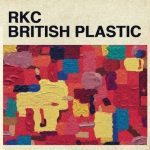
Adam Ficek was in a successful band. The band split up and he has taken the chance to follow his muse with his new band RKC. A resplendent album full of lo-fi meanderings and sharp bursts of electronica it couldn’t be further away from the ragged, arena rock of Babyshambles. It is a much more personal venture and in some respects more rewarding than his previous band. I caught up with Adam on a flight back to the UK and although he added that he hadn’t slept for the last 50 hours he was willing to answer questions regarding RKC, ‘British Plastic’ (the album) and the state of record business in general.

‘British Plastic’ has been well received by the press, has this vindicated the way you work and given you the impetus to carry on?

“The reviews were ok but I do try and ignore the media to a certain extent. It’s funny old game but I’ve become quite thick skinned from my years in the industry.”

“It’s nice that people like it but it has no bearing on my approach to writing or releases.”

And how about the production values?

“The production is a lot harsher and perhaps a little messier but it was done by my own fair hands, I don’t know that much about production but I’m slowly getting there.”

“My goal is to be far more competent on the production front, stick with me.”

This lo-fi approach to work underpins the RKC work ethic. Where-as Babyshambles was bombast, albeit with an undercurrent of DIY punk it is British Plastic that harks back to that original idea of doing things your own way. It is a philosophy which stems back to The Clash and is now prevalent in the world of music.

Does this affect the way that you write your songs? Has it changed since the Babyshambles days?

“My songwriting generally comes from not trying, it’s always been that way. Whenever I have tried to write about a subject it comes out contrived so I tend to just play some chords and let the words flow subconsciously. I then fine tune the sketch and juggle a few words etc.”

Talk now turns to the record business in general. In a climate where it could be argued there is over saturation of music and we now have to search through a minefield of rough to find the diamonds it is the artist who suffers. I wonder how this has affected Adam.

Has it been difficult to get your work out there in the current climate.? Without the backing of a big promotional campaign you would obviously have to approach things differently. How do you do this?

“It’s an odd time for unsigned artists, big labels are collapsing and refusing to sign, yet social media is providing a great platform for exposure.”

“I do get frustrated about not having the power of the big labels. It all boils down to money like most things in life.”

“I use my limited contacts and social media to get exposure. Twitter is great for me. Facebook seems to be getting saturated.”

“I did use a PR company on this release and they done a good job. There are suddenly thousands of PR companies popping up so you have to be careful. I used Prescription PR on Gary Powell’s recommendation and they delivered. ..PR plug.”

“I won’t be able to afford PR on the next release so it will be interesting to see what I can pull in.”

Is it a big change from how Babyshambles used to work…I’m thinking of guerilla gigging and the like? In some respects they were just as independently minded as RKC.

“Yes, Babyshambles was signed to a major label but obviously Peter was a PR machine. Normal bands would die for the exposure we gained. Perhaps this isn’t a positive thing though.”

“Regarding gigging, the whole guerilla thing died when the media got hold of it. I’ll perhaps do some small acoustic stuff here and there as it’s nice to meet the fans etc.”

“I recently played Trafalgar square due to a prick of a London promoter trying to stitch me up. I thought rather than get £300 and get screwed I would reschedule a free thing in Trafalgar Sq on my own terms. It was cold but successful.”

(It is refreshing to see an artist such as Adam stay true to his integrity and refuse to play the game. This is a point that we return to later but in the meantime Adam continues to talk business.)

“To be honest I’m not sure how much interest the others had in the record industry. I was probably far more ahead in terms of being tuned in than the management.”

“Obviously I was launching my own stuff so had to be ‘on the pulse’ of whatever was happening in the field. I half regret starting my own label though as I became increasingly aware of how much of a racket the business is. I think if you’re passionate about music don’t start a label. I didn’t have a choice so had to do it to release.”

“I’m learning to separate business with emotion!”

One of Adam’s main ways of plugging RKC has been through the internet and in particular through the use of social media. I’ wanted to hear more on his thoughts on this way of working.

The internet has changed music…for good or for better? Whilst it does provide a platform for musicians it can also become a bit of a minefield. Should there be some sort of regulation. Should record labels be doing more?

“That’s a big question, not sure, I sit on both sides. Illegal downloading is killing the commercial side of industry yet it gives exposure. In my personal experience the theory that people download without paying and then come to your shows or buy merch is bullshit. I don’t see that trend in RKC.”

“Unless you’re a big band (400 cap) there isn’t income to be made in touring.”

“We do it for the buzz of doing it. If something happens then that’s great but I’ll never be desperate to be the next big thing. I see it in young bands now and that’s great but I question the integrity of some.”

Any advice for struggling musicians out there?

“a) Get a good job and dig in deep with the music, it’s going to be a long haul.

b) Start applying for next year’s X-Factor

c) Do as you’re told.”

Do you think the record labels need to re-assess what they are doing…there are some good independent ones out there but they are struggling as well? Should the Government provide aid?

“It’s a shame that the industry is crumbling, like a lot of British export, we’re losing it.”

“In Europe the government fund arts projects, so yes perhaps someone should set up a fund of sorts. Perhaps the big earner should have a subtle tax to give something back.”

“If an artist earns in excess of a million they could stick £1000 into a pot for the kids.”

Some wise words there from Adam. It is clear that something needs to be done about the record industry. With the Government harping on about the British Film Industry surely it is only a short step for them to consider the art form that truly made Britain great. Consider this…would The Beatles and The Rolling Stones been as successful if they were starting out now? The collapse of the industry is affecting the future of music and sooner rather than later we are going to be lamenting it.

To bring the talk back to RKC and ‘British Plastic’, I ask Adam about his plans for 2012.

What plans are set for the new year? A tour? festivals seem to be a shoo-in…can see Here Comes The Summer being a big hit. European dates?

“I’m playing a few dates in Europe in Feb, Italy throughout the whole of March, some UK dates in April, some Australian dates in the pipeline for May. It could be a busy start to the year.”

“I’m hoping for some festivals, fingers crossed.”

And this is what it all comes down to. Buy the music, go and watch the band…keep music alive.

You can find out more about RKC and here some of their music here


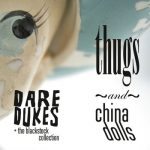
One of the wonders of the internet these days is that every once in a while you stumble on some music which once again affirms why you love it so much. Like finding a diamond in all the rough that is floating out there in cyberspace, it can be a wonderful experience. Dare Dukes Thugs and China Dolls is one of those diamonds.

Hailing from Savannah, Georgia Dare Dukes is a singer songwriter who chronicles the oddities of everyday life. This immediately sounds whimsical and in the wrong hands it very well could be. What sets Dare Dukes apart is the band that backs him. An ever-changing line-up of people contribute to a sound that in parts evokes the more eccentric side of REM (circa Out Of Time) but never knowingly imitates. A mixture of the usual instruments plus accordions, trombones and mandolins amongst others create an almost minimalistic sound which rather belies what you may believe would be created.

It is through repeated listens that the music starts to reveal hidden textures. Mariachi style brass steals the show whilst on the slower songs it is the mandolin that creates a whispering sound. All this is augmented by the vocals and in particular the lyrics. Dare Dukes lyrics focus on characters who are slightly odd or different. Imagine Rivers Cuomo fronting a redneck acoustic band or a countrified They Might Be Giants. It all seems a bit quirky at times but with a mix of fast and slow songs the album becomes much more cohesive.

Thugs and China Dolls has to be treated as a genuine contender for album of the year. It will make you smile, laugh and cry and really, what more could you ask from music? It will also be the starting point for the Mariachi style revolution which will take place in 2012…you heard it here first!

Available now through Bandcamp

Posted by Martyn Coppack


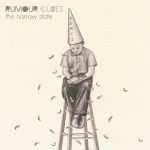
I was no Oliver Twist when I found an instant appeal to Rumour Cubes‘ music on first hearing them last year. Happily it’s been only a few short months to wait to hear their first full length album and, in late February, everyone gets their turn.

What stands out for me most about ‘The Narrow State’ is the variety and extent of emotion the band conveys, thanks largely to their use of strings. Although it’s hard to think of an instrument that can be as utterly and beautifully depressing as the cello, the violin and viola (there’s one of each in six-piece Rumour Cubes) come close behind, but with greater capacity to be any other human emotion required.

It’s not just the fact that Rumour Cubes use strings, or what the strings play, it’s how their lines in the score interact with the other instruments and each other that gives such depth to the six songs on this record.

In opener ‘The University is a Factory’, the strings create a magnificent tension, carried through much of the song but making the most subtle changes here and there. They create a wave, and you become a cork on that wave. You are afraid and for good reason, because guitar and percussion are predators lurking below. You drift helplessly over a shiver of sharks – they soon vanish but any relief is short. Now more ferocious activity develops, a feeding frenzy as the music nudges and chomps at you, the water churning. You are pulled momentarily under the waves before the strings carry you slowly away from the drama below. They have saved you, for now, but you don’t forget that they took you there in the first place.

The start of ‘The Gove Curve’ has such a sad, despairing feel to it. But as guitar, violin and viola join hands together the despair becomes anger. The time for sitting is over and the revolution begins. “Gather your weapons, grab what’s at hand, there’s an uprising and we’re all gathering”, the music seems to cry. Then, when everyone is gathered we hear the clear and articulate reading of a poem by Steve Willey. As the words end, the crowd stands there in sad and silent reflection. There will be no revolution today. It’s a non-Hollywood ending and I like it.

‘At Sea’ is a peaceful and meandering song. It follows on perfectly and is the sort of track you would not normally find at first drop, yet it is right where it belongs.

In ‘Rain on Titan’, strings provide the peaceful constant as all around chaos develops. It’s like a film using the most beautiful classical music over scenes of great violence. Like a brilliant mash up. Quite an experience.

‘Triptych’ has an altogether different structure from the other songs. As the name describes, it’s a track in three distinct parts that complement each other. It starts off in an explosion of fierce bowing, strumming and electronics (this must be amazing live in one of those cosy London venues I keep reading about). The adagio on the centre panel sets us up for a finale that exudes confidence, triumph, self-satisfaction. If any emotion was missed in the last four songs, then they can be found in here. ‘Tempus Fugit’ is the wonderful, gentle lullaby that takes us out.

What Rumour Cubes do so well in their compositions is for the strings to be the prominent instruments and build the other sounds around them as support. It’s a mature and successful approach that ensures a full sound that is consistent enough to make the deviations from this consistency so effective in their story-telling.

It’s not a long record by instrumental standards, but it works so well, with enormous variety and no flat spots. The songs on their debut EP have been re-recorded, not just remixed (from what I can tell), and included in the album. ‘The Gove Curve’ has been available for streaming for a couple of months, so for many there are just two wholly new tracks. For those new to the band this is not an issue at all, nor does it detract from how brilliant the record is. It certainly didn’t stop me pre-ordering my own physical copy, but a bigger fix would have been nice.

There are some moments in a couple of songs that could be further developed, and I’d like to hear some of the other instruments given a greater opportunity to shine.

That said, this is an excellent record, with a level of emotional detail that reminds me of Laura’s ‘Twelve Hundred Times’ and the kind of instinct for rock with strings found in 3epkano’s work. And all this from a band that has really only just hatched from its egg and taken a few small flights. I can’t wait till it learns how to soar.

Please Sir, can I have more?

Available to pre-order now on Bandcamp

Posted by Gilbert Potts


What’s in a name? Well, if the title of Casiokids‘s second album is anything to go by, not all that much. The group are Swedish, and ‘Aabenbaringen over aaskammen’ roughly translates to ”the revelation over the mountain;” as such, it’s a moniker more suited to, say, a post-rock record. It conjures up images that are entirely at odds with the band’s sound, but then again, the band who were once known for ‘that one song’, ‘Fot i hose’ are trying to present themselves in a different light this time around, and it’s definitely paid off.

The album, whose title I can neither pronounce or type out unless I look at it first, really has no business being released in January. It’s far too summery for that, and I can’t help but long for warmer weather when I listen to it. It’s an intensely uplifting listen; its instrumental title track, especially so. Meanwhile, ‘Dr. Tarzan Monsoon’ is laid-back and effortlessly catchy, while ‘Det haster!’ is the kind of song that wouldn’t have sounded out of place on Metronomy’s ‘The English Riviera’ last year, except that it’s not sung in English.

Yep. In an impressive feat, the group have refused to compromise, and all the lyrics on the album are in Swedish. Credit must be given to them for sticking to their guns, and it actually works rather well, because people who don’t speak Swedish can delight in a record that is musically rich and full of fun. You get the sense that, in a different world, a lot of the material on this album could be potential hit singles.

It’s difficult to pick out the highlight on an album that is so relentlessly cheerful and uplifting, but ‘Golden Years’ (which works just as well in an acoustic setting) and ‘London Zoo’ are particular standouts. Casiokids’s debut album was scrappy and well-intentioned, but they seem to have ‘found themselves’, as it were, and, in any language, ‘Aabenbaringen over aaskammen’ is enjoyable from start to finish. Anyone suffering from January blues should be given this album as a prescription.

Out now through Moshi Moshi Records; stream the whole thing here.

Posted by Gareth O’Malley


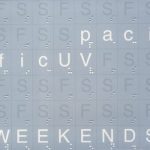
You know those moments at about 4 in the morning after a long night partying. Everyone is sat around chilling out, half-asleep? Conversation is generally stilted with the odd giggle thrown in. ‘Weekends’ is the perfect soundtrack for that time of morning, particularly with a blazing sunrise (not that we get this very often in the UK!).

PacificUV are a band dealing with soundscapes which are stately and ambient. The music floats over you like an otherworldly dream while little stabs of electronica prevent you from completely falling asleep. Mix this in with some pure pop and you have dream-pop at its best. ‘Weekends’, the new release from PacificUV builds on their previous work by embracing this pop element giving their songs a much more commercial edge. That is to say, in a perfect world they would be the soundtrack of the top 40. Never going to happen but hey, we can all dream.

Dreaming provides a theme for ‘Weekends’ with it mentioned in three songs. These songs, named after the days of the weekend, give the sense of a journey happening; albeit a journey of very strange circumstances. At any given moment in between this triptych of “bookends” you can be hit with the full-on pop of ‘Funny Girl’, the majestic ambience of ‘High’ or droning electronic psychedelia such as ‘Be My Only Shallow Love’. There is just enough variety to stop the album feeling stilted.

File this album alongside your worn copy of ‘Screamadelica’ and soundtrack your early weekend mornings to it. ‘Weekends’ is a beautiful album quite unlike anything that is around at the moment. A real treat for your ears.

Released on January 31st through Mazarine Records; pre-order a variety of formats on their Bandcamp.

Posted by Martyn Coppack


I discovered Hawk Eyes, formerly known as Chickenhawk, last year around the time they changed their name, or maybe a couple of months before. You see, I was sleuthing about, trying to find more and newer and better and louder music, following the untimely demise of the mighty Oceansize. (Maybe, to blaspheme a bit, the demise of one of the best bands in, well, forever, was really a timely musical blessing in disguise? Food for thought… now, back to Hawk Eyes.) While Hawk Eyes’ LP ‘Modern Bodies’ is not the subject of this review, I feel it’s important to note that that album is the album which made me a big fan of them. It is a must-own for lovers of post-thrash-punk-rock sonic goodness.

Their latest effort, and the subject of this review, is the ‘Mindhammers’ EP. It’s important to state right away that it is not a continuation or sequel of the nearly-flawless ‘Modern Bodies’, but a brilliantly loud and noisy (these are different, dear readers!) evolution of this band’s already substantial sound. I think that it’s a possibility that some Hawk Eyes diehards might find this EP less visceral and ballsy than ‘Bodies’, and it might even, possibly, turn some people off.

Let me qualify that bold assertion, since it reads a little on the negative side when I go back over it: I love this new EP, and I love all of the older material I have heard. But there is a definite style evolution that I perceive from these Leeds-based rockers, with seemingly more emphasis on song structure and tightness, as well as a strengthening of the lead vocal. Still frenetic and emotionally-charged, the vocals seem more mature somehow, with the same sing-shout as before, but with more singing, mixed in more melodically.

Is this evolution the product of all the touring and festival appearances that the Hawk Eyes lads have been doing over the past couple of years? I can’t say, but in my mind they have completely shed any vestige of amateur Garagia (which is not a bad thing, it’s where pretty much everyone starts!) and crossed into ‘Holy shit! These guys are GOOD!’ territory.

I hate the term with a passion, but I can hear a bit more of a ‘stoner rock’ vibe on these new tracks, especially on the kick-ass opener ‘Crack Another One’. The guitar on this track has a deeper growl, like it’s an octave down from the shredding shriek that grabbed me by the ears on ‘Scorpieau’. The lead guitar on this track is somehow more elegant, less fuzzy and wouldn’t sound out of place on a QotSA track. Maybe less distortion is being used? I am not sure, and the sound is still vintage Hawk Eyes.

My frontrunner for favorite track at the moment is track 3, ‘Dead Man’s Hand’, and that is mostly because I love the vocal structure, a staccato chorus and that familiar sound of a big voice played through a small speaker on the intervening verses. The towering, booming bass and crunchy lead guitar would sound perfectly at home on an Amplifier track (which I consider high praise!). Listen for the guitar playing along with the vocals on the verses, almost in the foreground, almost drowning the vocals out. It’s a great effect and some damn fine guitar playing.

The final two tracks, ‘Eleven Years’ and ‘Hidden Hound’ are more of the same, meaning listenable and enjoyable, but I am running low on word count, so I will just say this: ‘Hidden Hound’ could have been an Alice In Chains circa-1990 song with just a few tweaks. Again, the maturing vocals feature prominently, and the drummer gets to show his considerable chops on this one!

To recap, I believe that Hawk Eyes are a band on the move, and I expect more great things, sonically speaking, soon, and hopefully for a long time in the future, especially if they are able to incorporate their proven gut-punching rawness with the powerful melodic refinement that I feel is showcased on this EP. If you have the chance to see Hawk Eyes live, do so! I hear they are energetic to say the least! Check them out, and if you like them, buy their music.

Available now through Brew Records. [Download/10"vinyl]

Posted by Jake Gillen


One of the most pleasurable things about hunting down new music to write about is when the planets align and a band comes into focus who literally take your breath away and remind you of the reason why you put yourself through it. It was one of those rare occurrences that brought The Reads into my periphery. Their debut album ‘Stories from the Border’ has reignited a faith in what was starting to look like a stagnant music scene. Its pastoral feel mixed with heartfelt vocals and experimental flourishes is a brave one in a climate where immediacy is paramount. I wondered if there was a story to tell (pun intended) about their journey so far.

How did you start, where are you based…?

We straddle the border of England and Wales, four of us in Flintshire and two in Chester. Jamie and Marcy (lead guitar and keys) have been writing music together since they were teenagers at school, Clare and Stuart met whilst working at HMV in Chester and Stu put some of Clare’s poetry to music with his trusty acoustic guitar. A mutual friend of Jamie and Stu’s decided as they were musically minded they needed to meet so he dropped Stu off at Jamie’s caravan in the middle of the night with his guitar and that was the start of The Reads. Our first few songs were actually written without all of us ever having been in the same room at the same time! A few years later Clare met and married Chris Goddard who was in a band with his brother Matty. Their band split up and so they were both welcomed into The Reads fold.

What are your influences…musically, culturally….how does this affect the music you write?

The usual suspects really such as Pink Floyd, The Beatles and Bob Dylan along with Brian Eno, Boards of Canada, Tangerine Dream, Doves, Stone Roses, Super Furries, The Bluetones, Elbow, Miles Davies, Fleet Foxes, Radiohead etc. We’re big fans of comedy music too; Tony Ferrino, Flight of the Conchords, Cassette Boy…. they’ve inspired quite a few comedy Reads tunes!

These influences betray a healthy respect of music past and present with some more than others being immediately spotted on ‘Stories from the Border’. It is also re-assuring to see a strong Jazz influence pervading their work. This is maybe what sets them apart from your run of the mill bands and provides an esoteric journey for the more discerning listener. This doesn’t mean that they make the sort of music which is unapproachable for the more mainstream punter. Perversely it makes them more so. The Reads are still grounded in reality.

Was the process a long one to reach the songs on your debut album? Tell me about some early songs you wrote.

We’ve been together for over a decade and in that time we’ve managed to amass quite a body of music. We spent several weeks (with the help of our Producer Jim Spencer) short listing 15 tracks to take into the studio with us. This was then cut down to the final twelve which made it onto the album. The tricky bit was actually deciding on the running order for the album, not picking the tracks!! There was a lot of heavy discussion over numerous pints of beer to try and establish the running order….. which we’d probably still change it if we could!

What will the new album sound like…will it be more of the same or are you looking to expand. What new influences will affect your writing?

The next album will incorporate a mix of some old reworked stuff as well as some brand new tracks, a few of which are already well on the way to completion. We get together every Sunday and have done almost religiously for the last 10 years and we’re constantly writing new stuff so we’ve got plenty of music to choose from for the follow up! We’re hoping to be back in the studio very soon.

2011 turned out to be a year which will remain in the collective memory of The Reads for a long time. After years of writing and playing the circuit it now seems that the pay-off is approaching. I ask The Reads to look back over the last year and give us a clue as to where they are heading next?

Over the last year or so what have been the bands greatest achievements

Supporting Evan Dando, a childhood hero of Clare’s at the Tiv in Buckley which is where Jamie, Marcy and Stu spent a great deal of their formative years, headbanging in a darkened corner to many a band! Getting played by Jeremy Vine on BBC Radio 2 was also pretty amazing, in fact all the radio airplay we had last year was fantastic. We were driving home in convoy from Cardiff after doing a live session for BBC Radio Wales when we got a phone call to say ‘Good Omens’ was being played on Radio 2. We pulled over, cranked the volume up and did a little Carlton dance by the side of the road…. that was pretty special!

How will these achievements affect you…have you noticed a difference in audience size or album sales?

When we launched the album at Telford’s Warehouse last March the place was full of familiar faces, all of whom have shown us unwavering support throughout our musical journey, wind the clock forward to our most recent gig there in September and we were playing to a sea of unfamiliar faces who were all singing along to the words! We were blown away….. I think Jeremy Vine may have had a little something to do with that!

What do you hope to achieve in 2012?

To give up the day jobs and focus on the music full time. A nice sunny summer full of festival gigs is also on the Jim’ll Fix It list. Our big ambition is for ‘Good Omens’ to be the soundtrack for a Sky Sports goal montage….. or the 2012 Olympic theme tune!! Oh and roadies, we need roadies……

As we can see, humour is never far from The Reads. The idea of them all doing the Carlton dance at the side of the road shows the joy they are taking from these successes. It is no small thing either when considering the geographical origins of the band. By straddling the border they are situated between two vibrant music scenes which may sound ideal but in reality can be something of a bug bear. Taking into account the English/Welsh divide it is refreshing to see that there is no animosity and that they are open-minded enough to see past any patriotic rubbish that can encumber bands. Maybe they have the best of both worlds, that’s for The Reads to decide.

What do think of the music scene in both Wrexham and Chester? Which bands stand out for you? Is there any you don’t like?

There is an abundance of great musicians in North Wales; Gintis, JKLMNO, Heal the Last Stand, Andy Hickie, Sundance, I Am Austin, The Revolutionary Spirit and Chester and Wrexham provide great outlets for them all as there isn’t much in the way of live music venues along the rest of the North Wales coast. The music scene in Wrexham seems pretty lively, unfortunately (through no fault of our own) we’ve sort of been on the periphery of this for last few years, something we hope to change this year. We’ve got a gig at Wrexham Lager Club on 28th January and will be playing at Central Station as part of Focus Wales in April.

How does Chester compare to Wrexham? Is it a different crowd…I’d imagine that the Chester crowd would know you (personally sometimes) where-as Wrexham may not?

When we play at Telford’s Warehouse we see it as a homecoming gig really, perhaps because The Reads first ever appearance was at one of their Sunday open mic nights. We always look forward to playing there and seem to draw a fairly good crowd. Last time we played in Wrexham it was the same night as Wrexham FC had a home game in the play offs…. needless to say the venue was pretty empty! Bryn Law (Sky Sports Reporter) left the match early and came to see us though, which was nice!

It is a shame to see a band of this calibre playing to empty venues but then this is something that needs more work putting into by other people. For The Reads, they will continue what they are doing and I have no doubt that 2012 will bring them further success. With a gig in Wrexham Lager Club and a prestigious slot for Focus Wales maybe The Reads can become a cross-border sensation. Once this has happened then who knows…maybe the story will expand. I ask for some final words, an epilogue of you like…

Finally….give us some rock n roll wisdom!

(Courtesy of Jamie) Never trust a stage manager with eyes like saucers and a very runny nose…..


In the early 1990’s there was a wave of bands whose notion was playing droning music whilst gazing at shoes. Feedback drenched music which would envelop your ears and make you feel like you were on drugs in the middle of a wind tunnel. That’s what All The Saints sound like; a heady combination of wall of sound guitars mixed in with sweet vocals. ‘Intro to Fractions’ is the second album from this Georgia band and builds on the earlier template of My Bloody Valentine and Spiritualized.

Starting at full speed with ‘Half Red, Half Way’, the pace hardly lets up for the next 35 minutes. Moments of brevity and melody interject the wall of sound at times giving some respite from the onslaught of drone. It’s all rather enjoyable also if you’re of the mind that loud is where it’s at. Repeated listening opens up avenues of psychedelia such as the excellent ‘EIO’ or ‘Alteration’ which sounds almost like it could have come off Primal Screams XTRMNTR album. It is moments like these that demonstrate there is something clever going on with this band.

It does get a little bit much after a while and maybe All The Saints recognise this as the title track suddenly slows the pace down into a woozy psychedelic anthem which provides a few minutes of respite. It is the best song on the album as it allows the band to stretch out a bit more. This slowing down is also reflected on the last song ‘Buster’ which curiously sounds like a cross between early Bunnymen and Joy Division. It is at odds with the rest of the album but is maybe the most approachable.

It is difficult to discern what the songs are about but then this isn’t really the point. This is not folk music, this is head music, to coin a phrase, and is best listened to in a darkened room with headphones on.

Released January 30 through Souterrain Transmissions

Posted by Martyn Coppack


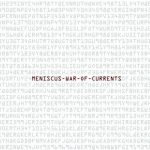
Sydney band Meniscus have been producing instrumental post rock sound scapes live since 2005 and previously released an EP, but amazingly this is their first full length album. It doesn’t use your typical crescendo structure of a lot of post rock, yet it’s full of dynamics, experimentation, memorable melodies, prominent bass grooves and ever-shifting beats.

When you listen to “War of Currents” you need to remind yourself constantly that they are, musically at least, a three piece – Daniel Oreskovic on guitar, Alison Kerjean on bass and Cameron Brennan on drums and samples. The secret to their full sound lies in the ever-changing balance of the individual sounds they produce, pushing them forward and pulling them back, often without the listener realising it’s happening.

Their skilful use of samples at times provides an introduction to a song or bridge between its parts. While synth occasionally takes the lead, the electronics generally form a blanket for the other instruments to alternatively lie, sit, stand and stomp around on. The bass alternates between melodic lead, pulsating driving rhythm, and a more traditional foundation. The myriad beats help ensure you never get a feeling of sameness, despite being restrained in volume. Around all this the guitar dances and weaves, providing gentle hooks to full on passages of super fast strumming and power chords.

The title of the record “War of Currents” is a reference to Nikola Tesla, inventor of radio and alternating current, and, I presume, the battles he had with Edison, Trump and Marconi. Google it if you want to know more – it’s fascinating stuff and he was your archetypal “mad scientist”. The opening track, “Room 3327” is named after the room in the Hotel New Yorker where Tesla spent the last ten years of his life and opens with a reading from a published article before a steady drumbeat takes us into the body of the song .

The six tracks are all very individual but tied together by sufficient constants to generate a record that works well as a whole. “Immersion” is probably the stand out because it uses all of Meniscus’ trademark devices, from soft rolling bass and guitar over complex drum lines and nicely balanced samples, to loud staccato in unison and lightning strumming.

When bands call themselves “cinematic”, it can mean boring and having nothing to say. Those who do this stuff well find the perfect balance between subtle restrained sound and enough hooks and bursts of energy to keep your attention. In the case of Meniscus, the live show is truly cinematic, with a fourth ‘contributor’ (as they are described on the digipac), Marty Wong, who provides live visuals. Wong sets up his gear just as the others do; a huge screen and laptop being his instruments.

Often bands will need an extra guitar or two to bring to life on stage the sound of their recorded material, but not Meniscus. Live, Oreskovic regularly seems to develop three strumming hands and is soaking from sweat after 30 minutes. He joins the crowd, occasionally screaming to release the pent up energy. Kerjean’s fingers dance their way like fireworks around the fretboard pushing out the brilliant bass lines and Brennan provides the beats and samples with precision and variety. But with no one to noodle between songs as pedals are reset, it’s Wong’s short films and visuals that keep the continuity without needing a fourth or fifth on stage.

The point of me telling you this is that what you hear on the record is primarily the product of skill and great song writing, not of production in the studio, as good as that is. It’s moody, it’s thoughtful, it’s engrossing. It surprises, comforts and rewards.
So sit back, close your eyes, set your imagination to “fully charged”, and make your own cinematic experience to this soundtrack.

Available now throughBandcamp

Posted by Gilbert Potts


This would be the first time I’ve ever done anything like this before, writing an article. So essentially dearest reader, I am letting you be my first. Congratulations, you’ve taken my writing cherry.

I’m in a band (Trojan Horse) and, as you’ll probably be able to tell from the state of my writing, I’m more used to musical notes than constructing sentences that aren’t filled with slang. As we’ve been featured on this site before, this is all inconsequential really, but I’m going to give you non-Mancunians a little bit of context to go with the feature that I’ve asked the lovely Echoes and Dust people if I could do.

The reason I mention my band is because we are lucky to be part of a musical revolution/renaissance/evolution, call it what you will, that is going on in the fair city of Manchester. One that isn’t based on trying to ape the simian gait of our forbearers, relive neither the hedonistic excesses nor the cold grey lows. We’re at a point in time and in the right place, surrounded by like minded individuals, bands and small organisations who are intent on pushing what music can and will be, purely for the fun of exploration of our chosen unbeaten path. Once again the lines between art and music are blurring. People are getting back into putting on a show to remember, giving the people who come to see them something to go away with that is special to each individual.

That’s not to say anyone sent out a memo, “FAO: All Manchester Musicians; now’s probably a great time to do something radically different.” And that’s what makes this time so wonderfully exciting…excuse my boundless enthusiasm, but after toiling away for 5 years, to now be at a point where people are all making and experimenting with such truly, mind blowing results, all separately, but under one umbrella of ‘progression’, it’s refreshing to be party to and I hope that anyone who came to a show, bought a release, delved into this rich sea, which I have no doubt will become an ocean, would agree with me.

Anyway that’s the context of what’s going on. I’m personally shining the spotlight today on the awesome dudes over at Superstar Destroyer Records (SSD), who have in the past couple of years, moved from a group of students operating modestly from bedrooms, into a fully fledged independent label, who are putting their own time and money on the line to release some of the most progressive bands to come out of Manchester in the last few years, as well as organise gigs for bands from all over the UK.

I caught up with Alex and Jonny to ask them some shit about shit…and that (writing skills +10)

Hello gents, so firstly give us a little bit of history about yourselves. Where you’re from, why you’re here?

Alex: That’s kind of a big question. I guess the short version would be that Jake (SSD’s co-founder) and I started telling people we ran Superstar Destroyer before we knew what it was. Anderson and Tom joined to help out with whatever we were up to. We met Black Market Serotonin and ‘SSD’ became a clubnight and then a label. I met Jonny at an open mic and then stalked him until he joined my band, and the rest is history. We’re still here because we’re bad at saying ‘no’ to good ideas.

Jonny: Popular belief would have it that I’m from the internet, and there’s an element of truth in that. As Alex said, I met him at an open mic night which I volunteered to film and put up on youtube as I was quite enthusiastic about the youtube music scene at the time. I never did get around to uploading it, but I did end up hanging out with him more, joining the band and building the website for the label. I only found out in retrospect that it was stalkery on his behalf. I guess I’m just unassuming like that. I’m still here because it all seemed like a good idea at the time. That, and Alex needs people around to tell him when not to do something ridiculous.

What was it specifically that made you choose Manchester as a base for the label?

A: Well when SSD started we were all students here, and most of us have stuck around. Personally I moved here in 2008 because it’s where Oceansize were from, and I figured there’d be a progressive scene. I was wrong then, but in 2011 there finally is, so why would I leave now?

J: I moved here in 2008 to study at Uni. Part of the decision was because Manchester has quite the reputation for being a musical city and at the time I had the pretensions of a singer-songwriter so it seemed like a good city to be in. Interestingly enough, lots of people have the same thoughts which lead to the bitter observation of an oversaturated scene made up of profiteering promoters, lad rock bands and shoddy singer-songwriters. Part of joining the label was because I thought it should be better than this. As of now, it seems things are better. Either that or I’m now looking in the right places.

Was the plan initially to focus on progressive bands, was there even a plan at all to start off with?

A: There was no plan. We just made it up as we went along and my student overdraft paid the bills. I think if you look at the bands, you could call them all ‘progressive’ in the strictest sense (and I mean in a kind of post-progressive, post-Ok Computer way) but not necessarily ‘prog’.

J: Personally I thought Alex was either brave or stupid wagering student overdraft on this project, but from the start, if there was any guiding idea, it was to make something cool. To quote Almost Famous “ What I’m talking about is the buzz!… And the chicks, the whatever…is an offshoot of the buzz” In reality we’re probably going to be waiting on those chicks for quite some time.

Whats the selection process for bringing a band onboard?

A: They have to be awesome. A bit of persistence usually helps too. Phil from Metamusic basically signed himself to SSD – we’d heard their early stuff and loved it but were kind of busy with other things at the time they wanted to put out World to Come – but he collared us and sort of said “you’ll put this out”. It wasn’t a question!

J: What Alex said basically. It very much helps if the band is there to meet us half way.

Ninetails – Rawdon Fever from Molly Hawkins on Vimeo.

I mean , I may be reading too much into it myself, but ive often thought it was no coincidence that you guys bear more than a striking resemblance, to the whole SST model of working, if only in the initials. Is this something you take inspiration from, obviously the music is different, but the DIY ethics of that early 80s hardcore scene, and more generally, who/what inspires you to do this?

A: I own a couple of SST records actually, but there wasn’t a conscious link to that particular label – what we always identified with was the DIY element. Jake and I had both gone through punk phases, and we had a lot of respect for the way the scene and labels organised themselves. When I was backpacking several years ago I went to an Asian Man show in San Francisco and there were these 40-year old bald punks pogoing with the 16-year olds; that was the day I really began to take the whole ‘punk ethos’ thing seriously, it’s very inspiring to me. When we started as well we had some great advice from Matt who runs Song, by Toad, and both Club AC30 and Sonic Cathedral have also tolerated me pestering them for information – they were all big influences when we started as well, so having a little support thrown our way really meant a lot. In terms of what inspires me to keep going, it’s 98 percent belief in the bands and 2 percent curiosity as to what comes next.

J: I can’t profess to know who SST records are though the DIY aspect was something that always appealed to me and it came out of seeing how various musicians were doing it on youtube. Jack Conte for one, is a musician who does it all by himself; all the way from writing to recording to distribution. The whole ‘I don’t need a record contract’ was a liberating concept, and in this case it was real; you could see it every step of the way as opposed to that PR spun “myspace band” business with The Arctic Monkeys. This combined with the writings of people like Andrew Dubber, Martin Atkins and some of people over at musicthinktank.com got me into that DIY ethos (though some discussions that go on over on that website need to be taken with a pinch of salt, but that’s another matter). What inspires me I guess is almost an academic fascination to see what will happen next.

Towards the end of the 2011 you embraced the pay what you want/free download model which that big famous band “started” a few years ago. was this something you arbitrarily decided yourselves as a label, or was there discussions with the acts too?If so did they take much convincing that this was a positive idea?

A: If I could correct you there, The Crimea did it first (er, actually, Marillion did it about 15 years ago without the help of the Interwebs – Ed). I saw them live countless times when I was growing up, and to me they were possibly the greatest live act on the planet at the time. They lost their record deal with Warners because their music was too weird and so gave away over 100,000 unique copies of the follow up for free; I paid for a CD anyway, so I know the model works. The free download thing came about because we realised three things: one, that filesharing sites had our records the second they were out; two, that if we were in a band on a label, we’d want people to be able to get the MP3s for free. The third thing was taught to me when I was working at Mixcloud – if you’re a business you have to have a plan for scaling, otherwise you can’t develop. We don’t have the capital of a major, or even a large indie, but we have hands, experience and ideas; therefore by offering free downloads we can grow beyond our ability to produce and promote physical; we don’t have to whore ourselves to iTunes or Spotify and ultimately the fans get a better experience too. Everybody wins! We explained this to the bands, and they were on board right away.

J: What Radiohead did was an excellent PR move for them at the time, but not a business model; you can’t still buy the album that way. Regardless I bought the album on vinyl later on anyway so I guess that speaks volumes about how I treat downloads. While I could regurgitate same ideas that people like Dubber have been banging on about for years about how music is a Listen, Like, Buy process rather than a Buy, Listen, Like process, the virtues of such a model have all been said numerous times before. As well as what Alex has already said, my view on it was firstly that such a model is a nice idea and we are in a good position to be idealistic. Secondly, it’s a matter of honesty and transparency. People are sick of this idea of businessmen profiteering off of music and it always annoys me when I see labels selling downloads of the album for practically the same price as the CD. By letting people name the price of a download we acknowledge what everyone knows already, that the unit cost of a download is marginal, and they decide for themselves how much they think the music is worth.

Are you a hands on kind of set up? Do you get involved with the decision making processes that go into bringing out releases, or do you just let the artists get on with it and bring you the finished idea they want to be produced?

A: It depends on the band, really; some are very proactive and driven, and some need a kick in the arse. Besides the artwork of the release though, we try not to have any say in the music. If it was shit, we wouldn’t release it, so as long as it’s good, we’re happy! Our job is to set release dates, make spreadsheets and shake hands, it’s not to interfere in the sacred artistic process.

J: Well so far, artists haven’t really brought us anything more than the music itself and the associated artwork. We’ve never needed to interfere in the artistic process and we have no intention of ever doing so. I think the most we’ve had to do in that regard is ask ‘is it finished yet?’ As for packaging and distribution, that is almost always our affair. However we always listen and take in to consideration what our artists want if they have any specific ideas for a release.

What with piracy issues, artist rights and the monopoly that the bigger labels have had, and the knock on effect it’s had on indie labels. Where do you fit in and what do you think the ‘industry’ (in the loosest sense of the term) should be doing in the future to stop its decline?

A: It’s in our name. Superstar Destroyer. The A-Wing that destroys the Executor. My personal feeling is that scale and free combined with an acceptance of the trend towards app development in the digital space is where this is all headed, and that’s right where we want to be. Hopefully we can slay some giants along the way.

J: Well for one thing, our name-your-price business model has kinda made us piracy proof until someone invents and markets a cheap 3D printer capable of reproducing vinyl records from the comfort of your home.

Though in seriousness, what the industry should be doing is anyone’s guess, but it seems that many of the majors are hopping aboard the Spotify and streaming service train. We’ll be seeing attempts to abstract the act of paying for music by bundling billing together with other things such as your internet bill, or even your bank account. I don’t know if this is the right thing to do or not, but it’s not what I’d have ideally. The problem now is that there is so much music, the choice is daunting and it’s alienating. For an art form that is so expressive and ultimately personal, such business moves only seem to further alienate listeners and makes the whole experience less personal. This is reflected in the way that Spotify and Facebook are integrating in an attempt to repersonalise the whole affair. What I’d really like to see is less of a model that treats listeners as faceless consumers but instead as valued fans. I’d like it such that fans see labels as not the faceless people in suits behind the scenes pulling the strings, but as music lovers who want to support bands. I want more transparency and personality in the whole affair. If this is done with web app development so be it. I’m certainly not going to deny that music does appear to be going down the streaming route and what I say is probably just conjecture that only really appeals to other idealists. Where do we fit in? Man, if I knew where we were going, we would already be there.

Being in a band that isnt exactly going to have masses of ‘mainstream success’, we decided a long time ago that we couldnt measure our success on a traditional model that people value as a ‘successes’ (i.e. loads of money, big houses, fur coats, BLING etc) and that we’d have to invest a lot of time, and effort into for probably scant reward in ‘normal’ terms. Is this true for you? How do you measure success with what you’re doing at the moment?

A: Every time I see a positive review or see our bands play a killer show, when I heard Black Market’s Christmas single and shouted “YES!” at my desk, or when I first heard a rough demo of ‘Pedestrian’; those are the times when you feel like it’s all worth it. If we were able to get to a point where the bands could be part- or full-time musicians and we’d helped them to get there, that’s the grand prize. A hit record would be nice too. I think when Muse can be one of the biggest bands in the planet you’ve got to set your sights high and say “fuck it”.

J: See Almost Famous quote above.

What has been your proudest moment so far?

A: I remember when we bullied Black Market into coming out of the practice space and playing their first gig, it was awesome. Ninetails supporting Three Trapped Tigers was cool too; Dune getting ‘single of the month’ on Manchester Music; seeing the artwork for Now I am Twenty in the flesh; hearing the final mixes of World to Come and going “fucking hell”, I don’t know, there have been a few!

J: Ahh, man I’m just proud that we’re still doing this and we didn’t fuck up horribly yet.

What are your plans for the year/s ahead? Anything in the pipeline that you are dying to reveal?

A: We’ve got a new video and single upcoming for Ninetails and three albums currently in the works, plus some remixes by bands we bloody love. The only plan we have is to keep surviving and growing a little with each release. Hopefully in ten years we’ll have built something to really be proud of.

J: Well, personally I’ll be looking in newer more innovative ways in which we interact with music and the internet. Eat your heart out Trent Reznor. In general though, well… on youtube there is a community of people called ‘Nerdfighters.’ We fight to reduce world-suck, and we are proud to be unironically enthusiastic about whatever nerdy things we happen to be interested in. We have a slogan that I think applies to the label pretty well: DFTBA – Don’t Forget To Be Awesome.

So I hope that goes some way to opening your eyes a little bit more, about what’s happening at the moment. If and when I can think of some good questions for the other people who are around here, doing really interesting things, hopefully E&D will let me waffle some more. In the meantime check out the bands who are on SSD over at http://www.superstardestroyer.co.uk/ and perhaps buy some of the stuff they have for sale, because it’s all brilliant, and you should treat yourself to a present for being so thoroughly brill.

Glad I got my first one out the way…was it good for you too?

Nick – Trojan Horse
x


Every so often, an album comes along and completely floors you. It may be because it was so unexpected; it may be because it is something that is moving on all different kinds of levels; and sometimes it may be because it is the sound of an artist’s true potential being realised. The second album from Jerome Alexander, AKA Message to Bears, is all three.

I remember hearing ‘Mountains’ way, way back in the distant times of June 2010 and being transported to somewhere only the most special pieces of music can take me. Fragile, yearning and self-reflective all in one, the song, in my mind, remains stunning, even more so, perhaps, now that eighteen months have elapsed and I’ve had the opportunity to hear it in album context. At the time, I thought Alexander couldn’t possibly produce anything quite as wonderful as a follow-up.

That was then. This is now.

‘Folding Leaves’ has taken my expectations and completely destroyed them. I don’t want to call this album ‘perfect’, because that is a hell of a tag and only applies to about five albums I can think of off hand, but damn it, this comes close, and has just set the bar for basically everything else in 2012, and especially so in post-rock and all related genres. Alexander’s music takes influence from post-rock, folk and ambient music, fusing them all together into something that is almost transcendent in nature. It sounds like I’m chucking out superlatives for the sake of it, but, good as it was, his debut ‘Departures’ utterly pales in comparison.

From the gentle, xylophone-led introduction to ‘Everything Was Covered in Snow’ to the euphoric coda that closes ‘Daylight Goodbye’, one of the songs on which Alexander employs vocals – creating multi-tracked vocal choirs that add an extra dimension to the already-rather-layered instrumentals – ‘Folding Leaves’ is the sort of album one can lose themselves in, a soothing balm to counteract stress and tension. It also helps that it is profoundly uplifting; even the minor-key songs are filled with hope.

I don’t want to throw out comparisons too easily, either, but listening to this album reminds me of the time when The Antlers consisted of just Peter Silberman, and he wrote ‘In the Attic of the Universe’. ‘Folding Leaves’ is also a ‘solo’ album, as it were, but is so textured and expertly crafted (case in point: the almost Sigur Rós-like ending of ‘Unleft’) that it’s hard to believe that it was created by just one man. Strings, guitar, electronic beats, piano, and of course, Alexander’s voice, all combine to produce something that shows him truly coming into his own as an artist.

There are just enough layers present on this album – literal and figurative. In the hands of most anyone else, the fragile beauty that lies at the heart of this album would be pushed to extremes, but what makes Message to Bears’s second album as amazing as it is, is that it is a case of ‘all this and nothing more’. Its payoffs aren’t explosions of sound; they are small things thrown into the mix that seem to make all the difference. There is an absolute ton of space on this record, space that is filled with only the necessary ingredients – and the result, regardless of how long it was in the making – is something to be treasured.

Self-released on January 18th 2012; pre-order on his Bandcamp.

Posted by Gareth O’Malley

© 2012 Site design by Audiium Suffusion theme by Sayontan Sinha