Interview: Rún
This record is very much about a state of play in the world at the moment, and how that affects each one of us as individuals and collectively.
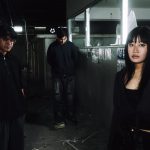
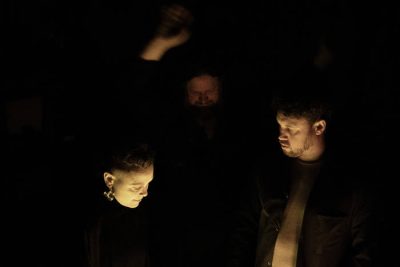
Rún have just released their self-titled debut album on Rocket Recordings and it sees the multi talented Irish trio that consists of vocalist and instrumentalist Tara Baoth Mooney, multi-instrumentalist Diarmuid MacDiarmada and drummer, sound designer and recordist Rian Trench, create an eclectic and ethereal listening experience. Gavin Brown caught up with Tara and Diarmuid to hear all about the album and its sound as well as getting an insight into the world of Rún and the inspirations for their powerful music.
E&D: Your self-titled debut album is out now. How excited are you to have the album out there and presenting the music of Rún to the world?
Diarmuid: We believe that the whole thing is actually completed by the person on the other end. So the person who comes to the show, or the person who has the record in their hand, the whole deal is done when they have the record at home and they have their own thing with it. That’s really where it comes alive. We have our own relationship with it, but everything starts with everybody else.
Tara: In a way, it almost finishes with us and begins with its new life in the world because we’ve committed it now to a material object, and because it’s now a material object, it can’t change in our hands anymore, so it belongs to the people who have it and who experience it.
E&D: How did Rún start and is it something you have wanted to do for a while?
Diarmuid: It really was two remote collaborations happening during lockdown, and Tara was the kind of key person there. Tara was doing some work with Rian. Tara was doing some work with me, and she had the idea that might be very interesting, to put the three of us together. It was a little while before we actually met, and it all really kicked off from there.
Tara: I had been working with Rian, a good bit before lockdown actually, and on a different project. Then during lockdown, we started doing some work ourselves and myself and Diarmuid were working with another friend, Connor, doing another kind of trio project. Then we had the opportunity to play live, and it just seemed like a really interesting idea to have the three of us in a room together. It felt like a good alchemy. That happened at the back of a castle in Leitrim, an outdoor gig. It would have been one of the first gigs during covid, maybe a bit later. We just kept playing together after that, and all of the material that we play live was developing and evolving. At a certain point we decided, let’s just commit this to some kind of status.
E&D: The album is a brilliantly eclectic listen that takes in folk, synth, drone, noise, was the creation of it a freeing experience that allowed you to take the music in many directions?
Diarmuid: We’ve all got so much wide and varied influences and things we can do. So it was a case of carding off things that maybe weren’t quite right for this, and then basically seeing what you’ve got left. It’s kind of a negative approach, so there’s still loads of possibilities, you know, things we haven’t even begun to tap into. It kind of explodes and then implodes again into something concrete.
E&D: Have you had thoughts about any new music yet?
Tara: We have a a lot of new music already. It’s a little overwhelming.
E&D: The music is very ethereal, was that something important for you to convey with this record?
Diarmuid: That’s an interesting word because people tend to use it to mean something precious and ornate and filigree, kind of dreamy, but we actually use the word ethereal to describe the invisible space for all the ideas live. Kind of pulling things from the ether.
Tara: Yeah, there are elements of ethereality that poke through but this record is very much about a state of play in the world at the moment, and how that affects each one of us as individuals and collectively. I suppose there’s kind of an expeditive or expedition feel to it where, where you’re kind of moving through states. You’re moving through states of body, and there’s a lot of darkness and pain, but then there’s this, almost like a relief from that at the end, through the Queen, who is almost like the birthing canal into the potential for something outside of the sorrow and loss that’s so prevalent at the moment. So there’s moments of ethereality, definitely, maybe little snatches of melody, there are certain ways that that comes through, I think, but very much as just moments, a glimpse of something rather than than an actual kind of whole phrase dedicated to that idea.
E&D: Would you like the album to a journey as well?
Diarmuid: Oh, definitely, yeah.
Tara: Yeah, completely.
Diarmuid: With regard to the ethereality thing, it is a kind of a two world thing, as in, it’s very rooted in the real world, and it’s very much about very real world things, but also how the intangible feelings and ideas and possibilities are the real world meets the invisible world, very much kind of working through things as a journey.
Tara: Even the materiality of the body versus immateriality of the body when the soul has been removed from the body, there’s quite a lot of stuff around, death and life and living and death in living, and death as relief from living. The journey is going through those states, the way that one does when one is on the earth, going through the body states, going through the emotion states, and maybe slipping between the reality and the immaterial or intangible, the tangible and intangible, along that journey.
E&D: Was it quite a cathartic album to make?
Diarmuid: It definitely was, for me anyway, for sure, because it’s very intuitive. It’s not a case of, you come up with a good plan, and then you choose it by how well you executed your plan. What we were doing was basically trying to channel something, and the successes if you really feel like you channel something, and you were actually kind of surprised by the results. It’s that feeling of something else.
Tara: The sum is greater than the parts.
Diarmuid: That’s the alchemy thing, basically, in a nutshell.
Tara: Cathartic is a good word, actually.
E&D: Of the songs you released prior to the album coming out, in the powerful ‘Terror Moon’ and ‘Strike It’, did you feel that these two tracks were the perfect introduction to the music of Rún?
Diarmuid: Well, I think the strategy is we kind of bring them in with some hard rocking thrills, and then we make them listen to grinding dirges for the others! It’s a bait and switch!
Tara: The lure!
E&D: With the issues that you deal with in those two songs in particular. Was it important to highlight those issues in this day and age?
Tara: Definitely, no question. There are very few ways to really get into the nitty gritty of the absolute horror and loss of what’s happening at the moment but through the energy of music and words and the rawness of the frustration and rage that you feel. I think that works really well when it’s funnelled through music or words and it’s a potential for a collective action or collective response, which we’re being denied. We’re watching this unfolding and that’s kind of specific to ‘Terror Moon’ and the situation that’s happening in Gaza at the moment. Terror Moon was written four years ago, and it was horrific then, but ‘Terror Moon’ has obviously evolved from that initial piece that was written. ‘Strike It’ is dealing with another form of utter dehumanisation of people, and it’s how the Catholic Church dealt with the situation in Ireland where, basically, they were taking pregnant women and putting them into homes and taking their children. Between 1925 and 1961 over 796 children under the age of three died in one home in Chewham, so they’re not a million miles apart. They’re deep injustices, and they’re deep injustices that happen in broad daylight and within communities where people know what’s going on, but people are maybe too frightened to say anything, or people are so normalised to the idea of dehumanisation that they don’t say anything,
E&D: How do you feel about the backlash that certain artists have had in speaking out about these atrocities publicly?
Diarmuid: It’s kind of indicative of how threatened the powers that be are. How precarious their position is, if they feel that threatened. That it really is a war of ideas, if you actually flip enough of the people listening, you could really turn the tide That’s the feeling that comes off. It is like that. It’s a dangerous place to be for artists to speak out and all that kind of stuff. But that’s because it really matters, I think, and what they’re doing really matters.
E&D: Have you had lots of support for those two songs in particular?
Tara: I would say yes, absolutely.
Diarmuid: Certainly, we’ve had no political backlash of any description. Thus far, maybe we’re not as explicit as Bob Vylan or Kneecap but really, no pushback at all.
E&D: Going back to the album, what were the biggest influences on the sound of it?
Tara: There’s a lot of remnants of folk and Hildegard von Bingen and sacred music, then i would say Coil and Alice Coltrane. I think probably a lot of those things that that they might have in common are that they’re expressions of attempts to go into an ascetic or kind of mystical state, unworldly.
Diarmuid: That’s true across the board. At this particular point in history where we actually have an extremely materialistic worldview, and in a way, we don’t have our nominally post religious world. We don’t really have a way of talking much about non material things. So it seems to fall to artists who have that instinct for wanting to deal with the intangible stuff, the numinous things of the world. I think a lot of music is actually about that, some more than others, get into that more mystical, kind of reaching, intuitive, way of doing things. We do it through sound. It could be through sacred music. Folk music has a very particular soulful unworldliness to it. Sometimes it’s like how folk tales almost exist in a parallel world where lessons are and all that kind of thing.
Tara: Things that are just difficult to express in language and in this reality can fly or have a place within an art form, like music. Let’s get back to some of the influences haha!
Diarmuid: I could talk a bit more broadly about it, because we bring certain things to the table when we’re just getting together to talk about stuff. Sometimes, you’ll see something as a kind of guiding star, and then sometimes you just want to just borrow something from someone. I feel like there’s periods in popular music that, for whatever reason, just seems to have been an explosion of imagination and maybe money around to actually fund making very weird and interesting records. I go to the psychedelic era, but particularly in countries that are not the UK and not the US, as fantastic as those scenes were, but amazing things were happening in Sweden, France, Italy, Germany, right across the board, and I think that, for me, it’s massively influential, just to look at how imaginative and how creative and how joyful some of that stuff is. Punk, post-punk, the folk revival in the 60s. You know, these are all wonderful moments, locus points of great humanity, I think.
E&D: Are looking forward to taking this music to the live stage? .
Tara: Definitely, we’re really, really looking forward to that because it’s going to evolve again, which is really exciting.
E&D: Does it feel like an otherworldly experience every time you play the music live?
Diarmuid: Definitely.
Tara: We definitely go to a place and we are aware of doing that, and we make space for that before we even begin.
E&D: Your upcoming live dates include an appearance at this years Supersonic Festival. Do you feel that the festival is perfect to showcase your music?
Diarmuid: Well, I had the pleasure of attending Supersonic once, and that was a fabulous experience. There’s terrific stuff in the lineup this year, so it’s great company, and I think Supersonic has built up the kind of audience that it makes a lot of sense to put us in front of.
E&D: What else is next for Rún for the rest of this year and going into next, and will that involve that new music at all?
Diarmuid: It’s kind of a wait and see thing. There’s a necessary element that is time to see how things grow and just to work out, really what the next thing is going to be. Basically, we could do album number two right now, but it really would not be the right thing to do as things are, the gigs are going to be super important for this, because we’ve got some things to maybe try out and see how the material that we have, evolves. I think that’s going to tell us really what’s next.