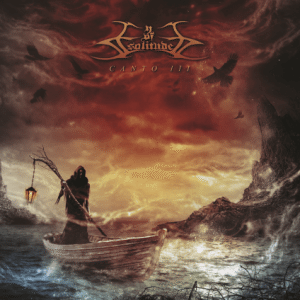
Delicate scraping strings, inhuman growling, choral chanting behind spoken-word Latin, and, most importantly, blastbeat-propelled epic doom riffing… London extreme metallers Eye Of Solitude have thrown everything into the pot for new album Canto III. The album is based around a section of Dante’s Inferno in which the narrator is led through the gates inscribed with the “Abandon Hope…” legend and over the river to hell, accompanied by the sounds of the tormented screaming of the damned. Despite this grandiose theme, the album still doesn’t seem quite capable of containing the vast scope of the band’s ambition. High-concept metal albums are nothing new, but Eye Of Solitude have made a rare record in which the pretensions of incorporating 14th century literature are matched by the band’s creativity in employing the tropes of doom, black and death metal in their dramatic whirlwind.
The literary themes certainly fit with the band’s epic and hard-edged metal, as well as with the introspective piano or string sections. At their best, these interludes join with rather than counter the heavy sections, as in the third song—sorry, in ‘Act III’— where the fragile, sombre piano melody is engulfed by a torrent of raging guitars, but then manages to emerge the other side of the maelstrom, tying the whole piece together through its multiple sections. This track is perhaps the pick of the record, as well as being quite representative in its showcasing of a broad variety of styles with a focused continuity. And, being myself a bit more used to the sludgier and dronier corners of the doom metal universe, it was a thoroughly entertaining surprise to hear the guitars launch into a classic metal solo, complete with gliss notes and a cascading harmonic progressions, during the second bout of heavy riffing. The band are clearly determined to cover as much extreme metal ground as possible.
Considering how much they’ve tried to achieve in in the album’s 6 tracks and 66 minutes, it’s understandable that there are some slightly less successful moments: the spoken word sections in English cover the Inferno’s stock doom metal territory (“altars of broken thoughts,” “souls fleeing onwards,” “feel[ing] the cold kiss of death,” and so on…). Similarly, there is perhaps a tendency to slightly overload some of the piano-led sections, either through an overly-literal approach to the lyrical subject matter or a concern to fill the album to bursting point with “interesting bits.” Particularly unnecessary are the sounds of a heartbeat and some overly emotive crying in 'Act IV', which cross over into slightly tiresome melodrama.
While the Dante text certainly helps provide some contenders for Most Epically Depressed Doom Song Titles (‘Act III – He Who Willingly Suffers’), I prefer my depressive tortured black metal or doom a little more abstract, ambiguous and blurry, in terms of thematic content as much as sound: one of the advantages of not speaking French, for example, is being able to enjoy the sound rather than the semantics of whatever it is that Sombres Forêts and Monarque are screeching and growling about. But these misjudged moments are rare, and for the majority of the album both the “orchestral” bits and the solid metal roar are executed with confidence and style.
In particular, while moving between quiet and loud sections is the most conventional of genre staples, transitions are orchestrated with creative flourish, each track finding three new ways for the band members to leap back in with a concerted pummelling noise after a period of more restrained instrumentation. My personal highlight of these is halfway through the final track, where tinkling piano and pattering rain give way to a fraction of a second of lone growl before being joined by a thundering, sustained riff. For all the considered appeals to violins and classical prestige (both musical and literary), first and foremost the strength of this record is its mid-tempo, sustained and heavy doom-riffing guitar sections, which are kept thundering along with urgency by the power of Adriano Ferraro’s masterful blastbeats and quirky, sometimes surprising rhythms and fills. Daniel Neagoe’s vocals are another real highlight, his deep growl approaching even the extremity of Corrupted or Tyranny, and in contrast to the slightly mannered clean-singing quotes in Latin or English, they directly convey an inextricable combination of the despairingly human and the terrifyingly demonic.
There’s an enormous amount to explore here over the record’s six tracks, and while occasionally the weight of ideas can make certain periods seem a little overcrowded, there’s clearly even more potential in this exciting and ambitious band. Looking forward to hopefully catching them at one of their UK dates in late January with Marche Funébre on their “Chants of Grief” tour, to see how the complexity and power of Canto III translates to the stage.