By: Gaz Cloud
Tangerine Dream | website |
It is not often that we are moved to post an obituary here on Echoes And Dust but then it is not often that an artist passes away that has had such a palpable influence on so much of the music we love. Here, Gaz Cloud gives a personal reflection on the loss of one of the Twentieth Century’s most important musicians.
On Tuesday 20th January, Edgar Froese, Tangerine Dream’s founder and only ever-present member, passed away.
It’s no understatement to say Edgar is my all time musical hero. I discovered his music aged 11 (I think), via a documentary on ambient music on Radio 1. The documentary as a whole had a big impact on me, but immediately upon hearing TD’s music, I was transfixed. This was music to transport the listener to another world… at once strangely exotic and the most comfortingly familiar sound I’d ever heard. I rushed out and bought the only CD in my local independent music store – The Collection. This was, unbeknownst to me at the time, a fairly cheap compilation covering their pre-Virgin years. The music had an enormous effect – this was Krautrock, of course, but my first exposure to a sound and scene that valued experimentation above conformity.
As I delved deeper into the music of Edgar and his colleagues, this desire to innovate seemed at first to have been replaced by a desire to refine and perfect these initial splurges of creativity. Tangerine Dream’s music of the 70s is implicitly linked with the development of synthesiser and sequencer technology. Yet they were never slave to the machines, and the pastoral sounds of Rubycon, an album that marries experimental tendencies and huge, pulsating rhythms, remains arguably my favourite album of all time. This era saw two classic line-ups of Tangerine Dream produce albums as essential as any band of the 20th century. The consistency of these records makes it hard to pick personal favourites – they’re all brilliant and each has its own personality.
The late 80s and the 90s were arguably less kind to Edgar and his bandmates. Although they produced a fine body of work in both decades, the public interest in the digital sounds they pioneered waned, leaving them favourites of a New Age crowd and few more. I discovered this modern output of TD at the same time as their “classic” era, thanks to my age. I loved it. Whilst there’s much more to wade through, and some ordinary music, every release contains something essential, and many became firm favourites on regular rotation.
The new millennium saw the landscape change in TD’s favour. A new and relatively stable line-up saw Edgar produce some of his finest music. Often introspective and hypnotic, this new Dream seemed to draw on all life’s experiences and present them back to the listener. A committed dadaist and surrealist, Edgar began using his sleeve notes and compositions to impart his peculiar world view. Whilst a private man, it became apparent that he was much more than a composer – at least, he was a fully fledged artist with a lot to say. To my mind he was a genius.
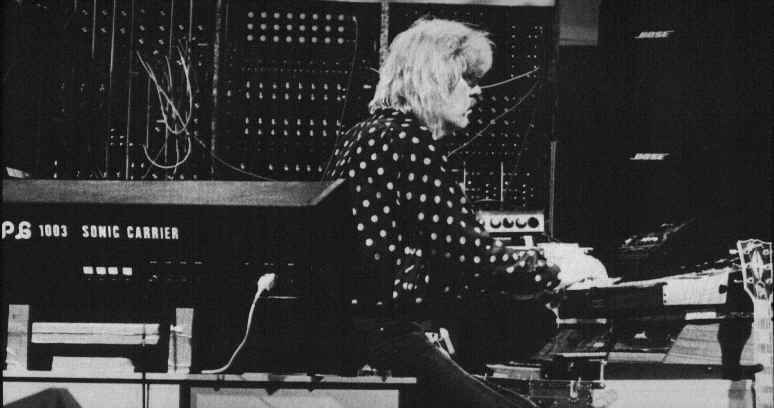 Tangerine Dream’s 70s live shows will always remain the stuff of legend – long improvisations that fans collect as bootlegs. By the time I was old enough to enjoy the band, that era had long-since past. Tangerine Dream still gave me my finest memories of live music, strapping their sleek, technology-driven aesthetic to visceral performances where virtuosity, light-shows and fine programming all contributed to a sense of event. Each tour also coincided with the release of yet more music, often available as a limited edition. The merchandise stall began to resemble a scrum, albeit one that as a committed fan, there was little choice but to dive in and hope for the best.
For me, the Tangerine Dream live experience was often solitary. Not that I didn’t have friends within their fan community, but a live show was something to be experienced alone. I realised several relationships were doomed to fail when it dawned on me that I’d rather spend a TD gig in my own internal dialogue with the music, rather than conversing or sharing the moment with a partner. That Owlin was allowed to share this precious world of mine spoke volumes about our musical and emotional intimacy, and soon my favourite band were hers, as well. Owlin had been fond of fantasy and counted Legend as a favourite film; all I really did was ignite an existing passion and give name to it. Before long, we were planning our foreign holidays to coincide with the band’s European tour dates.
Edgar was also one of the most prolific musicians of the modern era, with hundreds of hours of music to his name. Towards the end of his life, this desire to create seemed, if anything, to grow exponentially. The last decade of Tangerine Dream have seen copious amounts of music released in various forms, many of which was really solo work by Edgar, or his compositions with a little help from his friends, and it appeared sometimes he used the band’s name to merely attract additional sales revenue to his endeavours. He leaves behind him a body of work that Bach or Haydn would have been proud of, including countless reworkings of his early successes than mean many key compositions can be heard in two or three fascinating interpretations.
The above comparison with the great Baroque and classical masters would surely have brought a smile to Edgar’s often sullen face. His work defies easy classification: inspired by the 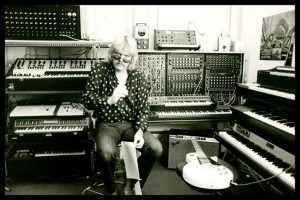 counterpoint and harmonic form of his own heroes from centuries gone by, but deftly referencing popular alternative genres of the day. Edgar never really made a rock record, or a drum n bass album, or any other neat and easy-to-categorise work. Whilst these and many more genres played into his sonic world, all he ever really produced was Edgar Froese music: influenced by the music du jour but never following fashions or trends for their own sake. This stylistic refinement meant some fans lost interest, but Edgar never really made “more of the same”. Throughout his oeuvre, one can expect surprises, and nowhere is this more evident that his song cycles – setting Blake’s Tyger and an orchestral trilogy of albums devoted to Dante’s Divina Commedia)! Edgar never lost the ability to take risks, and I loved him for this as much as anything.
Few musicians remain in the game long enough to see their son join and leave their band. Jerome Froese goes down as one of many great talents to play in Tangerine Dream alongside Edgar. My heart goes out to all these individuals at the moment, but none more so than Jerome, who has lost a father, as well as a former band mate. For Thorsten Quaesching and Ulrich Schnauss, current members of the band’s line-up, the shock must be massive. Ulrich, another favourite of mine, had only recently been invited to join the band he rated above all others. The future looked so promising with him on board. I sincerely hope that the end of Edgar’s reign in the band he created back in 1967 is not the end of Tangerine Dream in all incarnations. But whatever these brave and talented men do, it will never be the same.
Rest in peace, Edgar Froese.