(((O))) FEATURES
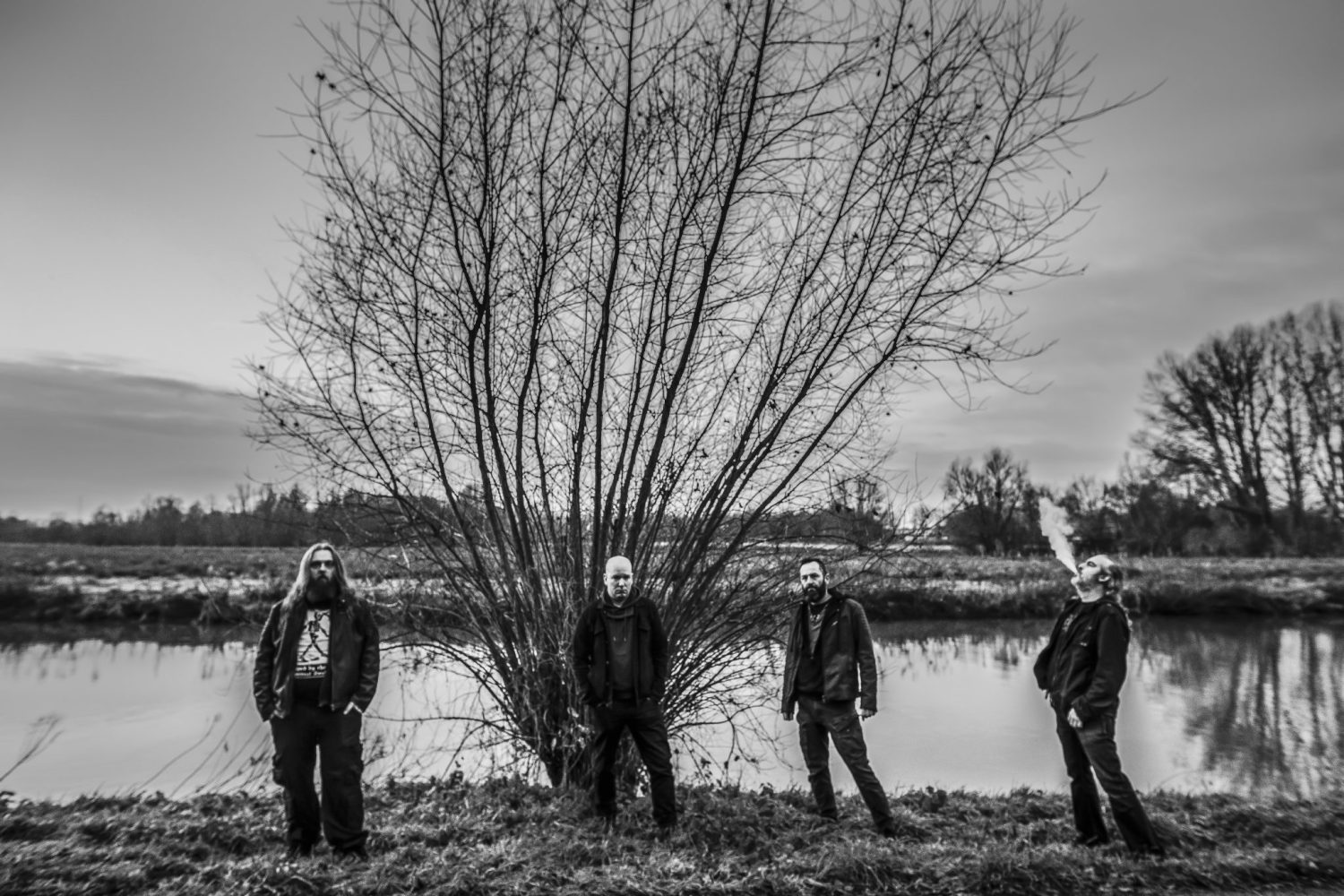
Under the Influence with Kludde
To celebrate the re-release of Kludde’s Langs Scheld- en Denderland, we asked the band for the 3 key influences behind it.
The author of this article wishes to remain anonymous
For years I had a little black address book with the following George Bernard Shaw quote scrawled on the opening page, “Alcohol is the anaesthesia by which we endure the operation of life”. I found it recently and just laughed; what an attitude! But I used to believe it and for a long time it was true; drinking helped me “get through life”. It allowed me to forget the doubts, fears and resentments that otherwise poisoned my thinking and it unleashed a more reckless, energetic side which temporarily obscured the darkness.
I had some brilliant nights (and days) when drunk and some of my most vivid memories are of those moments when everything seemed to fall into place. Often these experiences involved music; certain gigs stand out as being almost transcendental when drunkenness served to accentuate the hypnotic, revelatory power of live music. In particular I remember seeing the Pixies in concert for the first time and during their final song feeling a supernatural sense of cosmic bliss as the maelstrom on stage, the fevered mass of the crowd and the alcohol-induced abandon, aligned to induce what seemed to be total karmic perfection. Had alcohol continued to have this effect I’d still be drinking; who wouldn’t?
Indeed, most people do. Alcohol is our society’s proverbial social lubricant and it positively enhances most people’s experiences. But most people aren’t alcoholics; I am. I can say that today without either doubt or shame; my family knows as do most friends and I don’t really give a shit what people think anyway. The day before I finally threw in the towel and admitted the blinding obvious, I was suicidal; utterly confused, full of self-hatred and self-pity, and more terrified than I have ever been in my live. I don’t feel anything like that today.
For years my drunkenness was, to an extent, camouflaged; I could never understand the point of “one or two” and so increasingly I gravitated towards those for whom drinking was means to get drunk. Yet, even amongst this crowd my drinking began to stand out and I certainly knew something was wrong even if others didn’t. My appetite began to overtake those with whom I would drink; I drank with a cheerless frenzy, a desperation to reach that point when I would feel invincible. These moments of (utterly superficial) invulnerability became increasingly rare and fleeting, however, and, insidiously, drinking became a daily concern. By the end a “night out” would invariably involve drinking on my own hours beforehand, hiding booze in the toilets of the pubs we drank in so I could maintain my demented pace unseen, and always ensuring I had a stash ready to deal with the apocalyptic hangovers that would inevitably follow. Drinking in the morning became routine; what was the alternative? Anadin? Ha! Needless to say I went to many gigs that I have no memory of; I have the ticket stub to prove I saw The Fall in 2009 but I can’t remember it.
Morning drinking as a means to deal with the excesses of the night before soon just became all day drinking and by the end I couldn’t remember if I was “drinking” or “drinking to recover from drinking”. Eventually drinking on my own became habitual but the alcohol had all but lost its anaesthetic effect; I drank joylessly and felt utterly hopeless. Needless to say this lunacy caused havoc; my mental health was smashed but, more devastatingly, I began to hurt and lose the people I loved who were helpless to understand or help. As one more debacle followed another I regularly found myself floundering as someone asked “Why?”
The truth was I had no idea. I didn’t want to isolate, I didn’t want to wallow in despair and I certainly didn’t want to become a social pariah but somewhere along the line I had lost the power to choose whether I drank. It’s perhaps this which non-alcoholics find most difficult to understand and precisely this which separates the alcoholic from the heavy drinker; the heavy drinker chooses to get drunk, the alcoholic doesn’t. Once I had one I lost all memory of the previous devastation I’d caused, the resolutions I’d made and the many ambitions I had; reaching oblivion became the single most pressing desire. Of course no-one coerced me into buying the stuff but I did it because my outlook on life had degenerated to such a point where drinking was, paradoxically, a sensible option. As the Shaw quote suggests, who but a madman would endure an operation without anaesthesia? If life – work, family, shopping, sleeping…everything! – becomes akin to an operation then naturally we reach for the anaesthetic. And so I did habitually, and perversely the pain induced by the “operation” became more acute and a vicious cycle began.
But I stopped; with the help of Alcoholics Anonymous I managed to quit drinking and, far more importantly, slowly develop a new outlook on life. I was, of course, terrified of going to an AA meeting; would someone know me? Would they all be old men with ropes for belts hopelessly destitute? Did it mean becoming religious? But also, I have to admit, part of me was afraid it might work; what then? A life without drink? It loomed like a coma promising only boredom and sterility. The reality was completely different; people in AA come from all walks of life and while we share similar dark experiences we aren’t encouraged to believe in anything beyond the ability of the fabled twelve steps to turn lives around. At that first meeting I looked around in amazement as ambitious men and women, young and old, with vastly different attitudes and outlooks on life, laughed and joked about their past exploits and shared stories about their new lives.
Drinking, I now see, was a symptom – albeit a particularly huge, toxic one – of a more pernicious disposition which led me to routinely make destructive choices. Since going to AA I’ve begun to appreciate what I have rather than crave what I imagined I deserved or needed. Instead of the old-mind set whereby I engaged in daily self-flagellation as I either unfavourably compared myself to everyone I met or furiously discarded them as weak, useless or just pricks, I’ve learned to change my attitude to life without becoming a sop; I still have strong opinions and a particularly close-minded view of what constitutes “good” music, but I don’t ricochet through my day on the back of resentments anymore.
Just before I went to that first meeting I’d started to learn the guitar; it was a disaster as my patience was non-existent. Once I knocked the drinking on the head, however, I took to it with more focus and drive. Today I sing and play in a band that’s had a few releases, some modest radio play and regularly plays gigs. I’ve made loads of new friends and find myself in a place that really, I couldn’t have dreamed of when I was mired in negativity. Music has become an enormous part of my life – to the determent of my “real” job – and it feels like a creative part of me that was buried under a mountain of fear, doubt and hatred has been unleashed.
Being in a band involves a lot of hard work, late nights, stress, nerves and strained relationships but, throughout it all I’ve been sober and, what’s more, I’ve never once even had any desire to drink. Music is obviously synonymous with hedonism and excess but in the same way that to have a punk ethic you don’t have to look like the Sex Pistols, to make and play caustic, emotive, honest music you don’t have to be drunk; at least I don’t. I am regularly surrounded by people drinking heavily and yet I don’t in any way feel envious. Since I gave up drinking I’ve been at many gigs just as intense as those when I was drunk; gigs where I thought my head was going to explode as I levitated amongst a baying crowd but crucially, gigs from which I woke the following day without crumpling under an avalanche of regrets and physical pain.
The history of music is replete with those “icons” who “did everything to the extreme”; but history is written by the winners. For every Jack Daniels swigging “Wildman” there are hundreds, possibly thousands, of casualties, wasted lives and unmade albums. The notion that being creative necessitates enduring mental distress or engaging in self-destructive behaviour – be it through drugs or alcohol – is irresponsible bullshit.
The mind of an “active” alcoholic is a hideous place; many people – myself included – can hide this torment for years but, at least in my experience, the pressure breaks you in the end. The choice then is ultimately to go on and plunge further – and invariably rapidly – into irrevocable mental decay, or to be brave enough to ask for help. The alternative to drinking isn’t the grinding tedium of endless nights in with nothing to do but a potentially more creative, dynamic life free from the torture of regret and fear.
For more information on AA please visit the website.

In his first piece of music writing of any kind, Gavin Davison recounts his first experiences with Pink Floyd's seminal The Wall album and how it changed his view on music forever.
It was in 1987 that my friend Lee’s parents (who were original hippies back in the day) introduced me into music in general; bands such as Camel, Yes, Led Zepplin, Cream and Jimi Hendrix – a baptism of fire by anyone’s standards! This seemed like an initiation of sorts though, and it was almost like they were holding back for what was yet to come, and what came blew my mind. When they played me The Wall by Pink Floyd, I was immediately hooked and needed more of what had entered my ears and ended up tattooed on my brain. It became a passion to discover more and get into the crazy mind of Roger Waters.
I found out that they were going to play in Manchester, Maine Road, on August 8th 1988, and I exploded with enthusiasm at the thought of seeing this band that I was so invested in at a stadium. Having months to prepare for this, just after finishing my exams whilst looking forward to the summer made every second count. My ticket had been up on my bedroom wall for months now, and was beginning to fade away with the intense stares I gave it every day. When the day finally came, I was a mess because of such a build up! On entry, I had no idea of what was to come from one of the most progressive and experimental bands my ears had ever heard. I was expecting the classics in a setlist, and what I got instead was completely different and did not disappoint.
From the get go, Rick Wright’s keyboards had me straight away and took me to a place I’d never been before musically – destination unknown; and I was willing to go wherever it would take me. From the minute the colours dripped down the giant screen in front of me, Rick’s subtle keys melted into Nick Mason’s drums and David Gilmore’s dulcet tones came on with the then slight familiarity of ‘Comfortably Numb’.
This was me, this was my paradise, this was the one thing in my world that meant absolutely everything to me at the time. The moment that David broke away to play the second of two guitar solos on this track, I went blind with emotion for the next seven minutes and nothing else would ever be the same again. After the show, it was impossible for anyone to talk to me, as I was literally speechless.
When I got home, for the next couple of days, I went through everything that was Floyd that my ears could wrap themselves around. From Pipers at the Gates of Dawn onwards, that was all I wanted to pass through my consciousness. But I always came back to one album, and that for me was The Wall – the one introduction to what I had never experienced before and will stay with me forever. From the very first time I heard ‘In the Flesh’, the pounding drums and soul searching keyboards just took me apart and reconstructed me as a musical Frankenstein. “Hey You’, one of the most simplistic songs you could ever hear, cleared the way with apocalyptic sounds – a contradiction in terms, yet this the genius of what could be done with minimal resonance.
The second half of the album was more of a struggle for me, as this is when the tone became a lot darker in depth and the environment more involved than I was ready for as a fifteen year old. Contrary to popular belief, ‘When the Tigers Broke Free: Part One’ was not on the original album, but was on the movie. This track holds a very special place in my heart, and not only did I feel a personal connection to the song itself – but to Roger Walters as well, having both lost fathers to war. With it’s regimented trumpets, Welsh choir and military drummers, it built up to memories long forgotten. As short as this track is, it still remains to this day one of the most powerful songs I’ve ever heard - Not just for the connection I had with it, but for the therapeutic properties held within its lyrics.
For a lot of fans, ‘Comfortably Numb’ was the quintessential Floyd song, with it’s massive musical arrangement and it’s haunting lyrics, and synths that only Rick Wright could put together. From the very first time I heard the first few lines of this song, I thought it was talking directly to me as a personal message, and by now the synths were flowing through my mind with the intensity of a first kiss. Enter Dave Gilmore with the guitar solo that would turn my world upside-down forever! With my eyes firmly closed, and my mind open in a way like never before, the first notes sent a wave of emotion through my body like no drug could ever achieve. The more he played, the more powerful it became – with every hair on my body stood firmly to attention.
Gilmore was hitting every note as if they were his last, and these six minutes felt like the longest time in the world. By the time he’d finished, I was in a state of suspended animation. No longer would I have to look for that perfect song or special album, I found what I’d been looking for, and it was The Wall. Twenty five years and a million songs later, there has been nothing that has touched me the way this album has – and probably never will……..

Ontology is a branch of philosophy dealing with what kinds of “things” there are and how to define their boundaries. Musical ontology, then, concerns what music is and what kinds of musical things there are: symphonies, arias, notes, chords, tracks, albums, riffs. Here I take a look at rock music categories and discuss the ontological noise of the Japanese group Les Rallizes Denudes.
Scholars of popular music ontology have discussed the issue of the fundamental unit of rock music. The “song” has been suggested, though that fails to distinguish between two performances of the same song by different musicians. “Songwriting” skill or ability, however, is still used as a measure of authorship and authenticity. Andrew Kania has suggested that we take the recorded “track” as the ontological unit of rock music, as ‘the primary focus of critical attention,’ and since the 1960s, the “album” has been another unit of rock music, seen as artistic statements by defined groups. Since then, live performance has existed in a strange parallel to recordings: firstly a standard by which recordings were measured, before fans came to demand hearing tracks as-played-on-the-album, to oxymoronic (and often horrible) “live recordings.” The recognisable “sound” of a particular band might be determined by technical equipment, the studio-as-instrument, or the techniques of particular producers, but are defining characteristics of rock groups and subgenres.
Bootlegs, leaked studio recordings or audience tapings of live shows, complicate things. These represent something of a betrayal, of authorial intentions in crafting finished musical objects, or of the ephemeral intimacy of live performance, though this is perhaps an ideologically coded way of saying that exclusive contracts have been broken. Occasionally though, the illicit deal pays off, and a different kind of authenticity is acquired, in which unguarded moments of spontaneous creation are captured. Another (doubly ontological) musical object is a canon: a musical “thing” made up of a critically-sanctioned list of great “things” like songs, albums or bands. While these categories (songs, tracks, albums, concerts, sounds) and polarities (live/recorded, classical/rock, official/unofficial) structure conceptions and discussions of rock music, equally fundamental to rock music are the ways they are challenged and transgressed, such as with bootlegs, cover versions, new technologies and new modes of creativity.
This entire musical ontology is undermined in the noise of Les Rallizes Denudes: a band otherwise known as Hadaka no Rallizes, otherwise known by various other names; led by mysterious guitarist Mizutani, and featuring a revolving cast of often nameless musicians, and sometimes not even featuring Mizutani; going by a French-language name containing a word that doesn’t exist in French; never releasing an official album (except for one side of vinyl on a compilation), and only existing on murky studio demos, dubbed and re-dubbed copies of audience recordings or soundboard tapes. In the lowest of low fidelity, Les Rallizes Denudes ask: fidelity to what?

For a band who never release albums, this band have hundreds of albums, none of which are albums. Only available through bootlegs, mostly released on dubious record labels, these are copies of audience tapings of live shows that emerge with vague or contradictory details of the supposed performances. Some are confusing mixes of demo fragments and soundboard excerpts. Two of the best known “albums” are 77 Live and the legendarily-titled Heavier Than a Death in the Family. However, 77 Live is often confused with Mars 77 Tachikawa, and Death in the Family has apparently been released several times with completely different material on it, with the latest Phoenix Records version has most of what is on 77 Live with some other bits probably from a different year. There are 10, 15 and even 50CDr sets of material, much of which reproduces material available elsewhere (or says it does and actually doesn’t). As an artistic whole, a sensible, defined unit of analysis, a collection arranged to fit a particular medium, or even as a document of a particular performance, any sense of an “album” is rendered absurd. Errantly titled Youtube postings, and blogs collecting ambiguously-attributed download links add another layer of discographical chaos. As well as these releases which stretch the format of the album to breaking point, the band use the limitations of technology in other ways to contribute to their sound which speaks of limits and transgression: one of my favourite moments is the distorted wail of the guitar line dissolving into feedback screech exactly as it bends up to a peak, from about 7.00 to 7.25:
The band’s signature sound is constituted, as with many bands, by the idiosyncracies, opportunities and accidents of technology used to record them. But far from supporting the band’s own authority-authenticity in mastering technology to artistic ends, the sound is determined by recording devices at the mercy of batteries, venue censorship, absentmindedness, and whatever the audience recorder happens to capture. There is no studio record to compare with, and there is no “pure” sound of the band. Mizutani (reportedly!) firmly favours noises, crackles and impurities: paradoxically valorising aspects of sound over which he has no control, in presenting how he thinks it should sound. A “high quality” Rallizes sound then, without any imperfections, wouldn’t sound like them at all. This extends also to sleeve artwork and titles: audience members guess or invent song titles, and provide vague photos or photocopies as covers.

Rallizes refuse association with “tracks,” relinquishing decisions about when pieces start and stop to audiences and lo-fi technology, by never having any originals. Cradle Saloon 78 contains two recordings of the same performance, with track divisions at different points throughout, and different sound profiles according how and where in the crowd they were recorded. Together they explode the myth of faithfully representing live performance: both and neither are authentic representations. The band also undermine songwriting and familiar ways of understanding musical creativity, while retaining amongst fans an aura of musical genius. One of the band’s best-known numbers is ‘Night of The Assassins,’ the band playing epic, time-collapsing versions at concerts over and over again for decades, but it’s far from an original composition or even a cover version by normal understandings. They simply took the elementary bassline from Little Peggy Marsh’s 1967 ‘I Will Follow Him,’ and they followed it, endlessly and aimlessly, for years and years, never getting anywhere except a kind of noisily compelling stasis. It’s not a cover or a new song, a radical departure from Little Peggy March, but without recognisable creative development.
The idea of a canon of Rallizes songs is also tested to breaking point: for 30 years, the same few songs were repeated, endlessly. Their canon is so fixed that it challenges the concept-- a canon might appear to imply a stable repertoire, but this relative stability is based on the expectation that this canon has been or will be added to and developed. Not so here: 20 minutes of guitar noise over a simple bassline in 1967; 17 minutes over the same bassline in 1996. Yet no distorted overdriven guitar is quite the same as any other. Each version is so undeveloped, but also so different, that “songs” and canons cease to meaningfully apply.
Other hilariously, dysfunctionally, gloriously quixotic moments in which Rallizes simultaneously uphold rock mythology and ridicule it, are the entertainingly odd Ethan Mousike concert footage, where (legend has it) the filmmaker was only permitted to film half the stage, from some distance; the Great White Wonder compilation (named after the famous Dylan bootleg), which hopelessly fails to offer the archival completism suggested by the box-set format; and not least, the famed upstaging of rock’s frequent “radical” posturing in bass-player Moriaki Wakabayashi’s involvement in a Japanese Red Army plane hijacking.

As anthropologist Mary Douglas noticed, noise and dirt are names we give to the bits and pieces that don’t fit our neat, compartmental grids for understanding the world. These categorical anomalies can acquire a certain power through defiant resistance to interpretation. Rock music has always sought this kind of transcendence in transgression, so it is no surprise that a cult has arisen around this group who aren’t really a group, their recordings which were never theirs, and their sound which is recognisable only through its own degradation and imperfection. In liner notes for Great White Wonder, Moshe Idel ironically notes that the band’s sound ‘regressed even as it evolved, ending up […] exactly where they had started from,’ frustrating any of the familiar rock fan/critic attempts at definition, categorisation and hierarchy. In most listener descriptions, the key issue is a recounting of a fleeting experience of an overflowing noise, the letting in of an ephemeral, broken transcendence, the apocalyptic experience which obliterates any categories and divisions that might attempt to take hold of it. This is the ontological noise of Les Rallizes Denudes:
A version of this article was presented at the Royal Music Academy’s Challenging Musical Ontologies event, at the University of Nottingham, November 2012.


(((O))) So, tell us a bit about yourself. Do you have a background in music? How did Kubalove come about?
My eardrums never fully recovered from my first band at age 15 and the rehearsals in the drummer’s tiny, sweaty bedroom. I’ve been in a succession of bands ever since, playing bass, some synth and singing, playing at festivals across the country, helping me get to know the London gig circuit intimately – grubby as hell but I love it. I set up my own acoustic music night for a couple of years, which was tough work but it meant I got to put on kids like Ed Sheeran before he got big (though he looks exactly the same now as he did then). Writing music electronically is a newer thing for me but feels very natural. My solo project as Kubalove is what best gets across this thing inside me itching to get out. I find I can produce music really fast these days, which is why I’ve moved into composition for other people recently too.
(((O))) What would you say are your musical influences for Kubalove, and more generally, which artists do you most admire / enjoy listening too / seeing live?
Moloko’s Roisin Murphy was always a massive role model for me. She’s got such a fuck-you attitude, such style - her live performance at Glastonbury years ago left me slack-jawed. And Moloko’s sound unites just what I love, compelling beats with sinister, sensual undertones and dark humour. There are so many strong female artists and front women out there to admire – P J Harvey, Alison Goldfrapp, Karen O – they’re all so awesome. I also appreciate anything that’s sexy, atmospheric and has a damn fine beat – CSS rule, MEN delight me constantly and Siriusmo is magnificent. Also, Thom Yorke is the one true god.
(((O))) Talk us through your creative process. How do you write songs? What's the recording process like?
Sometimes I sit down deliberately to write something, but my best work comes when my subconscious just flows out. It’s like the Elves and the Shoemaker – where in the morning his shoes are magically made somehow… I’ll start by laying down a basic beat, and a big bassline (I’m always going to be a bass player at heart) and then I just let my fingers do the work, and somehow the tune just seems to write itself. I’m lucky like that – often I’m amazed at what I end up with – I think, “where the hell did that come from?” This was very true with ‘Dangerous’. I came home from a heavy drinking session in a dark mood and just sat up and wrote until about 5am. I can’t remember what went on, but all I know is that when I listened back hungover the next day I thought “holy shit, that’s not bad”.
(((O))) What's the story behind the video for Dangerous? How did you decide on the footage to use? It's very well synced to the track, was it edited to fit?
I’ve always been obsessed by bizarre, unsettling dance performances – at the dancers’ ability to move their bodies in completely inhuman ways, to transform themselves into disturbing creatures. Whilst I was putting the final touches on ‘Dangerous’ I was thinking about how I’d move to it if I was totally uninhibited. It’s a song filled with darkness, anger and self-hatred, a desire to be rid of the skin you live in, but also a strange sensuality and passionate desperation. I spent a while searching online for some dance inspiration and came across this incredible Chunky Moves video. I instantly felt it expressed in dance what I was expressing in music – this constant fight against yourself, this desperate inner struggle, these forces battling beneath the skin. The video was edited somewhat to fit, but it didn’t need a lot – somehow the music and video just slotted together like they were meant to be.
(((O))) And how about the video for ‘All I Want’? How did that come to be made?
I’m so happy with how this video for ‘All I Want’ came out. The track is a lot more romantic and euphoric than ‘Dangerous’, but it still has a desperate yearning to it. I think the video captures this atmosphere in a stunningly beautiful, sexy way. It certainly seems to be getting people a bit hot under the collar, which can only be a good thing I think…
The up-and-coming director Susie Francis approached me to make it through the Radar Music Videos site, which was really flattering. It seems she just loved the song and had a great vision for how the video should look. Susie’s based in L.A. and has some amazing connections, and the video ended up starring the very hot fashion model Kasimira Miller and her Hollywood actor boyfriend Tarquin P. Wilding – who also happens to be Elizabeth Taylor’s grandson. You can really see the chemistry between them on screen I think.
(((O))) Tell us a bit about your upcoming EP? When can we expect to get our hands on it? What will it sound like?
The EP will be out at around the start of April. It will be quite a varied mix of sounds, with songs representing all different moods – from the dark aggression and sensuality of ‘Dangerous’, to more feisty, flirty and tongue-in cheek tracks like ‘Criminal’ and ‘Lovesick’, which are more beat-orientated. There’s cohesion throughout though, in their attitude. They’re all about tugs of war – whether it be a dark personal struggle or a more stimulating battle of love, sex and hatred with a partner.
(((O))) What are your plans for 2014? Musically, personally, creatively, professionally?
I’d like to complete my first album as Kubalove – it’s in the works. I’d also like to tour the EP, I’m in the midst of rehearsals now and dates will be announced soon. I’d also like to have my music reach as many people as possible through as many ways as possible. I’m glad to be providing music for the online entertainment show The Fox Problem (hosted by Radio 1’s Gemma Cairney), and to be working with big brands like Hewlett-Packard in my composition work. I’d like to work with more and more TV shows and brands – as it’s a great way to get your music heard by all kinds of people.
(((O))) Reach for the sky time: What one thing, musically, would you most like to happen to Kubalove?
I want to get a song on the Girls soundtrack at some point, because there’s nothing cooler in the world than that right now. I also want the music to feature in a film with Ryan Gosling taking his shirt off to it. The Drive soundtrack is just about my favourite soundtrack ever, and Ryan Gosling’s face makes it sound even better. My music needs his six-pack to reach its full potential.
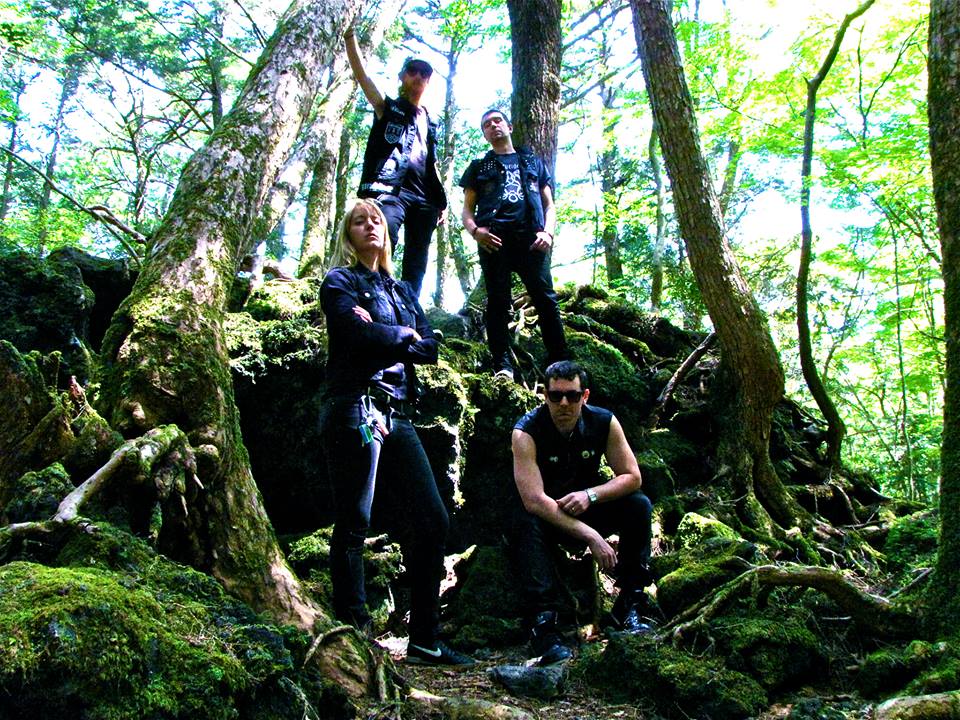
Thrall's Aokigahara Jukai was a very important album to me, if you couldn't tell from my recent review. I felt so privileged to have the opportunity to ask the band some questions in order to probe deeper into their thoughts behind the myriad of topics explored on the album. This is what Thrall had to say on a number of subjects including their interests in Japanese culture, nature, different philosophical perspectives, and how it all fuels the music they write.
(((o))): I know that parts of Vermin to the Earth were recorded in Japan, whose culture so inspired your work on Aokigahara Jukai; is this where your interest in the country began? Or has there been a curiosity or passion for Japanese culture for a while?
Tom: The drums on Vermin to the Earth were recorded at LM Studio in Osaka with Ippei Suda. Our mate Chew Hasegawa from Corrupted hooked this up for us as Corrupted have long-term ties with Suda, as an engineer and later as a member. Everything else on Vermin to the Earth was recorded by Trent Griggs at his home studio ‘The Gate’ in Tasmania. He put a lot of work into the mixing and tone. His vocal production is particularly outstanding. He also played a couple of guitar parts and did backing vocals along with Em. On Aokigahara Jukai we decided to try and capture something much closer to the live line-up. Neil Thomason recorded the album and a split in about four days. We did everything as live as possible, only vocals and a few leads went down after the fact. Neil is particularly adept at capturing a great drum sound and this was one of the reasons we wanted to work with him. I think we ended up with something unique.
I’ve been interested in Japan for a long time. My fascination with Japan probably started in childhood watching Mighty Atom (Astro Boy) and Robotech. I can remember seeing Akira at The State Cinema when I was about 12 and it blew my mind! I still love that film. I used to watch world cinema late at night on SBS. My favourite Japanese directors were Akira Kurosawa, Takeshi Miike and Shin'ya Tsukamoto. Later I studied film at University, though I never went into making films as I had hoped. I wrote musical scores for a couple of films and performances, half of which weren’t made and my scores went to waste! I was also becoming very interested in Butoh (舞踏, Butō) in the late 90s. Butoh is basically a form of expressionist performance/dance/ritual birthed from reaction to the A-Bomb. One of its defining features is that it defies classification. Whereas Western ballet is oriented toward the sky with all of its leaping and upward energy, Butohis earth-oriented and focused on the space between the body and the spirit. This theme interests me in relation to catharsis and transcendence in black metal. The style of the Yūrei (dim spirit / vengeful ghost) in the film The Grudge (Ju-On) was derived from a combination of traditional ghost style and movement ‘classic’ Butoh style movements. In the late 90s I wrote a score for a Butoh-inspired performance. I reused sections of this score on 'To Velvet Darkness' on Away From the Haunts of Men, though I added acoustic guitar on top. I would love to collaborate with a legitimate Butoh troupe.
Em: I studied Japanese history and language a bit when I was in high school, and I enjoyed Japanese film and art, but if you’d asked me where I wanted to visit most in the world, I would have probably said Europe. I grew up in rural Tasmania in the pre-internet age and so the things I was exposed to were limited to what was on the bookshelf at home, at the public library, or recommended to me by friends. Friends were very important in this cultural underground, and we used to make each other mix tapes and pass on videocassettes. There was this amazing cult movie show on public television hosted by a guy called Dez Mangan and that exposed me to a lot of my formative impressions of Japan, including Wild Zero (The Guitar Wolf movie), Tampopo, and Kurosawa. Through my friends I found out about Zeni Geva, manga, The Boredoms, Shonen Knife, Japanese martial arts… But really, I didn’t know anything about Japan. My impressions were based on peeking through a crack in a curtain at a reflection based on a third-hand recollection of a real thing; so far from what Japan is really like as to almost be irrelevant. It’s so different for people these days: you can just jump on a computer and look up anything that takes your fancy and become an armchair expert in ten clicks of the mouse. It also encourages people to be satisfied with the experience of a place or a thing through a screen rather than seeking a personal connection with a place or a story. Humans are disappearing up our own arses, we are fucking hilarious creatures…
Back in the 90s, back in Tassie, my exposure to other cultures was even further mediated by who I knew or what was being covered in the music magazines, and even then, it was hard to get music magazines at my local news agency. I read a lot of Rolling Stone. It was the grunge years, so most of the coverage was heavily focused on the USA alternative rock scene. My knowledge of what was out there in the world was quite narrow. I think that’s part of why I’m so keen to travel.
It was 2003, I’d just finished University and I moved to Melbourne from Tassie. I was unemployed and finding it hard to get work; I saw an ad that said Teach English in Japan! in the newspaper and just said “fuck it, can’t be any worse than rotting away here in this dark shithole house with no money.” I don’t know what I was expecting when I went over there. I’d never even travelled outside Australia for a holiday. Air travel was so expensive when I was growing up, it was only well-off families who went on holidays overseas – and when you live in Tasmania, everywhere is overseas. The first three months in Japan were really hard. I lived in Nagoya and worked for a fucked up company called NOVA. My Japanese was bollocks. I had no friends. I just hung out with other ex-pat English teachers and drank heavily. It took me a long time to become more adventurous. But in the last six months of my first year there I started learning how to travel in Japan, learned to speak basic Japanese, and started to really thrive as a truly independent person. I can’t stress this enough, but if you’ve never travelled alone, lived in a country as different as Japan without your safety net, you’ll always have been supported by something else. Even the familiarity of your surroundings will reassure you in your home environment. Japan… hell, Asia in general… is so different. Nothing is as you expect. You have to rely on your wits and figure it out. And so, going back to your question, part of my passion for Japan is symbolic, as Japan is the place where I went from being a cloistered child to being an adult. While I was over there I had my first experience of being able to get regular, unfettered access to a stable internet connection and as a compulsive boffin, I researched my new country heavily. I found out about traditional arts, ukio-e, local Japanese bands and record stores; I visited temples and castles and went for long bike-rides through the local area, just soaking it in. I came back to Australia in 2005 and I yearned to go back to Japan, until Tom and I went together in 2008 for two years in Osaka.
Osaka is my home in Japan. Nagoya was always a bit ‘meh’ – I mean, don’t get me wrong, it’s a great place, I’ve got great friends there and I love Nagoya’s food. But people there aren’t as welcoming and effusive as the Osakans. In Osaka, buoyed by having Tom by my side, we got really involved in the local punk scene – Osakan d-beat is world class – got to see Corrupted and pester Chew Hasegawa until he became my friend. In Osaka I feel like I grew into Thrall and made the switch from live bassist to writing the drums. It was an amazing time. We travelled from the far north of Japan to the west, and a lot of places in between. I’m always sad that I didn’t spend more time in the Tohoku region before the tsunami – the tsunami and the Fukushima Daiichi disaster have cast a long shadow over that whole region. When we went back with the full band in 2013 to visit Aokigahara Jukai and tour, it was so awesome to travel with everyone. Ramez and Tom both have their own relationship with Japan and we got to share a lot of our experience. Ramez lived in Tokyo for two years around the time I was in Nagoya, and Tom had lived in Osaka with me. It was really easy for us to get around because we all have different strengths in communication, logistics and planning in a Japanese context. We got to take turns in being the tour guide for the group. The hardest part was catching the bullet train with all our guitars and gear – trying not to hit people in the head when we were moving down the aisles – but aside from that, it was brilliant fun. So, yes… To return to your question, I have a long-standing relationship with Japan. It is an amazing place, with so many layers, I would encourage anyone who hasn’t been there to make sure to visit Japan at least once in your life.
(((o))): Thrall’s first album, Away From the Haunts of Men, was almost solely the work of Tom. Now you’re a full four-piece band. Did this evolve from performing live or was there simply a desire to bounce ideas off of other people? What is rewarding about creating as a unit as opposed to doing so as a solo performer?
Tom: I wrote Away From the Haunts of Men with the exception of one excellent riff that was written by Trent Griggs. Trent recorded, mixed and produced the album at his home studio ‘The Gate’ in Tasmania. Prior to recording Away From the Haunts of Men our mate Alex invited us to play a couple of live shows with Ruins and Psycroptic and I enlisted Em on bass for these performances. Coincidentally, one of these performances was with ABC Weapons (the band that Ramez was playing in at the time). Away From the Haunts of Men is more akin to Leviathan’s Verräter than a cohesive album.
After our 2013 Japanese tour Leigh Ritson and Thrall parted ways. Leigh has always been based in Tasmania, whereas the rest of the members live in Melbourne, and the distance was just too much in the end. He has several musical projects on the boil and we’re still good friends. Okkvinkalfa stepped into the bass position in Thrall and things are going very well indeed. I recommend that any Thrall listeners check out her other band Hordes of the Black Cross and also Ramez’s other current band Extinct Exist.
Em: My involvement in the band grew kind of organically. First, I just played live bass and hit the “go” button on the drum machine because we had a gig and Tom needed someone to accompany him live. I was living with Tom at the time, we’d played in bands before together – going back to 1997 – so it was an easy fit to enlist me. After that, Tom recorded the first album by himself. Tom was writing a lot in the studio and so it made more sense with the limited time that he had for him to track the bass rather than get me in to figure out the songs. When we were in Japan, we didn’t have the drum machine available to us, so we decided that it would make more sense for me to play drums and find a new live bass player. When it came time to record Vermin to the Earth, again, it made more sense for me to play the drums on the album than it did for Tom to learn to play them, so that’s kind of how we went from being a solo project with live musicians to being a duo. My increasing involvement has been a series of pragmatic decisions over the years. When we got back to Australia, we had Leigh and Ramez playing for us live and we decided that it worked better for us to be a cohesive band than just having live musicians. It’s been a long, organic process, but now we’re at the stage where the band works really well for developing and vetting ideas.
Tom and I discussed an analogy for the benefits of cross-pollination of ideas over the years. It’s a concept that is echoed in Ghost in the Shell and in nature more broadly: over specialisation breeds in weakness. It’s through hybridisation and genetic diversity that an organism will build adaptability, and I think this is as true for an idea as it is for an organism. By having the other members contribute to the songs, the songs can only benefit.
(((o))): To specify concerning Japanese culture, can you speak a bit on what the concept behind this album is? Many people are totally unaware of the stories behind Aokigahara Jukai and how it relates to certain Japanese cultural beliefs and especially taboos surrounding the dead and the spiritual world. How did you come to find out about Aokigahara Jukai and what about it drove you to base an entire album around it?
Tom: We were intrigued by the taboo or stigma surrounding Aokigahara Jukai. The overwhelming reluctance of our Japanese friends to talk about Aokigahara Jukai or shed any light upon the subject only spurred our intrigue. We were repeatedly urged not to go there. After several failed attempts we eventually went there during our 2013 Japan tour. It was one of the most eerily beautiful and still places that I have ever been. The silence of the Jukai is the antithesis of overt noise pollution prevalent in Japanese cities. The disjuncture between the actual physical place and the cultural/mythical construct is really interesting. The only time I ever saw a snake in Japan was as we entered the Jukai. It was a beautiful Japanese Grass Snake (Yamakagashi). I took a photo of it and we watched each other for a while. It didn’t seem very imposing compared to a Tasmanian Copperhead or Tiger Snake. My artwork is filled with snakes so this was a very special moment for me.
Each song on the album is meant to be a distinct story or concept. Aokigahara Jukai the place and/or the cultural construct is the unifying theme. There is a lot in the album about universal themes such as transcendence, despair, death, fecundity through decay, nationalism, social conformity, indoctrination, anti-theism. There is a lot of specific content too. I also tried to use the trees of the Jukai as protagonists with their own agenda, feeding on the dead.
Em: We came to hear about Aokigahara Jukai in the last year we lived in Japan. Our friends Kerry and Dave came over and stayed with us in Osaka and they told us about Aokigahara Jukai. Hilarious that it was our friends from Australia that told us about this totally Japanese thing. After Kerry described it, I started asking other people about it. It was like all our Japanese friends knew about it, but no one had ever talked about it. When we asked people, everyone said “don’t go there.” They told us stories about how you cannot use a compass there. They said “you will get lost and die.” “Evil spirits live there.” “It is an evil place.” To which, of course, I thought “bullshit. I’m going.” The day before we were due to get on the train to go there in 2010, the master of Away from the Haunts of Men went missing in the mail and we had to cancel going to Aokigahara so we could try and get a back up master from Australia to the plant. I don’t know if we would have had a good time if we’d gone then anyway. It was then end of a damp winter, and we probably would have frozen our arses off. When we finally went there with the whole band in late-Spring 2013, it was amazing. It was such a lovely tranquil place – undulating mossy undergrowth, dappled sunlight through maples and cedars, a warm breeze through the trees – it was intensely beautiful. Then again, I didn’t follow any of the ropes that trail off through the undergrowth to look at the dead bodies. That shit’s just grim: leave those poor dead bastards alone.
(((o))): While the topic of suicide is covered heavily on this album, it ends up not being the sole focus. The track 'Ubasute' for example is named for the Japanese cultural tradition that was once practiced somewhat commonly in which the younger generation will bring their parents to a secluded area so they can die alone. How does this speak to you philosophically and especially in how it relates to Japan’s views on death as a whole (not to mention your own views on death)?
Tom: I write a lot about death as it is the most universal and inevitable aspect of life. In my opinion religion is a mental disorder that shelters the human psyche from this inevitability. Religion allows humans to disengage from this world/life and perpetrate horrific acts upon other humans. 'Ecstasy not of the Flesh' and 'Slaves' explore such themes.
Aoikagahara Jukai is not entirely focused on suicide or death, though it is one of the major themes. What interested me most is the threshold between Aokigahara Jukai the physical place and the cultural/mythical construct. The disjuncture between the human-abstraction imposed on the physical location. The band members have all been affected by suicides of those close to us. We’re not trying to romanticise, glorify or advocate suicide. Having said that, ignoring it solves nothing.
Em: The Ubasute ritual is very taboo these days and many modern Japanese would either deny that it was ever practiced or would attribute it to the Ainu. I have no idea what really happened back in the pre-Edo times, because there’s a lack of evidence either way and I don’t dabble in historical conjecture. However, there was a poem that was written in pre-Edo period that speaks from the viewpoint of the old lady being carried by her son up some remote mountain to die. The old lady breaks white twigs to make a trail for her son to follow home, like some kind of Hansel and Gretel thing. I found this poem intriguing.
There is a certain acceptance of death as an inevitable conclusion to life in Japanese culture, it flows through Shinto and the indigenous animist traditions, it was imported from China in the form of Buddhism. In the West, we try to make individuals live forever – sometimes at the expense of those who are left behind. We throw good medicine after bad at bodies that are experiencing systemic collapse. The resources that we expend on people who are obviously and inevitably going to die are immense – particularly in the US health system, people inherit incredible bills for treatments for obviously terminal illnesses that ultimately serves no purpose but to prolong people’s suffering. We ruin lives to extend one life. As a culture we are programmed to prolong life at all costs when the life is human, and yet we will put a dog out of its misery as soon as it becomes apparent that it is no longer able to enjoy its life. I’m not saying that I endorse euthanising people, but I think it’s important for us to examine our preconceptions around what is important about life. Illness and death are very real experiences that touch all people’s lives at some point, and I find those kinds of themes far more powerful to explore than fantasies about deity or mythology. I’m really not interested in writing songs about dragons and made up shit.
(((o))): As a sort of side note, I couldn’t help but think of the film The Ballad of Narayama when reading the lyrics to 'Ubasute'. It’s the only film I can think of about the subject, and I was struck by how unsentimental its approach is in really exploring some blunt realities concerning this practice and other elements of life and death. Your album seems to mirror many of its themes. Is this a reference point for you at all or am I grasping at straws? (As a side note within a side note, I highly recommend this film to anyone who hasn’t seen it yet!)
Tom: Yes I have a copy of The Ballad of Narayama. It’s a very evocative film, very immersed in the seasons and cycles of nature. In this way it seems to tie in with the elements of animism in Shinto. We encountered it during our preproduction research. It’s definitely not clutching at straws, it’s a relevant reference. I would have sampled the film, but we’re not ‘that kind of band’. I hate being absorbed in the atmosphere of an album and then having the experience ruined by an obvious sample from a movie. I would find lazy and clichéd in the context of what we're trying to do. I would like to say that several reviewers have mistaken the Bell Crickets (Suzumushi, 鈴虫, Homoeogryllus japonicus) at the end of 'Aokigahara Jukai' to be electronically generated. They are actually Bell Crickets that we recorded on location in Japan, as were the cicadas on the end of 'Ubasute'.
Em: Are they cicadas? I have no idea what those spooky bugs were that made that weird noise. We were visiting Koya-san, the equivalent of Mount Wudan for Japanese Buddhism, and we stayed in a Buddhist temple overnight. At sunset we started to hear those noises in the forest and we got out a mini-disc recorder and went following the noises up the hill. They appeared to be most intense in a cedar thicket – but we never saw what the creature that was responsible for the noise actually looked like.
Insects are fucking amazing and so different to humans. I can kind of see how someone might mistake the sound of a cricket for a machine – they are so fundamentally different to mammals, both physically and in the way that they organise their societies in bee and ant populations. But yes, oh-cunning-reviewer who thought those noises were electronic: no, they are 100 per cent natural.
Anyway, Koya-san is another amazing place of natural and man-made beauty in Japan. One of the largest and most prestigious graveyards in Japan is situated around the tomb of Kobo Daishi, the monk who imported Buddhism from China to Japan. Koya-san is all misty mountaintops dotted with samurai families’ grave monuments and enormous temples. There’s a monument to miscarried and aborted babies there that has a water throwing ritual attached to it. It’s a seriously evocative place.
There are also some ‘company graves,’ an interesting artefact of the corporate family mentality that Japan was famous for during the post-War and ‘Tiger Economy’ years. As a company employee, you can select to be buried alongside your company colleagues at the Hitachi grave, or the Sanyo grave, or similar. Personally I couldn’t think of anything more heinous than to spend eternity at work, but then again, I’m a gaijin: I don’t think I’m expected to get it.
(((o))): The lyrics in this album take on many voices. From the opening track, which seems to be from the point of view of someone who wishes to commit suicide, to the album closer which ends on a much more self-empowering note. Are these voices all yours? Do any of them speak more closely to your actual voice, beliefs, and emotions than others? I believe that art is most effective when it explores an issue from several, often conflicting, perspectives. In this way, the "truth" seems to be somewhere in between what is actually said. Is this important to you? To explore these themes without perhaps saying any one concrete statement on them?
Tom: In short, yes! I want to explore themes and conflicting perspectives and prompt others to do so for themselves. I’m fine with others having entirely different interpretations of what my lyrics are about regardless of my intended meaning/message. There are many voices and perspectives on the album. I have tried to inhabit and understand them all in the process of writing the lyrics. I am always attempting to ask others to question and make their own conclusions. I have no interest in proselytising or converting others to my mindset, only to encourage others to free themselves from indoctrination and imposed belief systems. It sounds pretentious, I know, but that’s the truth.
Em: We wanted to make something that would serve as a document of our interest in the topic and our interest is multifaceted. Aokigahara speaks to the relationship between humans and nature, as well as the stories of death related to the ubasute/euthanasia ritual and the suicides that the area is notorious for. As Tom mentioned earlier, we’ve had people close to us commit suicide. We wouldn’t want to approach the idea of suicide in a way that wouldn’t speak to our experience of the topic, which is raw and real, not abstract or imagined.
The realities of creative endeavour are that once you have completed your work, people will bring their interpretation to your work and you can never control what other people will think of your work. Their reaction to your output will be framed by the things that they have experienced in their lives and people will compare things to what they know to attempt to understand it. That’s why a listener with broad tastes will pick up on a bit of that genre-mashing that we sometimes do, and someone with a less developed understanding of music might just think it sounds like Metallica because that’s the heaviest thing they’ve ever heard. They might invest heavily in your artwork and develop a sophisticated interpretation of what you’ve made or they might listen to half of the first track and then throw it out the window of a moving car. You can never account for the audience reaction.
I think with an inspiration as wide as Aokigahara, I think it was necessary to take a multitude of perspectives. The suicidal have a voice in 'The Pact' and 'Longing for Death', the forest itself speaks in the title track, Tom inhabits his own voice in 'Slaves', 'Of Hate' and 'Its Toothless Maw', and I take the role of the old lady being carried to her death. A lot of people sing endlessly about satan, satan, satan… For fuck’s sake, you may as well sing about the boogy man or the abominable snowman or the Easter bunny or whatever. The struggles that we face in the real world are so much more interesting than the struggles of imaginary beings. So, anyway, we make the music that we want to hear ourselves, we write the words that interest us… And that’s pretty much it. What people take away from what we make is beyond our control and I wouldn’t have it any other way because that’s where the interesting tension between intent and effect exists.
(((o))): I wrote in my review of your Aokigahara Jukai that I believe it is important because it is, ultimately, a very life-affirming album. True, there are moments of vitriol and even hatred toward mankind and toward the self, but I believe these are overcome in a way by first acknowledging the sadness of the subject matter and then transcending it through art. This is in stark contrast to the lyrics in Vermin to the Earth which have a much more overtly misanthropic tone. I know on that album too, though, you’ve spoken in previous interviews of the positive power in viewing the world and humanity in a more truthful way. Would it be safe to say that in an unorthodox way your band is very much commenting on life and how to live it with a more positive (or maybe just honest) way of thinking? Or is this a gross misinterpretation of where you’re coming from
Tom: Through all the voices I use in my lyrics I am merely wrestling with existence. In order to do so one needs to try to overcome the blinkered view of religious and moral dogma and indoctrination. I was trying to talk about this in 'Slaves'. “The system of your beliefs, shelters your psyche, limits your consciousness”. Thrall is a conduit for my madness. I find a cathartic release in Haha. I don’t claim to have the answers, and by saying that that I am honest: Be suspicious of anyone who claims to have answers.
Em: People who claim to have “the answers” are invariably full of shit. They’re either deluded megalomaniacs or they are relying on someone else’s answers being correct – why should you copy your homework from someone else? How do you know that the person you’re copying from knows more than you do? You don’t – and you can’t. You’re better off figuring it out yourself. I pity people who blindly trust a book written 1500-odd years ago for their answers for twenty first century living. The only answer I believe is the one that says “keep questioning.” There’s always more to know out there. And yes, I think this is actually a more honest way of living.
We have spoken previously about the importance of not blocking out the truth. Any reasonable adult can agree that humans have had an impact on this planet. Any reasonable adult can agree that humans have created and released poisons into the air, waterways and dirt. And from that standpoint, isn’t the obvious next part of the conversation is “well, what the fuck are we going to do about it?” But that’s where we can never get any consensus. You start with a simple premise, such as “do you want to drink poison?” You progress to “do you think it is OK for other people to poison people?” You extrapolate “is it OK to poison people if it’s going to make you a lot of money?” But you hit the wall when you start to say “what if the poison takes 100 years to work, and you’re poisoning people who aren’t even born yet?” We can’t agree to the point where people start going back and disputing that there’s any problem at all: “It’s not poison.” “It’s not that poisonous.” “You’re being over-emotional.” “In the future, science will fix all the problems that we are causing now.” And that’s when the truth has left the room. There are already dioxins in every ocean, there are detectable levels of dioxin in the breast milk of every woman in the world, there is radiation seeping into the water table, there are 1000s of 44-gallon drums of radioactive waste in every ocean just rusting away… And yet the chairman of the board will still turn a blind eye to all of this in the name of protecting shareholder profit. It comes from this basic, stupid weakness in our social intelligence. We can’t trust each other and we can’t be bothered. We keep ripping the minerals out of our ground and burning fossil fuels because if we don’t do it, someone else will. And we don’t do anything about deforestation or corporate criminals dumping chemicals all over the place, because someone else will. And if we change the way we do business, we’ll have to find a new way to do business. And the truth, at the end of the day, it’s all too fucking difficult.
So, no, I don’t think this album is life affirming. I’m still as misanthropic as fuck and I think it is important for people to remember that 'Slaves' is a bonus track. On the vinyl, the album ends on 'Ghost Chrysalides'. It does not affirm life. It smothers it. It ends on the emptiness of a lone guitar ringing out into the nothing.
Tom: 'Slaves' was intended to be on our fourth album. It may still be reworked/rerecorded. We already have several songs for Thrall IV largely written.
(((o))): Musically, it’s often spoken about that Thrall is particularly adept at blending different styles of music. Is this a conscious effort on your part? Or is this simply the sum of a broad range of influences? I almost feel bad asking this question because it seems sad that it’s somehow surprising to some people when a band listens to several styles of music. Nevertheless, I would be interested in knowing if there is a core philosophy to the band’s sound or if it’s simply the result of a natural progression.
Tom: This is difficult to answer. I suppose that it’s a natural progression and the sum of a broad range of influences. It is also deliberate. We prefer to have an expansive (rather than reductive) musical aesthetic. If it works for the song we’ll do it. All of the current members (Em, Ramez and Okkvinkalfa) have played a broad range of styles of music over the years. Playing live has significantly changed what I write from a studio-focused style to a live focused style. Thrall is a collaborative project but I am still the primary writer.
Em: This is an interesting question for me, as I see myself as a bass player who is playing drums. Because it’s not my primary instrument I have to use what I’m able to do in a creative way to get the effect that I want and this probably results in me shifting a few feels from less obvious sources of inspiration into the Thrall sound. So yeah, I do what I do because I can and it’s what I like and it’s what’s natural to me.
(((o))): I know Tom has been responsible for all of Thrall’s album art, and I have to say that the album cover for Vermin to the Earth was the first thing that made me really open my eyes and want to know who your band was. The artwork for Aokigahara Jukai is especially poignant and evokes the sound of the album so well. What is your background in art? Is your passion for visual art equal to your passion for music? It’s clear there is a connection between the two, but is there one creative endeavour that ever takes precedence over the other? I ask a similar question as this one to a lot of bands, but do you feel like the album would be incomplete without the visual component?
Tom: My visual and musical output is inseparably intertwined. I started drawing earlier than playing music. With Thrall I decided to consolidate both fields of endeavour into the one project much more tightly than previously. I stopped doing exhibitions and concentrated all of my visual output to Thrall and commissions for other bands (Ruins, Regnum, Nekros Manteia, Dead River Runs Dry). I tend to operate in cycles. One medium takes precedence over the other in terms of productivity, then I switch, but neither is more important. It seemed like a good way to retain as much control as possible and reduce costs by keeping as much in house as possible and I wanted to create a distinct visual identity for the project.
(((o))): Finally, what’s the best way we can support Thrall in the next year or two? Are there some exciting shows coming up? What’s the best way for people to get their hands on Aokigahara Jukai?
Tom: Well our next show is Friday 21 March at the Melbourne Hi-Fi supporting Absu on their 2014 Australian tour. Portal and Denouncement Pyre are playing all of the dates on the tour as well. After that we’ll be planning some interstate shows to promo Aokigahara Jukai. You can get all of our releases and merch direct from us on our Bandcamp our LP from Eisenwald or our CDs from Moribund Records.
Em: You can buy our albums directly from us through the Bandcamp site – but once we’ve sold out, it’s great if people can support our labels by buying legitimately through them because the labels support us. If people don’t buy from the small to medium-sized labels, the labels disappear, and the support they provide bands disappears too.
I would also like to encourage people to buy the remaining copies of the original pressing of Away from the Haunts of Men from Håken at Total Holocaust Records. I have a personal debt to him: he was the first to believe in us and he made the ultimate version of the album artwork and then we ran off with Moribund – what a bunch of bastards we are! But the Total Holocaust limited edition version with the silver foil packaging is one of the most magnificent things I’ve ever set my eyes on. There’s only 500 copies of it in existence I can’t believe that they haven’t sold out yet. Send well‑hidden cash money to Håken in an envelope and feel massively old school, and support his continued journey unearthing the best underground bands out there.
(((o))): Thank you very much for this in depth interview. I can't wait to see what the future holds for you, and I wish you all great success!
Tom: Thanks Luke! It’s been refreshing for us to have a reviewer engage with the album intellectually.
December 10th 2010. I was sat in an Italian restaurant on Lincoln’s Brayford Wharf. It was snowing heavily outside. My phone rings, it’s my girlfriend. She’s calling to break up with me. Well, kinda. She gets half way through and passes the phone to her friend to finish the job. Harsh, right? For the first time in I don’t know how many years I’d been reduced to a blubbering wreck. I called a few friends and my family. One of them offers to travel an hour on the train to make sure I’m OK. The other, who hates the snow, hops in his car and comes to find me. He told me months later that in 20 years of knowing me he had never seen me in such a mess.
I should point out that this wasn’t my first split, but this was easily the worst. The only way I felt I could deal with this was to write. I’d just started a new band, Akarusa Yami, and it seemed like the best way of working through it. I didn’t want to write a series of miserable love songs, so instead I scripted a few tracks about an individual’s life breaking down, them systematically figuring out how to work through it and come out the other side a better, happier person. The record became the band’s first EP “Ouroboros” and it opened more doors than we could’ve dreamed of. We played Bloodstock & got reviewed and interviewed by national magazines & radio stations across the UK, US and Europe. It put the band on the map of sorts, and we’ve gone from strength to strength since.
But while we were going through our strengths, I was slowly going mad; becoming more withdrawn and depressed. I was seeing a sea of doctors regarding a testicular cancer scare that was later discovered to be a blood clot. Had it not been removed I’d not have been able to have kids. I watched helplessly as members of my family flew in and out of hospital for their own various emergencies, and saw my best friend fly thousands of miles away to start a new life. All the while trying to keep my PR company afloat and dealing with my already terrible break up.
It took the better part of two years to thoroughly put everything behind me, but the thing I remember the most about it was the sense of isolation and being stuck. I don’t know now if it was a physical thing because of the clot (I was banned from the gym or any massively physical activities until after surgery), an emotional thing or maybe a combination of the two. Either way, I did become very depressed and distant. A lot of people close to me were celebrating anniversaries, getting engaged, having kids and I was staring at Christmas in bed with seven staples in my hip.
While I’ll never begrudge anyone being happy, being surrounded by that joy made me worse. A result of the depression I’m sure, but it made the idea of being content and happy again seem like something that just wasn’t meant for me. So I threw myself into music and work, it seemed like the only logical thing to do. I travelled as much as possible and met a lot of people, but I only really felt comfortable if I was by myself working or heading off to the next event.
Everyone at some point will endure something that will rip their guts out, and I’d hate to think what kind of mess I’d have been if I didn’t have music to turn to. If I’m proud of anything during this period, it’s that I turned my misery into something positive. Not everyone is that lucky, and I thank God for that much at least.

Five Albums from My Teens That Knocked Me Out When I First Heard Them... and Still Do!
There are only five here. I could have picked fifty. I first heard these at various points in my teens, a predictably exciting and simultaneously boring period which spanned 1983 to 1990. Some of them were already a bit old at the time, not that it matters. The one real fear I have about dying, well the one that seems to eclipse all the other fears, is that I won’t be able to hear them again. I better play them now, and drink some real ale, and toast my good fortune that I AM ALIVE. Here we go then…
~ Adam Stone, Head of Crom Records
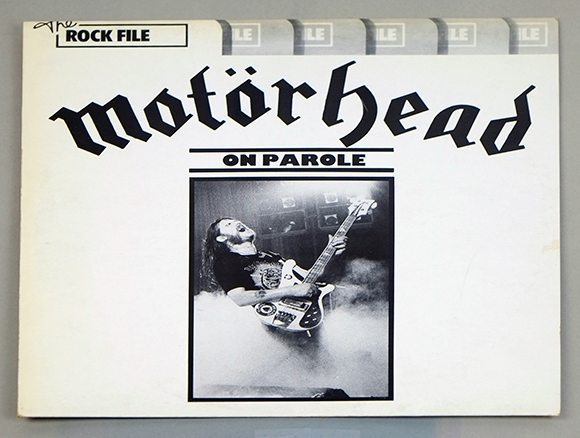
Motorhead - On Parole (1979)
The first thing Lemmy recorded after he got booted out of Hawkwind for taking the wrong drugs. Absolutely my favourite Motorhead album, and quite unlike the sound they developed afterwards, this is lazily relaxed and stylish quasi-pub-rock that contains a few headbanging punked-up mid-seventies urban-menace numbers like 'Vibrator' and 'City Kids', plus the Lemmy-penned Hawkwind classics 'Motorhead', 'Lost Johnny' and 'The Watcher' that are recorded for the first time without Brock's cosmic entourage, and coming over leaner and meaner as a result. Instead of sounding like swirling space-rock or the evil metal-juggernaut that was to come, 'On Parole' is the authentically gritty, libidinous, oily and licentious swagger of the alienated biker-cum-hippy-cum-fifties rocker that Lemmy essentially is. Part Pink Fairies (their guitarist Larry Wallis features here) and part typical Motorhead, this album abounds with Lemmy's new found energy after hanging out with sluggish hippies for the entire early to mid-seventies. The rousing 'Iron Horse - Born To Lose' is the highlight of this incredible long player, a sprawling, nihilistic/hedonistic and bluesy paean to the biker lifestyle that lopes along like a big stoned wolf, borne aloft by the fabulous rhythm section's fluid and muscular dexterity. On Parole was recorded in 1975 and wasn't released until years later because Motorhead's big money record label didn't think it would sell. Twats. It's one of the finest British rock classics in existence.

The Circle Jerks - Group Sex (1980)
Hardcore doesn't get any catchier or more vitally rapid than this landmark blast of fourteen songs in fifteen minutes. It doesn't feel superficial or breakneck or snotty for the sake of it like many HC albums do, it just feels like one of the best rock albums you've ever heard, simply speeded up and fired out the shit-spangled American anus of acute urban alienation like an atomic hell-fart that has been incubating for a millennia. Like so many albums that come out at the start of a new decade (it was released in 1980), Group Sex straddles a seismic ideological shift, marking the passing of Jimmy Carter's socially liberal US of the seventies and the ushering in of the dark and hostile Reagan-ite neo-con paranoia of the eighties. Caught between both worlds, this breath-taking nihilist nugget of stinking fury literally takes you by the throat and slams you around the room with truly vicious joy. Think skateboards and all-ages shows, think 'Repo Man', think plaid shirts tied round your waist and bratty US teens hanging out on hot LA streets. This is the terrier's testicles when it comes to seminal hardcore, and one of the soundtrack moments to my eighties construction of myself as a kerb-grinding, spliff-sucking sixteen year old slacker growing up in a dull Derbyshire town.
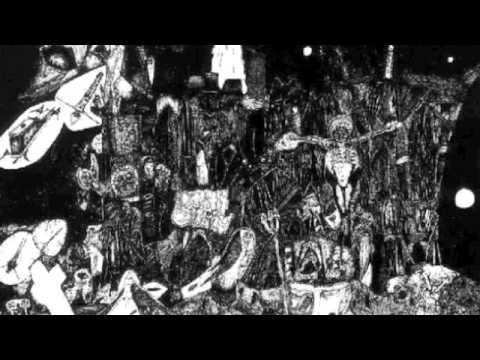
Rudimentary Peni - Dead Church (1983)
The ultimate in dark, twisted and Lovecraftian anarcho-punk, and the soundtrack to days spent in my bedroom post-fifteen years of age, staring into the mirror at my face, having no money, hating capitalism and always wanting to be somewhere else. The antithesis of a summery feelgood vibe, Death Church was Peni's debut album and re-wrote the rule-book when it came to pissed-off punk. Every riff is deliciously haunted and preposterously heavy. Nick Blinko's hyper-anguished angst-wails and psychotic barks punctuate the furiously driven power of simple guitar, bass and drums like an acid-stuffed super-chimp gibbering atop a kamikaze hate-tank. As hideously psychedelic as it is punk, this fabled long player still leaves me reeling with disorientation like a hollow come-down from a handful of psilocybin mushrooms. Depressing, fuzzy, shot through with skewed lyrical genius, very heavy and bloated with righteous anger at the WHOLE of society. Death Church is like a neurotic Crass gene-fused with early Sabbath, and then a ton of weirdness on top of that, and the intricate art-work reveals the warped mind of a man obsessed. Indispensable.
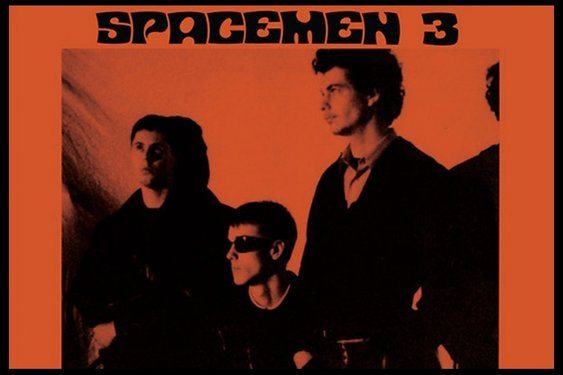
Spacemen 3 - Sound of Confusion (1986)
A veritable roller-coaster ride of evil fuzzed-out chords and thumping back beats, with sweet melodies thrown in for heavenly measure: Spacemen 3's 1986 debut screams 'DRUGS', or rather mumbles it, because it's too fucked to do anything else. This is as close as Sonic Boom and Jason Pierce ever got to psychedelic perfection, and rightfully sowed their reputation thereafter. One of the soundtracks to my youth in the late eighties, this profoundly lysergic long player is a glorious and unashamed tribute to being out your head, and appears to be specifically designed to be appreciated whilst tripping your balls off, sweating under a bare light bulb, chain smoking and gurning through the night with your bug-eyed mates. The huge and relentless layers of all-encompassing guitar acts like a smothering sonic blanket that wraps around your consciousness and insulates you from all the bad stuff out there, leaving you with just the bad stuff inside. Three rollicking cover versions (13th Floor Elevators, Stooges and obscure British blues rockers Juicy Lucy) stretched out and hammered to death by a tsunami wall of disorientating distortion, plus four strapping originals, including the momentous album opener 'Losing Touch With My Mind', which is basically the Velvet Underground on acid and steroids (and smack), make up the magic forty minutes of this classic landmark in British psychedelia. Just for old times sake, eat thirty to forty magic mushrooms mixed into a chicken and mushroom pot noodle, sit there for about 20 minutes and then put this on. Then it all makes sense.
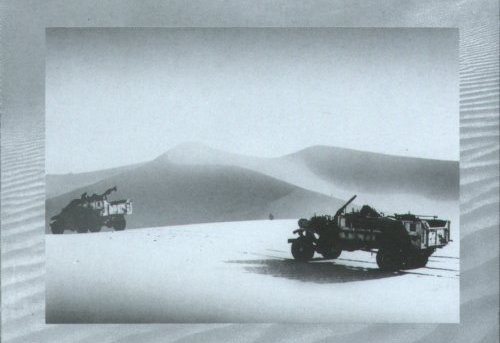
Head of David - Dustbowl (1988)
A VERY clever record in that it gets everything just right, and not by accident. The most scintillatingly perfect marriage of Brummie industrial menace, savage noise-rock violence and zeitgeist post-gothic posturing ever, ‘Dustbowl’ sounded like nothing I'd ever heard before, or I’ve ever heard since. Steve Albini’s trademark visceral production helps to cement the individual bricks of malice into an impenetrable wall of gloom, and it remains to this day a most beautifully crafted display of alternative rock inspiration. The haunting and ominously spidery black riffs of Eric Jurenovski linger long in the consciousness and Stephen R. Burroughs' sullen vocals are parched and desperate and downright delicious. Add Godflesh mainman and all-round musical pivot Justin Broadrick incessantly pummelling the trembling shit out of Stonehenge-sized drums, and a luxuriously thick and gnarled bass sound, and you have, for me, one of the coolest, darkest and most exhilarating albums of the late eighties period. I would pay handsomely (up to thirty quid) just to see Head of David play this album in its entirety.

The Strangeforms line up is pretty much a who's who of bands we've been banging on about here at Echoes And Dust for the last few years, so when it was announced we knew we just had to have a chat with Bad Owl Promotions's Stewart & Kerry to find out more.
(((o))): Can you give us some background on Bad Owl? How long have you been putting on shows etc?
Kerry: It all started in May 2012. Basically, a friend of Stewart's from back home in Ayrshire got in touch as her husband's band, What The Blood Revealed, were looking to play a show in Leeds. We didn't really have many promoter contacts so decided we'd put the gig on ourselves. We enjoyed it so much we decided to continue! Since then we've put on 20 shows. We put on bands we love and we work on a not-for-profit basis, so any money made on the door after the promotion and venue costs are covered goes back to the bands.
(((o))): How have you found life at the coal face of grass roots music promotion, if you’ll excuse the mixed metaphor?
Stewart: It can be stressful at times with regards to knowing you need to try and get enough people interested in your shows to ensure you have enough money to pay the bands (we've had to put our hands in our own pockets on a few occasions but we'd much rather do that than let a band go away empty-handed) but, on the whole, we find it to be a really rewarding experience. There's a lot of joy in introducing a new band to a crowd who, otherwise, might never have heard them. We love being able to hang out with the bands before and after shows too which really only happens at this level of music promotion.
(((o))): With that in mind, what made you want to step up & take on something as large as Strangeforms?
K: The idea came from Stewart, really. A lot of the bands we've put on over the past 18 months have played and toured with each other, and we felt that it would be amazing to have them all in the same place at the same time. It's also a bit of a temporary grand finale for us, as after StrangeForms we're taking some time out of putting on shows for a while, whilst we explore other avenues and adventures.
S: As Kerry says, the idea of having so many amazing bands on the one bill was really exciting to us. Our friends in Himself had asked before if it was something we had ever thought of but, at the time, we felt it was too big a step up for us. It was probably after spending such a fantastic weekend at ArcTanGent and seeing all those incredible bands play together that we thought we'd love to have a go at trying to re-create that kind of buzz up North but, obviously on a much, much smaller scale.
(((o))): Arctangent does seem to have inspired quite a few people! The scene seems to have been slowly coalescing over the last few years but my feeling was that ATG really brought it together & gave people a sense of identity; would you agree with that?
S: Absolutely. There was a real communal feeling at ArcTanGent and you knew you were part of something really special. With most other festivals there's usually one or two bands that you definitely want to see with the others being bands you'll watch out of curiosity or to pass the time whereas, from our experience, many people felt that ArcTanGent seemed curated almost specifically for them.
K: Most other genres have a pretty healthy choice of festivals, weekenders and all-dayers, so it was amazing to have something which catered for the post-rock scene. I'd never seen a line up like it. The atmosphere there was brilliant.
(((o))): How have you found the scale up to Strangeforms? Are you doing things differently to what you'd do with a normal show?
K: It's not too dissimilar to a normal show I guess, just takes a bit more thinking about! The main concerns are things like making sure we stick to schedule and have enough time for change overs etc. Inevitably there'll be the odd hiccup but we've got a pretty ace team of friends who each have a role to play over the course of the weekend so fingers crossed everything should go to plan. We've been amazed at how far some people are coming from (we've sold tickets to people in Italy (our very own Dani ;)) and Germany) so there's a little more added pressure than usual on us to get it right.
S: Yeah, we'll probably feel quadruple the stress we normally do at a show but the fact that we've previously worked with around half the StrangeForms acts will hopefully set as a bit at ease. Although Bad Owl is essentially the two of us we've had so many offers from friends and bands to help us out over the weekend that we're sure everything will go as close to plan as possible.
(((o))): I'm sure we've all played a bit of fantasy festivals in our time. If money was no object, what would your dream StrangeForms lineup be?
S: I'd have most of the usual suspects on there like 65DaysOfStatic, Mogwai, And So I Watch You From Afar, Russian Circles, Adebisi Shank etc. I'd throw some money and nice tasting biscuits at Humanfly and What The Blood Revealed to get them to reform and play then I'd put on all the bands that have ever played for us before, ensuring they were handsomely paid and finally I'd get a 'guilty pleasure' band on that I wouldn't often get the chance to see. Probably Paramore.
K: Gah, the pressure of a name! As well as all the bands we've ever had play for Bad Owl (and all the names Stewart got in there first with), I'd ask Slint, Red Sparowes, Pelican, Maybeshewill, That Fucking Tank and Fugazi, and then I'd get Echelon Effect to play us his lullabies to help us cope with the post-festival comedown. I'd also get This Et Al, Spy vs Spy, Engine Down and Yourcodenameis:Milo to reform and play a special pre-festival show. Just for me.
(((o))): If April is a success, and I think it will be, can we expect to see StrangeForms as a regular addition to the festival calendar?
S: Absolutely - that's definitely the hope.
(((o))): You said earlier you're going to take a break from promoting after StrangeForms to work on other things. Can you share any of your plans with us?
S: Yes, we're really excited to now be working alongside Leeds post-metal act, Envoys. They're such good guys, not to mention extremely talented and we've become good friends with them through having had them grace our gig nights on several occasions over the past 18 months. We'll be lending a helping hand with things like booking gigs and generally promoting them to, hopefully, a wider audience. They genuinely are one of our favourite bands at the moment and we're really looking forward to show them off at StrangeForms - their live performance is a genuine joy to behold. Kerry has given me the go ahead to join them on their European tour at the beginning of April, which should be a lot of fun.
K: Whilst Stewart is sampling European delights with Envoys I'm going into the studio to record a couple of tracks myself. My old band (Laboratory Noise) are taking a bit of a break at the moment, so as well as that I'm going to be singing for a couple of other artists, which I'm really excited about.
(((o))): I think that's about it really. Anything else you want to share with the world before we sign off?
S: We'd just like to say that we've had a lovely time and that we really appreciate the support from all you lovely people at Echoes & Dust. And that if any of your readers would like a ticket for StrangeForms then they can pick them up at www.badowl.bigcartel.com - make us happy!
K: What he said! Thank you for having us x
Thanks guys. A small number of day tickets are now available. Get 'em while they're hot!

By the end of this week Conan will release their much anticipated new album Blood Eagle, their first release on Napalm Records. John Dickie recently reviewed it for Ech(((o)))es and Dust and stated that "Conan are probably the best metal band in the world" and that Blood Eagle is "pure Advanced Dungeons & Dragons Metal". John asked guitarist/singer Jon Davis some questions about the band, the new studio and the new album. Jon also has some useful advice for new bands. Please read on...
(((o))): Hi mate, how is it going?
Jon: Alright John? I’m great thanks, things are going well. Been busy packing up the new Bast album today so have been busy with that, but having a nice Monday!!!
(((o))): That sounds great mate. Can you think of a number between 1-100?
Jon: Yeah, I can.
(((o))): Was it the number 69?
Jon: It was actually, that’s fucking brilliant 🙂 !!!
(((o))): When is Jon getting here?
Jon: Lolz.
(((o))): So, Blood Eagle is quite good, great in fact. How's the band feeling about the reaction to it?
Jon: Thanks. We feel great actually. It’s really cool seeing what people think of the music, but I’m personally more interested in playing live and seeing how people react then. Up to now we have had some really positive reviews, really high scores etc., but heavy metal isn’t about scoring points or pretty reviews - it’s about sweat, head banging, tinnitus and screaming your head off at a show. We’re really keen to get touring again and we can then see how people react to this stuff played live. But the early signs have been great so far, people seem to see the things we thought they would in their reviews and most have mentioned the tempo changes and the slightly more aggressive manner of the tracks so up to now it’s going well.
(((o))): I'm right into the whole tech side of music, even though I have nothing to do with it. Tell us about all the tech you guys use, pedals, guitars, amps etc.
Jon: Well for me I have a German made Travis Bean ‘clone’ it is made by some company that bought the copyright to make these guitars in Germany. It’s not 100% true to the original designs I don’t think but it has been made pretty much in line with the original specs and aside from a wooden neck (instead of aluminium) it is hard to see the difference. I play that into a Matamp GT120 and a Sound City L200, these go into a 6x12 and a 4x15 (both cabs are being made for me as I speak). Guitar pedal wise I use a custom made fuzz pedal called Fuzz Throne - it’s bit like a Muff and a bit like a D*A*M Meathead all in one - it’s prefect for what I need.

(((o))): Talk us through how you create a song like 'Gravity Chasm’.
Jon: I think I was either trying to copy the riff from 'Children of The Grave' (Sabbath) or ‘Call Me’ by Blondie, fucking around in practice one night, and that riff just happened. It’s not a very complicated thing but sometimes is more than a sum of its parts and we think, with this track, that we have the perfect marriage of charging riffs and weighty slow parts, with our own style of vocals screamed over it. The lyrics are kind of a miss mash of various bits and bobs I had lying around. For example ’Shaman’s Disease’ was because I had a virus on our our website and Lee (Edwards - The Sleeping Shaman guy) was fixing it for us, ‘Man Is Myth’ was just a cool idea about our brief stay on planet earth - in a few thousand years when we have tweeted each other to death and evolved into a touch screen human with one round button on our midriff and no other discernible features, we might be remembered as a failed experiment or a bad mistake. Basically it all started with that riff, then Paul added the drum intro and it sounded a bit like .Where Eagles Dare' by Maiden, then the rest of the track pretty much snowballed over the course of a few practice sessions. The ending, where it all slows down quite a bit, rings out in a riff which uses the same notes as the intro to 'Horns For Teeth' (hence partly why they sit back to back on the album).
(((o))): What inspires Conan?
Jon: Well, the music is all about just playing the loudest amps possible and using this medium to deliver riffs that other more technical bands probably throw away all the time as being too simple. We are like the Hovercraft amps of the heavy music world, we take all those bits and bobs that don’t work for other bands so well - songs about giants, hammers, ancient battles etc., and we then mash them all up, give them a clean and make something completely different from them. Our core ingredients are the same as any other band - we don’t use any weird instruments or weird techniques and I guess sometimes less definitely IS more.
If you look away from the music, I can say that I have wanted to do something like this for several years. Even when I was a teenager I knew I wanted to play guitar and sing on stage - I couldn’t even play guitar then, nor had I written my own song. I first started writing songs using an old spanish acoustic, using my finger for a plectrum (I couldn’t work out how to hold a plectrum for a while) and I would make up single note melodies and write songs along side these. This progressed into writing more upbeat songs, I was shown how to form a bar chord by some guy I was buying a leather jacket off in Manchester Arndale shopping centre with my 18th birthday present off my Grandfather (My Grandfather John Fitzsimmons was in the merchant navy and latterly the Dockyards in Liverpool) he used to save up his coppers for me and I remember when I was 18 he gave me what he had saved, it was around £120. I bought a leather jacket with it in Manchester, one of those big stiff ones that were all the rage back then - anyway, the guy in the shop showed me how a bar chord looked (the three string version, not the full chord itself) after this I started learning Nirvana songs and also started writing music that was pretty much Nirvana / Soundgarden style and played win a few bands similar to this. As time went by I decided to start Conan because I had been out of action for a little while and had some time on my hands so I started it with the intention of writing the heaviest, most simple riffs I could and try and copy some of the style of bands like Slomatics, Fudge Tunnel, Sunn etc.
(((o))): Are you guys still loud or are you louder?
Jon: I’d say we’ve been a little louder. My biggest ever back line for a show was four 4x12s and an 8x10 and I doubt this was necessary, however I am currently having some custom made cabs made that will work very nicely with our sound. I'm having a 6x12 and a 4x15 made by these guys at Soundune Audio. The 4x15 will sound fucking amazing, so I’m looking forward to that. Our volume is always going to to be considerable but I think we could always go one better.
(((o))): Tell us about Skyhammer Studio.
Jon: Skyhammer Studio is a recording studio and adjacent 2 bedroom cottage that I own with my wife. The studio itself is run and managed by myself and Chris Fielding with Chris managing the recording of bands and myself managing some of the business related stuff. The studio itself is custom built within the shell of a 19th century coach house at the back of our house, across a small courtyard from our kitchen. As I am sat here in my house, I could walk into the studio within 30 seconds. We had the studio designed and installed professionally, and every aspect of it is aimed at both seriously high level sound isolation (so our neighbours can’t hear the noise going on within the studio) and also an extremely high quality of finish. The inside of the studio is a nice mix of oak flooring, oak doors, grey acoustic fabric and aubergine walls. It’s a nice relaxing place to come and record music. Of course, the main draw is Chris Fielding. Chris, as most people will know, is a highly thought of producer and we have been friends for a few years now. He asked if he could come and work at the studio and of course we said yes, the rest is history. As well as being Conan’s practice space it is a really busy commercial recording studio, with bookings being taken all the time, as we talk we have bookings as far ahead as November this year.
(((o))): How can bands reading this record there?
Jon: The best way is to email us on bookings@skyhammerstudio.com.
(((o))): Do you think the whole doom scene is now a bit over saturated with few bands attempting anything interesting?
Jon: I don’t think there are too many bands, but there are a lot more opportunities for the bands that are active. This would explain why there are so many good shows happening. What I have noticed is this uprising of young fresh bands, injecting youth and vitality and life into this music and then you get bands (that gave up a while ago for whatever reason) reforming to have another bite at it. You therefore have a nice mix of established acts headlining shows that the younger bands provide support for and this has created this snowball effect where bands are being created all over the place because there are so many decent shows coming through, and decent festivals coming up - it’s pretty exciting to be a band right now. Whether or not they are contributing anything new is another thing. I don’t listen to an awful lot of new music for this very reason, if I am being honest, but whether or not some bands are original they are still capable of being very good. Fuck it, we’re all into Black Sabbath anyway pretty much so there will always be some level of similarity - I guess those bands that reach a little further with their sound and their whole vibe will probably get more of the breaks.
(((o))): What's next for Conan?
Jon: Well right now as I type I’ve just had the nod on our upcoming Australia shows. We’re playing about 10 shows across Australia later this year - the dates will be announced soon I’m sure. We have tours coming up in March, April and May and then Hellfest in June. July we have a couple of festivals on the horizon in Europe and I think we’re going to Europe again in October. We’ve got a few support slots in the pipelines that we’re working on currently and I dare say we’ll tour in the UK again before the end of 2014.

(((o))): How did you guys hook up with Tony Roberts?
Jon: Initially it was John McNulty who brought Tony to my attention when we were looking for an artist for Horseback Battle Hammer. Once I saw his work and once John had introduced us we hit it off straightaway, his initial sketches for Horseback Battle Hammer were amazing and he hit the nail on the head each time he sent an update. Tony is great to work with and fits really well with our whole style, his artwork just fits brilliantly with our music. He’s also a really nice person and easy to get along with.
(((o))): Any advice to bands starting out?
Jon: I remember before we recorded Horseback Battle Hammer and not really being arsed what we did, or when. I also remember those first couple of days when we had the recording in our hands (after our trip to Foel) and being really organised sending the tracks to a few record labels and trying to be as professional as possible. If I had to try and steer other bands in the right direction I would say focus on two areas:
1. TRYING TO GET A LABEL. If you want your music to reach an audience further and wider than those people who have bothered to look at your Bandcamp, or have bought your CD at a show then you should try and get the backing of a label that works with similar bands. Most record labels will sign you off the back of a previously successful release. For those bands who get lucky you might be able to grab their attention with an exceptionally well recorded debut release. If you have not released anything yet, but are very serious about being signed to a particular label, then unless you are personal friends with the guys / girls at that label you had better develop a big buzz by gigging EVERYWHERE or pay for some studio time at a great studio. Then with this nice recording you can convince the record label to press some vinyl copies for you. You must remember that it will cost the label about £900 to press 300 copies of a 12 inch record so you have to make it worth their while, the best way to do this is to make the album sound great and get some cool artwork lined up. Do not send tracks out to labels if you are in any way unsure of the quality.
2. TRYING TO GET DECENT SHOWS. We were really lucky with the release of Horseback Battle Hammer and so haven’t had to work too hard to get gig offers. The hard work starts when you are trying to fit all the shows in. I believe it is really important that bands play as often as they can as this is how you build a fan base. There’s no point releasing a great sounding album unless you go and tour to back it up. Start by going to the local shows and getting pally with the promoters. Do shows for free, or just the cost of fuel (sell merch to make more money) if you wish. Play shows all over the country if you are offered, and try not to let people down by cancelling…… Once or twice is expected, but if you do it often, especially with the same promoter, you’ll quickly find yourself down the pecking order.
Basically, get the best recording you possibly can and then tour like a fucking bastard to back it up.
Content Waring: Eating Disorders/Suicide Ideation
This piece might be more auto-therapeutic than I can even imagine, but I'll try to explain how it is that my love for words and music without words related to my mental state. I'll begin by saying that my depression is not yet diagnosed - simply because I can't face doing something about it. When I noticed that I can go from euphoria to uncontrolled crying within moments, I did an online assessment test for the bi-polar disorder and I received 80% chance of suffering from it (also - if you suspect you might be suffering from it, I strongly encourage you to take one of those tests, you can print them and take them to your GP for further consultation).
I've always loved words. Before I could write stories as, I would draw little books to tell them. I was brought up in a home with thousands of books and I would swallow them. I talked the librarians from my local library into letting me have a card of my own before I was legally allowed. I also grew up as a hopeless romantic and most certainly believed that a Prince Charming would arrive one day (preferably as a rock star). I ended my first major relationship when I was 19 because somehow, contrary to my hopeless romanticism, I realised that I can't spend the rest of my life with the first guy I got together with. However subsequently I started to sabotage any future prospects by very hopelessly falling deeply in love with people who were in no way available. At uni I started to write a blog, in which my alter ego would overanalyse a romantic narrative that was actually happening in my life. Suffice to say, I hinted enough for the object of my affection to read it and killed the romance before it started. To punish myself for it, I decided to develop an eating disorder.
Now a digression - there is a huge misconception as to why people develop eating disorders. It's mainly blamed on the body images in the media and the desire to become prettier. It's not always the case. I took an inspiration from my Gender Studies professor and became anorexic for two reasons - it was a way to disappear completely, it was also a way not to be a woman. I started to shrink. I got as low as 47kg. My body shape was becoming more and more androgynous, I've lost my period. I not only punished myself - I punished the girl in me.
Back to the main thread. I noticed I started to sabotage more things in my life than just relationships. I spent 6 years at university studying for my Master's, gathered all the research for my dissertation, went on two student mobility programs - only not to write the damn paper. I couldn't find the words. By the end I couldn't believe that anything I had to say was of any value. Around that time I was already heavily into post rock.
As a person who is obsessed with words and language, I found post rock the most uplifting. I started off loving Mogwai's 'Mr Beast' and the buildup in 'Friend Of The Night' would elevate my mood to an unknown level. The high, repetitive notes of 'Auto Rock' became my happy pills. All of a sudden I'd feel that ball of happiness forming inside me, giving me massive angel wings and blowing the wind in them so strong I could take off. Grayson in his submission talked about how the words in music help him express or name his feelings. For me, because I also create them, words are haunting. Anorexia with the strong desire to stop being made me realise that I have - let’s give it a proper name, it’s not out loud, but it is in words - suicidal tendencies. I used to think about them not as that - it was my way of living a fully post-modern life, with a staple fascination with Jean Baudrillard’s ‘Simulation and Simulacra’. I thought I was just drawn to simulating what would happen if I didn’t mind the gap. After years of dark episodes I know there’s more to that and listening to words makes it worse, especially as we established in the intro to the series that plenty of authors draw inspiration from their depressive states. If I get stuck on Radiohead’s ‘Kid A’ - I will start to think about the ways of how to disappear completely. Post rock allows me to give into the music and reviewing for Echoes and Dust enables me to find my own words and be creative while writing (and talking) about music.
There is an apparent link between my depression and creativity as well. Just as I couldn’t write my dissertation at the peak of my anorexia, I can’t write when I’m down. I need to be happy. I was always known for taking my time with reviews (I liked to say - because of my academic, analytical approach). There was one memorable evening when I submitted two reviews one after another and no one knew how that could have happened. I was with my boyfriend at the time, sitting on his bed while he was by his desk. We both had our headphones on, working on our own projects. I’d look up at him every once in a while, smile and continue to type. I’ve never been happier. There’s also a reason why my Echoes and Dust output hasn’t been that frequent ever since.
It might sound trivial - to link depression to the state of one’s romantic affairs. I thought so myself and that gave me even more reasons to feel worthless. I managed to go to one therapy session and after a digest of my issues, the therapist said that it’s not that strange at all. For someone who’s always been a good achiever (great grades at school, ticked all the goals I set myself, with moving to London being the last on my list), there just isn’t a way to certify being good at relationships. Add to that the yet unmentioned father issues and deeply rooted fear of rejection - I find relationships a way of validation. Because I feel worthless, I keep giving even more just to justify the other person’s interest, as if my humble self wasn’t enough of an incentive. And because every woman is subconsciously looking for her father figure, I’m looking for men who will ultimately reject me. A perpetuum mobile.
Because I’m terrified of who would I be if I wasn’t how I am, I’m stuck between moments of great creativity and moments of profound depression. To pick myself up, I tend to put too much on my plate, get overwhelmed and end up being incapable of doing anything but staring into space (hence a big heartfelt apology - if I said I’d write something in the past year and didn’t - it’s not that I couldn’t be bothered, it’s because I simply couldn’t). Any words that surround me during those times become my own weapons against myself. But there’s always the music to help me climb back up. The introduction to the Caspian’s ‘Moksha’ makes my heart want to burst like a confetti cannon. Seeing Degree Of Arc live sends me exploding in the sky. Getting to know members of bands I love gives me the most incredible buzz and a kick to keep on going. These are the only moments when I think to myself that I might not be perfect at what I do just yet, whether it’s writing, photography or promoting, but I want to develop and make myself proud one day. Only then I can face my father and perhaps get his seal of approval.
My story might not offer any solutions, but our series certainly encouraged me to face my own demons and lift myself up from a yet another doomed rejection. There’s Caspian’s ‘One Breath In Winter’ playing in the background and I just created a lot of words.

By Rob Thompson
NWOBHM, depending on your point of view:
“.. was a nationwide ground-breaking phenomenon from which sprang such heavy metal legends as Iron Maiden, Def Leppard, Saxon and Diamond Head.”
— Kerrang! NWOBHM supplement (1989)
Or it was:
“... crude, poorly produced and played by musicians with rudimentary talents.”
— Joel McIver, Justice for All: The Truth about Metallica (2004)
Echoes And Dust Guide To... NWOBHM by Echoesanddust on Mixcloud
Well, I agree with both of these statements: it was, in my opinion, a magical coming of age for heavy metal which will never be bettered. The term NWOBHM was conjured up at the time by journalists to conveniently package the rock and metal bands which had embraced the DIY punk ethic; speeding up what went before, toning down the blues influences and turning it up to 11. The genre reached its peak in the UK in the early 80s when the charts were packed full of Maiden, Priest, Motorhead, Saxon and loads of other excellent metal bands. It was also a period where the numerous subgenres of metal were slowly starting to define themselves.
The excitement was compounded for me as I lived literally five minutes away from the legendary Neat Records. This indie label was so prolific during the NWOBHM era that there was even talk in the press of a splinter movement called North-East New Wave Of British Heavy Metal – or NENWOBHM, based on the output of just one label alone! You’ll see a few of the bands from the Neat stable in the mixtape.
What a lot of newcomers to the genre fail to realise is that it was never about multi-billion dollar sales, global tours and huge highly polished production. If a band achieved any of these then transcended what NWOBHM was all about. Some of the groups on the mixtape got signed to major labels, some supported some big name bands who are still selling out venues today, but for a variety of reasons all of these bands never made the leap into mega-stardom; they were the contenders, the might-have-beens, the we-fell-out-with-the-label-because-of …..., and if-only-Jupiter-had-aligned-with-Venus-when-we-toured-with-Saxon-we-would-have-made-it bands.
The star of NWOBHM (and NENWOBHM) burnt brightly but had largely fizzled out by the late 1980s. I personally felt that this led to a bad time for metal in the 1990s, especially for underground bands. Not only had a lot of the more traditional styles of metal died but those that remained were starting to move away from what made them excellent in the first place. I hope that the songs on this mixtape will help to recapture some of the spirit of that era.
And in their own ways each of these songs are “classics”. By “classic” I either mean these bands laid the foundations for metal to spin off into a variety of different directions or they mean something to me personally. My selection are all songs that have staying power: I constantly return to these and play them to people who aren't familiar with the genre in the hope they discover them for the first time and love them.
To create this mixtape I've plundered my extensive vinyl collection, dusted off my tapes from the loft (tape trading formed a huge part of my teenage years; that's how new bands got heard in the days before the interwebs was invented, kids) and I've subjected these songs to a complex sifting and filtering algorithm, ie my ears and my admittedly hazy memory of when I last listened to them circa 30 years ago. I've then digitised them and here are they are!
Note that you’ll not find the likes of Iron Maiden in the mix, who went onto bigger and better things after violating several of the ‘101 Rules of NWOBHM’, and in any case:
“Iron Maiden after Killers is not NWOBHM."
So, dust off your bikers and denim jackets adorned with patches, pop this "tape" in your Binatone double cassette deck and be prepared to play the air guitar until your fingers bleed.
The Bands
Avenger
The selected track, ‘On the Rocks’, is the B-Side to Avenger’s first single Too Wild To Tame. This has superlative solos which Megadeth would still be happy to play today. Avenger was formed by past-members of Blitzkrieg and other seasoned NWOBHM veterans and for a brief period of time in my youth I considered them to be Newcastles version of Metallica, something which excited my teenage metal mind no end. After this single they swapped vocalists with Satan, a move which confused me and many of the fans at the time. Their first album, Blood Sports (1984) blended seasoned NWOBHM with proto-speed metal. Sadly it was criminally ignored probably because that although these songs were definitely at the harder and heavier end of NWOBHM spectrum it just wasn’t thrash metal, which was in the ascendency around this time. The album also came out too late as by 1984 NWOBHM was on its last legs. Had this album been released in 1981, well … Avenger may well have been the UK version of Metallica that I had hoped for. Listen out for the magical production values from the Neat studios, by magical I mean it sounds like a demo track recorded in a giant biscuit tin, but this complies with a key rule of NWOBHM:
“Bad production values are a MUST, if it’s highly produced, it’s not NWOBHM.”
And, perhaps more importantly, this just makes me love it all the more. The band reunited in 2005 and still plays the occasional gig.
Satan
The next track is ‘Alone in the Dock’ by Satan taken from their 1983 album Court in the Act. Now, this lip-smacking effort is NWOBHM played at its upper limits before you would call it thrash (which was only just emerging as a viable genre at this point). As an aside I believe the perfect blend of NWOBHM and thrash was created by Metal Church (check out albums such as The Dark to hear what I mean). So, Satan took the NWOBHM genre to the very brink, then the Big Four pushed the sound over the edge in their own slightly different ways. The ability of the band and riff work on display is similar to but more complex than say Kill Em’ All. I can image the young Metallica lads at the time listening to this album, then looking at each other and crying about how much they still had to learn. The commanding vocals worship at the temple of Halford while the album itself really defines what could be done within the constraints and conventions a particular genre without actually creating a new genre. Fast-forward to today and Satan have just released a new album to much critical acclaim and are playing this years Bloodstock.
Virtue
Virtue released perhaps one of the best ever proto-Power Metal NWOBHM singles back in 1985, ‘We Stand to Fight’, despite the fact that the genre was practically dead at this point. To be fair to the band this wasn't really about Virtue procrastinating until it was too late, rather it was about just how young they actually were. As late as 1984 were still getting turned away at the clubs they were booked to play for being underage. When you listen to the musicianship, and especially the guitar duels, on this track reflect that the guys involved were barely out of school - it literally blows your mind! The single was so impressive it even had the mighty EMI sniffing around, but alas nothing went passed the planning stages. The band cut some demos for an unreleased EP which show the band moving into thrasher territory: extremely complex guitar work and drumwork is prevalent, for example the track ‘Seek and Destroy’ (not a Metallica cover) features an awesome guitar showdown which wouldn’t be out of place on Megadeth's Hangar 18! By the mighty Gods of metal, Virtue wherever you may be I demand thee to you reform!
Vardis
Digging through my ancient copies of Kerrang! from the early 1980s I noticed that Vardis seemed to feature rather a lot. Fronted by barefoot, bare chested and blonde-haired Steve Zodiac (who featured in Sounds Magazine best 15 rock guitarists of 1982) they were frequently described as part Slade and part Motorhead and had a style which veered wildly between pub rock and balls to the wall metal that ripped the guts out of your speakers. Vardis had been kicking around for a few years before jumping onto the NWOBHM band wagon and took the unusual decision to release a live album as their debut. Great idea as the relentless performance of the trio is probably a cut above what they could’ve achieved in the studio.
Perhaps their finest moment came at the 1981 Heavy Metal Holocaust festival, sharing the stage with Motorhead, Ozzy and Triumph with 30,000 heavy metal fans in attendance. Briefly poised for the big time they created a lot of heat and light which burned passionately but quickly faded and was extinguished, seemingly forever. However, Vardis are back! They’re headlining day three of the 2014 Brofest and I for one can't wait to see them.
Battleaxe
Next is Battleaxe, a band from my neck of the woods, Sunderland, UK. The main claim to fame Battleaxe had was the God awful cover art on their scrumptious debut album Burn This Town. Questions abound: why is Kevin Keegan riding the motorbike? Where has the other handlebar gone? What’s with the furry outfit - I mean if its synthetic fur then and you're going to “burn a town to the ground” then isn’t this a health and safety risk? Also how is the burning going to be initiated? Does he have some matches in his pocket? And I’m not going to mention the logo (oops, too late). The cover art on the French release of this album was no better as it has drawing of a handsome, mysterious man on an orange background which looks like it was copied out of a 1970s European post-apocalyptic comic. One last word on the artwork, the re-release of the album made amends for these crimes against art and all is now forgiven.
The raw energy and lack of fully formed songs on offer propels you through Burn This Town. Read No Sleep ‘Till Saltburn for a full account of the formative years of this band, it is both heartwarming and hilarious in equal measures. In mitigation the guys were young and inexperienced and their second album made quantum-leaps in terms of musicianship. As is routine in these cases it all went pear shaped on the eve of a major appearance at Hammersmith Odeon, London in support of Saxon on their Crusader tour, just while some A&R guys from Atlantic Records were showing interest. Amazingly after 30 years Battleaxe are just about to release that “difficult third album” and are appearing on day one of Brofest.
Tokyo Blade
‘Night Of The Blade’ is the title track from Tokyo Blades second album. This is the title track and not only is it one of the best tunes on the album, practically approaching a thrash metal level of intensity and speed (listen out for the pummeling kick-drum). Production values are sleek and reverb thick but nonetheless it shows just how heavy this band could actually be.
Thinking back, I always thought that Tokyo Blade sounded like Iron Maiden trying to copy the playing style of Y&T. For a few albums at least it appeared that they would emulate Def-Leppard in terms of career progression. They also had some of the coolest album covers of the period too, with an airbrushed Ninja in various menacing poses and situations (perhaps it was their version of Eddie?). Definitely one of the more polished bands to emerge from the genre.
Jaguar
Yet another Neat band, Jaguar, who had a style which blended traditional 1980s metal with raw speed, power and a sense of terrifying urgency. This track, ‘Dutch Connection’, is from their 1983 album Power Games (it has bloody awful cover artwork by the way, which looks like something I would’ve submitted for my o-level art homework). I vaguely recall that when this album dropped it has a ripple effect throughout the local metal scene and was a must-listen for all young thrashers, as I was at the time. I really like the loose and unpolished sound of the guitars which blend well with the basic nature of the song. Sadly, the follow-up Jaguar album was a masterpiece in fan alienation, changing their style to try to attain commercial success. Naturally, we “the fans” switched off in droves ultimately allowing Jaguar to sweetly embrace musical oblivion (or so it seemed). Jaguar are still going strong to this day, releasing albums in both 2000 and in 2003. These were pretty decent efforts and I’m looking forward to seeing the group play day 3 of Brofest 2014.
Shiva
Hailing from Bristol, Shiva was a power trio who created a pleasing progressive /NWOBHM blend, even down to the vocals sounding a little like Geddy Lee. The band were always at the upper end of the musical skill and capability range within a genre which prided itself on a just pick it up and play mentality. The one album they made, Firedance, is a slab of excellence that was literally years ahead of its time; it still sounds fresh today after 30 years. Sadly, Firedance got lost in the wilderness due to a lack of promotion and appeal to their would be fanbase. The main problem was that Shiva combined NWOBHM’s uncompromising basic rock sensibilities with the attitudes of Rush and Yes. The result was something that didn’t quite attract the day-to-day metal fan nor did it please the prog rock aficionado who delighted in bloated overblown song structures, something with isn’t evident here. Add the fact that they never released a substantial body of work all conspired to regrettably send Shiva the way of the dodo.
Angel Witch
Formed in 1977 Angel Witch were the softer, more effeminate side of NWOBHM and while they claimed to dabble in the occult, they probably summoned the Dark Lord in a rather polite, pleasant manner. After being dropped by EMI they were picked-up by Bronze who released their far-from-critically-acclaimed debut album, Angel Witch, in 1980. This track, ‘Angel Witch’, shows that while the vocals don't have the sheer power of say, Halford or Dickinson, the riffs and melodies are good enough to have been repeatedly cited as massively influential to a host of other bands who followed. What I noticed when I re-listened to this album with my 2014 metal ears was that there is a level of energy in each track which cuts through the terrible production. It’s in this infectious energy that you can hear the genesis of spin off genres such as thrash. However, what separates good bands from great? The ability to go on making awesome albums year-after-year and this was something which unfortunately eluded Angel Witch, despite a revolving door of new members.
Raven
I confess to having a soft spot for Raven having seen them live twice before. They still manage to put on an aggressive, energetic, crazy show despite being 50-something years old. This song is the title track of their third album All For One, a record which they took on tour back in 1983 with a little known support band called Metallica (who later admitted they had learnt a lot from Raven in terms of how to put on a fearsome stage show). In fact this particular tour name blended together both albums being promoted and was called Kill 'Em All for One. This was Raven at their peak and they took the leap on to a major label for their next album. As you can probably guess this shot at the big time didn't go well for the band and in later years they ran out of creative steam. Still Rob “Wacko" Hunter and the Gallagher brothers deliver the goods here, somewhat bizarrely being supported by Udo Dirkschneider from Accept. Its all very over the top, with fast riffs, insane solos, simplistic song structures, thundering basslines and thudding drums but that are what Raven are all about. Enjoy.
So to conclude, the 1980s were an awesome time to be a teenager and I doubt there will ever be any other decade like it, in terms of metal. Ultimately, the handful of tracks presented here really only scratches the surface. There are hundreds of other bands which I could’ve included and indeed I could’ve selected different songs from each of these bands too. Think of this as a tiny primer into an all too short but hugely important chapter of musical history.
When I was researching this post I couldn't believe there were so many bands which I’d forgotten about who were still actually releasing music and gigging after all of these years. To me, this highlights the fact that big labels will continue to shovel crap onto the general public who are happy to buy it, while 99.9% of the truly awesome bands who created superbly influential songs sadly fail to make a living from doing what they love. That said, I think we all have a part to play in trying to prevent the any further regression. Support artists of today and yesteryear, support the small record labels that are still willing to release (and re-release) metal, support the record stores and websites that still stock and sell metal, support the bloggers dedicated to publicising both new and old metal, support the pubs, clubs and venues still willing to book metal. In short, support metal!
Did you like this post? What did I miss? What should I have included? What did you make of this genre? Leave a comment below:
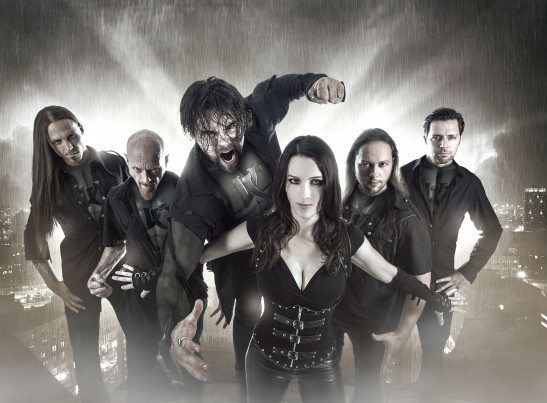
A cappella metal band Van Canto recently released their new album Dawn of the Brave through Napalm Records, which impressed Andrew Rawlinson a lot when he reviewed it (see here). Andrew asked Stefan Schmidt (lower Rakkatakka vocals and wahwah solo guitar vocals) some questions.
(((o))): So, you formed in 2006. How did you all meet?
Stefan: We knew each other from our former bands. Bastian and I played together in a band for more than 10 years and played gigs together with the bands of the other singers.
(((o))): Who are your influences as a band?
Stefan: We don’t have a idol band, but to get an idea which music we like you can have a look at our cover songs.
(((o))): At what point did the idea of doing an ‘a cappella metal’ move from one person’s crazy idea to starting an actual band?
Stefan: The moment Bastian joined the tribe in 2007 and we opened for Nightwish in front of 10.000 people 3 months later. This was the point it felt like a band, and not just like a project.
(((o))): How do you learn/practice the vocal guitar style?
Stefan: We do this since 2006, so we are quite used to what we do. There is no special practice, but of course we have to warm up like every singer has to.
(((o))): When was your first gig and what was the reaction of the audience and other bands?
Stefan: Our very first gig was at Bochum Total, a big city festival in Germany. The reaction was great, and it was good for us that it was not a pure metal festival. So all people attending the shows had to be quite open minded to have fun on the festival.
(((o))): How do you go about choosing what famous songs to cover?
Stefan: First of all we have to like it, so the lead singers can keep up with the original. Apart from that there has to be a lot of melodies in it so we can arrange it for 5 singers.
(((o))): How do you go about writing process to create an original song?
Stefan: It’s not that different from a regular band. We write a song on guitar or piano and translate it into an a cappella metal arrangement afterwards. For Dawn of the Brave there also have been some parts that were written by just singing them.
(((o))): Several of your covers have included the original bands vocalist as a guest (such as Sabaton’s Joakim Brodén on 'Primo Victoria') how did these partnerships comes about?
Stefan: Well, we asked and they joined, haha.
(((o))): On a similar note have you ever asked an original bands guitarist(s) to perform an ‘a cpapella’ guest spot
Stefan: Yes, we did a guitar battle with Victor Smolski (RAGE) on the song 'One to Ten' from the Tribe of Force album.
(((o))): You are playing London on April 2nd, what should people expect form a Van Canto show?
Stefan: Many voices, a lot of power and energy. And don’t be surprised that we are loud!
(((o))): You’re given the opportunity to create your own festival. What would be the first five bands on your list?
Stefan: Van Canto, Manowar, Europe, Metallica, Iron Maiden. That's a cool billing actually.
(((o))): Are they any places you have yet to play that you really want to?
Stefan: Of course, an US tour, Australia, Asia, …
(((o))): What are your goals for 2014?
Stefan: Have fun being on the road to perform metal a cappella.
Dawn of the Brave is now out on Napalm Records.
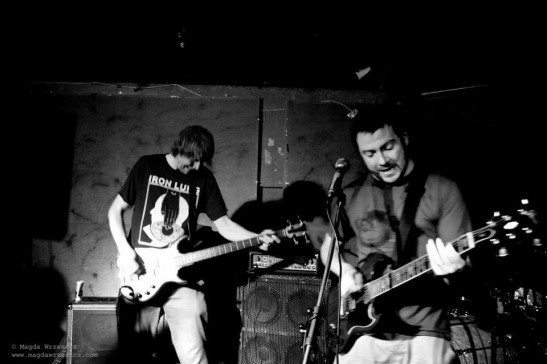
Henry Blacker released their debut album Hungry Dogs Will Eat Dirty Puddings on the brilliant Riot Season last month, which Richard Collins described as "It certainly has the potential to be a crowd pleaser and can see it appealing to a huge range or rock fans from across the spectrum" (see Richard's review here). Richard decided to ask JT (bass) and TF (guitar and vocals) some questions.
(((o))): So we know you are two of the chaps from Hey Colossus and a brother, what made you want to start another band?
JT: It was accidental, Roo, Tim’s brother, wanted to learn the drums so we got together so he could give some tubs a thrashing. Then, it was like, fuck it, why waste time doing covers. Then before we knew it we were rehearsing weekly, twice weekly, Sundays. There’s fuck all to do in Somerset once you’ve bailed the hay and wassailed the apple trees.
(((o))): Henry Blacker is a more accessible than Hey Colossus, it rocks but you could probably put it on at a wedding and people would keep dancing. Was this intentional or the just the way it came out?
JT: How many people in bands go solo and hit us with noise through loop pedals, whilst hunched over a lap top on stage? Got no problems with it, some of it’s good, but that’s for other people. Fancied doing the exact opposite, fancied going the wedding route.
TF: I would like to test your wedding theory.
(((o))): I'm going to go all Smash Hits on your ass I'm afraid and ask about your name. I know Henry Blacker was some tall man who was knocking about in the 1700s, what's the connection? Is it because your bassist is quite tall?
JT: Little known fact – Henry Blacker is Tim and Roo’s great great great great grandfather.
TF: As is immediately obvious with one look at our towering physiques.
(((o))): Lots of reviews mention you have a Queens Of The Stone Age vibe. Do you mind that comparison?
JT: No. No problems with anything like that. Can’t argue with what people hear.
(((o))): Is it true a member of Torche was there when you recorded the album? If so, what was he doing there? If not, tell us something interesting about recording the album.
JT: The album was recorded over 2 days, it didn’t cost much, we slept in the studio, on the Saturday we almost went to see Glenn Branca play in a Peckham car park but we decided to watch Saxon and XTC video’s on YouTube instead. Yes, the Torche guitarist was there. He was staying with Mr.Cedar, they’d toured together when they did the split 12". We all went out and had Chinese food and it was the best of times and it was the worst of times and we laughed and we cried and we cried with laughter.
TF: There was a storm one night when we were recording and Stewie, the studio cat, had some sort of fear-related case of lockjaw. He would swivel round to look at you with his mouth wide open like a ventriloquist’s dummy. It was sort of terrifying.
(((o))): Do you guys ever smile?
JT: Fuck you.
TF: I only smile at rainbows, moonbeams and the wonderful reminiscences of Peter Ustinov. IN THAT ORDER.
(((o))): What is the best gig Henry Blacker have played so far?
JT: Cosmic Carnage at the Windmill. YOU KNOW THAT.
(((o))): Name 3 bands all 3 members of Henry Blacker think fucking rock?
JT: ZZ Top, Jesus Lizard, UFO.
(((o))): When listening to the album it's pretty easy to get the conclusion that the singer is an absolute nutter, is this true?
JT: Sexy as well.
TF: Sexy nutter. Should be some sort of delicious spread. Or my signature scent.
I used to be quite mild-mannered. As with everything in life, I blame [David] Cameron. And his porcine cabal of fiends. It’s the sort of impotent middle-aged rage that would be directed towards the more traditional targets: “eurocrats”, health & safety legislation and an inability to find one’s reading glasses (they’re on your head, dear).
(((o))): Are you the only good band in Somerset or are there more? Do tell.
JT: The only other band in Somerset is Hacker Farm.
(((o))): If Henry Blacker were an animal what would it be?
JT: It IS an animal.
TF: A honey badger.
Content Warning: Suicide / Domestic Violence
I want to give you something triumphant. Something that will make you punch the air with satisfaction. Something that will imbue purpose to the hours spent waiting for gigs to start or all the money spent on all those albums and something that will reaffirm the sacred place that music has in your heart, and in mine - but I can’t.
I was in college. I was 19. I was struggling financially and emotionally. I had been impaired by a low and ever deteriorating sense of self worth and berated by a pathological internalised anger over my teenage years. It had not abated, as I hoped it would, with a change of venue. The fear and anxiety I often needlessly felt suddenly found good grounding in the real dangers of poverty and failure I faced in my first forray into an independent adult life.
Then one night, of no particular significance - other than I had just finished reading Kate Chopin’s ‘The Awakening’ for class - the rabid self hatred that had coursed through me with every single pulse of my life overruled reality and I plunged broken glass through the tendons and arteries in my wrists.
I spent a week in hospital. No one came to visit.
This is where my relationship with music begins. Before now, to me, music was just what was on the radio; a melodic static that I tuned in and out of as it took my fancy. I shunned medical help and bluffed my way out of hospital feigning long abandoned interests and painting a future for myself “five years from now” I couldn’t see.
So I was set adrift with nothing but the prevailing winds of sleep and study to move me. No destination, no purpose, no constellations to guide me. On some midnight bus, shuttling me between study and sleep, I heard something on the radio. The radio whose sole purpose was to keep the driver awake. I sat up and the blend of sounds dragged my attention out from under its burial mound. That something furled around my heart and gripped it. That night I had a new album, a gig ticket and a smile on my face.
The academic community continuously strains itself trying to reduce to a formula the overwhelming anecdotal evidence of the comfort found in music but of all the papers I have unearthed none have mentioned ‘recovery’ and one paper even correlates teenagers who invest heavily in music with a higher risk of depression. I still struggle through most days scattering apologies in my wake hoping to scour the world of my tracks. I go to work feeling wholly inadequate for the task. Mostly, I do not speak unless spoken to. I wish people would not look at me. I am terrified that people can smell me. Understandably, I am not in a relationship and I maintain very few friendships - except those I have fostered through music.
In 1977 the Voyager 1 and 2 were launched into space with a ‘Golden Record’ on each. While accompanied by diagrams and recordings of nature the bulk of the content was a choice selection of humankind’s music to date. It’s a romantic notion for music lovers that in trying to reach out to unknown life forms, that could be hostile or prefer to remain anonymous to us, we sent a music collection. Why was it presumed an extraterrestrial could comprehend music and why did we feel that in the vast incomprehensible expanse of our universe music would be the thing that would bind us together?
Music has given me an opportunity to relate to people. The confidence I have in the worth of the music I enjoy lends courage to my words. I feel worthy of attention and I have begun to believe that people are willing to hear me speak. That some people, who have become my friends, even enjoy hearing me speak. I have seen people smile when they recognise me in the crowd. It is the only place I have ever felt wanted, even if it just because the band are happy to have someone, who cares about what they have created, to play to. I have felt wanted.
It has also opened the door for me to reach out to the wrong people, to overestimate my right to intrude on someone’s good will. I have read that when managing anger, listening to calm or soothing music doesn’t help, you should listen to fierce music instead. It becomes an outlet for your emotion. It was the first thing I thought of when my mom asked me: “Why didn’t you do anything?”
The night before I witnessed an incident of domestic violence in my home. It was a brutal retaliation to months of emotional abuse. Ever since I have tried to select the song I would have played to stop it, had I thought to do anything at all. It’s difficult when you realise that your parents can’t protect you. It’s a realisation I’ve had to come to again but this time with music.
It couldn’t protect me from the self destructive whim to edge up to the lethal dose of codeine and mix it through with alcohol. It didn’t stop me as my eyes became agitated and my insides began to grow barbed wire. I crawled over to the glow of my computer screen and watched my music player’s timer drag from left to right. I couldn’t hear any of it and I began to scream at myself and at it that ‘this wasn’t supposed to happen anymore’. I tricked myself with false hope that someone could help fix this disconnect. One of the people who made the music I was trying to hear in the first place. Someone I vaguely knew. He gently and correctly pointed out that I should not be reaching out to him. I needed real help.
I awoke the next day not remembering, having to discover, what I had done. Having to discover that I couldn’t trust myself to be better nor could I trust music to keep me from committing dangerous blunders, as I had hoped it would. However, it hasn’t failed me. Music has led me to a community that has welcomed me and given the best version of myself a perfect microcosm of adult life in which she can be coaxed out.
I haven’t recovered, but I have found my best self. She is adventurous and quirky, generous of spirit, possessions, time, love and is sometimes wise. She marvels at the world and the people in it. Her eyes are enrapturing. She has her flaws too but they can be endearing in the right company. She possesses and feels all the love in the world without ever having stepped into the world. I don’t know if she can or ever will but now I know that she is there. I can write about her as if she exists.
It’s January 2014, a decade and a week since this whole wretched business began in earnest. I am standing at the front of the crowd unapologetic and unashamed to be there. Shoulder to shoulder with strangers; I am brave and I don’t feel alone. I do not cower away. There will be people here whose words I have read or photographs I have enjoyed, even EPs I have listened to. I regard them all as friends. I dance and I am carefree. I can conduct joy, wonderment and awe all at once. I can scarcely breathe for they won’t give way to the air. I can feel the sounds course through me, note by note. I feel gratified and here is where music prevails; I recognise the potential for the rest of my life to be just like this.
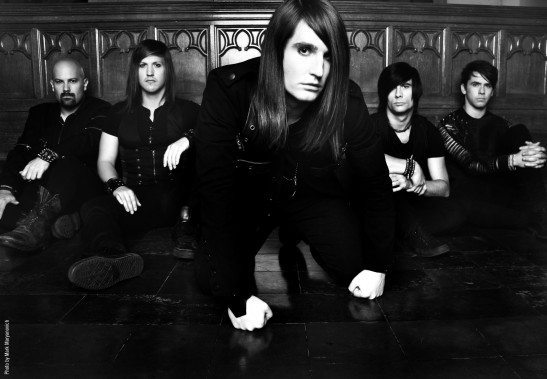
Canada's Incura are causing quite a stir (in my house at least) with their debut self-titled release (you can read my review here). Our intrepid report (who never left his armchair...) posed lead singer Kyle Gruninger some questions about singing, opening up your heart and musical theatre.....
(((o))): Can you tell us a little bit about the band's history? How you came to become the line up you are today.
Kyle: The band formed in a small prairie town in Alberta. We all met through playing in the local music scene. We eventually moved to Vancouver to try and push the band to a bigger audience.
(((o))): The musicianship on the album is technically stunning, particularly your vocals. Do you know what you full range is? When did you discover you could sing?
Kyle: I don't know my full range, though I'm hitting full voiced high E's all over this record. It's not about the range of voice but the way you can manipulate and control it. The characters and emotion you can display in a "theatre of the mind" sort of way.
(((o))): Lyrically, you're very openly expressing some intimate thoughts, feelings and emotions. How do you deal with people criticising lyrics? Does it concern you in any way being that open with strangers?
Kyle: My lyrics are out there for anyone to say whatever they want. Good or bad, the interpretation is up to them. I write very honestly. I write about things in my life that have effected me in a serious way. Though it may seem I'm "open with stranger"... the sub text to all my lyrics could be anything. 😉
(((o))): There is a great amount of theatricality in the songs and vocal performances, in fact it's very easy to hear this album as the soundtrack to a musical. Are you (or any of the band) fans of musical theatre and if so what shows?
Kyle: Yes, it's very apparent that musical theatre has had an impact in my life. I saw " The Phantom of Opera" when i was 5 . From that moment on I knew I wanted to be a performer. On top of Incura I also do professional theatre as well, I studied live performance in University. I enjoy almost all live performance, "The book of Mormon", Les Miserables ", "Cats" anything from "Cirque du Soleil" are all things I've enjoyed in the past year.
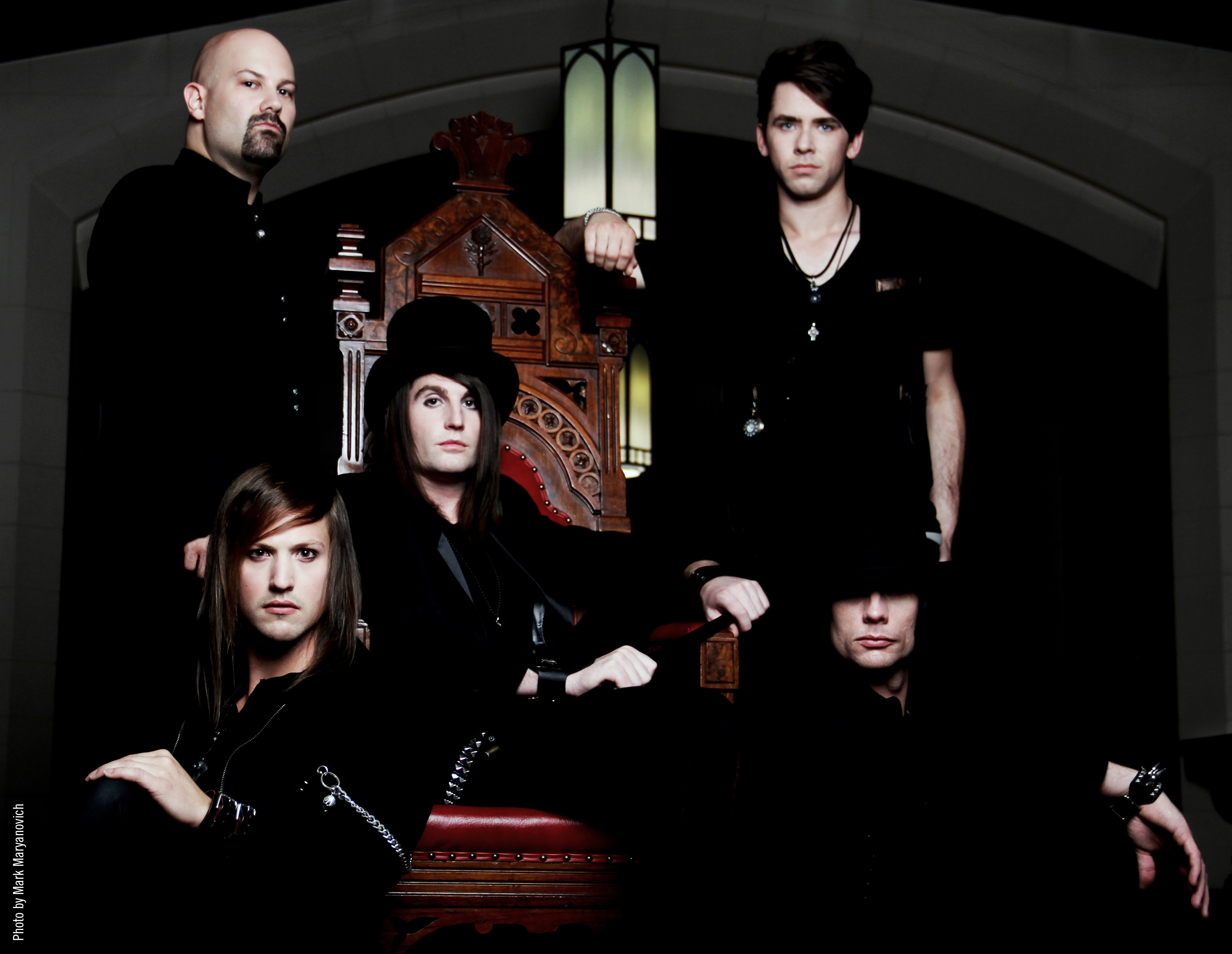
(((o))): A number of terms have been used to describe your sound - "Epic", "Grandiose", "Complex", "Intricate", "Textured", "Beautiful"….. how would YOU describe Incura?
Kyle: Theatrical hard rock. Though any of the descriptions above I'm okay with. hahaha
(((o))): What bands/artists are you currently listening to?
Kyle: Lamb Of God, Pantera , Queen , Dr.Dre, Pink Floyd.
(((o))): What's your favourite song from the album and why?
Kyle: It's hard to pick a favorite because they all mean so much to me. At any point in my life, even my own words can act as inspiration through a difficult time. Right now, 'The Greatest Con' has been a favorite of mine.
(((o))): What album/song/artist first got you into music?
Kyle: "Phantom of the Opera", seeing a live show with such emotional highs and lows at such a young age really inspired me to want to perform and get into music.
(((o))): What are the band's plans for 2014?
Kyle: We will focus 100 percent of our energy on getting our music to as many people as possible all over the world. TOUR TOUR TOUR TOUR and then more TOURING!
(((o))): We're currently running a series about the links between music and mental health (see here). Do you think music is important in terms of cleansing the mind/soul? Do you personally find the benefit of being in a band in so much as it allows you to say things you might otherwise keep inside?
Kyle: Music should be whatever you want it to be. If you love it because it makes you happy, sad, or just maybe so you feel like you're not alone, music will always be there for you, and never turn it back on you. Personally, music has helped me get through the most difficult times in my life. It's my best and sometimes only friend.
(((o))): Any final thoughts for our readers?
Kyle: Do what you love, not what you're told.