(((O))) REVIEWS
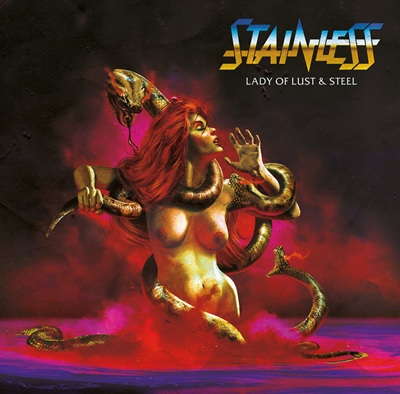
Stainless – Lady of Lust & Steel
This is Stainless’ moment. Their time. One of the best hard‑rock debuts I’ve heard this year. Give them a thunderous round of applause. They’ve delivered a monster of an album to kick off the summer with a bang.
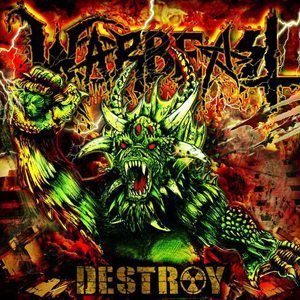
Destroy. Pretty self-explanatory here folks. That is what this entire album does for nine straight tracks; destroy everything in its path. Warbeast have undergone a few line-up changes since their formation, but the core has been together since the beginning in ’08. The addition of guitarist Bobby Tillotson in 2010 made that care even stronger. (The band currently uses a touring bassist. I don’t get to ask so I can’t tell.) Anyway, the music on this album is very thrash inspired, but it’s not just “thrash”. This album just destroys everything (Yup, I went there).
Opening an album with two and a half minute instrumental is pretty ballsy for a thrash album. Warbeast do it perfectly. Honestly now, when have you heard “instrumental” and “thrash” in a sentence without seeing “Metallica” mixed in there? Moving on to the first proper track ‘Nightmares in the Sky’, the familiar voice of Bruce Corbitt (ex-Rigor Mortis, although I’ve heard the “ex” might not belong there as of last year) is perfect with the music. His “rough but sometimes soaring and still rough” vocals are great. And what can I say about the music, well, LOOK AT THE TITLE OF THE ALBUM!!!!! I know this doesn’t always apply, hell, it rarely applies. But this time it does. The drumming is relentless, the guitars are nuts. They know one thing and that is to simply shred like a mother fucker. The tone is great, and there is even audible bass. A lot of records just drown the bass in the mix, Warbeast keep it in with the entire onslaught.
‘Egotistical Bastard’ is an attack on those people you just can’t stand, who have their nose in the air. And that attack is brought with a nice drumbeat and an opening verse of sucker punch guitars. The rest continues with soaring leads built on top of rock solid rhythm playing. ‘Warbeast’ (yeah they went there) is groove based, but very up tempo at the same time. Verses have a beat that will move your head and the chorus will move your body. ‘War of the World’ starts out slow, with a southern vibe to it and enough guitar squeals to keep you fed for a week or longer. It moves right along with the “groove in my thrash” practice. And that’s missing from a lot of records out there. You can play as fast and as loud as you want, but if the songs don’t cause feet or hands tapping, you didn’t do it right.
Closing out the album with the title track, Warbeast have saved the best for last. Everything on this song is over the top. Vocals pushed to the max, guitar solos and rhythms burning up strings, bass and drums knocking down foundations. And when you get to the halfway mark, you are educated in the proper way to do a breakdown. This essentially continues until the albums done, and your bones are shaking.
It’s a shame that great music nowadays won’t get a lot of the recognition it deserves due to an overcrowded market full of copy and paste bullshit. Warbeast shine above a lot of the music I’ve heard in the past few years, and they deserve your support. Go get this album through Season of Mist on April 12th in Europe and through Housecore Records right now in the US. It comes on CD (with bonus track on the Euro version) and special edition red LP. Support this band, go out and grab this album!!
HAIL!!!!!!!!!!!!!!
By John Sturm
There must be something in the water in Australia that that embeds itself into musicians. Something that makes them want to rock and roll, drink some beer, meet some ladies and essentially raise some hell. Well most musicians except maybe Stefan Dennis and Craig McLachlan. Before we crack on I’m going to promise you that I will only make one AC/DC reference in this review ok? (Excluding that one, pedants).
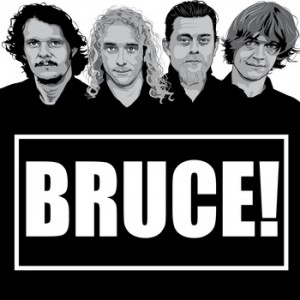
BRUCE! hail from the fabulously named Wollongong in New South Wales and are not afraid of embracing the usual Aussie stereotypes you might care to mention. Their Facebook page lists their interests as “YOUR DRINK, GIRL AND CAR KEYS” and in an interview with Sludge Factory they confirm, as I suspected, that their name derives from a classic Monty Python sketch. Whilst there is certainly humour running through this band, (they’re all called Bruce you know), there is nothing frivolous about the music on offer here.
Album opener ‘Hell Gig’ is essentially a hard rock re-imagining of ‘The Devil Went Down To Georgia’ but with more guitar and less fiddles obviously and kickstarts the album off in a fine fashion followed swiftly by ‘Money and Go’ which details the life (and frustrations) of being in a band… “You want it, You got it, Take your money and go”. Further on we delve into ‘Make You Proud’ in which lyrically singer Bruce informs his mother and brother that he’s going to make them proud. ‘Bottle in a Brown Paper Bag’ deals with police bribery. Later still, ‘Meanwhile in Norway’ seems to be a piss-take of the black metal with it’s growling vocals and jagged riffs. And then there’s the waltz section in ‘On the Road Again’….
All of this leads me to an uncertain conclusion about BRUCE! I’m not exactly sure what kind of band they want to be. Are they comedic? Are they social commentators? Perhaps that is the genius of BRUCE!, that they defy scrutiny and are simply a band that you need to have a beer to and get yourself into a big sweaty mess about. They’re a rock and roll band and perhaps, at the end of the day, that’s all that matters. Songs like ‘%99’ with it’s infections riffs and shouty-a-long chorus begs to be bellowed at full volume in a club after 7 pints of nectar.
As it should be.
And yes, even though they are Australian they don’t sound like AC/DC (take note Airbourne).
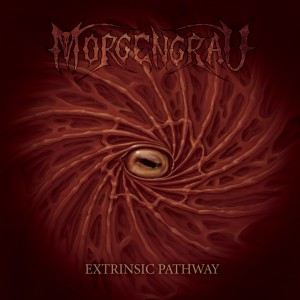
Austin, Texas-based traditional death metallers Morgengrau perplexed me a little bit at first. Old-school death metal, moreso than most other genres, is defined by its many different regional sounds; the thrashier sound of the Florida scene, the pummeling brutality of New York, the Swedish scene’s love affair with hardcore, etc. And Morgengrau most definitely sound old-school, but it’s more of a standard, almost generic old-school sound that borrows a variety of influences from a few different scenes while not fitting cleanly into any of them.
And that’s okay. Those who throw on the band’s full-length debut Extrinsic Pathway hoping specifically for Florideath, Finndeath, or Swedeath worship might be disappointed, but everything heard on the album should still sound familiar to the old-school death metal fan, and those who just want riffs should have no problem enjoying it. Also, if you’re the type who enjoys finding female-fronted extreme metal, you’ll be happy to know that vocalist Erika Swinnich Tandy does a damn good job.
The three biggest points of reference I can think of for Morgengrau’s sound are Sepultura, Demigod, and Pestilence. Extrinsic Pathway is mostly groovy, with some thrashy parts and some doomy bits as well. There are hints of Swedeath in some of the more melodic bits, but the album never really gets that melodic; it’s more of a ‘Stronger Than Hate’ by Sepultura kind of melodic than an ‘Override of the Overture’ melodic (Extrinsic Pathway even features a cover of Sepultura’s ‘Inner Self’). Originality is lacking, but you won’t find much of that with old-school revivalist death metal anyway, and the riffs are solid enough that it’s possible to overlook. Vocally, Erika Tandy reminds me heavily of Deathevokation’s Götz Vogelsang, and the resemblance was so strong at first that I was hoping they shared members (The Chalice of Ages is one of my favorite death metal albums of the past decade, and I was very, very disappointed when they split up). And, as stated earlier, her performance is superb.
My one real complaint is the pacing. The songs all seem to hover around the same mid-paced tempo, which causes the album to feel monotonous at times and exacerbates the originality issues. There aren’t many really slow, massive moments, and no real speedy neckbreaking moments either, and the band could have used a few of each to expand the sonic palette some and break up the monotony. Fortunately, the standout tracks on the album – the title track, ‘Choking Grove,’ and ‘Polymorphic Communion,’ with ‘Grave of Lies’ being pretty cool as well – are all spread out pretty evenly.
Extrinsic Pathway won’t be the best death metal album you hear this year, nor the most original. But death metal fans should find some nice riffs and an overall enjoyable experience from a solid debut album.

By Jake Murray
Kranky have long ruled as the primary designators of space in sound. For what seems like a millennia the label has delivered some of the finest performers of the long and weird from Stars of The Lid, to Lichens, Windy & Carl, Atlas Sound and many many more. To continue the list would be like writing the lineup for arguably the greatest night on valium the world has ever known. Today, Kranky continue their mission at the helm of their misty ship to bring the world the greatest in fuzz and fog - which brings us nicely to Implodes's second album, Recurring Dream.
The record kicks off with ‘Wendy’, a short synthy introduction that surely stands as an opening homage to Mrs. Carlos - the one and only. Wasting no time at all Implodes bring something to the table that's not often found displayed by their label-mates: a beat and a pulse. ‘Scattered in the Wind’ rides along on a straight engaging drumbeat with ghostly vocals and a guitar line that leaves the mouth hanging from its hinges (this happens a lot, so guitarists might want to grab a tissue).
‘Sleepyheads’is another fuzzy brooder reminiscent of early M83 or Team Ghost and sounds as though Kranky regular Bradford Cox is assuming the vocal duties; whether or not this is the case, it is good. ‘Necronomics’is a shoegazing piece which carries a bass-line reminiscent of The Cure while overall more closely resembling my bloody valentine, with rich bubbling synth lines replacing the guitar.
At many points on the record its vast range of influences become apparent. Often, acts like The Cure that are not necessarily obvious on the surface to Tangerine Dream or Mogwai: all artists performing music in their own right with no real business being together until now. Similar moments lie across in the album in the form of continuing references to the great and the gone: ‘You Wouldn't Know It’screams The Jesus & Mary Chain or A Place to Bury Strangers, whilst ‘Melted Candle’seems to carry UNKLE in the heavier days of War Stories, perhaps. At this point it's worth mentioning that although the sonic fingerprints of many great artists lie all over Recurring Dream, it is in no way a criticism of Implodesbut rather quite the opposite: as each of these ear tickles are mere memories in moments of musical glory we all look back to, and remember fondly through the group's own form of nostalgia and reinvention. But then, the album is called Recurring Dream…………
A true moment of genius is ‘Ex Mass’, by far the centrepiece of Recurring Dream, with its excellent vocal delivery and frankly mind-blowing Mark McGuire- or David Gilmour-influenced guitar line that actually caused my girlfriend to scream "THAT GUITAR!" amidst everything… needless to say, the track was played about three times a day for most of the week. Through everything it seems to stand as the defining moment in the record that draws all the power and strength of the group and defines it in a single instance. The beauty of the piece is its reluctance to fall into repetition, whilst revisiting a melody or an idea just once or twice more at any time - it holds the perfect pace and feels completely uplifting and inspiring; like watching the sun rise from the top of a mountain.
Recurring Dream is an easy record to take in, it's a dream to write about and it's a delight to pass on to others. It is a rare instance that a record can be totally engaging from start to finish without feeling pushed or try-hard…. in this Implodes seem to have been lifted out of the days of the concept album a-la Pink Floyd or Hawkwind, where everything plays in a context of its own and part of the total idea encapsulated by the collection. However, the record does not sit in the past, or quite up in today's modern clatter and bang of bleeps, bloops and jangly guitars - no, this record feels timeless, like an old classic dug up by your older brother as an example of those guys who were "way ahead of their time." Perhaps it's that Implodes have simply taken in what's great about music today and merged it with their influences, or perhaps it's just that they have a solid and refined vision of themselves and their music already by their second album… it's possible, in fact, it's quite likely. In no time at all (or what seems that way) you're left floating on by though the serene Prisms and the Nature of Light and finally literally at the Bottom of a Well wondering just how to get back to the top, to play the record again.
Recurring Dream is out on Kranky NOW and you'd be an idiot to miss it.
<iframe src="https://player.vimeo.com/video/63088303?title=0&byline=0&portrait=0&color=ffffff" width="500" height="281" frameborder="0" webkitAllowFullScreen mozallowfullscreen allowFullScreen></iframe> <p><a href="https://vimeo.com/63088303">Scattered in the Wind by IMPLODES (film by Lori Felker)</a> from <a href="https://vimeo.com/lorifelker">Lori Felker</a> on <a href="https://vimeo.com">Vimeo</a>.</p>
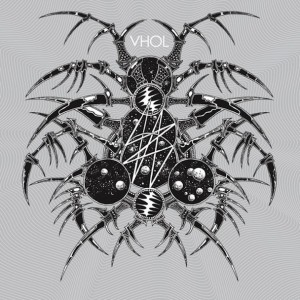
The musicians stacked in this line up are down right daunting. Mike Scheidt, John Cobbett, Aesop Dekker and Sigrid Sheie. Names out of the way then, they come from or were once in bands such as YOB, Ludicra (R.I.P.), Hammers of Misfortune, Agalloch, Amber Asylum…I could keep going but those bands alone should have you out of your seat to hear this album.
All band name dropping aside, the music is what matters here. Always. People will gravitate towards this band just due to the names attached to it, which is good, the music will win them over. What you’ll find behind the cover is 80s thrash, metal, punk, hardcore, 90s era black metal all blended together into a sweet mix of tunes that demand you throw horns and drive fast. This is getaway from the police in your ’69 Corvette music. This is “Get in the car boys, we’re going to town!” music. The mosh pit opens and begs and NEEDS this kind of music. Cobbett's speed/thrash mix is built upon Mr.Dekker’s “the 90s never happened” drums. And Sigrid plays to the tune of these guys like it ain't no thang!!!
Mike is allowed to howl his soul out on each track, each track built of a wall of attitude. Had this been released 25 years ago, these guys and gal would be sitting in mansions debating if they can really top Death Magnetic. (Although in my personal opinion, they would have taken a different route than the implied band I speak of). In fact, this album makes me wish they would release an 80s thrash covers album. Yo!!!!! Mr.Cobbett and Mr.Dekker, MAKE THAT SHIT HAPPEN!!!!
Ok, I think I may have gone a little overboard there….NA!!!!! Go grab this album when it comes out through Profound Lore Records on April 16th. Support bands and artist that make rocking tunes like this. Tunes that make you feel alive, HAAAAAIIIIIILLLLLLLLL!!!!!!
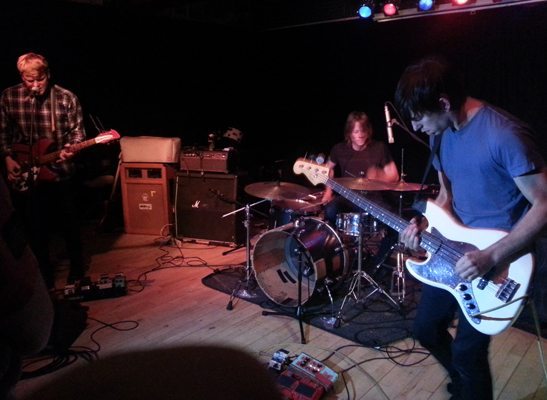
There has always been a musical division in Scotland between Glasgow and the rest of Scotland. Or that is how I experience it as a non-Scot and having played in an Edinburgh based band myself for years. Glasgow gets a lot of the touring bands, has better venues, later gigs, more bands, bigger crowds etc. So, when a band such as Die! Die! Die! come over from New Zealand to play on a Friday night in Edinburgh you don’t think twice to come along. Especially when the support bands are United Fruit (from Glasgow) and local post-punkers Black International. You don’t care that it’s a Good Friday and you have family over from the Netherlands for the weekend, as was the case for myself.
 The night kicked off early at 7.45pm on the dot with Black International, who helped organising tonight’s gig. Most Edinburgh venues have a 10pm curfew, so people need to show up early and luckily for Stewart on guitars and vocals and Craig on the drums, there was already a reasonable crowd to witness their 2-piece assault on the eardrums. It always surprises me how much noise a 2-piece band can make, and Black International are no exception. Aside from some technical guitar issues and at times a visibly unhappy Stewart they played a solid set. Craig’s infamous drum face is always a pleasure to observe. He’s a brilliant drummer, providing a very jazzy style to the overall post-punk sound of Black International. Their set was a short one, but we were treated to 2 new songs ‘The Sky Is Falling In’ and ‘A Gilded Palace’, which will be released as a 7” single through Electric Company Records later this year. They also played ‘A Million Mouths’, which is the opening track of their great album In Debt and 2 more unreleased tracks ‘In The Sun’ and ‘Shining Swords’, after which Stewart angrily chucked his guitar on the floor as the Wee Red Bar doesn’t have a stage. It wasn’t his best night, but I still thoroughly enjoyed them!

Next up were United Fruit, which are one of my favourite alternative noise rock bands in Scotland. I’ve seen them live a few times now and you know you are always treated to a dynamic and extremely tight set. United Fruit’s rhythm section with Marco on bass and Ross on drums is a solid machine pounding away through the set, and guitarists Iskandar and Stuart share the vocal duties while working themselves in a sweaty state by some intense guitar playing, singing and moving uncontrollably at the same time. Their set mainly consisted of songs from their last album Fault Lines, such as album and set opener ‘Kamikaze’, ‘Liar’, ‘Go Away, Don’t Leave Me Alone’, ‘Confuse Her Now’, ‘Dust To Light’ and final song of the set ‘Red Letter’. Beside these songs they played crowd favourite ‘Push It’ of their first EP Mistress, Reptile Mistress! and a brand new track called ‘Nightmare, Recovery’, which is a brilliant track and just makes me wish for them to release a new album again! Apparently they’re working on it and I can’t wait to hear it as the this new song sets some high standards.
 Lastly on the bill were the New Zealanders Die! Die! Die!, whose musical style can be described as post-punk alternative guitar noise, and thereby fitting in just perfectly after Black International and United Fruit. They played with a lot of energy, and great catchy guitar hooks, snarling vocals and most importantly an amazingly steady rhythm section. Drummer Michael Prain seemed to be in his own rhythmic zone throughout the gig and bass player Michael Logie steadily plugged away on his bass guitar. Guitarist/vocalist Andrew Wilson was something else all together though. He seemed to have troubles standing still and continuously danced around his little area between the mic stand and the amps. More than once he created a feedback loop by placing his guitar against his amp and grabs his mic to then go into the crowd, whilst Michael and Henry continued to play a repeated thumping rhythmic loop. Besides songs of the new album Harmony, such as ‘Trinity’, they played older songs ‘Sideways Here We Come’, ‘Blinding’, ‘A.T.T.I.T.U.D.’ (all from their album Promises, Promises), ‘Wasted Lands’ (from their album Form) and a new song called ‘Trigger’. I’m not even sure if I have all these songs right as there wasn’t a setlist for me to take home.
All in all it was a brilliant gig with 3 blinding sets from 3 amazing bands. They all showed that it is possible to have a great gig in Edinburgh and the good-sized crowd certainly helped. What made it even more memorable was the random Australian bloke I bumped into at the merchandise table. I forgot his name, but let's call him Bruce or Shane. I initially thought he was with one of the bands but he told me he was in Edinburgh for work and he picked up a copy of The List magazine to see what was on that night and he ended up at the Wee Red Bar. Well, he couldn’t have picked a better night in Edinburgh! Rock on!
Credits: video footage by Bruce Cowie.
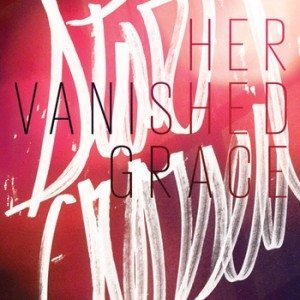
Distorted drums lead out ‘Car Crash’, the opening track on this sixteenth (!!) album from New York natives Her Vanished Grace, before a heavy guitar riff hints at something approaching rock. Then banks of guitar shimmer into scene and Charles Nieland’s vocal takes us into familiar Her Vanished Grace territory, but with an edge: The pace is more up tempo, this is dreampop you can tap your foot too. In the right light you could even find yourself dancing.
You’ll stop when ‘Fade Away’ comes in and stops you dead though – this is the sort of song that doesn’t come along too often. It’s slow, heavily hazy guitars mix in a fog with synths, and drums thud as the noise builds, beautifully encapsulating the sound of a band that knows exactly where its place in world is. When Nieland’s vocal arrives, it’s as if thunder has clapped across the sky and it’s raining for the first time in months. “If it came down to what you see, and the inside is just like me, would you silently turn away?” he asks in the devastating opening line. There are elements of Depeche Mode in here, maybe Echo & The Bunnymen, definitely U2 (The chorus sounds like it could shift into ‘With Or Without You’) and when Nance Nieland arrives to harmonise, goosebumps arrive with her. If the album stopped on this track, it would still be worth the money.
Cocteau Twins are proving themselves to be an enormous influence on many dreampop bands these days and ‘Bridge of Sighs’ could find a place on Heaven or Las Vegas. That’s possibly why the track that follows it, ‘Break Down’, sound a tad out of place, granted this is forgotten after the first few bars. It’s a more upbeat, positive track that could define the term ‘dreampop’ as guitars fire furiously in the background while vocals ping back and forth, the male and female Nieland voices melting into each other.
That a minor quibble over the tracklisting is about the only thing that comes close to criticism speaks volumes. For a band that has been making music since the late 80s it can’t be easy to sound so fresh, so current. There’s a more electronic sound on ‘Hungry’, showing the band’s progression and ability to take inspiration from other genres. It is dark and brooding and mixing the vocals down into the track, it creates a haunting sensation.
This track marks a turning point and from title-track ‘Star-Crossed’ the mood takes a more introspective direction. Album closer ‘Earth Stood Still’ is a reminder of the band’s ability to write catchy pop melodies against a backdrop of controlled reverb.
It would be too easy to label Her Vanished Grace simply a shoegazing band. While this album is unlikely to find mainstream success it goes beyond the bounds of niche music. It’s rich, multi-layered and melodic, with crisp production that gives it a cleaner polish than many of its contemporaries. Noel Gallagher once said that for a time in the mid-90s “the biggest bands were the best bands”. Star-Crossed is another example of how that is no longer anywhere near the case.
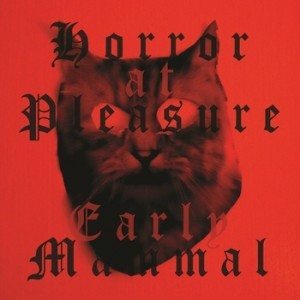
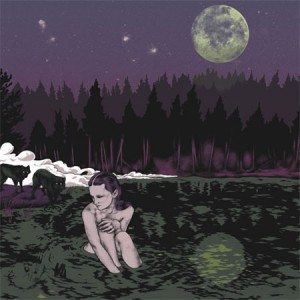
Juxtaposition of styles is rapidly becoming the norm for modern heavy music. It’s really rare that a functioning or successful band can claim to be any one genre, and most would choose not to. This split release from doom band Undersmile and their acoustic alter-ego Coma Wall encapsulates this quite well even though the division into two distinct bands seems a bit unnecessary in light of the similar moods and vibes between the two projects.
Wood and Wire” starts of with three Coma Wall songs. The opening track ‘Summer’ sets the tone for all three songs with doom inflected acoustics and plucky banjo. It manages to sound rich and full despite the lack of the distorted electrics and thundering drums that most heavy bands rely upon. The combination of rattly guitars and languid vocals are incredibly successful in setting up the mood for not only the Coma Wall tracks but also the Undersmile (more on these in a moment) songs as well. There is enough space and texture to the musical composition to really let the understated vocal harmonies shine and the patience demonstrated in the structure is particularly impressive. The second and third Coma Wall songs follow suit and continue to deliver on the doom/folk/americana/drone promise of the first track without much variation. There is some truly excellent arrangement and sounds on these first three songs. ‘Cutter’s Choice’ is the standout track on this record. It is a bleak and gorgeous piece with just enough hopefulness buried in the chorus to make the gloomier sections even more powerful.
The second half of Wood and Wire is reserved for the heavier side of things. The songs plod along at a familiar doom/sludge sub 100 bpm tempo. The change from the acoustic driven first half into the wall of guitars is pretty jarring at first. By the time the previously established lethargic female vocals enter the music it becomes apparent that this is the same band in an altogether different medium. Album closer ‘Hives’ is the standout for the Undersmile portion of the record. Opening with some disgustingly dissonant chords and vocal harmonies before dropping into a spacious and torpid groove. The space in the music once again lets the dire vocals shine before crawling into a wall of distortion and a climax so slow and ominous the most devoted of doom fans will have a hard time complaining.
While there album is mostly successful there are a few small things that keep it from being perfect. The production on the Coma Wall side is warm and full while the Undersmile side seems quieter and less rich. This is easily overcome though when listening at the considerable volume that the music demands. The only criticism that I can honestly level at the record stems from confusion. I’m not sure why they feel the need to separate into to two distinct bands. The two sides are similar enough in sentiment and mood that the separation seems a bit forced. If the doom and folk styles could be combined into one genre bending monster Coma Wall and/or Undersmile would really be onto something special. As it stands this is still a quality release that is worth any fan of the slower side of metals time.
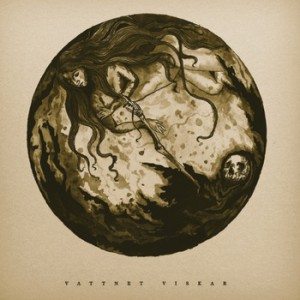
I received Vattnet Viskar’s promo just as a sample, something to listen to at first. My editor always has hidden intentions though. He and another writer know I can’t say no to a good album, an EP even. So after 30 seconds of the first song I pressed stop, and emailed Mr. Editor and said ok. That’s all it took. I just knew that whatever came after those 30 seconds was going to be what I wanted to hear. A risk, yes. But then again, you should see my moustache.
‘Weakness’ opens up this bad boy with a chime of the bell and a prayer being whispered. Feedback and burning at the edges soon tear that right apart and we have METAL! Black metal at that. Tremolo picking, blasts beats, scorched earth vocals, and would you believe me if I told you the bass was audible. Towards the later end of the track we are hit with some seriously awesome guitar playing and effect usage. Harrowing guitars, soul baring vocals, the works. At the end we even get acoustic guitar strumming the way out to next track, ‘Intention Oblivion’. And this bastard rips just like the last one. But not only is it brutal and savage, no, it’s powerful. "Beautiful" as I always say. The kind of music that makes me type these letters and words so fast my editor will hate me because I’m not going to edit SHIT!!! (Love you boss) Primal, galloping rhythms guide this song all the way through. Never too clean, never too dirty; until the end. A slow melodic section played gracefully over drums that still tumble and pound. Building and building towards the end until the guitars echo out and we hear the fog rolling in...
Rolling in to the last track ‘Barren Earth’. An acoustic affair to start out, but it’s not long until they rip the heart right out of this sucker and scream all they have at the skies. A few back and forth parts (used tastefully) of light and heavy keep the mood going until it all breaks apart at the end. Instead of an abrupt end, they just keep on playing as the volume fades out. Outstanding.
Say whatever you will about Vattnet Viskar signing to Century Media. “A big label!! Oh no!!!” These guys have their shit worked out and put together. Any bands that can put together three songs like these deserve recognition and a chance for bigger things. Anyone of you reading this owes it to yourself, and to the band, to check out this EP. You also should be on the lookout for their full length album, which I hear we may see by the end of the summer. Ill be waiting, front row, moustache ready.
HAIL VATTNET VISKAR!!!!!
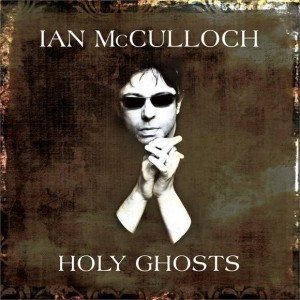
One thing that strikes you about Ian McCulloch these days is how much fun he seems to be having. If on tour with his main band Echo and the Bunnymen or hitting the clubs with his old mate Ian Brody to offer up stripped down versions of his songs (review on this site), McCulloch seems to have lightened up and even if he does have that old scowl, this time its more ironic and knowing.
What we have here then are two albums which in a way represent where McCulloch as a person stands now. The first, Holy Ghosts is a live recording of the Union Chapel gig he did with an orchestra and the second, a solo album. An easy sell for his new songs you may think, but what a bargain if that is the case.
Holy Ghosts captures one of those moments when magic happens at a gig. All the requisite details were there to start with, the orchestra, the venue and of course the songs, but on any given night umpteen things could go wrong. It is testament to Youth's production that this is now saved for posterity.
One listen to the majestic 'Bring on the Dancing Horses' allays all fears of overkill. Having toured Ocean Rain with an orchestra, McCulloch understands how to utilise them and they never ever seem to become intrusive. 'Horses' is perhaps the most overly orchestral with other songs having mild flourishes. The majority rely on acoustic guitars and that voice.
A wide selection is played covering Bunnymen classic such as 'Rescue', solo gems like 'Candleland' and even a run through of the title track of his new solo album. It is the aforementioned Bunnymen songs which you really want to hear though, and they don't disappoint. Possibly the most surprising is the ubiquitous 'Nothing Ever Lasts Forever' which becomes an ode to Wilson Pickett halfway through and gives a whole new perspective on the song.
Following this with a new solo album was always going to be a tough call and whilst it may not reach the heady heights of Holy Ghosts, Pro Patria Mori is still a very good addition to the McCulloch legacy. Much lighter in tone than later Bunnymen albums, this is the sound of McCulloch cutting loose and having fun (that word again). Almost skeletal in delivery, the music relies heavily on synthesisers with McCulloch enjoying wordplay over this. 'Empty as a House' soars whilst 'Fiery Flame' dances about. It is the title track which takes your breath away though with its drum machine pattern, jaunty vocal and church choir background (imagine Rebecca from Golden Fable singing on this). It sends shivers down you spine.
All in all, a fantastic package which will delight McCulloch fans even if it does not win any new ones. A shame as there is much to be happy about here and while living up to a legendary status seems to suit Ian McCulloch these days, at least he is doing it on his terms and having fun.
Released March 25th 2013 on Indie Recordings
Every so often an album comes along with such a wealth of back-story that (if you're curious enough) you can lose hours online tracing histories and hyperlinks through the fresh gaps that have yawned open in your knowledge. I found this out to my cost one stunningly sunny day when I spent the entire afternoon indoors, buried in Old Norse language, mythology, instruments and runes. The culprit was Yggdrasil, the newly-released behemoth from Norwegian folk(ish) enigma Wardruna.
Wardruna is the musical realisation of founder Kvitrafn's years-long studies of ancient Norse paganism and tradition. Yggdrasil is the second in a projected trilogy of albums based around the runes of the Elder Futhark, the earliest alphabet used by Germanic tribes in the centuries before the Viking Age. The album is named, appropriately enough, for the immense tree linking the nine worlds of Norse mythology, on which Odin purportedly hung himself for nine days and in so doing acquired divine knowledge of the runes and their symbolism.
Helvegen (Live) from Wardruna on Vimeo.
Eight of the eleven tracks are named for runes with basic meanings ranging (if Kvitrafn will forgive the abbreviation) from 'sun' to 'horse' to 'gift' to 'need' to 'wealth/cattle'. Much of the album was recorded in outdoor locations with meanings specific to each rune, and features recordings of birds, thunderstorms, burning torches and trees alongside massive vocals, deerhide drums, mouth harps, goat horns, and a handful of Old Norse instruments on which Google is reluctant to shed much light.
As you've probably figured by now, Wardruna is one of those slippery bands that defy all classification. Any attempt to brand it as 'folk' or 'ambient', or to place it under that suspiciously Imperialist umbrella 'world', will fail on first listen. Possibly the best description comes from Kvitrafn himself: "sowing new seeds and strengthening old roots". With his blend of Norwegian, Old Norse and Proto Norse lyrics, ancient poetic metres, nods to Norwegian folk music and the aforementioned ancient Norse instruments, Kvitrafn casts lines back to times over a thousand years ago, drawing sound and inspiration from pagan language, traditions and symbolism in order to reimagine them in his own musical cast.
What results is not so much an album as a saga. Running close on an hour and ten minutes in length, Yggdrasil stomps, thunders, and charges to battle through your living room, stopping only to consider a passing rainstorm or the shifting of leaves around birdsong. The album opens with the patter of raindrops, the call of a hunting horn through the fog, and a major triad in triumphal baritone. The upper voice yodels across modal shifts, the chord suspends then ends, echoing across some vast landscape - and with a deep bass hommm an army bursts through the speakers, snarling and sonorous and darkly percussive.
Wherever you turn in this album, the drums are never far behind. Yggdrasil is relentlessly rhythmic, fat with the strength of a hundred pagan percussionists gathered in some chill forest clearing. Voices call solo or amassed across the cavernous reverberations, swinging between speech and chant and rollicking song. Each track opens in relative calm, with footsteps or foresty twitterings or crunchy double-stopped strings, before erupting again into pounding beats and epic choral sweeps. Prepare to end the album feeling slightly windswept.
Whether you're talking books or movies or music, there's a certain fetishisation of the past that invariably comes with attempts to reimagine it, and at times - perhaps it's the occasionally over-produced refinement of yodels and bellows best left raw - Yggdrasil swings perilously close to the kind of sweeping cinematic aggrandisement you hear in Lord of the Rings or the opening credits of Skyrim. Certain heavy whispers are rather too reminiscent of the nastier workings of the Ring, or cries of “Bagginsss” across The Shire. But forgive the album its cornier moments and you're left with something quite remarkable, and nothing quite like you've heard before.
By John Sturm
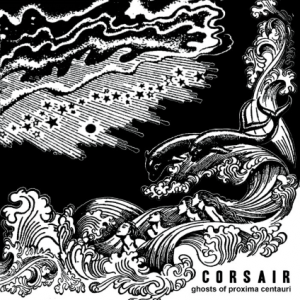
When reviewing records, I like to listen to the music before reading any of the accompanying PR or heading out on the internet to the artist’s website. I like to form my own opinions and thoughts, to draw comparisons of my own. My first run through of Ghosts of Proxima Centauri from Corsair generated the following words (according to my notes): “Thin Lizzy/Simon & Garfunkel/Humble Pie”. According to the tags on their Bandcamp page list as “70's rock hard rock metal NWOBHM progressive rock rock adventure rock classic rock Charlottesville”. So that should sum up the EP for you, dear reader. You’re welcome, off you pop now.
Oh ok, I shall dive in deeper for you. But only because you asked so nicely.
Corsair are one of those rare bands that can generate an emotional response in me simply through the music alone. The harmonies of guitarists Paul Sebring and Marie Landragin are so melodic and sweet it’s like letting waves wash over your feet at the end of a long summer’s day. Just like Simon & Garfunkel’s intricate vocal harmonies are rich, intoxicating and hypnotic, so too are Corsair’s albeit with guitars. A perfect example of this is the last 2 minutes of ‘Centurion’ which is simply the most simultaneously melodic and uplifting series of notes I have ever heard. So much so, that the play count for that one track alone (according to eyeTunes) is up to 15.
Elsewhere we have the classic rock-tinged ‘Warrior Woman’ which takes the principle of 70s rock to heart with some typically bare-chested Plant-esque lyrics. In fact most of the lyrics read much like the inside of a mid-70s double album: Gods, demons, jaguars, leopards, arrow, and Caesar all feature here. (And as fan of Iron Maiden, that is certainly not a complaint or criticism from me). Closing track ‘Eyes Of The Gods’ stomps on your ears while swigging a cold beer and ‘Burnish The Blades’ features a guitar solos outro so revered by the Allman Brothers. Energetic starts lead to peaks and troughs and end with the gentlest of endings.
Now stop reading this and go and listen to this EP and don’t forget you can thank me by using the comments section below.
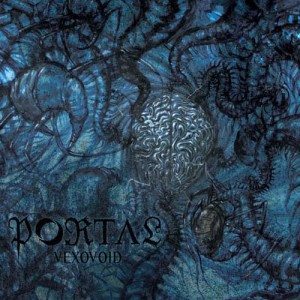
Hailing from the wonderful Land of Oz, Portal has been making blackened musical madness since as far back as 1994. It wasn’t until this side of the millennial mark that we saw some label-backed output from them in the form of The End Mills EP. Fast-forward 11 years, and Portal sound somewhat the same: dirty, evil and savage. Their offering of Vexovoid is just as spinning as much of their previous works, but a tad cleaner, although that isn’t saying much.
The quick fire guitars and drums on opener ‘Kilter’ immediately bring a suffocating feeling, one of darkness and evil. If you expect any less, then you’ve picked the wrong album. The mix throughout is very blunt, all elements coming at you at once. This is exceptionally good to hear on ‘Curtain’, as again Portal leave us with a dark trance to be engulfed by. The following track ‘Plasm’ is equally qualified to hypnotize you, leaving you begging for more darkness and suffering.
Second to last track ‘Orbmorphia’ is a two minute burst of mind bending incantations, proving that Portal can get the job done quick and efficient. Instrumental closer and hymn of all that is dark and pure-fucking-madness, ‘Oblotten’, is a pounding reminder of just who you’re dealing with. Portal has been doing this for quite some time, and although many may try and imitate, they will never truly duplicate the harrowing feelings that Portal can bring out of your mind.
If you’re looking for a soundtrack to a trip to hell and back, you can pick this album up from Profound Lore Records. I recommend you do so timely; Vexovoid is an album you need to hear. Support bands and artists that make you feel something, no matter what it may be.
HAIL!!!!!
If you've hung around on pretty much any music-based website in the past decade or so, you know that revivalist trends in any genre are often a contentious issue. There is no need to rehash those arguments here, but I will state my opinion that revivalist bands of late have been producing much better music than those in years past. While the retro-thrash movement of the mid/late 2000’s produced Vektor and nothing else of note, more recent revivals in old-school death metal, psychedelic rock, and doom metal have produced some very, very high quality material. In the death metal realm, Tribulation’s 2009 debut full-length The Horror is one such notable album, and a follow-up was hotly anticipated for some time.
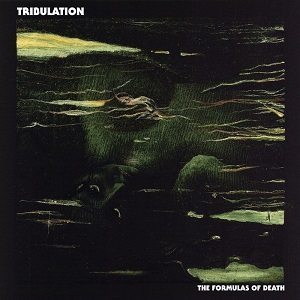
That follow-up is out now, and it’s not at all what anyone expected. Where The Horror was a straightforward Swedish death metal punch-in-the-gut, 2013’s sophomore effort The Formulas of Death is a dense, dynamic, and ambitious offering of atmospheric-but-riffy black/death metal.
To give you an idea of what you’re in for, The Horror was 32 minutes long over nine tracks, whereas The Formulas of Death is 75 minutes over 11 tracks. The longest track on The Horror was 'Graveyard Ghouls' at a flat five minutes, where The Formulas of Death has 'Suspiria' and 'Apparitions' at 10:21 and 13:25, respectively. The predecessor was focused mainly on kicking your ass with riffs, and while The Formulas of Death does have plenty of riffs, it has a bigger focus on the black, majestic, ritualistic feeling, hence the longer songs. Imagine the middle ground between Doom of the Occult by Necros Christos and From the Devil’s Tomb by Weapon, and you've got the right idea; it’s more focused on atmosphere than From the Devil’s Tomb, but emphasizes the riffs more than Doom of the Occult.
Furthermore, The Formulas of Death is a very demanding album, which is partially a result of its length but largely due to the complexity of the songwriting. Dare I call it progressive? Yes, I dare, although it doesn't shove the progginess in your face; the song structures are complex and nonlinear, with a few softer sections scattered among the heavy parts, but this is black/death metal first and foremost. While it should be readily apparent from the first listen that this is high-quality material, it will definitely take multiple listens for it to completely sink in. The multitude of riffs and the evil, grandiose atmosphere are a worthy reward for your undivided attention.
Despite their traditionalist roots, Tribulation have delivered something that is very much fresh and unique to the death metal world. The Formulas of Death is adventurous in ways many metal albums aren't, and it demands equal adventurousness from the listener. And, as in all things, the journey is its own reward, except this journey is filled with riffs.
(((O))) EXCLUSIVE STREAM