(((O))) REVIEWS
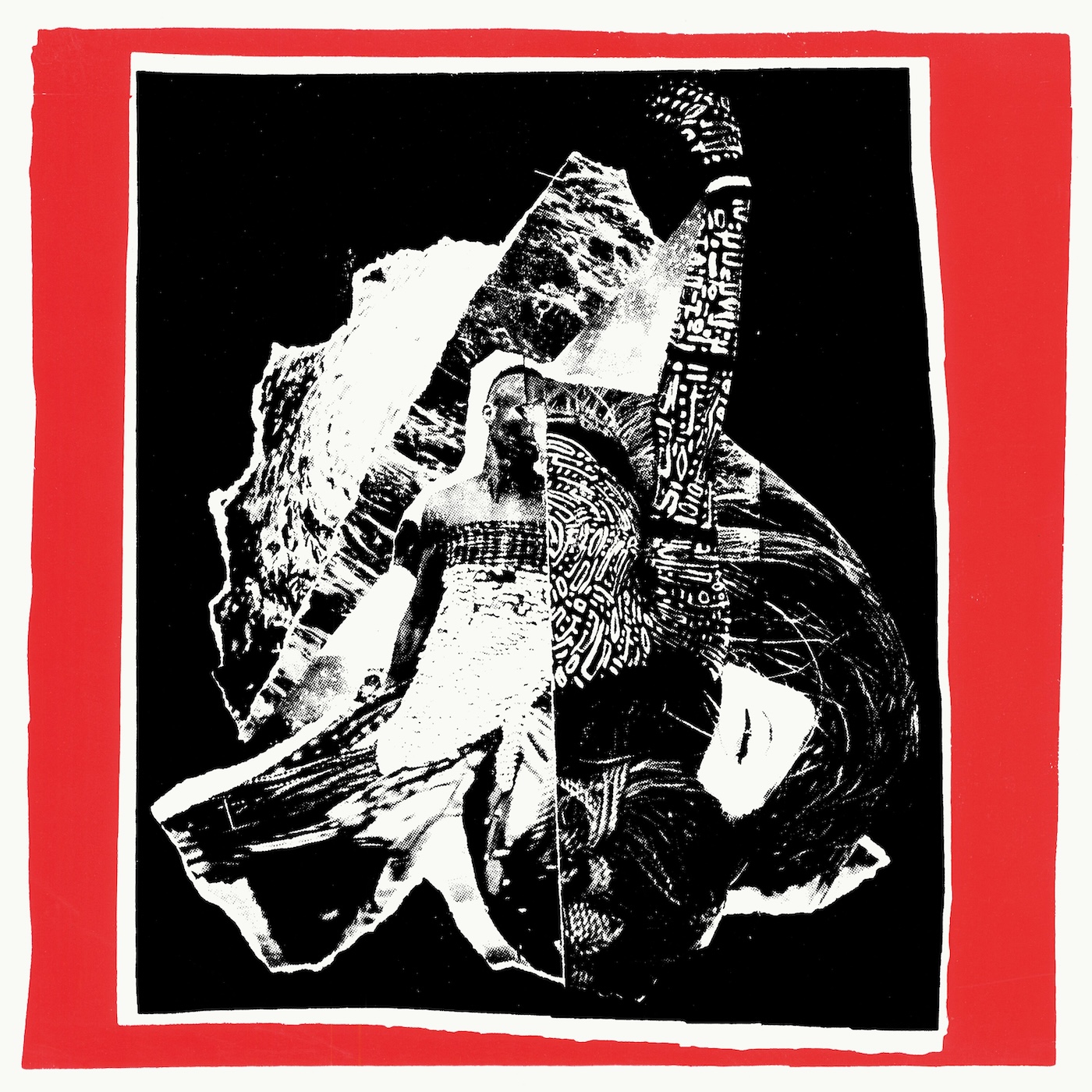
Àbáse – Laroyê (remaster)
Bognár was able to retain the authenticity of those original sketches by adding high-quality personal musical elements that still have retained its original impact.
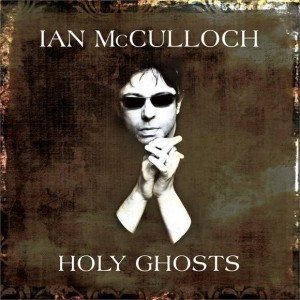
One thing that strikes you about Ian McCulloch these days is how much fun he seems to be having. If on tour with his main band Echo and the Bunnymen or hitting the clubs with his old mate Ian Brody to offer up stripped down versions of his songs (review on this site), McCulloch seems to have lightened up and even if he does have that old scowl, this time its more ironic and knowing.
What we have here then are two albums which in a way represent where McCulloch as a person stands now. The first, Holy Ghosts is a live recording of the Union Chapel gig he did with an orchestra and the second, a solo album. An easy sell for his new songs you may think, but what a bargain if that is the case.
Holy Ghosts captures one of those moments when magic happens at a gig. All the requisite details were there to start with, the orchestra, the venue and of course the songs, but on any given night umpteen things could go wrong. It is testament to Youth's production that this is now saved for posterity.
One listen to the majestic 'Bring on the Dancing Horses' allays all fears of overkill. Having toured Ocean Rain with an orchestra, McCulloch understands how to utilise them and they never ever seem to become intrusive. 'Horses' is perhaps the most overly orchestral with other songs having mild flourishes. The majority rely on acoustic guitars and that voice.
A wide selection is played covering Bunnymen classic such as 'Rescue', solo gems like 'Candleland' and even a run through of the title track of his new solo album. It is the aforementioned Bunnymen songs which you really want to hear though, and they don't disappoint. Possibly the most surprising is the ubiquitous 'Nothing Ever Lasts Forever' which becomes an ode to Wilson Pickett halfway through and gives a whole new perspective on the song.
Following this with a new solo album was always going to be a tough call and whilst it may not reach the heady heights of Holy Ghosts, Pro Patria Mori is still a very good addition to the McCulloch legacy. Much lighter in tone than later Bunnymen albums, this is the sound of McCulloch cutting loose and having fun (that word again). Almost skeletal in delivery, the music relies heavily on synthesisers with McCulloch enjoying wordplay over this. 'Empty as a House' soars whilst 'Fiery Flame' dances about. It is the title track which takes your breath away though with its drum machine pattern, jaunty vocal and church choir background (imagine Rebecca from Golden Fable singing on this). It sends shivers down you spine.
All in all, a fantastic package which will delight McCulloch fans even if it does not win any new ones. A shame as there is much to be happy about here and while living up to a legendary status seems to suit Ian McCulloch these days, at least he is doing it on his terms and having fun.
Released March 25th 2013 on Indie Recordings
Every so often an album comes along with such a wealth of back-story that (if you're curious enough) you can lose hours online tracing histories and hyperlinks through the fresh gaps that have yawned open in your knowledge. I found this out to my cost one stunningly sunny day when I spent the entire afternoon indoors, buried in Old Norse language, mythology, instruments and runes. The culprit was Yggdrasil, the newly-released behemoth from Norwegian folk(ish) enigma Wardruna.
Wardruna is the musical realisation of founder Kvitrafn's years-long studies of ancient Norse paganism and tradition. Yggdrasil is the second in a projected trilogy of albums based around the runes of the Elder Futhark, the earliest alphabet used by Germanic tribes in the centuries before the Viking Age. The album is named, appropriately enough, for the immense tree linking the nine worlds of Norse mythology, on which Odin purportedly hung himself for nine days and in so doing acquired divine knowledge of the runes and their symbolism.
Helvegen (Live) from Wardruna on Vimeo.
Eight of the eleven tracks are named for runes with basic meanings ranging (if Kvitrafn will forgive the abbreviation) from 'sun' to 'horse' to 'gift' to 'need' to 'wealth/cattle'. Much of the album was recorded in outdoor locations with meanings specific to each rune, and features recordings of birds, thunderstorms, burning torches and trees alongside massive vocals, deerhide drums, mouth harps, goat horns, and a handful of Old Norse instruments on which Google is reluctant to shed much light.
As you've probably figured by now, Wardruna is one of those slippery bands that defy all classification. Any attempt to brand it as 'folk' or 'ambient', or to place it under that suspiciously Imperialist umbrella 'world', will fail on first listen. Possibly the best description comes from Kvitrafn himself: "sowing new seeds and strengthening old roots". With his blend of Norwegian, Old Norse and Proto Norse lyrics, ancient poetic metres, nods to Norwegian folk music and the aforementioned ancient Norse instruments, Kvitrafn casts lines back to times over a thousand years ago, drawing sound and inspiration from pagan language, traditions and symbolism in order to reimagine them in his own musical cast.
What results is not so much an album as a saga. Running close on an hour and ten minutes in length, Yggdrasil stomps, thunders, and charges to battle through your living room, stopping only to consider a passing rainstorm or the shifting of leaves around birdsong. The album opens with the patter of raindrops, the call of a hunting horn through the fog, and a major triad in triumphal baritone. The upper voice yodels across modal shifts, the chord suspends then ends, echoing across some vast landscape - and with a deep bass hommm an army bursts through the speakers, snarling and sonorous and darkly percussive.
Wherever you turn in this album, the drums are never far behind. Yggdrasil is relentlessly rhythmic, fat with the strength of a hundred pagan percussionists gathered in some chill forest clearing. Voices call solo or amassed across the cavernous reverberations, swinging between speech and chant and rollicking song. Each track opens in relative calm, with footsteps or foresty twitterings or crunchy double-stopped strings, before erupting again into pounding beats and epic choral sweeps. Prepare to end the album feeling slightly windswept.
Whether you're talking books or movies or music, there's a certain fetishisation of the past that invariably comes with attempts to reimagine it, and at times - perhaps it's the occasionally over-produced refinement of yodels and bellows best left raw - Yggdrasil swings perilously close to the kind of sweeping cinematic aggrandisement you hear in Lord of the Rings or the opening credits of Skyrim. Certain heavy whispers are rather too reminiscent of the nastier workings of the Ring, or cries of “Bagginsss” across The Shire. But forgive the album its cornier moments and you're left with something quite remarkable, and nothing quite like you've heard before.
By John Sturm
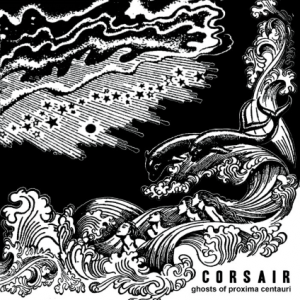
When reviewing records, I like to listen to the music before reading any of the accompanying PR or heading out on the internet to the artist’s website. I like to form my own opinions and thoughts, to draw comparisons of my own. My first run through of Ghosts of Proxima Centauri from Corsair generated the following words (according to my notes): “Thin Lizzy/Simon & Garfunkel/Humble Pie”. According to the tags on their Bandcamp page list as “70's rock hard rock metal NWOBHM progressive rock rock adventure rock classic rock Charlottesville”. So that should sum up the EP for you, dear reader. You’re welcome, off you pop now.
Oh ok, I shall dive in deeper for you. But only because you asked so nicely.
Corsair are one of those rare bands that can generate an emotional response in me simply through the music alone. The harmonies of guitarists Paul Sebring and Marie Landragin are so melodic and sweet it’s like letting waves wash over your feet at the end of a long summer’s day. Just like Simon & Garfunkel’s intricate vocal harmonies are rich, intoxicating and hypnotic, so too are Corsair’s albeit with guitars. A perfect example of this is the last 2 minutes of ‘Centurion’ which is simply the most simultaneously melodic and uplifting series of notes I have ever heard. So much so, that the play count for that one track alone (according to eyeTunes) is up to 15.
Elsewhere we have the classic rock-tinged ‘Warrior Woman’ which takes the principle of 70s rock to heart with some typically bare-chested Plant-esque lyrics. In fact most of the lyrics read much like the inside of a mid-70s double album: Gods, demons, jaguars, leopards, arrow, and Caesar all feature here. (And as fan of Iron Maiden, that is certainly not a complaint or criticism from me). Closing track ‘Eyes Of The Gods’ stomps on your ears while swigging a cold beer and ‘Burnish The Blades’ features a guitar solos outro so revered by the Allman Brothers. Energetic starts lead to peaks and troughs and end with the gentlest of endings.
Now stop reading this and go and listen to this EP and don’t forget you can thank me by using the comments section below.
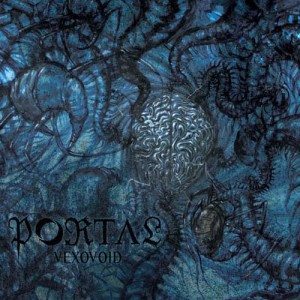
Hailing from the wonderful Land of Oz, Portal has been making blackened musical madness since as far back as 1994. It wasn’t until this side of the millennial mark that we saw some label-backed output from them in the form of The End Mills EP. Fast-forward 11 years, and Portal sound somewhat the same: dirty, evil and savage. Their offering of Vexovoid is just as spinning as much of their previous works, but a tad cleaner, although that isn’t saying much.
The quick fire guitars and drums on opener ‘Kilter’ immediately bring a suffocating feeling, one of darkness and evil. If you expect any less, then you’ve picked the wrong album. The mix throughout is very blunt, all elements coming at you at once. This is exceptionally good to hear on ‘Curtain’, as again Portal leave us with a dark trance to be engulfed by. The following track ‘Plasm’ is equally qualified to hypnotize you, leaving you begging for more darkness and suffering.
Second to last track ‘Orbmorphia’ is a two minute burst of mind bending incantations, proving that Portal can get the job done quick and efficient. Instrumental closer and hymn of all that is dark and pure-fucking-madness, ‘Oblotten’, is a pounding reminder of just who you’re dealing with. Portal has been doing this for quite some time, and although many may try and imitate, they will never truly duplicate the harrowing feelings that Portal can bring out of your mind.
If you’re looking for a soundtrack to a trip to hell and back, you can pick this album up from Profound Lore Records. I recommend you do so timely; Vexovoid is an album you need to hear. Support bands and artists that make you feel something, no matter what it may be.
HAIL!!!!!
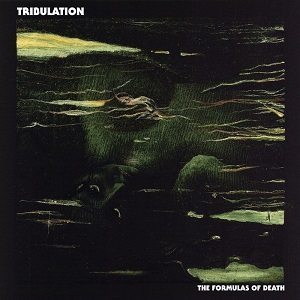
If you've hung around on pretty much any music-based website in the past decade or so, you know that revivalist trends in any genre are often a contentious issue. There is no need to rehash those arguments here, but I will state my opinion that revivalist bands of late have been producing much better music than those in years past. While the retro-thrash movement of the mid/late 2000’s produced Vektor and nothing else of note, more recent revivals in old-school death metal, psychedelic rock, and doom metal have produced some very, very high quality material. In the death metal realm, Tribulation’s 2009 debut full-length The Horror is one such notable album, and a follow-up was hotly anticipated for some time.
That follow-up is out now, and it’s not at all what anyone expected. Where The Horror was a straightforward Swedish death metal punch-in-the-gut, 2013’s sophomore effort The Formulas of Death is a dense, dynamic, and ambitious offering of atmospheric-but-riffy black/death metal.
To give you an idea of what you’re in for, The Horror was 32 minutes long over nine tracks, whereas The Formulas of Death is 75 minutes over 11 tracks. The longest track on The Horror was 'Graveyard Ghouls' at a flat five minutes, where The Formulas of Death has 'Suspiria' and 'Apparitions' at 10:21 and 13:25, respectively. The predecessor was focused mainly on kicking your ass with riffs, and while The Formulas of Death does have plenty of riffs, it has a bigger focus on the black, majestic, ritualistic feeling, hence the longer songs. Imagine the middle ground between Doom of the Occult by Necros Christos and From the Devil’s Tomb by Weapon, and you've got the right idea; it’s more focused on atmosphere than From the Devil’s Tomb, but emphasizes the riffs more than Doom of the Occult.
Furthermore, The Formulas of Death is a very demanding album, which is partially a result of its length but largely due to the complexity of the songwriting. Dare I call it progressive? Yes, I dare, although it doesn't shove the progginess in your face; the song structures are complex and nonlinear, with a few softer sections scattered among the heavy parts, but this is black/death metal first and foremost. While it should be readily apparent from the first listen that this is high-quality material, it will definitely take multiple listens for it to completely sink in. The multitude of riffs and the evil, grandiose atmosphere are a worthy reward for your undivided attention.
Despite their traditionalist roots, Tribulation have delivered something that is very much fresh and unique to the death metal world. The Formulas of Death is adventurous in ways many metal albums aren't, and it demands equal adventurousness from the listener. And, as in all things, the journey is its own reward, except this journey is filled with riffs.
Going from a full band to a two man project can be a daunting task at times. Sea Of Disorder’s Robert Czeko and Christian Hubmann were more than happy to take on the task, though. In November of 2011 they decided to jump ship together and flesh out some of their own music together. And as a result we have some nice songs to listen to.
Opening up with ‘Chapter I ~ Frozen Tide’, you’ll see that Sea Of Disorder are more than capable players with a knack for building tension within their music, and exposing their love for groove. The type of groove that make you can tap your feet to, bob your head even. While the guitar tones are familiar, I will forgive them simply due to my love of those guitar tones. You’d find these guys on a playlist mix with ‘Celestial’-era ISIS and earlier The Ocean as sandwiching layers. ‘Wor~ship’, to me, is an entirely unnecessary track. Its two minutes are distracting from the flow of the album, not really needed.
Loïc Rossetti from The Ocean provides guest vocals on Chapters II & III, cementing my earlier, but complimentary, assessment of their sound. His vocals are a nice mix into the gorgeous echoes that are ‘Chapter II – And From The Deep Gloom Came The Stillness Before The Storm To Crush Upon The Sea And To Awake The Secluded Conqueror’ A steady and droning sound on this track, but still very full of life and exploration.
On ‘Chapter III – Reinvigoration/ Thalassophobia’ (A phobia of the sea, for those keeping score) is a 13 minute affair with occasional “catch-me-if-you-can” drum beats, gorgeous guitar and effects sounds and Loïc’s vocals. The music is very good at keeping with the title of the song, as I found myself moderately anxious at a few spots. For those of you expecting a quarter hour of song that is up and down lie the churning of the sea, you found your whale here. The song even closes out with a nice drum jam and guitars full of sludge. Well done.
Sea Of Disorder has put plenty of time and effort into this album, even paying for it all on their own. Their style may touch the two bands I mentioned earlier, but all can be forgiven, as I enjoy this sound. And who knows, The Ocean may need a little disorder in their ranks one day.
Sea Of Disorder’s self-titled EP is available in digipack form through Le Crépuscule du Soir productions or on the bands own bandcamp. Support artist you love and enjoy, go buy their record.
HAIL!!
By Karla Harris
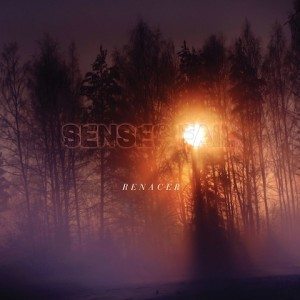
Formed in 2002, New Jersey’s Post-hardcore favourites Senses Fail have spent the past decade making records that, in the least patronizing way, have fallen under the ‘same-old same-old’ criteria. I mean why wouldn’t they? With the success of their 2004 debut album Let It Enfold You, it’s so easy to continue along the tried and tested, if it ain't broke don’t fix it route giving their fans the top high quality popular Screamo that they have grown accustomed to.
Surprisingly, their fifth and most recent 12-track LP, Renacer, is completely renovated sonically, thematically and lyrically. The album title, translating from Spanish means “to be reborn” and Senses Fail have bravely shed the skin of their former sound and are coming at us essentially with the creativity and freedom of a brand new band who have dispelled of all boundaries to embrace a much heavier and darker musical experience.
Wasting no time whatsoever in alerting the listener to what the album stands for, it kicks off with the title track that just seconds in fans of Senses Fail will either be dying of excitement at the change of direction or crying into their pillows at the loss of slower, emo ridden angst. Substituting former melodic, predictable hooks, with raw aggression, fast paced pummeling beat-downs, spluttering downpicking guitar riffs, monotonous yet growling screams, the lyrics are also different; being a much more personal and profound shared coping experience. “The gate you're afraid to enter holds the treasures you seek.” Begins 'Renacer', a quote by American Author Joseph Campbell, that lead singer Buddy Nielsen explains; “I think it embodies the journey that I’ve been on personally… the best things I found about myself in the worst places within myself” thus, setting the theme for the rest of the album.
Tracks to look out for, 'Mi Armor', their first official single composed of lyrics sung most predominately in Spanish. For those that don’t speak Spanish, the catchy overtly poppish chorus breaks up the heavier, chaotic Spanish Hardcore is in English; “You are the ocean and you are the moon. I'll follow you until the waves come through” reminds us that it is actually a love song and its components are intended to challenge people, exposing them to something new. This is the most self-confessed “marmite” track of the album, but highlights how much Senses Fail have matured musically.
'Closure/Rebirth' is the last “Frankensteined” feel good song they wrote but interestingly, despite its name, is placed as the fourth track instead of an album closure. From time to time I like a bit of a good back story and this track goes as follows: Having had a fair amount of trouble recording this single due to Hurricane Sandy causing flood damage to the ground floor of the building the band were working in preventing them access (luckily the studio was on the second floor and suffered no damage) they then wrote two songs “one really fast that got really heavy and the other one was sort of upbeat but then got really spacey so… we took the parts we liked from each song and made this song 'Closure/Rebirth'. This song again serves an example of the bands embracing new challenges. There are certain parts of the track that embody familiar melodies from previous tracks and the lyrics roar repetitive positive messages asking us to “let ittt goooo”.
Lastly, the inspirational closing track 'Between The Mountains And The Sea' mirrors older Senses Fail and could easily fit in on a typical Taking Back Sunday or Brand New album. Slower, spacious, yet definitely not duller the track opens with sparse, echoing, haunting guitar riffs closely followed by the standard lightly heavier but melodic and monumental choruses Nielsen’s fans have previously grown accustomed to. Poignantly ending with the lyrics “don’t fear the unknown road, what is diamond was once coal” the album wraps up nicely exuberating the continuous theme of not being afraid of what’s to come, discovering yourself, and remembering that “everything that’s good comes out of a struggle.”
With a change in line-up, (original member and key songwriter Garrett Zablocki (guitars) was replaced by Strike Anywhere guitarist Matt Smith and guitarist Zack Roach) a change in producer (Senses Fail went with Shaun Lopez of Deftones, Crosses, VersaEmerge instead of using longtime collaborator Brian McTernan) and a change in the way the band perceive the world, progression, growth and such an extreme change in sound has completely worked in their favour. Whether or not this will be the general consensus is yet to be seen, but it’s always a pleasure to see a band who are true to themselves and their creativity, even at the expense of knowing fully well people might not like it. An impressive effort. Respect!
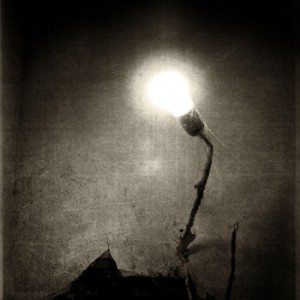
Well, we here at Ech(((o))es and Dust do things a little backwards it would seem. But, not quite, my friends. After reviewing Abyssal’s second album Novit Enim Dominus Qui Sunt Eius we received word that Hellthrasher Productions would be reissuing their self-released debut, Denouement. So now we get to hear the darkness that in Abyssal, in their earlier form.
Instantly ‘The Moss Upon Our Ruins’ begins with cold winter winds then an intro with evil intent. The drums at times sound a bit too mechanical for my liking, but I’ll get over it. Also noticeable right off the bat is the mix on the album. Where Novit Enim Dominus Qui Sunt Eius is claustrophobic and devouring, the mix on Denouement has a little more breathing room. Everything is quite a bit clearer, minus the vocals at certain parts, a minor complaint.
The mix I talked about being so clear is somewhat all drowned together by the time we hit ‘Detritivore’. Not entirely, but its getting there. The menacing drums still higher than vocal parts (and in full assault mode I may add). The guitars seesaw with ease and an appropriate buzzing. This is the Abyssal I found first, on their second album. Final song and album closer ‘Swansong of a Dying Race’ finds Abyssal on all cylinders and bringing the menacing, evil sound that they are known for. The song packs plenty of sorrow as well, something any Abyssal track needs.
If you haven’t heard or don’t own Abyssal’s debut album, I suggest you pick up Denouement as soon as you can. Hellthrasher Productions has this available right now, and I believe Abyssal deserve your support. So that we may continue to receive the black mass they have crafted and evolved. Support the bands and artists you love.
HAIL!!!!!!!!!!!!!!!1
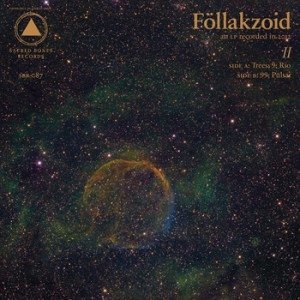
Earlier this year, Tactile Tracks ran a fantastic article about the struggles faced by artists, poets, and musicians in Chile during the reign of dictator Augusto Pinochet. Following the coup d’état that ousted Socialist leader Salvador Allende and placed Pinochet in power, the military regime tortured and killed folk musician/political activist Victor Jara, forcing many artists, writers, poets, and musicians to flee the country. The psychedelic rock scene in Chile was booming in the 1970's before Pinochet came into power, with acts like Los Jaivas (the most popular of Chilean psych groups) breaking boundaries with their free-flowing compositions and spacey atmosphere; Pinochet's rise essentially halted any and all artistic progress within the country.
While Chile’s music scene rebounded almost immediately following the fall of Pinochet, it is only now beginning to make a worldwide impact, and Föllakzoid, featured prominently in that Tactile Tracks article, are one of the best neopsych acts to come out of any country in recent years. Their second album II is an absolute trip, filled with spacey textures and trance-inducing Neu!-inspired grooves that will project you to the outer reaches of the universe.
As with any space rock album, the most important aspect is the atmosphere, and if you couldn’t tell from the previous paragraph, II has atmosphere in droves. Drummer Diego lays down the repetitive, hypnotic rhythms upon which synth player Alfredo and guitarist Domingo are able to trade places developing the textures and playing the lead melodies. Bassist Juan Pablo is felt throughout the whole record, binding everything together with a constant low-end glue and contributing a distinct hazy earthiness to the spaciness of the album that is most noticeable on 'Rivers' and present (to a lesser degree) in '99' as well. (There are sparsely-placed vocals throughout the album, but I can barely find lineup information on the band as-is so I have no idea who does them.)
However, despite that earthiness, II generally takes you way out into the furthest galactic reaches. '9' and 'Pulsar' each make you feel like you’re floating through multi-colored nebulae, and the faster-paced middle track 'Trees' feels like a high-intensity 12-parsec trip through the Kessel Run. And while the spacey atmosphere is no surprise – the genre is called “space rock,” after all – Föllakzoid’s execution of it is spectacular.
Föllakzoid have put together something brilliant, and if you enjoy modern psychedelic rock, II will be one of the best albums you hear in any genre. I can think of no better “fuck you” to an arts-crushing autocrat than for a universally-acclaimed album to come from the country he once ruled, and Föllakzoid may have just pulled that off.
This release will no doubt see the dreaded "supergroup" term banded about as did Shrinebuilder. Okay so the members include Scott Kelly, Bruce Lamont, Mike IX Williams and Sanford Parker,but can we just call them a band or project. Like Shrinebuilder, Corrections House differ to other so called supergroups by actually being brilliant and relevant.
The music created here is different to what most members have done previously anywhere else. Industrial like rhythms pound the senses and a highly experimental and electronic tinged sound dominates. First track 'Grin with a Purpose' features spoken word vocals over harsh industrial textures. It's difficult to classify but there are elements of all the member's influences apparent. 'Hoax the System' is more immediate and relentless in delivery. Rhythms combine to form a hypnotic sound of impending doom. It's punishing and infectious and leaves you craving more.
Hopefully this is the start of more to come from Corrections House as the world needs to hear more from what these four combined can produce. This release will be issued in Europe by Burning World records and War Crime records in the US and it is available here.
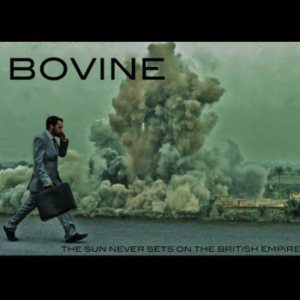
You know you're in for some serious music when your album begins with what can only be described as a mood piece. A piece of music of no consequence at all that lulls you into what is to follow. A cursory glance over the song titles confers this as we see a pattern emerging. 'Military Wive', 'The Battle of the Sinkhole'...these are not love songs. Even the name Bovine conjures up images of meat racks.
So it is with second song 'Ghost Chair', Bovine set out their stall. All pummelling riffs and vocals lifted straight out of a Deftones songs this is emotional metal of a different ilk to the panda eyed hordes. Shades of nu-metal are abound but there is also a technical ability which always seemed amiss among the majority of that scene.
The main issue is that there are too many ideas, snatches of disembodied voices drift out of the mix whilst the vocals strain to be heard over the music. Thankfully this changes with 'Thank Fuck I Ain't You' being a welcome breather. That's not to say things have calmed down, its just that the music has more chance to breathe.
This is where Bovine's power really shows, on songs such as the superb title track and the aforementioned 'The Battle of the Sinkhole', they stretch out and let the gaps in the music do the talking. Sometimes it isn't about filling in every space possible and a pause can say a million words.
Lyrically its difficult to discern what is going on. One can imagine visions of war and possibly some sort of analogy with a dying British Empire but this is lost in the tumult of music. Not a bad thing by any means as this is more than enough to keep you going.
After a while it tends to get a bit similar but ultimately it is a very satisfying album. Yes, there are moments where the band get over excited and a tad too serious but given time and experience they should be able to iron these out. When Bovine are good, they are up there with the great bands of whatever scene this may be. At the end of the day its metal, its loud and technically its very astute. A welcome addition.
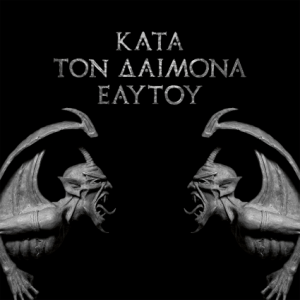
Rotting Christ has been making music in some way, shape or form since 1987. 1987, I was turning one that year. Some of you may not have even been born yet. Crazy isn’t it? Since the incarnation, the Tolis brothers have been the only consistent. Themis on drums and Sakis on vocals and guitar (bass as well for recording, they use touring live musicians on the road). So when time came to write the follow-up to 2010’s Aealo, brother Sakis did soul searching to really lay it all on the line. And as a result we are presented with Kata Ton Daimona Eaytoy (in English it is translated to “Do What Thou Wilt”, a phrase of Aleister Crowley fame.). You want to know what nearly 30 years of Greek domination sounds like? Let me tell you.
‘In Yumen – Xibalba’ opens this ritual as a slow sacrifice, chants, standard tempo guitars, and vocals being sung/chanted in a language I do not understand. At first it was off putting, but after a few listens it really wasn’t an issue. I found everything fit together well enough that it crossed vocal limitations for me. Anyway, after chants be done, a solo guitar riff preps us for blast beats and evil. Yes, blast beats and evil. Standing behind that is a wall of great chants and echoes if you listen close enough. Minor orchestrations as well, an opener of epic proportions.
The series of tracks ‘Grandis Spiritus Diavolos’, ‘Kataton Demona Eaftou’ and ‘Cine Iubeste Si Lasa’ really flowed well and stood out in my mind. They were the three tracks I went to the most. The first being a prep for war, shields and swords are being sheathed. ‘Kata Ton…’ being the ride into battle. Limbs torn, bodies flayed, bodies decapitated, all while the King yelled his orders and oversaw the blood bath. Drums keeping the pace of horses, guitars the heartbeat of warriors and the choir the spirit of the slaying. ‘Cine Iubeste Si Lasa’ is what’s left of the battle. A piano accompanying a soprano (I’m probably wrong) vocal performance full of mourn, but strength. No soldier lost without a reason. Eventually the band kicks in and the troops left standing continue their travels. One fight behind them, cleaning the blood from their weapons and armor, they keep forward.
The rest of the album continues its ups and downs until the final two songs, ‘Ahura Mazda Anra Mainiuu’ and ‘Χ Ξ Σ (666)’. ‘Ahura...’ is the final battle cry, taking over the kingdom, paving a path for a new reign. A dark King wishes his throne, and his warriors are gaining every inch of ground they can grasp. No stopping these wild men, not with a soundtrack like this.. This war is and was, theirs in the first place. They just wanted to get their armor broken in…a little blood on their blades. ‘Χ Ξ Σ’ has the king taking his new throne. Marching riffs and drums leading a ceremony of victory and darkness; the dark lord now looks over the land he now calls his own.
In the distance the drums ech(((o))), and the king now tells his men to prepare for battle. And Rotting Christ will be there, ready and waiting, a new anthem of mayhem in their souls. Be sure to go out and grab this album from Season of Mist, once you’ve wiped the blood off your boots...
HAIL!!!!!!! HAIL!!!!!! HAIL!!!!!!!!
By JH Statts
There are hundreds—if not thousands—of Black Metal bands in this cold, dark world of ours. Of those thousands, possibly a few hundred are considered to be quite good. Of that few hundred, maybe 75 to 90 are thought to be pretty great. And a handful of those “greats” happen to be the best the genre has to offer (and can be different as night and, well... darker night). There is no sun in this scenario. No brightness. No day. No light. That's the way it should be, anyway.
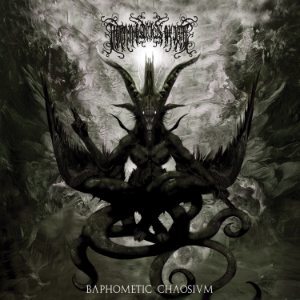
With Baphometic Chaosium, Los Angeles-based Black Metal band Lightning Swords Of Death have made a record that easily fits into the “quite good” category. It might even qualify as “pretty great” depending on the listener's preference. Historically, Black Metal's production has been low-fi, with more of an emphasis on capturing the raw and icy feeling of the music, rather than making sure the recording is perfect and/or as clean as possible. This is not always the case, as on Baphometic Chaosium. These days bands (or their engineers/producers) prefer to beef-up the production of Black Metal, resulting in a very crisp, in-your-face sound. Think modern day Behemoth. To be honest, either is fine by me. The music is what matters here. And Lightning Swords Of Death make good music.
Songs like 'Oaken Chrysalis', 'Acid Gate', and the title track are not only filled with speedy, blackened blast-beats, and catchy, yes, catchy, dark riffs, they are also successfully cohesive on the record. These songs—this record—rocks in a way that is different from most Black Metal. Maybe it's the L.A. connection, or maybe it's just a coincidence. Either way, it is quite good. Not terribly long, and not annoyingly short. Maybe it is pretty great; not just quite good. One of the best the genre has to offer? I guess time will tell. Pick it up and decide for yourself. Baphometic Chaosium is out now through Metal Blade Records.
Reading the bio of Masaki Hosotani the first evident thing coming up is his passion for music. He is, for the uninitiated, a rather special composer. Just to mention something: main member of the band Miso Soup, music composer with commissions for international famous brands, soundtracks for TV programs, advertising, art exhibitions and several other commercial projects, and music producer with the project Just Becoming. I suppose this is enough to agree with me and I do believe he will put his hands on other music projects in the future.
Breakfast At The Twilight is Masaki Hosotani's debut album as solo artist and it is going to be released next April 19th, by Post Rock label Oxide Tones.
'Breakfast at the Twilight', as the album title, is the first of the 9 tracks on this album. The song starts with soft guitars, clusters of notes gradually coalesce and dissolve around a dominant sound that slowly moves into a Japanese sound.
If u are Japanese (as Masaki Hosotani) it is not difficult to think about this kind of sound but for sure realizing it in this terrific way is not so easy! Within a few seconds the listener finds himself in one of the most beautiful prints of Hiroshige. He is now along a route experiencing the beauty of cherry blossoms in a landscape full of colors with a dominant one: 'Pink Sky Light'. This is the second track and also my favorite where guitar-driven melodies, delays and reverbs give an atmospheric sound and a really original rhythm that characterizes the entire album. And 'Sketch of Dream Shadow vers. 1' seems a continuum of the second track.
Each song of Hosotani starts slow blossoming then into an extraordinary piece: 'A Smaller Letter With Her Favorite Tin Can' in particular is hypnotic, spacey, deep, rich, emotive with significant ambient qualities. Spring arrives with 'Flower, Mirror, Puddle, Sunshine' where a gentle guitar dance gently evaporates into a simply amazing track, and perfectly named.
The two-minutes guitar joke of the 'Sketch of Dream Shadow vers. 2' lead intoone of the last tracks, named 'In One Colour', that sits comfortably on appoint where ambient, electronic sounds and guitars notes gently merge 'In One Colour' that is the colour of the 'Pink Sky Light'!
It’s been said many times before by myself, and possibly a few others, that in order to stay fresh you have to step out of you element. Well here I have Nubilum, the solo project of Michele Ferretti also of Eleleth and Gottesmorder. Tsantsa isn’t a minor EP, but a journey of soundscapes. I know what you’re thinking “Come on Ryan, you do this all the time.” Deal with it. Don’t like it, I’m positive one of my usual tales of violent death metal and blast beats will be back soon. Sit back and enjoy this, maybe you expand your horizon.
‘Migration Divides’ is a heartbeat pulsing. The sounds of air echoes through halls. The occasional high-hat snaps. I'm in a dark room with no lights. I am everything and nothing all in one. My surroundings unknown, but uncared for. I drift alone. I heart the pacing of wild animals in the distance. But I am still in this dark room. All my fears are gone. And yet they surround me. My eyes are closed but I can see everything. The darkness is neither friend nor foe. It just is. Here and now, I am. All is quiet, but my heart still pulses.
‘Kelp Forest District’ Who are you, what do you speak? I can hear the voice but cannot find it. The static is growing. I can’t breath. The ringing in my ears, make it stop. I feel it pass, and the beautiful seas have taken me. I am but adrift in the ocean. My movements clear and weightless, I am here and now.
‘Wetland Disease’ I open my eyes and I'm in front of a forest. Many fear but I proceed. My heart racing. My body aching. My heart racing. My eyes burning. My heart beats unsteady. I can hear the fires in the distance. I can hear the skies screaming down upon me. In this night glow I am still, but I cannot stop moving. Where I am going, towards the calling. My heartbeat grows stronger the closer I get. To what I do not know, but I continue. I see a clearing in the thick of the forest. A fire burns before me, yet no one is here. But the fire speaks to me. What I have been through, what I have seen, has led me here. My heartbeat fades. I can rest now. I am one with the flames. Here and now.
Three soundscapes. 17 minutes. If you need to get away and have 20 minutes to spare, your answer is right here. You’d be doing yourself and Nubilum a favor if you pick this EP up from Tulip Records right now, today. You deserve to get away now and then. Nubilum want to help you do so, and open your eyes in the process.
(((O)))
(((O))) EXCLUSIVE STREAM