“I want to be kicked in the gut. I want to be scared of what my character can do.”
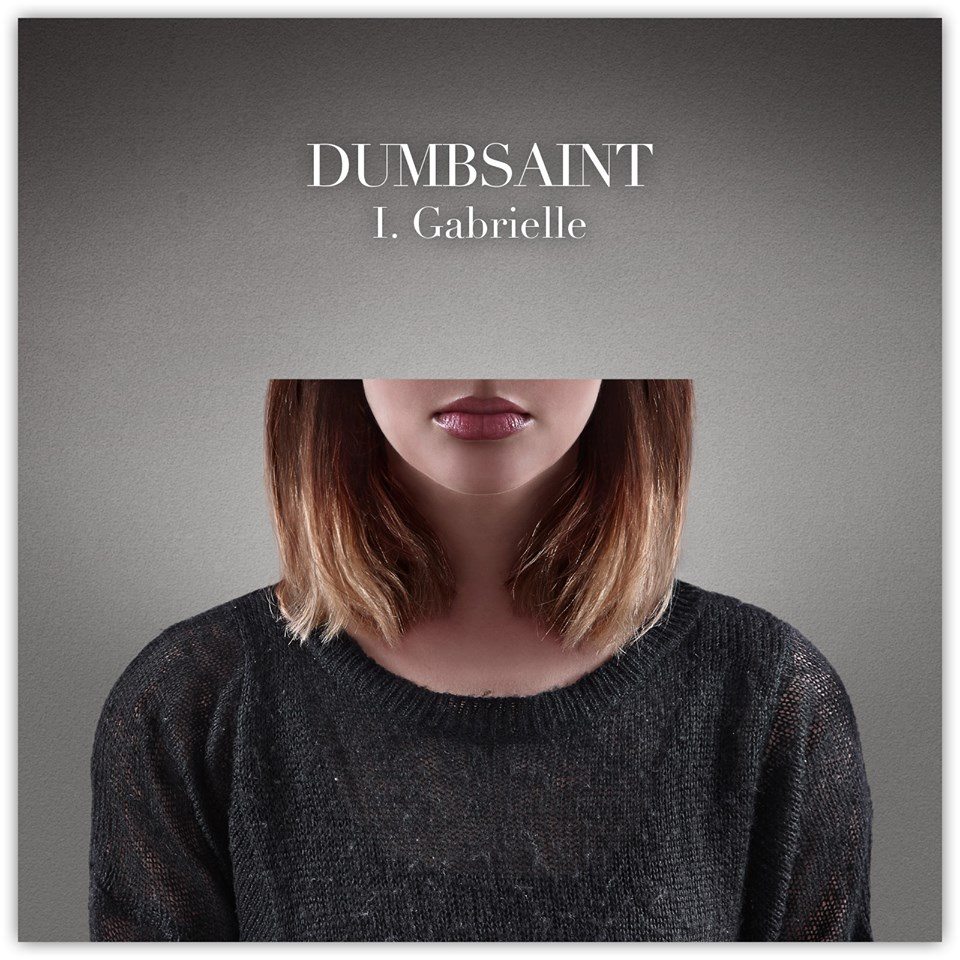
Dumbsaint is a Sydney entity consisting of four humans that create music and film. Or film and music. They are about to release the final part (Part I: Gabrielle) of their trilogy Disappearance in a Minor Role, which ties in with their other short film from last year; The Auteur, and will in turn lead to a bigger future project. They suggest you watch Part III: Celeste then Part II: Sara first, but I suggest you watch The Auteur before them. Each part was filmed and recorded separately, and in fact production and mixing of the music is done by three different people- Part I by Dylan Mitrovich, who also records and produces the music of his own band, Breaking Orbit. Apart from character and story links between Disappearance and Auteur, there is at least one subtle reference to the band’s debut album Something That You Feel Will Find Its Own Form with a song name appearing in two of the four films, but I’ll let you find that connection yourself.
The relationship between music and film, is interesting, not the least because on their own they are so different. The fact we use the term “multi-media” when talking about a band playing while images are shown suggests both a whole and a fractured collection of parts, as though we’re talking about oil and water. For the most part you can have each without the other and when separated from the whole they are created, presented and devoured in such different ways. Further, not many people will watch the same film a hundred times, or even five times, but will watch a song’s film clip over and over and listen to that song on its own many more times still.
Film as an aid to selling music from the ‘50s pretty much consisted of filming a band play in a TV studio, until Scorpio Rising and A Hard Day’s Night in 1964 changed the future of pop music films. Australia’s Countdown introduced clips made for TV a decade later, including early AC/DC efforts, and twenty years later directors were starting to get as much credit as the band. Of course through all this you still had bands like Kiss whose film clips are pretty much identical and consist of the band in a studio with some cheap star lens effect, and performers still love to get themselves into most videos today- self-promotion first, story second or non-existent.
Despite this use of three-and-a-half-minute ads, the music video as a means of telling a story visually and aurally without reference to the musicians has also found a foothold, and what makes creations like Disappearance so different from both movies and the promo-style music video is that they are more like old silent films. Silent films were no more silent than instrumental music is silent. The fact the soundtrack was not attached to the celluloid is of little consequence - the music can be, and was, provided easily enough (although they didn’t call it multi-media back then). The term “silent”, which of course was only used after sound was added to differentiate it from talkies, was more about the fact that they had no spoken dialogue that you could hear, and any narration or conversation was either lip read, found in the expressions and actions of the actors, or flicked on the screen in minimalist written form. I don’t see how that’s silence, especially once you add music.
To me the pinnacle of the essence of silent films is not a “silent film” at all but found in the companion pieces Mon Oncle and Playtime by Jacques Tati, where dialogue is sparse and often simply represents conversation, and takes a back seat to the sounds of the world around, the music, the visual style, and the deception of the viewer through manipulation and exploitation of assumptions. Nothing is quite what it seems. What Dumbsaint has done with Disappearance is another interpretation of this philosophy in which dialogue is virtually unnecessary in telling a story and keeping the audience guessing. Music and image is almost all we need to manipulate the viewer.
While The Auteur is described as an audio/visual piece, Dumbsaint has moved to the description “short film” for the trilogy, thereby declaring complete the transition from creating visuals that matched the music, to creating a single piece. Without giving too much away, Part I gives clarity to Parts II and III, although thankfully not too much. There’s enough left unclear to draw you back to the other parts and check your assumptions, an effect amplified by the fact that the three parts don’t directly run into each other either in time or in point of view. After all it’s hard to know what’s real and what isn’t real in Dumbsaint’s film world.
Using those wonderful themes so loved by writers and film-makers of envy, deception, and making a deal with the devil, we’ve had to wait till now to find out who the man in the tree is, so to speak, and what the predicament is. Going back in time from the conclusion to the beginning is not exactly unheard of in TV shows and short film, but the connection with The Auteur gives that sideways link and there’s the gaps between the three parts that throw your sense of time and direction out compared to an unbroken, linear narrative.
Visually the style varies between the three parts. Part III is mostly a collection of static camera shots with simple and minimal design but no harshness, very little movement, and there’s a sense of graphic novel about it, although this is carried through the other parts. Part II is similar but has more movement and physical interaction, more characters and much more eyeline matching and reverse angle shot, where we cut to shots of what the character is looking at after a closeup of their face. Part I becomes more complex still - more characters, a small amount of spoken dialogue, and still more movement, so that in reverse the story gets layers built onto it, not only in the story but in the way it’s filmed and edited. So if you watch the three parts in chronological order rather than in reverse order as intended, the peeling of layers actually reveals less.
And what of the musical component? In many ways the clearer the story becomes, the more discordant the music is, which contradicts the sense of closure you’re expecting the final chapter (Part I) of the story to provide. But of course it’s not so much a resolution as a reveal, where we discover many of the secrets of the characters, but the whole story still remains sketchy.
Each of the three parts starts with a short introduction before the main body of music, as does with the film, and for the main it’s build on steady drone, minimal percussion, liberal use of downpicking and a bassline that provides much of the dynamics. There are lighter parts, but never happy, and it’s all about establishing emotion and atmosphere rather than following the action precisely. Yes there are moments here and there where a strum or drumbeat will coincide with movement, but the fluid nature of the soundtrack provides a contrast to the neat storyboard segments of the visual experience.
This is more obvious as we move from Part III to Part I, but despite this contrast the music still tells the same story as the film. Break its endosymbiotic relationship from the visual side of the film and the music in each part holds up as it shifts through tension, moodiness, melancholy, anxiety, apprehension, despair and more in what is essentially a more downtempo and drone manifestation of the post metal found on their album or in The Auteur. They won’t like me calling it this but it’s great post-rock, rock that’s about texture and freedom from conventional structure rather than melody and riffs. It’s not quite as intense as I expected and in some ways is quite ambient, but its purpose is not to drain the life out of you or steal your attention from the visuals. In exchange the visuals don’t steal attention from the music, and as the songs are not 20 minute drone epics, they are not trance-inducing either on their own or as part of the films.
The elements of the trilogy are based on subtlety. Whether it’s a single strum of the headstock of a guitar, or the same curtain blowing freely in the breeze in one scene, then blown against window bars in another as life starts to spiral downward, even at its most intense, minimalist, and clear there is a satisfying inner complexity of texture and mystery. No doubt as this creature expands into the next film project both the clarity and mystery will deepen, which will give these films a longer shelf life and more revisits than short films usually command.
Part I: Gabrielle will be released on 8th August and the music will be released as digital download or limited edition cassette. Keep track on Dumbsaint’s Facebook page.
DUMBSAINT - Part III. Celeste - 2014 Short Film from Dumbsaint - Music & Film on Vimeo.
DUMBSAINT - Part II: Sara - 2014 Short Film from Dumbsaint - Music & Film on Vimeo.