So now we have a view from across the pond for you. San Diego based Jake Gillen has been one of E&D’s most prolific & inspiring contributors over the last few years; here he speaks to a couple of the old friends that made him the musical guru he is today.
I’ve asked a couple of friends to share what music and independent record stores (the same ones that I frequented in fact) meant and mean to them.
First is Ken Bibb, a guy from my neighborhood who introduced all of my friends to computers, UNIX, the Internet and, of course, music. Ken introduced everyone I know to the band Marillion, and nothing has been the same since!
“When I first bought records in the late ‘70s, there were the major chains like The Wherehouse, which were in malls and mostly staffed with people who didn’t even know who The Police were, and Tower Records (where I bought my first LP on my own) where some of the staff were knowledgeable, but many others were only interested in preening. You could go in and buy what they had in stock but staff weren’t that helpful. We didn’t have an Internet back then — I didn’t find usenet listservs until the late 80s — so store information, magazines, and what you heard on the radio was about it.
At school one day I heard about Blue Meanie’s, a record store on the far side of town. The first time I went there I rode my bicycle and wasn’t sure of the place since it really was just a house. So I stood on the porch, undecided, and then someone came out with a bagged LP and I went in and it was like entering a cave of wonders.
There were posters and tee shirts on the walls and the clerks were intimidating but once they saw you a few times revealed themselves to be Keepers of Knowledge.
I could pull any album from a bin, say Random Hold’s (rare) double LP “Avalanche” (as originally conceived), take it up to someone who worked there and they’d not only be able to describe what was on the album (“music”), but they could tell me what bands the bass player had previously been in (“Matching Mole”), where they’d moved on (“the guitarist is now Peter Gabriel’s”) and if they were touring(“no”). I was happily told that it was the worst kind of crap, but considering what I’d bought the week before, it might be crap that I’d like.
A couple times a year one of the staff would go to far away London and there was a lot of anticipation as everyone waited for the mailed box of LPs to arrive. There would often be impromptu listening parties where the returning staff member would tell the others about what they’d seen, upcoming bands and styles, and would share magazines that they’d bought.
Eventually, the house became too small and they moved to a more traditional storefront. Staff members moved on. The internet arrived and it all seemed to change.
You’ll still find cool, informed people with great taste at your local record store. They edit the titles down to stuff they like. Go through the bins and pick up something and ask the staff what it’s like. It might even be the worst kind of crap, but just the kind that you want to buy.”
Next up is Jason M. Hough, who I met almost 30 years ago, and with whom I have always shared a love of James Bond and good music. Jason also happens to be a very talented writer, and his first novel, a science fiction epic, will be released next year.
“You could say I came of age at a turning point in the music industry. I’m talking about MTV, back when the M stood for something. The channel became insanely popular right around the time music grew into something more for me than just a passive relationship.
Before video killed the radio star, I listened to whatever my brother listened to, and that meant a lot of KISS. Some Crue, some Ratt, a little Judas Priest… but mostly KISS. My brother had an entire wall of bootleg KISS concert tapes, at one point intent on collecting copies of every show they’d ever performed. We had all their LPs too, of course, but he’d bought them. I was only thirteen, I just listened.
Then MTV put music front and centre in the playground chatter at school, and I followed the herd away from my heavy metal roots to top-40 fare like Depeche Mode, Duran Duran, a-ha, and all that. More on a-ha in a minute. The thing is, most of it was shit, and I knew it. It was popcorn. It was repetitive and shallow. I only listened to it because everyone else did, and the videos were often hilarious or wonderful.
When I started to spend some of my meager paper-route income on EPs, I quickly found the B-sides were far more interesting than the hits. The songs not deemed worthy of radio or video. This was a revelation for me. Even bands I tolerated only because the playground mandated it turned out to have some good songs to offer.
I even found out that some top bands had unpopular, radio-unfriendly albums in the Tower Records bargain bin. Albums I absolutely loved. Case to point: East of the Sun West of the Moon by a-ha. Still one of my favourites to this day.
Around 1984 I met two people who changed my life. First, my friend’s neighbour Ken hired us to do some data-entry during the long, boring summer between seventh and eighth grade. We’d sit there and type things into a database for a few bucks an hour, and since we were in Ken’s home we had to listen to whatever music he put on.
Looking back I suspect that might have been Ken’s real goal all along. He was a true connoisseur of great tunes, and I think he wanted to open our minds. The music… the fucking music… that came out of that record player, is still with me, twenty-five years later. Pink Floyd, Rush, and the true gem in the mix: Marillion.
This is a band I doubt I’d ever have discovered in that pre-internet age. British, melodic, poetic, awkward. Long songs that rarely repeated a chorus. Exactly the kind of thing U.S. radio hated, and exactly what I craved. Marillion made entire albums that had all the traits I loved about B-sides coming from popular bands. And then I heard Marillion’s own B-Sides Themselves. Any entire song of lyrical puns? A seventeen minute epic based on Beowulf? Are you fucking kidding me? I could go on about it all day. Suffice to say, they’re still my favourite band, and through thick and thin, sickness and health, they always will be.
I met someone else that summer. Another kid from school, Jake Gillen (who reviews for this site). Now, Jake took a lot of his musical cues from his older brother just like I did, but he never seemed to get dragged down into the pop-hit morass like me. Jake was a mod. He introduced me to The Who, The English Beat. Ska. And his personal favourite, The Jam.
The Jam are nothing like Marillion, and yet I loved them both. Still do. And those two bands have largely been my wheel and rudder for all my adult life. Think a band can’t sound like a mix between The Jam and Marillion? Check out Amplifier.
Of course, to feed an eclectic music taste in the mid-80s, you had to look far beyond MTV or radio. You had to ride your bike for an hour in hundred-degree heat, past Wherehouse and Tower to reach the local indie record store, Blue Meanie. The thing I remember about that store, beyond the sheer scope of their inventory, was the knowledge held by the staff. Sadly I didn’t really appreciate that kind of service at the time. Most of that passion and information filtered down to me through Ken and Jake, because I had no idea what the clerks were talking about. They intimidated me. Now I miss it, and treasure passion like that when I find it. Same goes for local bookstores, comic shops, game arcades, and so on.
Granted, the internet has made it easy to find that rare album. That’s only if you know to look for it, though. It’s the stuff you don’t know about but should that is never going to magically show up on some computer-generated recommendation list.
No, the best way to find something truly special and new is to get into a full-blown geek-out conversation with someone who lives and breathes albums, or books, or whatever your poison happens to be.
Sadly, Blue Meanie Records is a casualty of the Internet in many ways; the guys there were definitely not in the indie record store biz to get rich, and it seems after a time, the margins just got too thin and the store folded.
I think Blue Meanie moved again after I was not visiting regularly any more, in the early 90s, but I am not sure; I am sure that the building they occupied during my teenage years was between a gas station and a shitty strip mall that would tow your car if you parked there and were caught hopping the token two-foot brick wall to the Blue Meanie side. The record store, named after creatures from The Beatles’ ‘Yellow Submarine’ of course, was painted with said characters on the side, and a pretty good likeness too.
As my musical universe was expanding from the likes of The Who, The Jam, Fishbone and The Specials in to hardcore punk, Prog Rock (King Crimson was a fav at this store, always recommended by many of the staff), and some genre that later came to be called Grunge (got my first taste of Alice in Chains and Soundgarden there), I was able to feed my need for new tunes and new bands on an almost-weekly basis (I worked as a pizza cook for most of these years). Had I known then what I know now, I would have pestered the living shit out of the staff, the somewhat surly, yet ultimately very cool and approachable, group that made up the core during those years.
Such places, legendary treasure troves of music memorabilia and knowledge, still exist and even thrive. The last time I visited Ken’s neighbourhood (Silicon Valley), the first place we went was Rasputin Records, and it was a lot like my old record store haunts in our native San Diego. People want to talk about the music, they want the interaction that comes with going to the physical store, hearing that forgotten Alice Cooper record on the overhead speakers, asking the person at the counter about it, sharing that Tribal Knowledge, the folklore of music who and what and when.
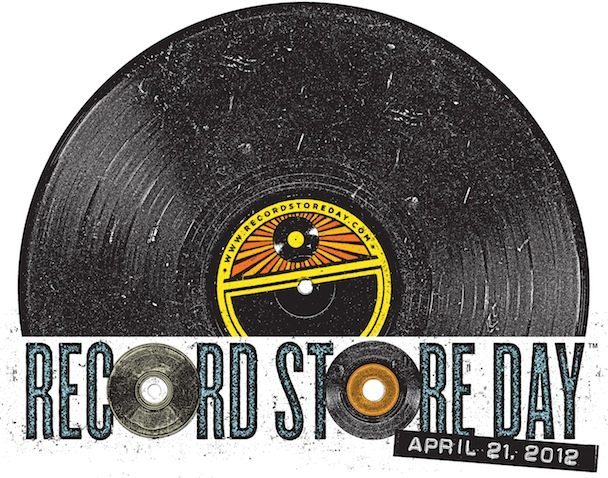
This Record Store Day, I am going to seek out a new favourite haunt, one with vinyl and CDs and posters and TOOL chain wallets. You get the drift. I encourage you to do the same, and also to say a big thanks to the folks keeping these bastions of music culture going through lean times and good.”
So, the best way to find something truly special and new is to get into a full-blown geek-out conversation with someone who lives and breathes albums, or books, or whatever your poison happens to be.