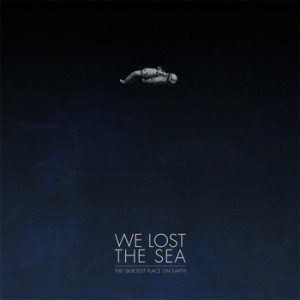
We live in an interesting time for music. Genres are colliding and mutating at a rate that is almost impossible to keep up with. It’s no longer unusual to see metal heads at artsy/indie rock shows and on the flip side the world of heavy music has become even more expansive, diverse and accepting. Some of the best music is formed when multiple genres plow into each other in a seamless manner. Australian 7 (!!!) piece We Lost The Sea are among this growing wave of bands that blend post-rock, hardcore, indie rock and even new wave into their crushing epics. While their sophomore album The Quietest Place On Earth has a few minor missteps there are more than enough moments of grandiose excellence to make it a record worth some time in your headphones.
I’ll admit to being partial to the use of piano and keyboard sounds in heavy music. The opening song ‘A Quiet Place’ starts of with a simple chord progression and some nicely effected guitars and subdued almost shoegazy vocals. It then builds in fairly standard post-metal fashion relying more on repetition and texture to build tension rather than simply “kick-in” to a loud part. After the wall of sound fades the second song ‘Barkhan Charge’ brings the riffs. The churning riffs, screamed vocals and gradually declining tempo act as a foil to the first songs expansive crescendos.
The delicate intro of the 16 minute ‘With Grace’ is yet another counterpoint and is delivered with honesty and confidence before erupting into gigantic riffs and pained bellowing. At this point many savvy music fans will probably think they know exactly what the rest of the record has in store. They are partly correct but the second half of the record is where this album really comes together.
‘Forgotten People’ is one of the standout songs on this record. The hymn-like piano chords and reverb drenched female vocals are a welcome reprieve from the density of the first three songs. When the straightforward drums and guitars all enter the song, their subdued performance really demonstrate the diversity We Lost The Sea are capable of. Guest vocalist Belinda Licciardo delivers a splendid, emotional performance that is both uplifting and melancholy at the same time.
A brief, gorgeous interlude ‘Nuclear City’ leads the way into the final 2-part song ‘A Day and Night of Misfortune’ parts I and II, respectively. After building to another bludgeoning wall of sound the album fades with a dark melodic piano line and a bleak spoken word rendition of the opening to the classic Moby Dick. It is a fitting and conclusive ending to an ambitious record.
Clocking in at just about an hour there is a goddamn LOT of music to wrap your head around on this record. The length may work against the latter half of the record because it is a lot to take in in one listen. The arrangement of all of the songs is quite good though. The whole record feels like one massive piece of music and certainly benefits from multiple listens. The production is very simple and dry, which generally works towards its advantage. Occasionally there are screamed vocals over a quiet part that seem incongruous or a guitar that is mixed oddly loud compared to everything else and while momentarily distracting the impact of the record is not diminished. The relatively simple production does give the impression that We Lost The Sea are tremendous live and I bet they are. I hope these guys continue to push themselves creatively and have a long career as a band. I know I am excited to hear what they do next.