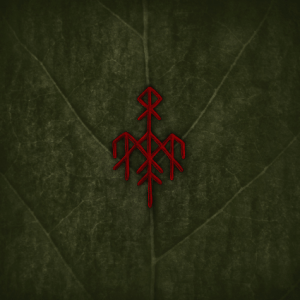
Released March 25th 2013 on Indie Recordings
Every so often an album comes along with such a wealth of back-story that (if you're curious enough) you can lose hours online tracing histories and hyperlinks through the fresh gaps that have yawned open in your knowledge. I found this out to my cost one stunningly sunny day when I spent the entire afternoon indoors, buried in Old Norse language, mythology, instruments and runes. The culprit was Yggdrasil, the newly-released behemoth from Norwegian folk(ish) enigma Wardruna.
Wardruna is the musical realisation of founder Kvitrafn's years-long studies of ancient Norse paganism and tradition. Yggdrasil is the second in a projected trilogy of albums based around the runes of the Elder Futhark, the earliest alphabet used by Germanic tribes in the centuries before the Viking Age. The album is named, appropriately enough, for the immense tree linking the nine worlds of Norse mythology, on which Odin purportedly hung himself for nine days and in so doing acquired divine knowledge of the runes and their symbolism.
Helvegen (Live) from Wardruna on Vimeo.
Eight of the eleven tracks are named for runes with basic meanings ranging (if Kvitrafn will forgive the abbreviation) from 'sun' to 'horse' to 'gift' to 'need' to 'wealth/cattle'. Much of the album was recorded in outdoor locations with meanings specific to each rune, and features recordings of birds, thunderstorms, burning torches and trees alongside massive vocals, deerhide drums, mouth harps, goat horns, and a handful of Old Norse instruments on which Google is reluctant to shed much light.
As you've probably figured by now, Wardruna is one of those slippery bands that defy all classification. Any attempt to brand it as 'folk' or 'ambient', or to place it under that suspiciously Imperialist umbrella 'world', will fail on first listen. Possibly the best description comes from Kvitrafn himself: "sowing new seeds and strengthening old roots". With his blend of Norwegian, Old Norse and Proto Norse lyrics, ancient poetic metres, nods to Norwegian folk music and the aforementioned ancient Norse instruments, Kvitrafn casts lines back to times over a thousand years ago, drawing sound and inspiration from pagan language, traditions and symbolism in order to reimagine them in his own musical cast.
What results is not so much an album as a saga. Running close on an hour and ten minutes in length, Yggdrasil stomps, thunders, and charges to battle through your living room, stopping only to consider a passing rainstorm or the shifting of leaves around birdsong. The album opens with the patter of raindrops, the call of a hunting horn through the fog, and a major triad in triumphal baritone. The upper voice yodels across modal shifts, the chord suspends then ends, echoing across some vast landscape - and with a deep bass hommm an army bursts through the speakers, snarling and sonorous and darkly percussive.
Wherever you turn in this album, the drums are never far behind. Yggdrasil is relentlessly rhythmic, fat with the strength of a hundred pagan percussionists gathered in some chill forest clearing. Voices call solo or amassed across the cavernous reverberations, swinging between speech and chant and rollicking song. Each track opens in relative calm, with footsteps or foresty twitterings or crunchy double-stopped strings, before erupting again into pounding beats and epic choral sweeps. Prepare to end the album feeling slightly windswept.
Whether you're talking books or movies or music, there's a certain fetishisation of the past that invariably comes with attempts to reimagine it, and at times - perhaps it's the occasionally over-produced refinement of yodels and bellows best left raw - Yggdrasil swings perilously close to the kind of sweeping cinematic aggrandisement you hear in Lord of the Rings or the opening credits of Skyrim. Certain heavy whispers are rather too reminiscent of the nastier workings of the Ring, or cries of “Bagginsss” across The Shire. But forgive the album its cornier moments and you're left with something quite remarkable, and nothing quite like you've heard before.