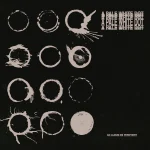
The Kibbo Kift: The 1976 Rock Musical by Maxwell Hutchinson & Judge Smith
Release date: May 1, 2026Label: Think Like a Key Music
Judge Smith has made a name for himself as the co-founder of Van der Graaf Generator since 1967. After that, he has been a very, very busy man when it comes to musicals, operas, song stories, and solo albums. But what if I told you that he had a rock musical he wrote 50 years ago chronicling the “Kindred of the Kibbo Kift“, a 1920s/1930s British camping, woodcraft, hiking, anti-war boy scouts, and youth movement founded by John Hargrave.
Written by Smith and Maxwell Hutchinson, the piece was performed back in June of 1976 at the Edinburgh Traverse Theatre, and at the Crucible in Sheffield, which tells the true story of Hargrave and his post-first World War back-to-nature movement, which turned into a political fringe force. It was originally performed by the band Totem, followed by The Imperial Storm Band for the 1977 production of the musical, and later produced at the Crucible under director Mel Smith (Not The Nine O’Clock News, Brain Donors). This CD, released under the Think Like a Key Music label, showcases rare studio recordings, tape demos, and a live recording at the Crucible.
Listening to this ambitious recording, it was quite a challenge for Smith and Hutchinson to tackle the Kibbo Kift Kindred and Hargrave’s vision. The rehearsal tracks for ‘No Bloody Fear’, ‘We’re the Green Shirts’, and ‘How Many There’ showcase a work-in-progress in what Smith and Hutchinson were going to do and the direction they were going to take by tackling one of the most unearthed subjects that was under the radar in British history.
It has these darker themes, almost nightmarish yet subtle, which you can hear on ‘How Many There,’ following it up with a guitar-only arrangement that speaks of Syd Barrett’s solo run on ‘The Heckling Song’, which he could have written during The Madcap Laughs era, but with a Bowie-like attitude during The Man Who Sold The World period, as the double-tracking heckling on this megaphone-like sound, speaks volumes.
At any moment in that composition, all hell is about to break loose over the views in what Hargrave envisioned, which is not going to go well. ‘The Street Fighting Song’ speaks to the space between Badfinger’s power-pop attitude and the Small Faces’ Ogden’s Nut Gone Flake period with its blistering attitude and eruptive fight where art imitates life with a killer wah-wah guitar solo in the middle of this brutal attack.
The Ray Davies-tinged approach to ‘Father Dear Father’ sets up this letter for a son writing a letter to his father, wearing his love commando uniform as if he knows what he’s doing, not knowing what will happen as he joins the Kift. The disturbing chants on ‘An Empty Clearing’ become very scary as the chorus sings, “We are the Ashdown Foresters/We are the Ashdown Tribe/Hika we la ha, Hika wa ho!/We are the Wealdthing”. You get a sense that it’s very militant, very tense, and yet eccentric in its Native American chorus in its symbology.
A live recording of the ‘Finale’ at the Crucible becomes a disturbing scene from the musical as the chorus comes on stage, each of them identifying themselves as a Nazi, Maoist, Hari Krishna, Jesuit priest, rabbi, Salvation Army member, or a PLO fighter. They turn to the audience in the script, knowing that this is their farewell with its marching piano, drums, guitar solo, and farewell as it erupts in amazing applause.