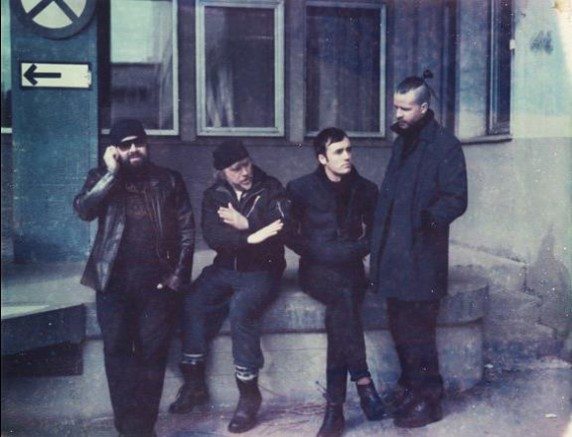
When Ulver first formed in 1993 it is doubtful that even the group’s own members could have conceived of the incredible diversity and creativity that lay ahead in their future. Originally coming together as the second wave of Norwegian black metal began to fade, the band (whose name is Norwegian for “wolves”), swiftly gained a reputation for being highly mysterious. They scarcely performed live (indeed, between 1994 and 2009 they did not perform any shows at all) and steered clear of doing what was expected of them. Even today they doggedly remain one of the most enigmatic bands around, mutating their sound at will with every passing release.
Bergtatt (1995)
It all began with Bergatt, recorded in 1994 and released the year after. One of the first folk influenced black metal records, the five track album has become legendary, both amongst the kvlt and casual black metal fans. It is a record that lacks the aggression of contemporaries such as Darkthrone and Mayhem, but that shares the atmosphere cultivated by those groups. Vocalist Kristoffer ‘Garm’ Rygg’s interchanging of powerful clean vocals and savage shrieks made him one of the first to alternate between two styles of singing successfully in a metal context. Similarly the band’s use of acoustic guitars (including one fully acoustic track, ‘Een Stemme Locker’) points forward to techniques that would soon be mastered by pioneering extreme metal acts such as Opeth. Kveldssanger, the band’s second album, would go further by being entirely folk based but its follow-up, Nattens Madrigal, proved to be one of the harshest black metal records ever committed to tape (it is so lo-fi that rumours spread that the band had recorded it in a forest). It is Bergtatt that remains the highlight of this period of Ulver’s history, however; an essential listen for anyone even vaguely interested in black metal.
Themes from William Blake’s ‘The Marriage of Heaven and Hell’ (1998)
After Nattens Madrigal, Ulver decided it was time to really spread their wings. The addition of sound artist Tore Ylwizaker to the group resulted in the mind-bending double album Themes from William Blake’s ‘The Marriage of Heaven and Hell’ in 1998. Although it retains element of the group’s metal past, Themes… dispenses almost entirely with anything even resembling the harsh lo-fi black metal aesthetic of its predecessor. Even today it is almost completely unclassifiable as anything other than ‘avant-garde’, as its melding of ambient, electronic, metal and progressive rock stylings sounds like little else recorded before or since. It is perhaps the most boundary pushing of a series of experimental late nineties releases from ‘black metal’ acts, such as Garm’s (then) other band Arcturus and Solefald. Themes… is not the easiest of listens, but necessary to hear both as the first indication of Ulver’s dramatically individual future and as a rare example of the genuine cutting edge.
Perdition City (2000)
Following Themes…, the Metamorphosis EP signalled a more electronic focused future for Ulver, and Perdition City emphasised the band’s complete change of direction. The influence of leading British IDM and trip hop artists like Aphex Twin and Massive Attack is apparent throughout, but Ulver’s own unique take on electronic music means that the resulting album sounds almost nothing like either. There are large hints of Coil’s complete disregard for genre categorisation in Ulver’s sound here, with fragmented beats, dark ambient atmospherics and avant sonic textures preventing this record from having an accessible dance edge. This is a record that would be as at home soundtracking a gangster film (especially on the chaotic ‘We Are the Dead’ and ‘Dead City Centres’) as being held up as a pinnacle of turn of the millennium musical experimentalism. Perdition City might just be the best thing Ulver have ever done.
Shadows of the Sun (2007)
In the years post-Perdition City Ulver kept busy, partially through the production of two excellent soundtracks in the shape of Lyckantropen Themes and Svidd Neger, but 2007’s Shadows of the Sun would be the next time the band would produce a real classic of their back catalogue. A haunting ambient record which features some of Garm’s finest vocal performances to date, Shadows… is possibly Ulver’s finest collection of songs, although it lacks some of the indefinable experimentation of their other records. Opening track ‘Eos’ might just be the highlight - it’s pretty much as perfect a song as the band have ever written - but an unexpected cover of Black Sabbath’s ‘Solitude’ also deserves special mention. Wars of the Roses, the band’s 2011 record, comes across as a collation of ideas featured here and on Perdition City, and is equally recommendable, but listen to both this and Perdition City first.
Messe I.X-VI.X (2013)
Ulver’s latest work of genius, Messe I.X-VI.X represents something of a culmination of the band’s journey over the last two decades. A collaboration with the Tromsø Chamber Orchestra, Messe sees Ulver’s music presented without comment in a classical environment, and it fits beautifully. The orchestra embellishes the band’s compositions rather than dominating them and the record as a whole works as a brilliant exemplar of the possibilities of contemporary compositional collaboration between groups from wholly different backgrounds. It’s yet another example of Ulver leading the way whilst others trail behind in their wake.