Rosetta | website | facebook | twitter | bandcamp |
By: Mark Martins
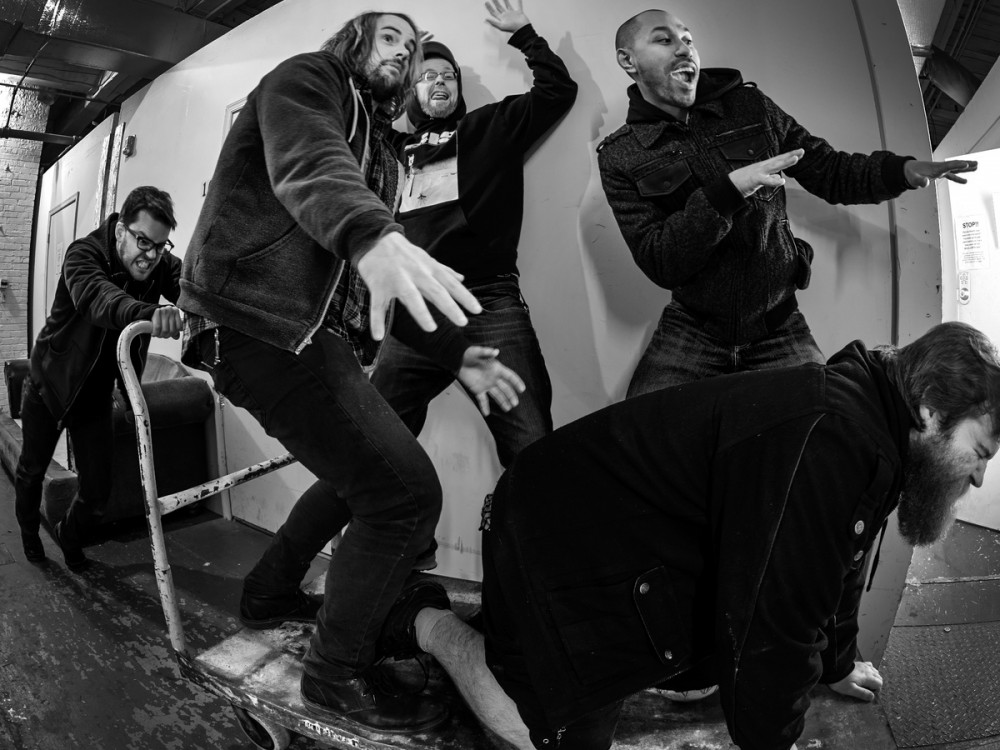
Quintessential Ephemera is the first album Rosetta has released as a five piece band and their second as a totally independent band. We spoke to Matt Weed about the recording process and the new album, their approach to releasing albums on Bandcamp, the past and the future.
(((o))): You seem to have adopted a way to work quietly and only announce your albums (especially with The Anaesthete and Flies to Flame) shortly before the release. Is it hard for you not sharing studio updates with fans?
Matt: It’s not really an intentional thing – we’re not deliberately trying to withold info, it’s more just that we don’t have a big PR apparatus to get information out. We just post what we can on our social media presences, and many times the fans themselves are excited enough that word spreads organically. That has been pretty amazing to watch in the last couple of years. The internet has so dramatically expanded a small band’s ability to reach people. There are tradeoffs for sure, but it’s an amazing time to be doing and sharing creative work.
(((o))): It’s nice to see you’re taking the same approach as for the last album (releasing the album at a “name your price” on Bandcamp). How well is this going for you? Is this where you think the music industry is heading?
Matt: The cynical part of me sees us swimming against the tide on this issue, but I want to hope that the industry as a whole moves in that direction. We really have found it to work better for us than any other model – but more importantly, I think it’s the future-oriented model. It’s centered on a long-term relationship between the band and the listeners, with a sense of mutual responsibility. So while maybe it’s not mature yet, and there are kinks to work out, it’s still a lot better in the long run than signing to a label and buying a ticket on the Titanic. If you want to have a fantastic three-year ride and then go do something else with your life, then yeah, sign a big contract and go play 250 shows a year for a little while. I totally get that. But if you want to make music for many years, you have to ask where the industry will be a decade from now, and make decisions in the present accordingly.
(((o))): How was the writing and recording process time time around? Do you have any crazy stories?
Matt: The writing process happened over weekends where Eric would come down to Philly from New York and we’d just bang out 10-hour practices a few days in a row. It took about exactly a year to write the record, and because of the scheduling and travel it required a lot more discipline than usual – which was part of the point, actually. Recording was super fast; we booked seven days for tracking and finished in six. Because of having two guitar players this time around, songs were a lot more carefully arranged in advance and we just blasted through it. Our engineers at Machines With Magnets had a lot to do with it too – they have a great punk work ethic there and it’s just go, go, go. We slept and cooked and ate on site. Rhode Island was having their snowiest winter ever, so it was like being on planet Hoth, huge mounds of snow covering the windows. The only time we went out was in the middle of the week to go see the Swans show in Providence, with one of the engineers. That’s actually the first time I’ve ever watched another band play while part-way through my own recording process. It was educational in all the right ways.
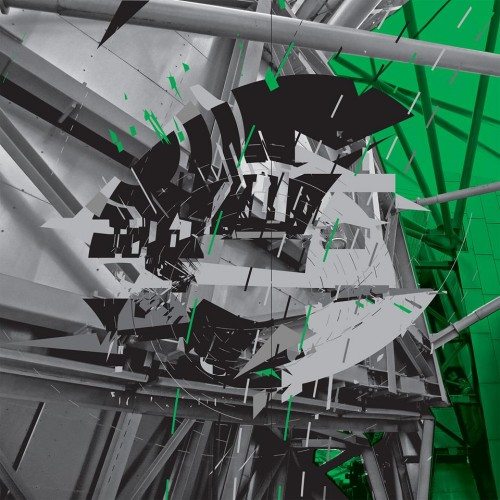
Quintessential Ephemera artwork
(((o))): What inspired this new album (in terms of the title and artwork)?
Matt: The core idea that we gave to Mark Price (the artist who made the cover) was “technology promises us utopia, but costs us humanity.” He took that and ran with it. The cover is just one panel of a series that’s made up of Mark’s original and found photos with bizarre digital drawing on top of them. The LP and CD versions have the full set between them. It resonates with themes that run through the songs, about all these virtual “social” spaces being ultimately dehumanizing. The title came from a book by historian Allan Brandt called The Cigarette Century, where he talks about cigarettes being the quintessential ephemera of the 20th century. A lot of the ‘content’ you find on social media, in both its lethal addictiveness and its ultimate uselessness, fit that image perfectly. Our society says: the world is burning around me, but I don’t care because my selfie got ten likes on Facebook! Just like nicotine hitting your brain while a tumor grows in your lungs.
(((o))): Was there any reason for most songs not having any titles?
Matt: Mainly that any title we came up with felt heavy-handed, just trying to stick a square peg into a round hole. We wanted them to speak for themselves. I think if you’re sitting there thinking, “ugh, what are we going to call this song?” then it’s probably better to just leave it without a title.
(((o))): City of Ships singer Eric Jernigan has been a regular guest on your albums. How is it to work with him as permanent member now?
Matt: It’s great, as we knew it would be. City of Ships is probably the band we’ve been friends with the longest, done the most touring with, all that. It was just a natural thing to have Eric in the band – he’s seen us play live probably 150 times over the last 8 years. Personalities and working styles were a known quantity for everyone. In some ways he might have been the only person in the world who COULD have stepped into Rosetta after 12 years of the same lineup and made it work comfortably.
(((o))): How did leaving Translation Loss Records change you as a band?
Honestly, I think we had changed before we left. The thing about Translation Loss was that they were always super supportive of us, but they were hamstrung by what we considered to be outdated music industry structures. So in some ways, being on that label was a safe space for us to learn just how uninterested we were in playing by the rules. Things got bumpy at times as a result, but without them, we wouldn’t be where we are now. By the time we finished our contract with them, we had made a lot of mistakes and spent a lot of time thinking through what we wanted and how best to pursue it. The self-release model was the obvious choice at that point – we understood that it wasn’t Translation Loss we were disenchanted with, it was the whole music industry’s way of doing things.
(((o))): What are your next steps? How do you plan to evolve even further?
Matt: I think with our independent business model, we have to take our relationship with fans really seriously. Being sustainable is less about creating a hype storm and more about building a relationship with fans where they can expect a consistent level of artistic honesty. I think about our responsibility to our fans a lot. I don’t think that responsibility is simply to make what people want or like, but more to make the record that is in you to make, with as much integrity as possible. You can’t serve people garbage and expect them to pay money for it. If we’re going to ask people to support us and help us continue to make music, then we owe it to them to work as hard as we can and continue pushing at the limits of what we’re capable of.
(((o))): What new music have you been listening to?
Matt: Recently, the new Swervedriver album. It feels weird to me the way so many marginally-popular 90s bands are reuniting now. I was a huge Swervedriver fan in high school in the late 90s, and people actually made fun of me for liking “a one-hit-wonder grunge band” instead of whatever sad emo band was popular with the scenesters that week. Does that sound awfully bitter? Anyway, I’m not big on reunions but I am glad that a lot underappreciated and influential bands from that era are getting recognition now.
I’ve also been on a massive A Winged Vicory for the Sullen kick since Atomos came out last fall. I love that record (just as I loved the previous one and the Stars of the Lid material before), and hope that it gets the attention of people who wouldn’t normally check out drone or classical records.
(((o))): What’s the most vivid story or moment you have as a band?
Matt: There are so many, it’s hard to say. I’m always looking for points of convergence where different parts of my life come together in interesting ways. We toured China last summer – my wife was born there, and she came along as part of the crew. The booking agent did something really cool and booked the first show of the tour in the small coastal city where my father-in-law grew up and where his family still lives. My wife’s uncle took the whole band out to an absolutely massive dinner after the show. I’ll never ever forget that.
(((o))): What do you guys do when you’re not touring/writing/recording?
Matt: We work a lot. Armine teaches high school and works as a veterinary technician, Dave teaches Jiujitsu, Eric’s had more jobs than I can count, BJ makes video and is a barista, and I build and fix amplifiers and guitar effects.
(((o))): Thanks! Love you guys! Please come visit Dublin, Ireland soon!