 By: Stuart Benjamin
Anna von Hausswolff | facebook |
The Miraculous is Copenhagen based Swede Anna von Hausswolff’s third album. In fact I hadn’t heard of Anna von Hausswolff before it landed in my inbox and so I had no pre-conceived ideas about what it would be like. I knew it had a pipe-organ in it and that von Hausswolff is pretty well known in her native Sweden and that’s about it. Within a few minutes of listening to The Miraculous I was completely sold and was online ordering her earlier albums.
The Miraculous is nothing less than a gothic post-rock masterpiece that deserves wider recognition the world over. von Hausswolff really should, on the strength of this record, take a place alongside Kate Bush, Bjork, PJ Harvey, and St Vincent as a creative musical force of our age, a Twenty-First century hero if you will.
So what makes this record stand out? Well, several things.
Firstly, it manages to fuse angular and brutal post-rock with a Pop sensibility. Now don’t look at me like Pop is a dirty word (I’ll say it again later), there’s nothing wrong with an ear for a commercial tune if it’s done as well as on some of the tracks here. Imagine if Florence And The Machine were actually any good and you’re halfway there. The music also draws on Scandinavian folk music too, as well as drone (Anna’s father is the conceptual sound artist Carl Michael von Hausswolff, who often uses drone for his installations) and other forays into experimental sound.
Secondly, it’s probably the only post-rock record to feature a pipe-organ – one of the biggest pipe-organs in Sweden in fact (the Acusticum Pipe Organ in Piteå, organ fans) – and if that’s not reason enough to like it, well, I don’t know what else is. The pipe-organ isn’t just exploited for novelty value either, it’s subtly blended into the fabric of the album as carefully as a Huguenot seamstress would make a suit of fine and dandy clothes for a rich and foolish young London gentleman. It remains a consistent presence on the recording without taking it over.
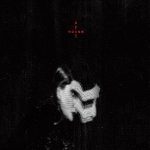
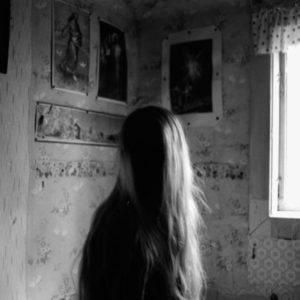
Thirdly, Anna von Hausswolff’s voice is an incredible instrument in itself, at once tender and powerful, and as distinctive in it’s own way as those of Bush, Bjork, and the other luminaries I mentioned earlier. Matching her voice is some incredibly powerful songwriting, composition, and word-smithery, creating in effect, a world of her own into which we can only glimpse via the medium of this record. von Hausswolff cleverly remains a mysterious presence across the record, from the album art which blanks out her face to the ethereal voice which haunts each track, she becomes an enigma, a cipher, almost a phantom at the feast.
The whole record is mired in a parallel universe, a dark mirrored world which, while in many ways like our own, is haunted by lost souls, dark creatures of folklore, in some twisted landscape of madness. Listening to it put me in mind of the realm of faerie, the domain of The Raven King in Jonathan Strange and Mr Norrell – it has that kind of sonic aesthetic and it’s very easy to imagine a ballroom of ghosts forever dancing to the music von Hausswolff makes. Almost as a counterpoint is the use of the sacred: look carefully at the album cover and you’ll spot religious imagery in the background, song titles such as The Miraculous, Evocation, Deliverance, are also suggestive of some kind of holy epiphany. Which is all underlined of course, by that massive church organ – an instrument which in it’s own way must have been as unworldly sounding and surprising to our ancestors as the electric guitar was to a more recent generation. The effect of these themes religion/fairytale/supernatural is to place us in a world in which we feel uncomfortable, in unchartered water if you like.
The musical content reflects this – we have Swans like crashing, percussive guitars; Sunn O)) type drones, Black Sabbath-esque doom alongside vocals pitched somewhere between Nico and Vashti Bunyan, Comus style folk-horror with a dash of classical/operatic flare – and all sometimes within the space of just one song. Unchartered doesn’t cover it, you can’t define it, but you’re glad that von Hausswolff did it. She clearly has a love music that transcends genres – why wouldn’t you put these things together and who says that you can’t? She clearly doesn’t give a hoot whether the record is commercial or not, and that’s highly commendable.
So you put the album on – and if you have any sense – you turn the volume up, and slowly but surely the thing wakens into life. Discovery starts us off with low, reverberating notes on that organ that grow to fill your speakers. Once the drums and guitars kick in you suddenly find yourself in post-rock territory and being thrashed around like a small craft on a seething, boiling sea. The squalling guitars only stop to allow von Hausswolff to sing which she does with ever increasing menace and drama, a willow-the-wisp, drawing us dangerously into the marshland, calling on us to ‘run’ when the music crescendos – but by which time it’s too late, you’re reeled in and for the remainder of the album you are its captive prisoner.
The Hope Only Of Empty Men and Pomperipossa are shorter pieces. The Hope Only Of Empty Men a thing of mournful beauty – “I can feel all your sorrows” she sings, like some darkly-twinkling messiah figure. Pomperipossa (based on a character in a satirical story written by the Pippi Longstocking author Astrid Lindgren – I looked it up) is a storming organ/shrieking guitar workout worthy of any 1970s prog-rock record, “Am I scaring you? Am I boring you?” she questions – certainly the former, but never the latter.
Then at the centre of the album we find Come Wander With Me/Deliverance – its pitch-black dark heart. Weighing in at almost eleven minutes it’s an epic journey into the unknown, it’s the journey through the labyrinth to see the minotaur, it’s the journey up the Congo to find Kurtz. It’s a musical blitzkrieg unlike anything else you’re likely to have heard this year. Starting quietly with a simple chord with von Hausswolff’s vocal hovering gently just above the mix we’re suddenly plunged into a raging maelstrom plucked from your darkest nightmares. It put me in mind of classic Celtic Frost in places, in one of their most contrary avant-garde moods. Guitars thrash, drums pound, a storm of percussion stings your face. It’s music full of tension and release, loud/quiet dynamics, and Kate Bush style wicked-witch sooth-saying.
How on earth you follow that up, I have no idea but En ensam vandrare does (or ‘A lone hiker’, for those of you who can’t speak Swedish), it’s an instrumental track that conjures up a solitary figure walking along a bleak, mist-brushed landscape and comes as something of a relief after the sonic histrionics of the song that preceded it. It has the lush feel of a film soundtrack and is as gentle and persuasive a track as Come Wander With Me/Deliverance was brutish. An Oath is probably the most upbeat song in the collection, a track that marches to an insistent military beat, even then it still seems like a bitter-sweet love song (or loss song). Evocation is a fuzzy, overblown, and utterly wonderful part spell, part classic torch-song that mixes distorted synthesizers with that ever present organ.
Title track The Miraculous is a drone of sub-light speed proportions which gives the pipe-organ room to breath, more so than anywhere else on the record – very reminiscent of György Ligeti or Philip Glass – and very much in common with contemporary organ composition. It shimmers into life like the dawn over a sun-parched wilderness, before an angelic, barely discernable, vocal floats down from the top of the mix – it’s just totally sublime. Finally, the acoustic guitar driven Stranger is the nearest thing to a conventional song on the record, and has more in common with the music found on the Ceremony album. It’s a great way to close what has been a remarkable listening experience and you’ll no doubt be reaching for the play button as soon as it’s ended.
Only time will tell whether or not this album will break Anna von Hausswolff to a wider audience. Such a prodigious talent needs to shine. If I have one criticism, it’s that the album felt all too short. The three epics ‘Discovery’, ‘Come Wander With Me/Deliverance’, ‘The Miraculous’ are long and satisfying without outstaying their welcome, but the shorter tracks that punctuate these seem – well – all too short: ‘always leave ’em wanting more’ is an apt adage here I suppose. But then, when I thought about it a bit, the whole genius of Pop music in it’s truest form, is to distill the whole experience of life into something under three minutes long – and somehow, von Hausswolff manages to do this with whole alternate universes.
Peerless.