Sunn O))) | website | facebook | bandcamp |
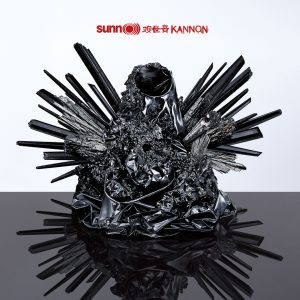
Released on December 4, 2015 via Southern Lord Recordings
Following such things with interest, it seemed to me that there was slight anxiety building about the new Sunn O))) record. Monoliths & Dimensions was released a long six and a half years ago, and it’s almost as if the vast project and vast achievement of that album loomed ever larger the further away we got from it. The inspired moves of collaborating with Ulver and then Scott Walker sharpened the question of the next Sunn O))) record proper, both by further extending the timeline and in producing records which were creatively daring, but definitely not trademark, standalone Sunn O))) records. That approach is to be commended, the band entering into those projects to create something that could only emerge from those partnerships, rather than treating collaborators as (yet more) guest musicians. It did mean, though, that there was another couple of cycles in which anticipation and expectation could grow.
While the idea of Sunn O))) trotting out greatest hits set-lists is laughable, the live line-up has stabilised around Atilla Csihar’s astonishing croaking, screeching voice experiments. Meanwhile, his fantastically bizarre attire (now dressed as a tree, now dressed as a deformed disco-ball) seemed to match perfectly with the robes and smoke ceremony, but at the same time stick out from it and provide a (sometimes genius, sometimes distracting) focal point amidst the immersive glooming distortion. This is Sunn O)))’s version of the age-old dilemma: how to balance tradition with innovation, expectation with surprise, fundamental drone power with avant-garde experimentation.
Given all this, the opening moments of Kannon are certainly reassuring. For all the intrigue of the records with Ulver and Scott O))) (and, for that matter, Boris), each of them for me lacked the sheer power that Sunn O))) can deliver at their best (on, for example, Monoliths and Dømkirke). ‘Kannon 1’ starts with some high feedbacky drones, each coming in at pleasingly dissonant intervals, adding platforms of solid distorted amplification. While there’s no massive riff drop, there is a reliably heavy gathering of sonic gravity which you know will continue to suck in momentum. And it does. And Attila’s croak comes in perfectly on cue, as the plates of fuzz and dark grey slabs resolve into lumbering riff patterns. This continues in fairly linear fashion well into the track, with gradually more insistent mid-range drones piercing the fog, which begin to have a nice moog shimmer by the final two or three minutes of the thirteen.
‘Kannon 2’ starts out with an alarming siren before more trudging grimm sludge, with even a few archetypal metal tritones thrown in. Attila’s contribution here fits another of his familiar modes, the debased monk intoning vaguely Gregorian intervals. The track bulldozes along with more vocal monotones over the black tar, until towards the end the guitars step back a bit. The relentless distortion drifts into a slightly industrial inflection at the end, sounding as if the band have switched over to playing their riffs on rusty machines found in the shed. ‘Kannon 3’ then ups the tension further. If on the first two tracks a cloaked Attila was muttering his haunted mumbles into the fog, now he’s gesturing furiously and operatically, summoning unseen demons and dressed as the cracked mirror wizard. Here, as throughout, the interplay between vocals and churning riffs is subtle and intuitive, marking both an attention to detail and a lengthy history of collaborative musicianship. A somewhat abrupt ending brings the whole thing to a close, and at just over 33 minutes it’s quite a brief wander into the dense thickets of the doom forest.
In some ways it sort of captures something of recent Sunn O))) performances more closely than many of their recordings, but then again its fairly predictable for a band ostensibly positioned at metal’s outlandish fringe. There’s some interesting details, but the guitar tones are pretty similar throughout: on one hand this could lead newcomers to wonder how the band have become notorious as experimenters; on the other, it provides a unifying consistency (reflected in the implacable track titles) and a sense of emerging fully formed out of the particular context of a single recording session. Overall then, the first Sunn O))) album since 2009 is reliable in its heavy drudge, a fair refraction of a signature sound, even if quixotically surprising in its lack of surprises.