Colin Edwin | website | facebook | twitter |
By: Raymond Westland
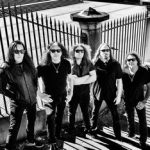
With Porcupine Tree on indefinite hiatus our favourite serial collaborator and bass virtuoso Colin Edwin likes to keep himself busy with a host of different projects and bands. One of his main stints, doom/post-metal powerhouse Obake is about to release its third record, entitled Draugr. Colin was kind enough to discuss in depth the creative process within the band, the spiritual significance of the band name, the connection between Obake, O.r.k and Metallic Taste Of Blood and his take on the musical dictum of less is more.
(((o))): Draugr seems to be the perfect soundtrack for the current political turmoil in the world. Is this somewhat reflected in the music?
Edwin: When we started to make the album it was before the time of the European Referendum thing and all, but it wasn’t on our mind at all. When you’re making music in some way it reflects the world around you obviously. Even when it’s subconscious it will still makes its way in the music you make at that specific time frame. I have the feeling for a while now, and it’s even more pronounced, we got some idiots at the wheel. I can’t help the feeling we’re driving in a car and there’s some really crazy people driving with no map at the wrong way in a one way street perhaps. I can’t help it seeing it this way.
(((o))): Onto the music then. Last time around you got involved when the music was pretty much written. This time you were involved from the get go. How did things work out for you?
Edwin: We started working on the album during a period in December last year in a studio somewhere in the countryside of Italy. Usually I like to come to a writing session with some ideas, just some basic things people can build on. It scares me when I come unprepared. However, this time there was a difference on how members of the band approached it. Eraldo (Bernocchi, guitars) likes to do things in the moment. He rarely prepares anything and he likes to respond and to react on what’s going on. If something happens it’s good and when nothing happens it’s also good. This is actually the first time I didn’t bring anything and I didn’t prepare anything. I just brought my base and some very minimal ideas. During the course of the sessions we just started from nowhere. We played a couple of gigs together in 2014, so as a unit we’re used working together now. Jacopo, the drummer from MoRkObOt, is very much a part of things now. It kind of took me by surprise how things turned out. It was almost like cooking a dinner without any recipe, but it all come together rather nicely. When I listen to the material know I really notice how fast ideas developed. I’m really pleased how the record came out.
(((o))): Oddly enough Draugr is described in the press sheet as a return to the roots thing, but to me it’s more of refinement of what the band was doing on the previous two Obake records.
Edwin: I wasn’t involved with the first album, but I know the album was very improvised. The approach they had was to improvise a lot. The second album was a much more developed thing. There was a lot development going on instead of editing improvised pieces. This feels like a real refinement to me. What I’ve noticed about Obake is that a couple of tracks of the first album are very powerful in a live setting. They’re very direct statements if you will. The ‘Dogstar Ritual’ track and the ‘Human Genome Project’ were points where the live audience really lit up and really get engaged with us. I thought it was really important to distil those elements and use it on the new album. One of my contributions to the new album is to consciously keep that directness. When you develop things too much you lose some of that, so the simplicity was kind of important for the overall picture. There are still moments where we took things and developed them, without losing that powerful directness if you will. That’s the strength of the album I feel.
(((o))): This directness is also one of charms of Draugr. It doesn’t wear the listener out like the previous album.
Edwin: I’m really glad you picked up on that. That confirms to me that we’re on the right track shaping the album like that. Mutations for me is very full on from beginning to end. It’s very relentless, besides the ambient track towards the end. We wanted to keep some of that, but not go completely overboard with it. It’s a balance. It’s a balance between the directness and relentless and the quieter pieces towards the end. All the different ideas we brought in separately really gelled together. We all played to our strengths on this one.
(((o))): You posted a picture on your Facebook expressing how pleased you were with the final mixes. Can you take us back to that magical moment?
Edwin: As a listener I try to keep a certain distance. When you’re involved in creating something you have to listen in different ways. Sometimes you need to listen to things on a technical level. It’s necessary, but not always enjoyable. For instance I listen whether the bass sound is right or whether a certain part is played correctly. It’s not the way most people will perceive the album. When I’m past that I like to listen to the music for my enjoyment or to get some emotional connection with it. Sometimes it takes quite a while before you’re past that stage and you can hear the music for what it is and how other people will hopefully hear it. I remember with this album there was a considerable gap between doing my parts and when Lorenzo (Fornasari, vocalist) finished his final parts and hearing the first rough premixes. After putting on the final version I couldn’t remember how we got to the end of that certain part. It was really that good! For me it’s not interesting to remember which bass I used and stuff like that, that’s boring to me. I wanted to hear the overall picture. If it moves me and I can feel the energy and I notice there’s a lot going on and I can feel that punch still, then I know we’ve done a good job. When I start to think a certain part should be redone I’m not happy.
Exclusive Premiere of the track ‘Incineration Of Sorrows’:
(((o))): Lorenzo really managed to find his niche in the overall Obake sound. How did that come about?
Edwin: The big change with this one was that he really wanted to do a lot more proper singing type stuff. He refers to some of the pieces on Mutations as “non-songs”. He used a lot of disjointed words and noises without any real song structure as such. Sometimes that works really well. It’s not an intellectual choice, sometimes you hear the sound of a voice and it connects with you in a different way. I was really happy if he would continue this way, but this time around he was really adamant that he wanted to sing in English, so I became involved in writing the lyrics. Writing lyrics is something I started doing again, because I haven’t done it for years. I really enjoyed doing it again. The way we approached it is that he came up with an idea for a vocal line and that I get an impression of the overall thing and that would get me an idea for a lyric and he would sing it back to me as a song. Usually a vocalist wants to writes his own lyrics, but this time he was happy for me to do it. Eraldo wrote a couple as well. It was more of a collaborative thing. Even on a impressionistic level it gives a certain vibe. The first two albums were way more open to interpretation as far subject matter goes.
(((o))): You described the creative process of Draugr as a group effort, but who are the main songwriters within the band?
Edwin: Well, all ideas spawned and developed as we went along. We were all in the same room jamming and playing together. Some ideas started out as a drum beat or a short jam. It was really old school. Nobody came in with any preconceived structure or anything. I’ve been in situations when somebody had a preconceived structure and we all build from there. It happened the other way around as well. However, the new Obake record was build from nothing
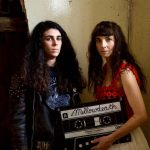
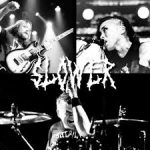
(((o))): You’re also involved with Eraldo in Metallic Taste Of Blood and with Lorenzo with O.r.k. Despite the differences in style it all seems to be come from the same creative genesis. What’s your take on that?
Edwin: There’s a common thread between Metallic Taste Of Blood, O.r.k and Obake. It’s not just me, but there’s also some musical overlapping territory in where things come from. The interesting thing with Obake is there’s a definitive split in how Eraldo approaches things and how Lorenzo approaches things. There’s a constant tension of keeping things in the moment and direct on Eraldo’s part mostly as where Lorenzo really wants to develop things. The magic is usually when they meet each other in the middle creatively speaking. That’s just their approach. When I work with Lorenzo in O.r.k he’s really into developing things much further from where they start. Usually I’m the one who acts as an editor and tell him to stop when we catch a certain vibe or idea. Let’s keep it there, you know? With Eraldo it’s the other way around. Sometimes I tell him to take things further and change a few things. Either approach is valid to me. It’s a just a judgement call at the end of the day. Do you keep certain things or do you leave them out? With Metallic Taste Of Blood it’s simplistic and direct in approach. O.r.k is much more complex.
(((o))): Really? I’m really surprised that you say that. I thought it was the other way around.
Edwin: Simplicity isn’t a bad thing. Most of the time it’s really hard to keep things simple. It’s quite hard to keep it simple and engaging. You can make things interesting by adding a layer of complexity but usually it dilutes the idea. It’s quite tricky to have something direct and meaningful. If you transpose that idea to painting there are some very powerful yet simple sketches. I remember a simple sketch of a man on a horse almost done in a single line. You can immediately see what it is and I try to keep that idea in music as well. Adding another layer doesn’t make things better always. These days you have unlimited amount of tracks when recording, but it doesn’t make things automatically better. Sometimes less is simply more. Getting back to Obake I think we’ve achieved a good balance between those elements. It’s easier with Metallic Taste Of Blood, because it’s instrumental music. It’s more difficult when vocals are involved, because it’s the immediate focus point for most people. You always want to focus on the vocals, because that’s the lead element.
(((o))): All the members within Obake come from very different musical backgrounds. How do you guys manage to find some common ground and communicate with each other on the same level?
Edwin: That is true. Jacopo comes from a math rock background, Lorenzo has a classical and avant-garde background and Eraldo originally came from a punk background, but through the years he did a ton of different things, including industrial and more jazz/freestyle orientated things. Everybody has a lot of experience. Is that experience when you feel you’re meeting someone musically speaking. There are tons of records made by people with fantastic musical backgrounds, but in the end it didn’t add up. We’ve played as a live unit before and that really helps. As a band we play to our strengths and we meet as musicians in a really good place where everyone can contribute and communicate their ideas and bring something solid to the table. As for Jacopo he wasn’t involved in the making of Mutations, but he has a great ear for details so he’s a good fit. Balazs Pandi, our previous drummer, has a really busy style on Mutations and Jacopo came in and gave it his own spin. He’s more of a leaner player. He isn’t a minimalist by any stretch, but his style of playing is more direct and measured. Again, it benefited the directness of the album. Because we played live we all had a good idea of how the band sounds like and what kind of record we wanted to make as Obake.
(((o))): So what will be next for the band as a whole?
Edwin: We definitely want to do more live stuff. We did a short tour in support of Mutations, a couple of one offs and some festivals. As for me there are a lot of possibilities within the music and playing it live is really powerful. Obake is quite a powerhouse live. It’s loud and very full on. It’s very intense and we really to focus on playing much more live next year.
(((o))): Finally, the band name has a lot of significance. Can you elaborate on that, please?
Edwin: Obake, our band name, is a kind of Japanese spirit. There is a joke within in the band how long it will take before we get the spirit, you know? Some tracks have this ethereal vibe, almost a ghostlike feel to it. It’s a very personal and private thing within the band. With music you’re creating something that is bigger than reality in a sense, a whole other world if you will. It’s almost like a legal drug with your emotions. It’s almost like a spirit, you know? The spirit within Obake is a very dark one I believe.
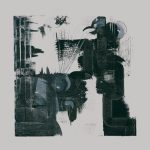
Draugr is released on October 28th through Rare Noise Records and is available for pre-order through here.