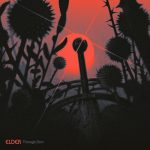
This is a gospel record. Nick Cave and The Bad Seeds have always been steeped in religion and religious iconography, but of late the blood and thunder of the Old Testament has been replaced with the love and compassion associated more with the New Testament. Some are uncomfortable with this bold openness and willingness to embrace and mysterious and the Divine, but ask yourself why is it okay to revel in tales of revenge, plague and judgement, but then unacceptable to move towards the light, especially if your goal is to bring your listener with you, irrespective of their beliefs.
There seems to be a very powerful desire to heal with the songs on this album which are more urgent, more concise and more directly uplifting than the somewhat woolly meditations of Ghosteen. I am perhaps in the minority in finding that album rather difficult to listen to, the majority of it I find somewhat unfocused, pretty but involving. Wild God can be seen as the next step in the band’s evolution after the almost eerily serene Ghosteen. That album was shrouded in a sort of hauntology, not the retro spook sounds of Ghost Box, nor as originally described by Derrida as the ghost of communism to come, but of the ghost of forthcoming grief. The tragic death of Cave’s son has since coloured every pronouncement from Cave, both artistic and otherwise, and now in its wake with years of contemplation passed Cave has arrived a place where he just wants to hold everybody and tell them that it will be okay “never mind, never mind…“.
For this new message the language has changed – out has gone the American Gothic and in comes a type of English pastoral. There’s “Cinnamon horses and the turpentine trees”…but no one will be shooting those pretty horses. This gentle imagery is wrapped in a sort of Olde Worlde nonsense and naivety that has more in common with Lewis Carroll than Cormac McCarthy.
Wild God is, however, more focused and anchored in the bands and listeners’ familiar shared universe. There is a wistful, but ultimately fruitless return to Jubilee Street on the title track, the crushed skull in the fratricide in the brilliant ‘Frogs’ and more storm tossed melodrama on ‘Final Rescue Attempt’. As to who or what the ‘Wild God’ is, well that does seem to be partly Cave himself, with his long trailing hair, escaping the “rape and pillage in the retirement village” perhaps an allusion to a rejection of the lyrical clichés and mores of the elder statesman rock star.
Musically the Bad Seeds have replaced their arch grandiosity, their stalking and stabbing with an orchestral sweep of such fulsome richness that individual parts disappear and it becomes an all-encompassing blanket of wonder and light, as befits songs such as ‘Conversion’ and ‘Joy’, where awestruck uplift is very much the required mood. The whole album is of a one piece, a work of such artistic confidence and creativity that it has the bearing of timeless being. Well, almost all. There is one tiny, mis-step on ‘O Wow O Wow (How Wonderful She Is)’ in the use of autotune technology. I suspect it is used as a sort of vessel for naive simplicity to help convey Cave’s feelings for Anita Lane, who the song is about. This listener and quite possibly others may have trouble enjoying the sound that so often is a symbol of musical infantilism and ineptitude. I hate that it makes me feel that way, especially when in the latter stages of the song we hear the last voice message Lane ever left Cave and it is so sweet and charming that you feel an utter prick for being so sniffy about it. I guess we all need to be forgiven for something.
The exact moment that Nick Cave moved from ghoul to guru is hard to pinpoint, but there is no doubt with the release of Wild God that Cave is no longer a sinister minister, with love and hate tattooed on his knuckles, and is now an advocate for joy, part gospel singer part National Treasure. This is indeed a gospel record and with Cave’s ever larger reach into the general public’s consciousness, it is for the nation to treasure.