What a great way to start off 2026 from the wonders and mysteries of Mediæval Bæbes. But this isn’t just a wonderful way to start the year off with a big bang, and their latest album The Spinning Wheel. This year marks the 30th anniversary of the formation of the all-female choral ensemble, founded by Katharine Blake and the late Dorothy Carter, who passed away on June 7th of 2003.
There’s no denying that Mediæval Bæbes have been around for so long, carrying the sounds of folk, classical, a capella, and the wonders that the ensemble has been taking their sound with unbelievable results releasing 11 studio albums from 1997 to 2022. Followed by two live albums, and singing the theme song for ITV’s Victoria, starring Doctor Who alumna Jenna Coleman in the lead role.
With their 12th album The Spinning Wheel, it tackles twelve modern folk poetry with original words and Blake herself handling the arrangements dealing with the 12 months of the different seasons. The genesis behind it was Blake’s visit to the Le Son Continu folk festival in France.
There, Blake was privy enough to the bagpipe, hurdy-gurdy folk sessions of a chateau. With all of the sounds that gave her ears an idea for The Spinning Wheel, she sets up each of the compositions for each month of the year. Each of those months that you have in your hand, represents a goddess to be worshiped.
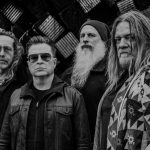
And with vocalists including Marie Findlay, Fiona Fey, Maya McCourt, Josephine Ravenheart, and Sophia Halberstam, along with multi-instrumentalists such as Michael J. York (The Utopia Strong), Charlie Cawood and Ben Woollacott (Knifeworld alumni’s), Orange Goblin guitarist Joe Hoare, Circulus’ Jenny Bliss Bennett, Puppini Sisters’ Marcella Puppini, and North Sea Radio Orchestra’s James Larcombe, it’s a family to bring The Spinning Wheel to life.
Ranging from the darker narrative inspired by the 1973 cult film The Wicker Man starring Edward Woodward, Britt Ekland, and Christopher Lee, ‘May’ serves this eerie sequence of members on this small island, forced to find someone for the sacrifice to please their goddess while ‘March’ features this operatic vocal-like sound and an a capella beauty in the arrangements as bird chirps in the background for spring to begin.
When I think of ‘February’ it takes me back to listening to the Acid Folk sounds of the 1970s. Think Comus and Trees, inside an English cottage in the middle of a heavy snowstorm, outside of Sheffield with the Baebes using a time machine, honouring the era’s between First Utterance and The Garden of Jane Delawney, creating this intense snow hitting the country hard, but taking a massive plant-based diet to get through the night.
Once we get into ‘May’, ‘June’, and ‘July’, this is where the summer comes around for its darker mournful pipe organ textures and I believe it’s a recorder that is used on the fifth track before entering a gothic cathedral, giving the sermon on a Sunday morning with its pastoral-like angels arriving to the church and lifting churchgoers their spirits up while the sun rises on the 7th track.
Here, the Baebes and the multi-instrumentalist sections walk into this chant-like momentum with hand-clapping enthusiasm and fiddle wonders to make you relaxed and cozy for what will happen next. As the Autumn leaves begin to fall in ‘September’, it becomes a gentle lullaby that the choral group endures as if they’re singing throughout the small countryside in the cool evening, sending children to bed and wake up for a brand-new day to begin.
As the weather starts to go from hot to cool, which we need some cool and cold weather between ‘November’ and ‘December’, the Baebes honour the Wicker Man more in the last two tracks with its climatic run to the hills before realising that it was this spiritual journey we’ve embarked on to deck the halls and bring in the Christmas tree to close out the months with a big bang to start another year off in the next chapter of our lives.