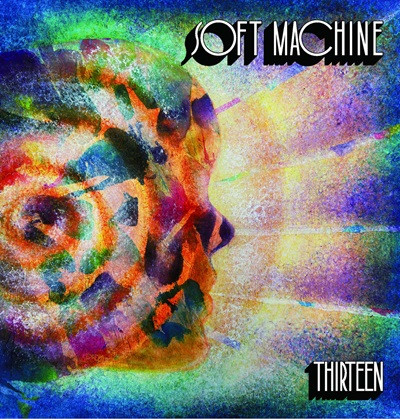
The Soft Machine’s music has stand, despite various line-up changes, the test of time. There’s no denying that their music has kept the ebb and flow within their reach by seeing the directions they’re about to go. Throughout their legacy between the Canterbury scene, progressive rock, jazz rock, and fusion, the Machine’s music is always there, and also, where the next generation will take them.
That and their new album Thirteen, which follows-up to 2023’s Other Doors, sees the power between Theo Travis, John Etheridge, Fred Thelonoius Baker (replacing Roy Babbington on Bass), and Asaf Sirkis are paving the way to carry the torch for this great influential wonder that is on Thirteen.
Mind you, I’m not an expert on the Soft Machine’s music, but delving into Thirteen is like going through the Looking Glass from Alice’s perspective to see what is going to happen next in these compositions in a way the band have worked, sweated, and pour their hearts into the arrangements that’s on here.
With ‘Seven Hours’ Travis tips his hat to the late, great co-founder Mike Ratledge where he visions the chaos he had created on his keyboards during the Third-era, carrying where he had left off on ‘Facelift’. But it has this spaced-out spaghetti western atmosphere Etheridge handles on the composition before going into this chase sequence with Baker and Sirkis leading the way in this Looney Tunes-like alternate score to a Bugs Bunny cartoon from the Bob Clampett-era.
The soul and beauty behind ‘Waltz for Robert’ brings a beautiful, yet emotional tribute to Wyatt’s time with the band from the first album to 1971’s Fifth. This track carries the flute improvisation that Theo goes into his Mel Collins approach from King Crimson, but with a setting in the mid-to-late ‘60s in San Tropez in black-and-white while ‘The Longest Night’ continues to score more Looney Tunes shorts in its ominous terror to its carousel dystopian Hammond organ textures in a way you feel as if you’re inside a dream.
There’s the improvisation, prog orientations, taking risks, walking on this tightrope, and the complexity that goes with it, Travis’ composition pushes you over the edge of the cliff, not knowing if you’re going to fall or not. But this 13-minute bad boy is where he and his band mates pull the string and go for the jugular. Let’s delve into ‘Open Road’ right now.
With the usage of Steven Wilson’s Mellotron that Travis borrowed from and guest organist Pete Whittaker in the realm, you feel as if you’re in Wilson’s universe as Theo expands the Insurgentes and The Raven that Refused to Sing-era, it becomes a driving down in the middle of a pouring rain, and wonder what will happen next in the story.
It has this dark, yet mysterious quantity in which Theo and Pete lay down the law in this thunderous final section of the piece by taking place in a gothic cathedral before Etheridge continues onward with his cat-and-mouse chase between the playful joy of ‘Green Books’ with its Monk-like blues sax improv, then wiring through his frets up and down the spiral staircase like a madmen using a heavy dosage of the wah-wah pedal to lead the charge.
Once he calms down and takes us into the warm, cozy atmosphere of Bahia, Brazil with its dazzling colors along with its lukewarm beaches on ‘Beledo Balado’, he’s more than just a heavier sound, but giving it that cool heartfelt approach which speaks of Wes Montgomery before going back into that climbing motif when it comes to the ‘Pens to the Foal Mode’ where he and Theo trade with each other on who will get a chance to win the improvisational finish line.
But what’s this? Have the Soft Machine walked into the rooms of Weather Report and Return to Forever when it comes to more wah-wah’s galore behind ‘Time Station’? You bet it is! It feels like we are back into the Columbia/CBS-era where jazz fusion was cooking hot and spicy buffalo wings during that time frame whilst walking into Terry Riley’s universe where Travis and Sirkis trade each other with a dooming powder-keg that has just erupt out of nowhere behind ‘Which Bridge Did You Cross?’
Closing Thirteen is the spiritual guidance of ‘Daevid’s Special Cuppa’ which showcases Daevid Allen’s glissando guitar on the composition. According to Sid Smith’s liner notes, the composition was recorded during Travis’ time with Gong. Theo wanted to make sure that during Daevid’s time between Soft Machine and Gong is mentioned on this beautiful farewell to the Pot Head Pixie himself and flying on wards into the Isle of Everywhere as he brings his story in full.
Adventurous, monumental, and awe-inspiring, Soft Machine’s Thirteen album offers the latest chapter in the band’s continuation of keeping the Moon in June growing and the Hope for Happiness, burn brighter than ever.