I was still a teenager in 2004 when I came across Klimt 1918, an Italian band that had already been building a following across Central and Eastern Europe that didn’t quite extend this far west. What caught my attention then is the same thing that interests me in music now. They had a distinct, difficult to pin down sound – alternative songwriting with post-rock space, a thin veil of goth rock, and a metal root underneath that gave it teeth. It was a sound I carried with me and over a couple of decades and four albums, I’ve listened to them trying to figure out what they wanted to be whilst I too, was on a similar journey. Their 2016 album, Sentimentale Jugend, swung the door open towards a shoegaze-tinted realm they’d been flirting with. Ten years later, Àmor walks right through it.
Let’s address the elephant in the haze first. Àmor was mixed by Tony Doogan (Belle and Sebastian, Mogwai) and mastered by Frank Arkwright at Abbey Road, so there’s real pedigree behind the desk. And yet the first thing that strikes me is how buried everything sits in the mix, how far back everything has been pushed, how much of this record sounds like a transmission from the nether. There’s an intentional space between you and the music. It keeps one at an arm’s length, and instinctively you yearn for closeness. It’s a genuinely intelligent production choice, because it plays on exactly this feeling, an emptiness that can never quite be saturated. Right from the first track there is so much going on here, so much detail in the way guitars coalesce and bleed into one another, that burying it this deep occasionally feels like underselling it. This is rich, layered material, and richness pushed to the background asks something of the listener that not everyone will be willing to give. I felt myself conflicted, leaning in rather than being pulled in, cranking up the volume so I can hear, not just feel. At times I thought I am working for the record rather than being met halfway. Repeat exposure for maximum pleasure then, though whether that’s a feature or its toll depends on how much you’re willing to bring to your listening experience.
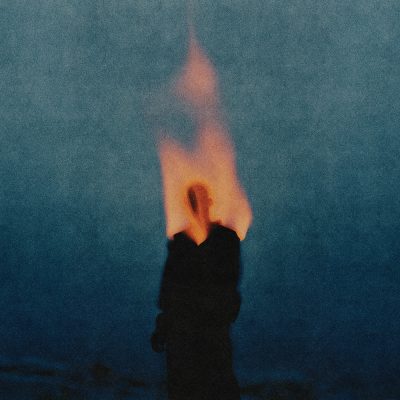
‘Dream Core’ opens the record and the aforementioned space is immediate, almost disorienting. It’s deeply melancholic, too, the vocals fraying into distortion at times, and there’s a yearning quality to it, something unrequited but sensual. Here’s the question that nags at me throughout Àmor – am I hearing that because it’s actually there, or have I been primed to hear it, told what the album was called, shown the album cover, before a single note was played? It’s the Kuleshov effect in its sonic form. I genuinely don’t know the answer, but what I can say is that ‘Dream Core’ sounds like longing, just not a sad one. There’s a lightness running through it, and a feeling of reaching for something rather than mourning its absence.
‘Aventine’ follows, and halfway though it something blooms. Post-rock guitars open up and the whole track becomes comforting. Vocals here do something Sigur Rós have built a career on, functioning less as lyrics and more as another instrument in the wash, texture more than message. Towards the end things grow muffled, instruments almost fusing into something singular. What’s most interesting is that much as every song on the album, this one never really climaxes either, not in the way the confines on post-rock usually demand. Instead, it develops a singalongable melody, post-rock structure dressed in dream pop hooks. That restraint makes it land harder than a crescendo would. It may be have changed its fur for something fuzzy, but at its core, this is the same Klimt 1918 wolf.
By the time ‘Mountain’ arrives to close things out, an hour has passed, and what impresses me most is how cohesive it all feels despite the distance covered. There’s been visceral urgency that collapses into something tender, a faint Ulver echo, a saxophone sounding pressing and grieving (‘Nihil Ultra’ into ‘Eros’). There’s been basslines you could dance to and hooks that prove that gaze can be catchy without selling out its blur (‘Nexus’), something more alternative and immediate (‘Un Été Invincible’), and the longest track on the record, sung in Italian, ethereal and sometimes droning long enough to test that patience properly (‘Petricore’). Klimt 1918 earn this indulgence. Rewarding, but not in the way I expected it. Not the same reward I came to this band for, but I think that is the point. The space and emptiness is what Àmor is actually about. Not the kind of love that resolves itself, but the kaleidoscopic one, the one that stays at a distance, that you can see, and feel, but never quite reach. Twenty years in, that feels apt. The band I found when I was young was car windows down music, easy to love quickly, whereas this is bedroom music, headphones on under a blanket music, and it doesn’t need you to fall for it immediately because you eventually will anyway. Longing gets its way. I’m not sure Klimt 1918 have changed and left me behind as much as both of us have ended up somewhere that asks more and gives less easily. And yet. This record left me torn in a way none of their others have, and I keep circling the same question. A band has to go where the path leads, almost thirty years on from where it started. So why does some part of me still want the windows down?