Helen Svoboda’s Headwater is a sixteen-part stream of fragmentation, individuality, and wholeness — a set of recurring threads (or “earworms”) that form an abstracted self, rooted in a deliberately devolved songform. It can be heard as a tapestry with blurred edges: strange, beautiful, evaporative, and fluid, with the soft distortions of memory.
The album’s distinctive sonic world is built from a tight, elastic palette: two double basses, two voices, and electronics, treated as both singular and combinatory bodies of material. Headwater features Svoboda (double bass, voice, composition) alongside close collaborators Jacques Emery (double bass), Finnish vocalist Selma Savolainen (voice), and Tilman Robinson (electronics, production).
Across the record, songs are fused through extended instrumental practice, improvisation, and strands of Svoboda’s cultural heritage. Finnish-born and based in Australia since the age of five, she reaches into her Nordic background largely through the vocal work, carrying echoes of Finnish folk harmony and traces of invented “Finnish” words, explored with Savolainen as a second voice. Svoboda doesn’t aim to emulate tradition so much as cultivate its influence into something deeply personal and intuitive.
On the instrumental pieces, Svoboda’s language is timbre-forward and articulate, expanding the double bass into a melodic and textural engine. Her interplay with Emery, refracted through Robinson’s electronics, stretches conventional ideas of what the instrument does in a chamber context, creating a different sound-realm entirely: moving between lightness and weight, guided by a sense of youthful curiosity.
To mark the release, we’ve asked Helen Svoboda to share three of her main influences behind Headwater as part of our Under the Influence feature.
Barre Phillips – Call Me When You Get There

This solo album, by one of my favourite double bassists, was a revelation when I was starting to compose my own solo music for double bass. On this album, Barre effortlessly brings to life the melodic beauty of the instrument, across a journey of beautiful folky compositions. When I first heard the opening track ‘Grants Pass’, I was struck by the cello-like quality to his sound, and it ignited a particular curiosity within me; that the double bass could be highlighted in many more ways other than just its lower end. This record was a pivotal moment for me when I was studying in the Netherlands/Germany from 2018-2020, and ultimately inspired me to compose my first solo album Vegetable Bass. It also started my fascination with the higher register of the instrument, which has continued to shape my music ever since with the use of overtones and extended techniques.
Sigur Rós – Valtari

My Finnish roots continuously lead me back to music from the northern hemisphere, and Sigur Rós has forever been a favourite of mine. Valtari is an album that I return to regularly when I’m travelling, particularly on the plane. I can easily disappear into this cinematic, other-worldly sphere, losing track of time and space. The richness of the orchestration amidst Jonsi’s falsetto vocals always give me chills. The word ‘Valtari’ translates to ‘rolling’, which captures the album perfectly – it feels like a gradual whirlpool of sound, and I’m simply taken along for the ride. As a lover of rollercoasters, I think I would still choose this album over any theme park.
Björk – Vulnicura
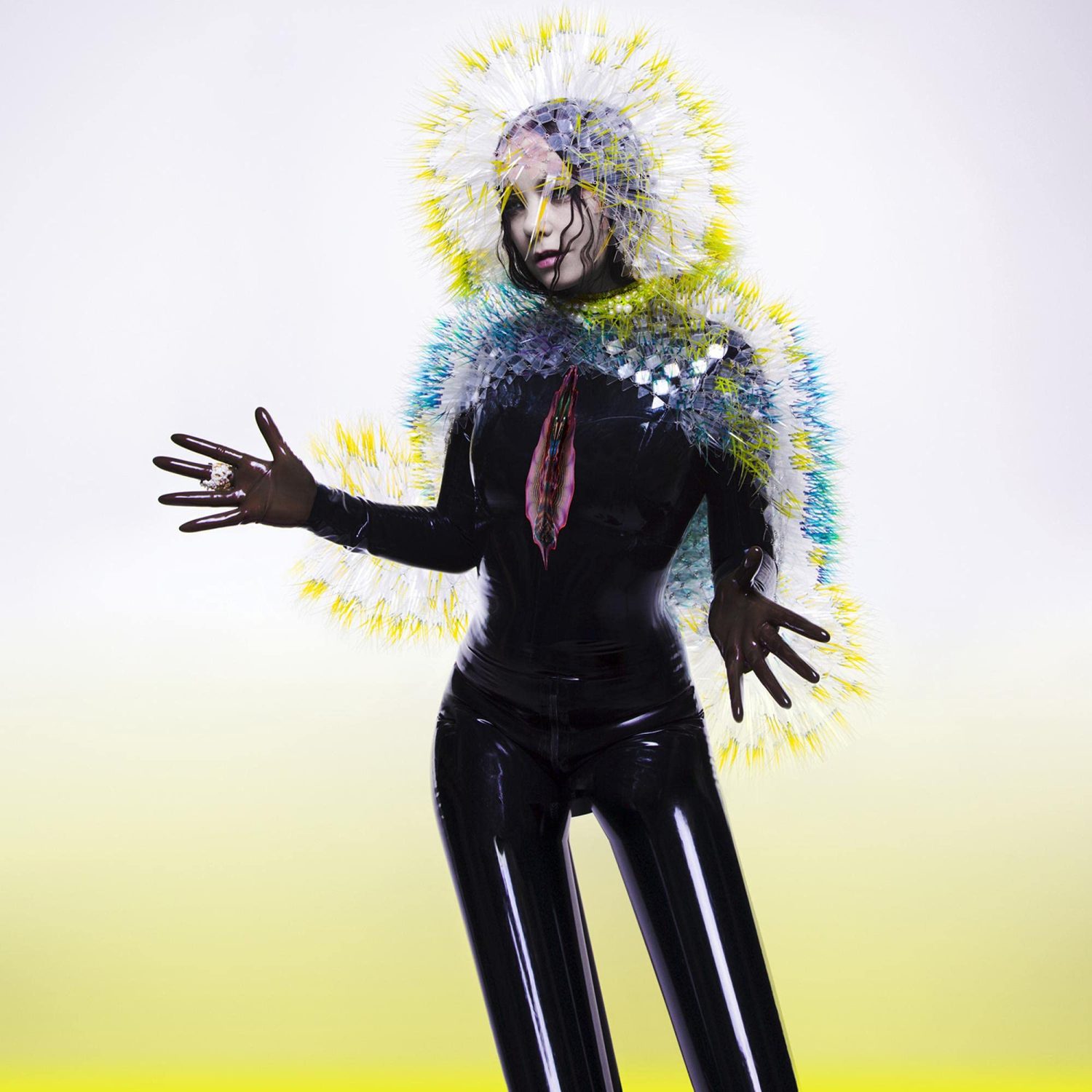
As I write this third paragraph, I realise that two of my top-three albums are from Icelandic artists. There really is something so distinctive and magical about music from this part of the world that draws me in. Björk has such an incredible discography that it was hard to choose just one body of work, but I am enamoured by the string and synth orchestrations on Vulnicura, embedded with her incredible songwriting and striking voice. As a listener, I often find it hard to focus on lyrics – rather, I naturally gravitate more towards timbre and texture. Yet, Björk pulls me into her lyrics every time, as if I can’t possibly ignore what she is trying to tell me. ‘History of Touches’ paints a picture right in front of my eyes, reminiscing on the intimacy of a previous relationship, in close and heartbreaking detail. ‘Family’ describes the realisation of a family of three spilt into two halves after a break up – leaving the mother and the child, and the father and the child, but with ‘no man and woman’. The way that she tells her stories on this record is visceral, real and haunting, yet beautiful and exquisite all at the same time.