John Carpenter needs no introduction. Whatever one may think of his work, whether good or bad, his influence on modern genre filmmaking is undeniable. Emerging during the tail end of the New Hollywood era as an independent filmmaker, Carpenter became one of the defining creative voices of late-1970s and 1980s cinema.
From Dark Star, Halloween, Assault on Precinct 13, and his landmark 1982 remake of The Thing to Escape from New York, Big Trouble in Little China, and They Live, he inspired generations of filmmakers by blending horror, science fiction, surrealism, and social commentary into something that reached far beyond the conventions of the slasher genre.
His contributions extend beyond directing. Inspired by his father, music professor Howard Ralph Carpenter, John developed a passion for arranging and composing his own scores. Beginning with Dark Star, he became an early adopter of synthesisers, using the EMS VCS3, an instrument also embraced by artists such as King Crimson, Tangerine Dream, Pink Floyd, and Brian Eno during his time with Roxy Music, particularly on the band’s 1972 self-titled debut, Roxy Music, and its 1973 follow-up, For Your Pleasure.
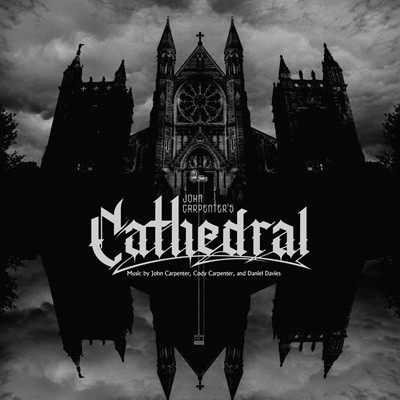
Released in conjunction with a graphic novel from Storm King Comics and the accompanying album on Sacred Bones Records, the project transforms Carpenter’s cinematic imagination into an immersive audiovisual experience, combining haunting electronics, crushing metallic textures, and an eerie narrative worthy of the Master of Horror himself.
The genesis of Cathedral dates back to a dream Carpenter had in 2024 about a supernatural entity lurking beneath the catacombs of an abandoned cathedral. Rather than existing as a traditional film, the story unfolds through music and illustration, allowing listeners and readers to construct the movie in their own minds.
The result is remarkably vivid. Listening to the album feels like stepping directly into its gothic world, where towering architecture, oppressive darkness, and bursts of overwhelming sonic force immerse you in every moment.
It’s easy to imagine Cathedral serialised in the pages of Heavy Metal magazine, eagerly waiting for the next instalment to discover what happens next. Carpenter pushes his synthesisers into darker and more mysterious territory than ever before.
While echoes of Goblin are certainly present, there are equally strong reminders of Fabio Frizzi’s unforgettable scores for Lucio Fulci’s horror classics such as Zombie, The Beyond, and City of the Living Dead. Those influences are especially apparent on tracks like ‘Abandoned Cathedral’, ‘Inside Out’, ‘Elevator Two’, and ‘Identity’, where swelling synthesisers intertwine with ominous pipe organ passages.
Yet Carpenter isn’t paying simple homage to Goblin or Frizzi. Instead, he filters those inspirations through his own unmistakable musical identity. Daniel Davies contributes crushing guitar textures that evoke Electric Wizard, Candlemass, and Cathedral (Lee Dorrian’s band) without resorting to obvious Black Sabbath worship. Together with Cody Carpenter’s atmospheric keyboard work, the trio creates a soundtrack that balances relentless heaviness with mounting psychological tension.
‘Inside Out’ is one of the album’s standout moments. At times, Carpenter channels the hypnotic spirituality of Popol Vuh’s score for Aguirre, the Wrath of God, while the doom-metal undercurrent steadily ratchets up the suspense. As Christine Marks, Paul Hernandez, and Steve Mayfield venture deeper into the cathedral, the music mirrors their growing realization that something ancient and terrifying is responsible for the death of Christine’s father.
‘The Ferryman’ descends even further into darkness, unleashing the monstrous presence through thunderous electronics and death-metal intensity. Its relentless pulse captures the terror of three people fighting for survival against an unimaginable force.
That momentum carries into ‘Lord of the Underground’, where crushing riffs collide with angelic choirs in a thrilling blend that recalls Mike Oldfield as much as early Metallica. It’s an aggressive, menacing piece that never loses sight of Carpenter’s gift for atmosphere.
‘Back to Ruins’ prepares the listener for the climactic confrontation with pounding industrial rhythms, creeping waves of doom, and subtle spaghetti western flourishes. It perfectly underscores Christine’s refusal to surrender, building toward a finale that feels both cinematic and emotionally earned.
Surreal, chilling, and remarkably ambitious, Cathedral represents a welcome evolution of Carpenter’s storytelling. Rather than returning behind the camera, he crafts a film that exists entirely in the imagination through music and graphic art. I couldn’t help but picture it as an adult animated feature inspired by Heavy Metal, Rock & Rule, Fantastic Planet, The Time Masters, Gandahar, and even the psychological intensity of Perfect Blue. It’s the kind of project that deserves to make that leap to animation.
Ultimately, Cathedral is more than another John Carpenter soundtrack. It’s a fully realised world brought to life through sound, atmosphere, and imagination. Carpenter, his son Cody, and Daniel Davies have created an experience that reminds us why Carpenter remains one of horror’s great visionaries.
Rather than revisiting past glories, they push forward, inviting listeners to become participants in the story itself. Few artists can make you feel as though you’ve watched an unforgettable horror film without a single frame appearing on screen. Cathedral does exactly that, and it’s one of Carpenter’s most imaginative achievements in years.