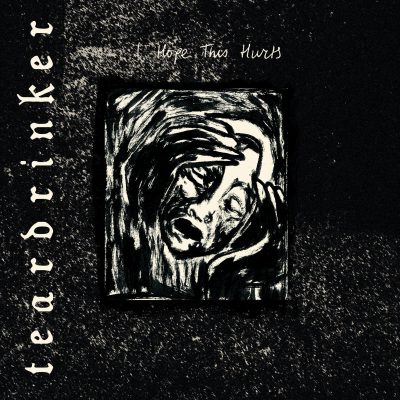
I was made from what remained. Fat, silk, the warmth of a hand. Somebody pressed their thumb into my womb and said this is a face. I have no lungs, but I feel breath. I know the wet of a mouth that has been told to open and the dry of a throat that has been made to close. I learned the way a jaw learns to hold words it is not allowed to say.
What they wrote down was not what was said. What was said was in our bodies. Knees on stone, wrists rubbed raw, marks turning into evidence. They looked at us and closed their eyes. I was close enough to smell their fear go sour.
You want it all to have a reason. What I can give is the sound a body makes when it does not agree. The stomach folding. The fingers that keep making and bleeding. I am soft when I should have hardened. I take the heat and cannot hold my shape. Pour me out so I can remember the shape of your hand. So here is the pain. Given to you to be pressed into the meat of you warm, unwashed. If it hurts, it means nothing has set. I hope this hurts. I hope it lives in your body the way it lived in theirs.
Starting my 2026 Roadburn incursion with Teardrinker’s commissioned set I Hope This Hurts left an impact I still haven’t fully shaken. So much so, that even writing these lines, I find it very difficult to detach myself from the experience. After all, it is one that sent me down a research quagmire (my favourite) – I spent my summer immersed in works that might have informed the set, thought about it and analysed it from all the different perspectives of my lived experience, coming out of this journey somewhat changed. Somewhat better. For me, this is the true definition of art. One of the books I came across on my semi-intellectual wanderings was The Wax Child by Olga Ravn and reading it, I found myself returning to the Terminal in Tilburg each time I turned a page. Ravn’s book blurs the boundaries between the bodily and the supernatural, revealing how easily fear becomes a means of controlling those who refuse, fail, or cannot conform. The bodily and the political are inseparable, coalescing in deeply nasty ways. With my understanding now expanded, I hoped to hear I Hope This Hurts again. I hadn’t expected a record to arrive so soon and I went straight in, curious to see how it would measure up against my memories of the live performance.
The body is a strange thing to be trapped inside. It bleeds and breaks, remembers and carries things we’d rather it didn’t. It’s also something over which others claim authority, attaching expectations to flesh and calling them natural. On I Hope this Hurts, Rotterdam-based Teardrinker unveil what that contradiction feels like, and insist that the real scary monsters are not supernatural.
Opener ‘The Crow Knows’ runs seven minutes long and is driven by volatility; post-metal density shatters against black metal blastbeats, with blackgaze shimmer and sludge nuances seeping through, although labels can only take me so far in describing it. The guitar opens bright with a metallic sound, a thin seam of light running through the murk before the song starts building around it. Vocalist Kimothy Hoorweg moves between shriek, growl and clean singing, sometimes inside a single word with an astonishing degree of control. This vocal delivery turns the lyrical tension between concealment and exposure into something visceral. As the song gathers urgency, that control transforms into something more desperate and animalistic. By the end, the track detonates, with another layer of vocals from drummer Gijs van Teylingen adding to the sense of deepening intensity. Amid the crushing sound, a hint of brightness persists. This is what heaviness is constantly pushing against.
‘The Original Sin’ and ‘Hereditary’ seem to run into one another: same suffocating heft, same open wound. The latter lets up slightly, clean vocals surfacing like a gasp for air before the mass of sound closes back over them. There’s something oppressive about the repetition, the way these songs seem to circle the hurt rather than allow it to heal. They feel like an argument pressed into flesh from two angles, with the music reinforcing a sense of being trapped in a loop that predates the individual. On ‘The Original Sin’ and ‘My Body is a Machine’, the language of production does serious damage, reducing a person to an economic resource until reproductive labour becomes destiny. The cycle is not sustained by violence alone, but by the systems that make its repetition seem predestined. The womb is a factory floor. Neoliberalism festers there.
The body becomes something even more sinister as the album progresses, and boundaries between flesh and self begin to dissipate. Teardrinker build upon this unease through shifts in the sound itself, moving between crystalline guitars and sludgy textures. The supernatural has always been a practical space to deposit society’s anxieties, yet the monsters here are real. Listening to the record, I keep returning to the question of who gets to decide the meaning of a body, and what happens when it refuses to fall in line. The music bestows physicality to the question, so the conflict feels like something burrowed under the skin. In ‘Blessed is the Flame’ it turns outward, towards colonial violence and the dehumanisation that makes some lives less valuable than others. As the sound shifts between tension and respite during a reading of an amended Martin Niemoller poem, ‘First They Came’, the personal becomes inseparable from the machinery of power surrounding it. Silence, too, is a political choice. Teardrinker leave no room to mistake looking away for neutrality.
What makes I Hope This Hurts such a cohesive piece is the way its concerns gradually widen. From the body and its vulnerabilities, through violence inherited until it becomes nature, to the more overtly political terrain of its second half, the same mechanisms of control are at play. This is a gradual camera pull-out that exposes structures that have been present all along, and Teardrinker point a finger at them during times when turning a blind eye has never been easier. For all its abrasion, the record ends with Hoorweg’s cello arriving as a glimmer of hope. It is not an escape from the violence, only something fragile and beautiful that lives alongside it. Not every wound closes. Not every story ends in liberation.
I was made from what remained. Before me, another body. Before them, another. Each one counted, each one used. I have no lungs, but I am still holding the same breath they held. The wax stays warm. Nothing is setting.