Primordial | website | facebook | twitter |
By: Josh Cuevas
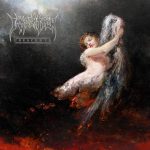
Primordial’s Where Greater Men Have Fallen was one of 2014’s most socio-politically attuned metal albums. It is also an absolute rocker. In December, Josh Cuevas spoke with vocalist Alan Averill, aka A.A. Nemtheanga, over Skype about the album’s themes, the differences between touring Europe and the USA, and why Primordial will never write songs about killing zombies.
(((o))): You recorded your eighth album, Where Greater Men Have Fallen, at a new studio and with a new engineer. What was the thinking that led to those changes?
Alan: I just think that old bands get caught in a rut of doing what’s comfortable. Especially when they get to album six, seven, eight—they just go back to the same place and the same engineer and [go], “Oh, here’s my amp” and plug in . . . I push very hard to change everything on the release, even the [visual] artist, because I think it’s important to shake up that routine every few albums. That’s the main reason why. Nothing against Chris [Fielding, Primordial’s previous producer]. Nothing against Foel Studios. We just wanted to have a different handle on things with the band. To try and get a different angle.
(((o))): In terms of the actual writing and recording process, what was different?
Alan: Nothing. [Laughs] Nothing has changed since 1991. We don’t trace files. We don’t write over the Internet. We don’t send each other riffs to a tape track. We don’t do anything like that. We still travel and meet in the rehearsal rooms. Stand there, argue, and fight, and bicker, and play Black Sabbath riffs, and sit around drinking coffee. You know, heavy metal needs human interaction to be made. The only thing that’s different with Primordial is that instead of old cassette recorders, we now record on our phones at rehearsals. And that’s the only difference in twenty-something years.
(((o))): You mention the human element. What about the natural element? Grouse Lodge—where Greater Men was recorded—looks to be very remote. Do you draw inspiration from nature?
Alan: Well, it depends really. It’s a good studio. Specifically with this album, I tried to stay out of the way as much as possible. One thing you learn from recording is when not to be around. Because—I know it may sound really strange—you learn over the years that you don’t need to sit in the control room and watch guitar takes. You don’t need to always be there to argue about something, because very often, when you trust each other to do your own parts, you have to learn that sometimes people have to work through the process of a bad idea themselves. And to fight all the time about what you think is a bad idea, which might actually turn out to be a good idea sometimes. You’ve got to let people just work through that process themselves.
So, Grouse Lodge was great for just not being around. I could disappear for a whole day and a whole evening and see no one all day. I don’t want to listen to fucking 40 guitar tracks. I don’t need to. I will come in and do the singing in the dead of night . . . It’s in the middle of the nowhere, so I can remove myself.
(((o))): It looks like an ideal place to record a metal album.
Alan: In a way. I mean, I’ve made albums in the city and that’s a different kind of atmosphere. But it can be all right because you can go and unwind at a bar afterwards and hang out with people. But it’s easy to get distracted, you know.
(((o))): What was the lyrical angle on this album? You’ve mentioned in the past that you try to avoid using metal’s “usual Christian-baiting” lyrics, instead coming at them differently.
Alan: I think I said that specifically about Redemption at the Puritan’s Hand (2011). [With that album] I wanted to write specifically about our relationship to mortality. To examine it. And Where Greater Men Have Fallen doesn’t really have many of those themes, to be honest. It doesn’t really have religious themes on it. There is a hint, here and there. ‘Ghosts of the Charnel House’ is about institutional child abuse by the Catholic Church in the 20th century. You know, cheery Saturday night listening. But that is not only anti-Christian. It’s against the state. It’s against the people who hid it. It’s about something very dark in Irish society. That’s a bit different.
I think what you do [to find a lyrical angle] is that you start in a couple of different places and you find they converge together. I took a couple of moments. One was that I was reading a lot about the Chicago World Fair in 1893 and I found that really fascinating, this building of a city within a city. Every nation came to display their technological industrial advancements, and there was a very great sense around that time that the world was about to step into a golden age of human kind in the 20th century, a century of promise.
So, I traced from that moment to World War I. And with that there are themes of shattered promises, empty rhetoric, and empty hope, in very simple terms, because you take the promise of the century, and ok, there was technological industrial advancement, but it was also used mainly to kill people on a greater scale.
And then I went forward to 2014, a hundred years from the Great War, and I looked at the relative era of prosperity in the mid- to late 1990s, as we witnessed a new emerging middle class mainly across Europe, and, aside from the Balkan Wars, an era free of relative conflict, with the European economic structure working. It’s since collapsed, and we have war on the borders of Russia and Ukraine, we have ISIS militants a mile from the Turkish border, we have the rise of the left, the rise of the Right, the rise of religious fundamentalism. The world in 2014 seems to be a much more dangerous place, a darker place, than in 1998 or 1996.
(((o))): And then there’s the album closer, ‘Wield Lightning to Split the Sun’, which almost seems to have humanist themes.
Alan: Yeah, well, after so much darkness for the rest of the album I felt like I needed to close it out with something a bit uplifting, something very simple and something very fundamental to the sort of basic, animalistic energy of the band. There’s no deeper meaning to that song. The words are exactly as they are, you know. But it’s a good song to close. It’s a good song to lift the album up at the end, because it can be heavy going in some places.
(((o))): What is track sequencing like for Primordial?
Alan: Our bass player [Pól MacAmhlaigh] is very good at that. He’s the one who figures out the order. This album was fairly . . . I mean, the opener is a no brainer. ‘Where Greater Men Have Fallen’ is almost like a German dancehall sort of song. You can hear it in like a fucking metal nightclub or something. It contains all the elements of what I suppose you could call a classic Primordial song. And the first three songs follow on quite well from each other. The middle of the album becomes a bit strange, the three songs [there]. And then it closes out and it returns to the more familiar Primordial sound.
(((o))): This far into your careers, you definitely have an established musical identity. What’s different about your relationship to music, specifically your own music, now as compared to 25 years ago?
Alan: We’re fucking older. [Laughs] More cynical, more pessimistic. Primordial is like an institution in all [its members’] lives. There are moments where we don’t do anything for three or four months, sometimes more, and we don’t see each other. We don’t socialize together. We do our own things; we have our own lives. We’re not a professional band. We do things when we want to or feel the need to. So, we kind of do most things on our own terms, but it definitely is an institution.
I’d like to think that we’ve stayed true to some of the original impulses we had when we first created this band. I’d like to think we haven’t lost sight of the energy that you need to capture and harness to make good heavy metal. I’ve never felt confined or bound by heavy metal. I’ve never felt like I’ve outgrown it. I’ve never felt anything like that—it is what I am, and it is what the band is. There’s a learning curve, an evolution curve, as a human being—and of course as a musician—but we’re very conscious of what makes Primordial Primordial. And that thing is something you don’t second-guess, and you don’t try to manipulate.
(((o))): How do you maintain the energy of your live performances?
Alan: To me, it’s very simple . . . It’s heavy metal. Where it lives is onstage. That’s the place where it works the best. It’s just a simple case of standing behind what you do, and when you do that it should be free of conceit. It should be about the ultimate transfer of energy to the people who are there at the gig, and I think that it has a really ritualistic tone . . .
The live show is about a sense of communion between the band and the people who stand behind you. And you can’t get that when you sing about killing prostitutes, or dissecting corpses, or hacking up zombies, or piracy. You cannot get from that the [same] sense of when we play ‘The Coffin Ships’ [a track off 2005’s The Gathering Wilderness about the high-mortality vessels that carried Irish emigrants fleeing the potato famine], and [we’re] playing that in a place where there are people who are descended from Irish.
It’s not to belittle [those bands]—bands make their own choices. And if you’ve made the fantastical, deeply ironic choice to sing about those things, then don’t be surprised when the show is lacking that small thing that can push it over the edge into something greater than just entertainment. I think that that is something Primordial have worked very hard to capture.
(((o))): What do you hope an audience member takes away from a Primordial show?
Alan: That they saw a band who meant it. That it meant something to them. That they built up some fucking passion and energy, and that there was something human about it. That [the band] didn’t look like they were going through the motions. And that they [the audience] didn’t take it for granted. Primordial will play the same way whether it’s 50 people on the floor of a pub or 15,000 people at Summer Breeze [Festival]. It’s a different kind of stagecraft, if you want to call it that, but it will always be the same thing. Hopefully when it’s not the same thing, we’ll just quit.
(((o))): Your latest album has picked up a lot of press in the United States.
Alan: It seems to have.
(((o))): So with this heightened exposure—and I ask this on behalf of your American audience and Echoes and Dust’s American readers—do you foresee a return to America to tour?
Alan: This is a complicated question, and something our label [Metal Blade] is trying to push us for. I make no secret of the fact touring America is fucking hard for European bands. Your government rapes us with the work visas. Then you’ve got venues that want to take percentages of your merchandise, the weakness of the dollar against the Euro, flights . . . I mean, I flew once from New York to Dublin for 300 Euro. Those same flights are now 700, you know? The era of cheap flight is gone. It’s over. When we come to America we are pretty much 10,000 Euro in the hole. So, if you’ve seen us [play for] 108 people in Virginia, we’re losing a lot of money playing there for you. There have to be 250 people at every show or else we lose. And there isn’t. I think hardly any European bands tour to 250 people a night in the States. It just doesn’t work.
Ok, the merch works. I give that to them. Americans buy merch. And I love being there. I like America. I like the challenge of it. I like the atmosphere of the place. I like the people. I think too many Europeans say negative things about America that have never been there. I like it a lot. But it’s fucking hard, you know, when you show up in Cleveland and the venue doesn’t even know who you are, and all the posters are underneath the chairs, and 60 people show up to a room that seats 500 people. And then you hear that Vader played to 20 people, and Rotting Christ played to 40, and Therion played to 80, and you’re like, “Why the fuck is anyone bothering?” It’s hard. I know the American rock and metal scene took a battering from Nü Metal and the sort of post-MTV generation. It’s [still] there, it’s just very spread out.
Also, the other problem is—not to keep rattling on about this—American bands don’t have to pay visas generally into Europe. It depends on the land, but they don’t have to pay them the same way. When you tour Europe, the promoter pays your flight. And pays for it. When we get an offer to tour Europe, we don’t worry about the bus, or the food, or the accommodation. You’re on the bus and that cost is the promoter’s. And an offer to tour America generally isn’t what we call an offer. It’s just a number that they deduct everything from which leaves you with . . . nothing. [laughs] Unless you’re Amon Amarth or Behemoth.
Hopefully, after the summer of 2015, I would hope we can do it. We’re trying to sort out some sort of visa.
Thanks to Alan Averill for taking the time to speak with us.