 By: Christy McGrory
loscil | website | facebook |
You’d be forgiven for not knowing who loscil is. Back in 1998, Scott Morgan branched out from his role as drummer for Canadian indie rock band Destroyer and started producing, at least what I think, is an entirely distinct and beautiful niche of music. The name ‘Loscil’ is derived from a programming language for sound written in C, aptly named Csound. Using the ‘looping oscillator’ colloquial function name, loscil was born.
Scott Morgan originally started making his own brand of ambient music to send his daughter to sleep, but has since branched out with thematic releases such as Triple Point, which elegantly transplants the various concepts of energy and thermodynamics into one of the most high octane ambient releases you’ll ever listen to. There is also Submers and Plume which both sound exactly as you’d expect. Submers delves into the broad sounds of the deep ocean, each track being named after a submarine, while Plume explores a semi industrial, semi otherworldly, upper-atmosphere sound.
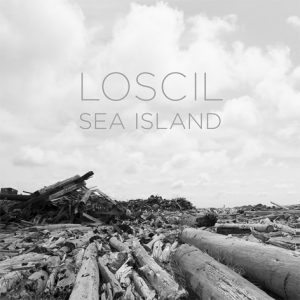
If you’ve listened to loscil long enough (and trust me, it’s the best thing to fall asleep to), it’s easy to spot similarities between his albums. Sound design is one aspect which Scott Morgan executes beautifully, and up until now his releases have been primarily conceptual, but Morgan’s latest release Sea Island has moved tangentially to story-telling.
A New York Times article published in 1983 eloquently titled ‘SLAYINGS SHATTER IMAGE OF IDYLLIC GEORGIA ISLAND’ reports on the brutal murders of a prominent elderly couple that occurred on the self-governed island resort, Sea Island, part of the Golden Isles of Georgia. The murders were the first to have occurred there in the island’s 55 year history and the aftermath caused racial tension among the residents, destroying the ideal that had been carefully crafted since its inception. The island eventually recovered after a period of two months, but it’s not difficult to imagine residents having a seed of doubt in their mind whenever they interacted with each other. “Do I know who this person really is? what if…”. Fear and anxiety are potent and powerful emotions. The damage had already been done.
Loscil is ambitious in his quest to capture the atmosphere of a time where I’m assuming he was still fairly young, and his ambition has paid off, especially given the limited information available. Each song has its own particular styling and tempo which meander in and out of each other without any regard for traditional song structure, with the various bleeps & bloops and periods of silence where only a sub bass is audible only lending to the eeriness. It’s hard to imagine writing a story with instrumental music, never mind attempting to do so with a small library of various field recordings and samples. Scott Morgan claims his process is to grow stems out of these individual seeds, and will sometimes even limit himself to a single sound which is edited and re-edited until a cohesive piece is made (although surprisingly, there is an actual human voice in the song ‘Bleeding Ink’).
The song titles are cryptic enough for the average listener but they add satisfying contextual information to the overall feel of the album. The opening track ‘Ahull’ is defined as ‘(of a sailing vessel) with all sails furled and the helm lashed to head into the wind, as in heavy weather.’, which not only is a beautiful definition (seriously), but also simply means to prepare for the heavy seas, and you really can hear that while listening to the broad panning, pattern based intro. ‘In Threes’ is likely a reference to the idea that things that come in threes are inherently more satisfying. If you care to listen to the song closely enough, you’ll notice that it has three distinct parts which all complement each other, and is likely thematically linked to the first track, indicating the satisfying nature of ‘In Threes’ is about to be disrupted, much like the Sea Island murders.
The rest of the album continues in this fashion, the most obvious title being ‘Sea Island Murders’, opening with electric filtered stabs accompanied by a haunting organ-like synth playing glimmering dissonant chords. ‘Holding Pattern’ counterpoints a beautiful slow-release xylophone melody with a deep and full-bodied bass, the howling frequencies in the background bringing the song together.
It’s difficult to fault an album that starts with so little to begin with. There maybe times during listening where it’s easy to mistake a lack of dynamic for a lack of passion, a lack of storytelling, but it’s essential to the cause of ambient music. The fact that Scott Morgan has attempted to tell so much with so little is seriously impressive, and the fact that he succeeded is even more so. Let me ask you, if I gave you a set of 20 words and asked you to write a short story, could you?