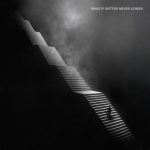
Sanzu | facebook | twitter | bandcamp |
Released on December 3, 2015 via Independent
Some death metal fans may already be familiar with the up-and-coming Sanzu. They received pretty strong critical acclaim earlier this year for their debut EP, Painless, and for good reason; the quintet’s signature brand of djent-tinged death metal drew positive comparisons to a litany of beloved groups, equally eliciting an old-school Morbid Angel vibe, Gojira-like complexity, and some even comparing them to deathcore acts, like fellow Aussie group Thy Art Is Murder or early Job for a Cowboy (probably due in part to their excessively low tuning). The comparisons are far-reaching for good reason as well: Sanzu have concocted an impressive mix of influences, resulting in a surprisingly mature recipe comprised of one part technicality and one part brutality.
Not surprisingly, Sanzu have attempted to capitalize on their burgeoning success by releasing their debut full-length album, Heavy Over the Home, less than a year after Painless – much less, in fact, at nearly 8 months. Also not surprisingly, the limited time between Painless and its successor is (perhaps unintentionally) apparent. The production is significantly cleaned up, but it’s about as much of a direct continuation as you can get: same heavy reliance on tremolo strumming, frenetic shifts between riffs, and an intensity that permeates from start to finish. For a band this young and a time frame this small between releases, that’s something to be expected, but it’s important to also be self-aware. An album plays differently than an EP, and when you’re as intense as Sanzu, the risk of suffocating the audience comes into play.
That’s where Heavy Over the Home both succeeds most and faces its largest challenges. Sanzu is at the top of their game compositionally, but how do you diversify such a well-defined sound in the context of a longer work? The first half of the album gives essentially one answer; from the second you start ‘Old Orchard Floor’, you’re met with a veritable aural assault, and if you want nothing more than a barrage of crushing technical excellence, you won’t be disappointed. As the album progresses, however, it almost immediately feels out of breath. You get some groovy, mid-tempo respite with the excellent ‘Ubiety’, but ‘Tailor’ follows immediately and encapsulates what is most frustrating with the album.
Sanzu are so intent on getting to the next section of (often tremolo-strummed) breakneck riffing, interspersed only with a breakdown or two, which thankfully they at least know better than to relegate to the bridge, that the entire song feels disconnected and haphazard. Even when they do manage to make a really breathtaking moment, like the tempo shift around a minute and quarter in, it’s dispatched so quickly that you can’t properly appreciate it. Does that make it “bad?” Of course not; at the end of the day it’s still creative, well-executed death metal, albeit lacking in powerful moments and somewhat incoherent. Unfortunately, that’s just as applicable to the rest of the album.
Still, it’s not as if Sanzu is entirely unaware of this. ‘Awaken’ heralds the beginning of the second half of the album with a well-needed different kind of intensity; slowing the pace and setting a less frantic tone breaks the settling tedium, creating a pretty powerful moment in the shortest song on the album – a feat that undoubtedly deserves praise. For the most part, the next few songs follow suit, the title track in particular standing out as masterfully encompassing a variety of tempos and tones throughout its seven minutes. By the time you reach the cosmic soup of a closer, ‘Colorblind’, it’s clear the album is heavily back-loaded, and if nothing else that’s a pleasant surprise.
Ultimately, Heavy Over the Home is exactly what you’d expect it to be: Painless translated to album form. There’s a little lost in-between, but the brutal, and at times complex onslaught will satisfy your need for frenzied death metal. It’s disappointing that you don’t see serious variety until well past the halfway mark, but when you do get it for more than a transient period, you’re left feeling supremely satisfied.