 By: Thomas Laycock
Russian Circles | website | facebook | twitter | bandcamp |
Introduction
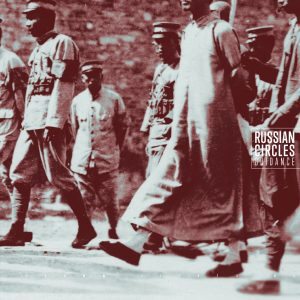
Russian Circles need no introduction, so let’s talk about their forthcoming 6th studio album Guidance released through Sargent House on August 5th
TLDR version
It’s great and you should definitely buy it.
Full review with track by track ‘analysis’
Guidance finds Russian Circles in top fighting form as they continue to evolve and refine their sound, which has both lightened and deepened over the years. Though some may prefer the starker, more aggressive sounds of their first three records, this is probably the best of their last three; more cohesive than Empros, more accomplished than Memorial it builds upon and supercedes them both.
Opening track Asa serves as a warm and shimmering overture, where the simplest of phrases and ambient sounds are branded with the bands unique bittersweet sensibilities. The bass-beef that squats at the lower end underscores the delicacies with direction and authority. It segues beautifully into Vorel whose fervent drums roll over themselves like the hooves of battle-bound horses. Here arises the album’s manifest intent to grind your brain to powder; the choppy chromatic guitar lines interweaving through the pulse of the rhythms, the instruments straying and compressing like a boiling tide.
Mota is melancholic and beautiful; the chord swells under the arpeggios are infused with optimism and grace. The soundtrack to a stoned summer’s night that gradually breaks itself apart and washes away like a memory into Afrika, one of the definite standout tracks on the album. Afrika is built around a shimmering melody dutifully served by well-deep drum tones that blister away beneath the bedrock. There is a perfection to the resolutions here that is both inevitable and invigorating, it’s the kind of art that tells you something you’ve always known but never could have expressed. The interweaving of rolling guitar lines and staccato bass creates both complicity and tension which is raised gradually and relentlessly before an erupting rejoinder to the main phrase rises like a dolphin from a molten sea (or something).
Overboard is next, perhaps weaker than the other tracks it remains a romantic and lovingly simple tune that has its place within the atmospheric narrative of the record. Calla is one of the heavier tunes, another schizoid beast in the Russian Circles menagerie, it beats its chest and shows its teeth and damned if it doesn’t get your head banging in sympathy. The album wraps with Lisboa, which is my personal favourite; full of contemplative breathing space it opens out magnificently with mighty ringing chords that lift you up to see further over the horizon. Like some majestic sci-fi movie soundtrack Lisboa smells like dusty sunsets and rocket fuel, reverberating like a benediction in your mind long after its final tones die.
In conclusion
The album flows together almost flawlessly like some rumination on one long and complex matrix of unspeakable things. This isn’t so much an exploration of loud vs quiet as a conversation between light and dark, pulse and peace, the delicacy that tempers rage; the one amplifying the other and creating the most bittersweet and inspiring offspring.
Some may find it cause for criticism that while this isn’t exactly more of the same it’s also nothing revolutionary. I’m torn on the issue, as I’d like to hear a little more experimentation. On the other hand there’s no law that says you must break new ground, especially when the ground you occupy is so uniquely and definitively your own, when you have one of the most singular and powerful voices in instrumental music and when you’re still at the top of your game.
The band are on record that their writing process is ‘forged out of gut instinct and base emotional response’ and that’s an approach that demands respect. I think it would be quite forced, and therefore dishonest, for them to work some other way. In the pure pursuit of such an aesthetic ideal such song-writing is akin to sculpting; teasing out the rarefied form of the final arrangement like finding the figure hidden, yet implied, within the stone. This is a Renaissance idea, but it lives on through the practice of artists who follow the Muse before the money. Russian Circles follow their Muse, it’s her Guidance they seek, and hers they receive.