by Aaron Lock
At school you could say I was the "archetypal loser" - the only kid with semi long hair and the only one who had any interest in genres other than pop or heavy metal. I had dreams of being a rock star but zero knowledge of a single instrument. The first Suicide album came along like something of a revelation. Sure, I discovered it over twenty years after it had been released (which was over ten years before I was born), but it seemed as immediate and intense as I imagine it must've back in the seventies.
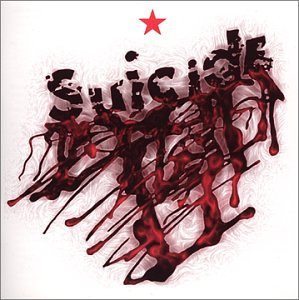
I wasn’t especially interested in music as a child, but that was probably because my parents only ever listened to things like Elvis, Celine Dion and The Bee Gees. It was up to my friends in secondary school to bring me properly into music, although unfortunately that was initially through awful bands like Limp Bizkit and Linkin Park. Nevertheless this laid the groundwork for me to discover bands on my own, and so I moved onto Bowie, Nine Inch Nails, Marilyn Manson, Alice Cooper and Iggy Pop. I can't remember how I found out about Suicide, but I do remember it being bloody difficult to find anywhere that sold anything by them (and this was before I was privy to things like Amazon). So I stuck it on a Christmas list one year and was enthralled to unwrap that iconic, blood-stained artwork.
At first I wasn't sure what to make of it, listening to it on my Walkman in the dark. It sounded like nothing else I'd ever heard. Frankie Teardrop stood out, with those intense shrieks that made me nearly wet myself, and the dense slabs of industrial noise. It was like listening to a soundtrack from Hell. It remains one of the most terrifying and harrowing pieces of music ever recorded, up there with Scott Walker turning into Donald Duck near the end of ‘The Drift’. It didn't take long for the rest of the album to unfold; the repetitive, primal drum machine of ‘Ghost Rider’ pushed its way into my head like a parasitic worm, and the fuzzy sweetness of ‘Cheree’ enveloped me like hot air. Alan Vega sounded like a reverential Elvis with proclamations like "America is killing its youth." It has grown with me over the ten or so years I've owned it and has been a constant musical inspiration for me in that time.
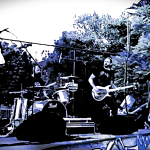
Suicide made me realise that it didn't matter that I didn't know how to play an instrument. I could form a band and it could be good, even if I couldn't play Stairway to Heaven. I soon purchased a cheap synthesiser and a drum machine, and teamed with a friend who had a guitar to start making music. Since then we've amassed a lot more equipment and another member. Now we have been playing live and recording for about two years. I know a lot more about how music works than I did when starting, but if it wasn't for Suicide, I never would have tried. They taught me was to make the best of what you've got. You don't need a lot of expensive equipment to make a good song; you just need to be creative. In fact, quite often, limitations can push you in directions you never would have thought of and make you think of different ways to achieve the sounds you want.
In terms of importance to electronic music, ‘Suicide’ is up there with the best Kraftwerk albums. The fact that they didn’t use guitars or drums provoked some extreme reactions at the time. Now though it is fairly common practice. After all, most chart music today is created using electronic instruments and computers. This proves how ahead of their time Suicide were, and some could argue that they directly or indirectly influenced the entire musical landscape of today, but I won’t
You see, it's not the innovative use of equipment, or the DIY attitude that makes ‘Suicide’ such a classic album. More than anything it’s the strength of the songs. Their minimalist techniques only show off what great tunes the band had. None of the tracks here need any of the things that they haven't got. The line "often copied but never bettered" is used far too often to describe bands that don't deserve it, but with Suicide, it's true enough. Successful bands like Crystal Castles, Factory Floor and The Horrors are amongst the many that have cited Suicide as direct influences, and hopefully completely new generations of music fans will discover and continue to be inspired by them.
Suicide remain a mystery. I still find people who I can talk about music with for hours who have no idea who Suicide are. They're like a wonderfully secret band whose fans are the only ones who understand their genius; in a sense much like The Fall, but less well known. Suicide's debut album, along with other classics like ‘Raw Power’ and ‘Hex Enduction Hour’, remains one of the ultimate punk statements. It will still sound as vital in fifty years as it did in 1977 when it was first released.
Aaron Lock is 1/3 of At the Heart of It All, who can be found on Facebook here and on Soundcloud here.