(((O))) FEATURES
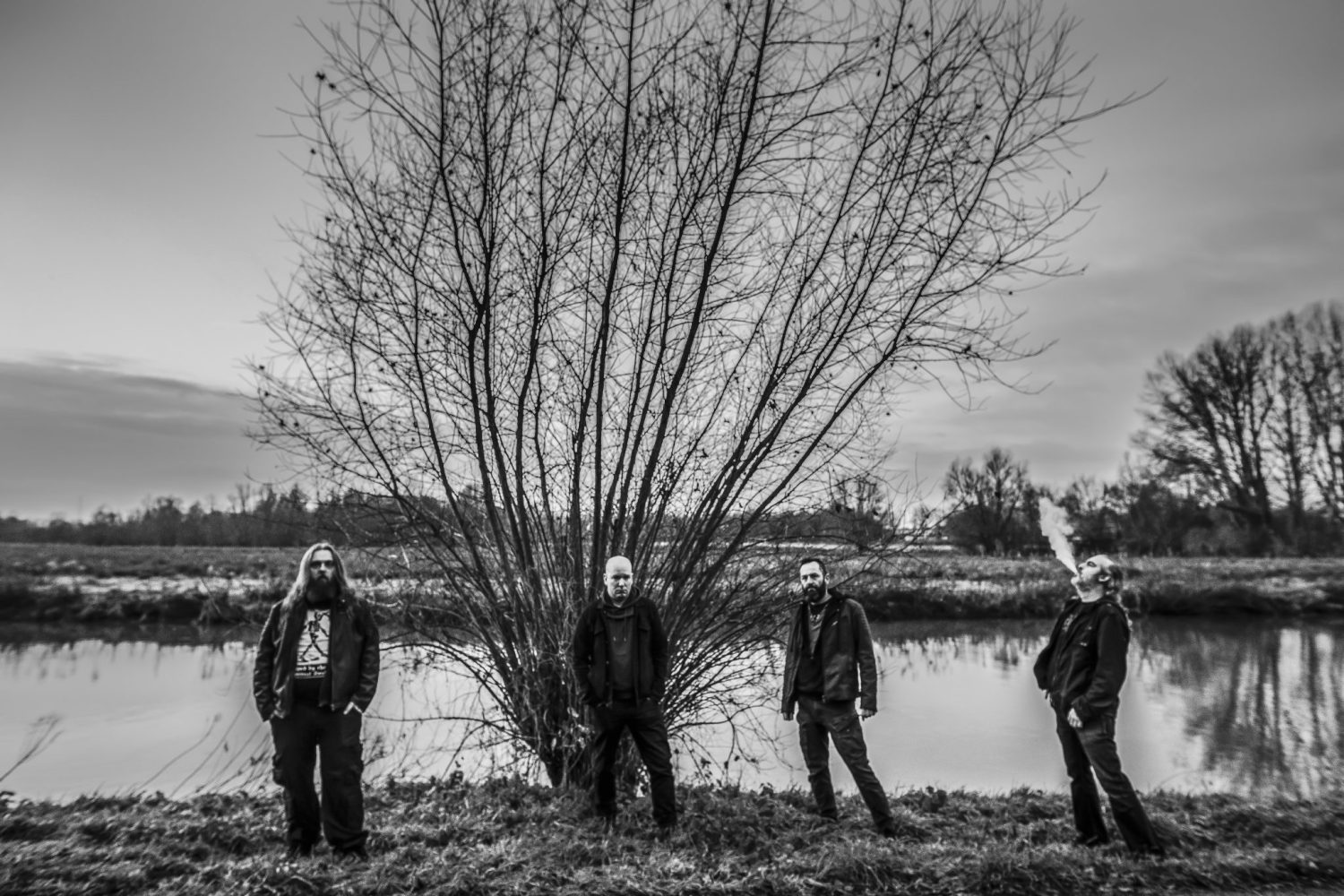
Under the Influence with Kludde
To celebrate the re-release of Kludde’s Langs Scheld- en Denderland, we asked the band for the 3 key influences behind it.

By Dave Cooper
It's true what they say - the older you get, the more past events slip through the mists of time and are lost to you somewhere beyond the veil. A few very vivid occurences aside, most of what happened to me before the age of about eight is lost to history. One of those few very vivid events is as clear to me now as it was yesterday, though. It was the day I first heard Kate Bush.
On Thursday, February 16th, 1978, I was five years old, having started at primary school the previous September. I lived with my mum at my grandparents small terraced house, my erstwhile father having long since disappeared from the scene. My mum worked as a staff nurse, and also part-time in a restaurant in town, to make ends meet. Considering the demands on her time and how tiring her endless parade of night work and long mornings and afternoons between shifts at the restaurant must have been, she spent an amazing amount of time with me - between her attentions and those of my grandparents, I never wanted for attention or things to occupy me.
Those precious evenings when she was at home rather than at work were often spent practicing my reading or basic maths, playing board games or watching TV. I owe a great deal of my taste in TV to my mum, who despite a weakness for Crossroads (the big British soap opera of the day) loved science fiction and fantasy (Star Trek, Dr. Who, Blake's 7 and later Battlestar Galactica were all favourites that we both never missed) and watched a lot of factual programmes - the whole family were absolutely transfixed by David Attenborough's ground-breaking Life On Earth when it started airing around this time, and I've had a deep and abiding love for nature documentaries ever since. But one show my mum never missed - and consequently I never missed it either - was the BBC's Top Of The Pops.
At the tender age of five, I was entranced by the glitz and sparkle of the pop acts as they strutted their funky stuff (and this was the 70s - there was a lot of funk and disco on Top Of The Pops, even as punk was beginning its strangled death rattle) and the rhythmic nature of so much of the chart music really appealed to me. I've been told several times that the family were convinced that I would want to play the drums when I got older, and that they were all busily engaged in trying to work out how that would be in any way possible in a terraced abode - it's a good job I didn't, as my sense of rhythm is akin to that of a robot trapped in a magnet factory, but I digress. To my five year old consciousness, noisy + shiny = good. And so it went, week in and week out, with me enjoying the process of watching Top Of The Pops and the colourful songs, but never really engaging with them, never really understanding what was going on.
However, one song that was on that fateful edition of Top Of The Pops was to change all that forever. My mum and I were seated in the near-darkness (the only light came from the TV screen and a little tabletop lamp) in the usual fashion, next to each other on the little settee. I was gleefully jiggling along to the beat as usual, when a song came on that was like nothing else I'd ever heard. It was being sung by a pretty girl in simple black clothes, and the flashiness of most of the other acts was noticeably absent. Her voice was very unusual: a ghostly, imploring wail. I must have suddenly gone very still and quiet, because my mum turned to me in her usual solicitous way and asked, "OK, duck?" "Uh huh", I said, unable to tear my eyes from the screen. "Who's that, mum?" My mum shook her head. "I don't know, duck. Let's listen, and I expect they'll tell us after she's finished." And sure enough, after the song was over, Kid Jensen told us, "Kate Bush there, with 'Wuthering Heights'."
Bush herself has been famously disparaging about this, her first appearance on Top Of The Pops, calling her performance "bloody awful", but there's still something so appealing about it, so unstudied and heartfelt. For all the uncertain glances at the camera, the slightly nervous vocal (yes, it was a live vocal - something that was to become a forgotten art on Top Of The Pops and indeed music TV programming generally) and her occasionally self-conscious gesticulations, the then only twenty-year old Bush projected an endearing and truly unique persona nonetheless. It's not hard for me, even now, to see the same appeal in that performance that captivated me all those years ago.
I woke up the following morning with 'Wuthering Heights' still in my head. And so it began.
Something must have been triggered in my brain, because I couldn't get the song out of my head. I vaguely remember going into school that day and wandering around singing my own version of the song, which consisted of about two of the lines, repeated over and over again. No-one else really seemed to know what I was on about, but as 'Wuthering Heights' - and Kate - slowly conquered the UK, one radio or TV appearance at a time, something amazing happened: the song - Kate's first release - finally climbed to the coveted number one spot in the singles chart.
Kate was to make a total of three appearances on Top Of The Pops to perform 'Wuthering Heights', and the associated promo video was everywhere as well. Indeed the promo video itself is the other chief memory I have of the song, as it spawned the nickname Kate was destined to have in our house for a few months. Kate appears in the 'Wuthering Heights' video - at least the UK version, as another very different video was prepared for promotional purposes in America - in a flowing white dress amidst a sea of dry ice, performing her own solo choreography to the song. At my tender age I felt she looked like an angel, and that's what she became to me: the "angel lady".
I drove my family insane with 'Wuthering Heights'. Utterly unselfconscious in that marvellous way that only five year olds can be, I steadily memorised the words - still only having the dimmest of ideas what they were all about, although I did at least feel sure that it was a ghost story, something I was delighted to discover that I had been absolutely right about later - and then the choreography. I spent weeks dancing around the neighbourhood singing 'Wuthering Heights', and if you've ever heard me sing, you'll know what a trial that must have been for everyone, as I can't carry a tune in the world's largest bucket and I think I've only improved with age.
My mum was clearly aware that something special was happening, as she took me to buy a record for the first time in my life. I was not a stranger to records: I spent many happy weekend afternoons listening to the radio or to my mum's Beatles and Neil Diamond albums on the long-antiquated record player my grandparents owned, a table-sized four-legged monstrosity made by Argosy that opened like a liquor cabinet to reveal a record deck within, and whose speakers were set into the cabinet itself.
This music was evidently part of my musical make-up by osmosis, but other than a slight fascination with the fact that a flat, almost featureless object could create this huge variety of sounds, I hadn't demonstrated any particular liking for a specific artist... until now. So my mum took me to the local branch of Woolworths, which carried the top 40 singles in neat little racks. "Would you like a record of the angel lady? So you can listen to her on the record player?", I was asked. Well, limited as I now understand it was, the record player did sound a lot better than our little colour TV, so I nodded excitedly - and probably started singing 'Wuthering Heights' again, which most likely told my mum that she was making a huge tactical error, but happily she overlooked the obvious disadvantages in feeding my addiction - and with her help, took a copy of 'Wuthering Heights' to the till. I paid for it with my pocket money, which I had started receiving when I started primary school. Usually my pocket money was spent entirely on sweets or an occasional ice lolly, but I didn't mind in the least that the last month's worth of accrued funds were all spent on a record instead - after all, it was the Angel Lady. This probably set an important precedent for me, as the vast majority of my "pocket money" has been spent on music ever since.
And so it is that I credit Kate Bush with not only being the creator of the first single I ever owned, but also for turning on a part of my brain that had hitherto lain dormant, an area that understood that music was more than just a collection of pleasant sounds, but something that could communicate ideas, stories, and most importantly, emotions.
I still have that single, although unfortunately the intervening time has not been kind to it. The sleeve got scuffed and creased, and I played the record itself to death, until finally, a couple of years later, the A-side developed a skip in it. I never contemplated replacing the damaged single, because by then I had a copy of Kate's debut album, The Kick Inside, which contained both 'Wuthering Heights' and the single's B-side, another wonderfully quirky song named 'Kite'.
But that's another story.
Next time: Dave discovers the joys of 'The Kick Inside', Kate's debut album, and with it the joys of The Album.


By Cameron Pikó
Long, bloated, unnecessary, self-indulgent… the criticisms thrown at the progressive rock genre are well-established (and in a few select instances, completely accurate). I disagree with those sentiments in general, but it made me wonder – are there any songs by these bands that could encapsulate their sound, in a more standard length of time? I've given myself the restriction of looking at songs 4 minutes and under, that still manage to fully convey the ideals and musicality of the bands. You won't find 'Schizoid Man' here, no 'Supper’s Ready' or 'Close to the Edge'. This is progressive rock (and one jazz fusion track) condensed.
Genesis – 'The Broadway Melody of 1974'
A two minute primer on all things Genesis (at least for the Peter Gabriel-heralded era), ‘The Broadway Melody’ is deceptively simple: a single note pulse for its entire duration with Gabriel singing obscure lyrics over the top.
Despite this, it still manages to summarise all of Genesis’ work so far. The militant, driving pulse is such a typical Genesis rhythm; a main focus of their longer, more famous epics like ‘The Knife’ off Trespass, ‘Watcher of the Skies’ off Foxtrot, or ‘The Cinema Show’ from Selling England By The Pound. Gabriel’s lyricism is also on top form, channeling T.S. Eliot and combining ancient myth with the contemporary in his cryptic depiction of a decaying Hollywood. Balancing the epic with the everyday perpetuated Gabriel’s time with Genesis; for every ‘The Fountain of Salmacis’ - depicting the Greek tale of the attempted rape of Hermaphroditus by Salmacis - there is an ‘I Know What I Like (In Your Wardrobe)’ – a groundsman happy with his unexciting life as a lawn mower. ‘The Broadway Melody of 1974’ combines the two most memorable aspects of what made this era of the band so special, and it tops it all off with some beautifully sparse guitar work by the Steve Hackett, relatively forgotten on this album. It’s no surprise to say this is possibly my favourite Genesis tune, and the song that instigated this entire article.
Other Contenders: Anyway (The Lamb Lies Down on Broadway)
King Crimson – 'Frame By Frame (live)'
It is nigh-on impossible to find a King Crimson track that is under 4 minutes. Even if you do, it’s even harder to find one which best encapsulates the line-up of the time. Ever the sonic chameleon, King Crimson’s sound changes every few albums or so, but no song better showcased the flirtation of pop sensibility with ever-more increasingly intricate guitar lines of the 80s lineup than Discipline’s ‘Frame By Frame’ – and there’s no better live version available than that off Absent Lovers. Adrian Belew, perfectly bringing his pop sensibility from time with David Bowie and Talking Heads with the complex music he learned in his brief time with Frank Zappa, grounds his and Robert Fripp’s entangled guitars with incredibly emotive vocals. Bookending the odd-timed, 7/8 riff is a 4/4 groove perpetuated by the great rhythm section of Tony Levin and Bill Bruford. Making the complex and intricate sound that King Crimson were known for and adding an almost Beatles-esque sensibility, it’s unsurprising Belew would be the voice of King Crimson from Discipline through to 2003’s The Power to Believe.
Briefly getting my music nerd on, the main 7/8 riff that constitutes the verses has some innovative guitar techniques by Mr. Robert Fripp. He drops a note whilst playing along with Belew, meaning the two are playing catch-up – this is what would create the entangled guitar sound that dominates all post 80s Crimson. Crazy to listen to, even crazier to play! (I’ve tried, failed).
Other Contenders:
What about earlier lineups? It’s far more difficult; all the shorter songs are quiet, generally acoustic, ballads that greatly contrast with the bands usual dominance over dissonance. If you’re willing to give a few seconds, 1974’s Starless and Bible Black has ‘The Great Deceiver’ (4:02) and ‘Lament’ (4:04) which are a great look at the Wetton-Bruford-Cross-Fripp lineup. Between these two tracks, angular and athletic guitar riffs nestle with quiet, emotive vocals before exploding into odd-time grooves that always threaten to collapse into a complete mess – but never quite do so.
Yes – 'Long Distance Runaround' / 'Roundabout (single-edit)'
Yes, or to be more specific bassist Chris Squire, really knew how to groove. The most accessible of the 70s Yes albums (i.e. the album that doesn't feature 18 minute sidelong tracks), Fragile has several shorter tunes. ‘Long Distance Runaround’ certainly covers most bases: the ethereal, elfin vocals of Jon Anderson, the keyboard noodling of Rick Wakeman and the grooves of Squire and drummer Bill Bruford (appearing on this list for the second time). In fact, the only one being uncharacteristically restrained is guitarist Steve Howe – and that’s not to say he’s not playing some great stuff here.
On the single edit of 'Roundabout' (something as an album purist I’m generally loathe to even consider) we get a better look at the entire band, and Howe particularly shows his classical guitar chops off here. The problem with trimming an 8 and a half minute song down to just over 3 minutes is…it’s missing bits. Specifically, the bridge to end all bridges – a personal favourite and one of the first riffs I play whenever I pick up a guitar.
Even more so than King Crimson before them, Yes have become known for the length of their tracks. As such, it’s difficult to find any single short tune that can contain the atmosphere, virtuosity and scope that they usually traverse. Having said that, these two tracks are probably some of the most easily listenable to a non-initiate as they contain some killer grooves that’s bound to get feet a’tappin…if you like your prog tappable, that is.
Gentle Giant – 'Cogs in Cogs' / 'So Sincere'
Well…these songs go everywhere. Which summarises Gentle Giant very well. A track off their lesser-known 1974 album The Power and the Glory, the schizophrenic jumping between grooves, odd time signatures and complex keyboard lines of ‘Cogs in Cogs’ is the perfect condensation of their work. All it’s missing are the chamber instruments – which you could check out in ‘So Sincere’ off the same album. Equally strange in structure, ‘So Sincere’ at least provides some room to breathe in the verses before going completely batshit crazy in his second half. There’s no ‘easy’ way to get into Gentle Giant, but between these two tracks you'll definitely be able to decide if it’s worth your time. This is quite timely, as The Power and the Glory has just been remastered by Steven Wilson, so the songs are sounding better than ever!
Camel – 'Rhayader'
For once, the song that the band is best known for is both under 4 minutes and is a great indicator of their sound. A joyful, bouncing tune propelled by excellent basslines and a memorable flute line by composer/guitarist/flautist Andy Latimer. Everyone in the band gets their time in the spotlight here, with a fantastic keyboard solo by the late Peter Bardens, simple yet uplifting drumming and one really, really cannot talk enough about how great those basslines are. Although fans of Latimer’s Pink Floydian guitar work will have to wait for the companion piece, ‘Rhayader Goes To Town’ (which alas that exceeds my 4 minute restriction), the piece still manages to convey the whimsy, complexity and melodicism that dominates so much of Camel’s classic material. A great song off a great album (The Snow Goose), it’s no surprise this piece would become a live staple.
Frank Zappa – 'St. Alphonzo’s Pancake Breakfast' / 'Father O’Blivion'
It is hard to find a single track that fully encapsulates the man that is Frank Zappa. The ludicrousness, the obscenity, the beautiful submerged in the utterly irritating and intentionally annoying…
This juxtaposition was important to Zappa, but more often than not he would still keep them separate: pop songs would remain excessively irritating and catchy, his “serious music” would be just that – highly complex material. But in a single, under 4 minute song? It’s a tough choice for an unabashed Zappaphile such as myself to make.
But sometimes, the best known work is the best choice. Off his 18th album - 1974’s Apostrophe(‘), -the third part in Zappa prog song-suite parody (often dubbed The Yellow Snow suite) ‘St. Alphonzo’s Pancake Breakfast’ does a reasonable job of portraying the technical insanity of the musicians Zappa surrounded himself with, as well as his more playful side. The first section is call-and-response in nature, with Zappa narrating the events of the aforementioned breakfast and the music doing an excellent job of conveying his words in musical form. The second section is an impressive feat of musicianship, a flurry of intricate notes played by keyboardist George Duke and bassist Tom Fowler, and between the two sections we’ve nearly covered a good deal of Zappa. It’s all topped off with the fourth and final section of the Yellow Snow Suite (which, when combined with St. Alphonzo, is still under 4 minutes!), ‘Father O’Blivion’.
A riff-heavy tale of the sexual activities partaken between St. Alphonzo and a leprechaun, the song jumps between complex guitar parts, Zappa’s odd vocal lines, church music and something border lining on bossa nova. Between these two tracks we are introduced to Zappa’s unique voice - literally and compositionally – his musical complexity, his off-colour lyrics and his poppier sensibility.
Other Contenders: ‘Bobby Brown Goes Down’ for further obscenity, or ‘Peaches en Regalia’ for instrumental beauty.
Rush – 'Circumstances'
Although Canadian power-trio Rush’s Moving Pictures may be their most well-known album, ‘Circumstances’ (off 1978’s Hemispheres) is a great way to get into their proggier side. Also, everything on Moving Pictures is over 4 minutes.
All up until the bridge, the song is pretty much how Rush are now and have always been. The track opens up with Alex Lifeson’s classic rock chords, and Geddy Lee sings in his love-or-hate falsetto whilst athletically playing ridiculous basslines, and drummer-extraordinaire Neil Peart pens lyrics about disillusionment and pounds away at his kit. It’s all classic Rush. The bridge near the end of the track definitely demarcates the differences between song-suite Rush and ‘poppy’ Rush, as they manage to start rocking out in 11/8 as if it’s completely standard behaviour, before easing back into the chorus as if nothing happened.
The more traditionally rock of all the big prog bands, ‘Circumstances’ is a great example of how Rush continued to tread the line of prog rock and hard rock without falling firmly on either side.
Other Contenders: The Twilight Zone (2112), Closer to the Heart (A Farewell to Kings)
Mahavishnu Orchestra – 'Celestial Terrestrial Commuters'
In 2 minutes and 55 seconds, guitarist John McLaughlin’s jazz fusion group Mahavishnu Orchestra pull out all their tricks. ‘Celestial Terrestrial Commuters’ (from 1973’s Birds of Fire) showcases complex yet melodious interplay between McLaughlin and Jean-Luc Ponty on violin for the main motif, keyboardist Jan Hammer gets a brief but shining solo, and the ever-fantastic drumming of Billy Cobham. The fact they all manage to show so much agility, skill and just plain good music for a piece in 19/16 (!!!) is utterly remarkable. It all typifies the Mahavishnu model – the roaring ‘Birds of Fire’ off the same album or ‘Meeting of the Spirits’ from The Inner Mounting Flame all have their own variant of lightning fast guitar and violin that’s present here (albeit the latter also includes some pretty crazy polyrhythms). The only thing the track doesn't really reveal is Mahavishnu Orchestra’s quieter side – ‘Thousand Island Park’ or ‘Open Country Joy’ would be better contenders whilst still staying under 4 minutes. But when anyone mentions the band to me, it’s this uncompromising, relentless and intense musicianship that springs first to mind.
Other Contenders: ‘Awakening’ (The Inner Mounting Flame), ‘Hope’ (Birds of Fire)
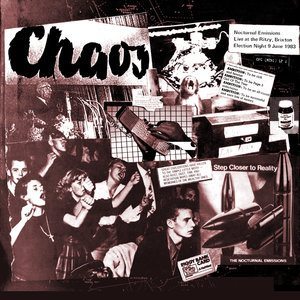
Recent events at London’s Ritzy Cinema have been well publicised. You probably heard that on 16th July, staff members were forced to go on strike for the eleventh time in an effort to convince their employers, Picturehouse, that they are worth a living wage. The strike drew support from a number of people, including director Ken Loach, Monty Python’s Terry Jones and founder-member of pioneering industrial band Nocturnal Emissions: Nigel Ayers.
For Ayers, seeing the Ritzy as the backdrop for the plight of the many at the hands of the few is no new spectacle. On June 9th, 1983, as Margaret Thatcher’s Conservatives enjoyed a second General Election win amid a social landscape of mass unemployment and a recessionary economy, Ayers was in this very location – with the rest of the Noccies – blasting out the most curious of musical cacophonies.
It was their first show to be recorded and made available publically, titled rather aptly: Chaos. 31 years later it is available as an official digital download from the group’s Bandcamp page for the first time too – Ayers’ show of solidarity to the striking Ritzyites.
In 1983 Nocturnal Emissions were embarking on an era of fevered invention, experimentation and de/reconstruction, initially most notable on Drowning in a Sea of Bliss which featured industrial noise as if realized in the mind of Hieronymus Bosch on the A-side, making way for near-danceable electronic beats on the flip.
Despite the diversity contained on the band’s studio releases of the time, one might not expect their live outings to throw as much into the mix – of course on Chaos, they pretty much do. A backbone of hard industrial and techno beats permeates the recording, embellished by Ayers’ trademark repeato-hollering. “Bad evening… I said BAD EVENING,” he shouts before the rhythms fall and those in attendance are faced with assorted footage of vivisection, Vietnam and female genital mutilation. “Smash with love, smash with love, smash with LOVE,” he screams later above the clatter, these words summing up neatly a key Emissions theme: the place of the human in a context which is beyond humane.
The record is a lo-fi affair and there’s plenty of live NE material of much better definition available from later in their career. But with the wider political context of the night, I imagine Larry Peterson scrabbling for his tape recorder at the last minute in an almost Alan Lomax fashion – capturing a folk moment, as much for the social heartache felt by the young British left at the time, as for the show.
But there are certainly moments which wholly transcend the background feeling and the frailties in the technology. ‘Smash with Love’ leads into some fantastic metallic vocal samples which reverberate around beautifully. Big synths arrive, before the subtle military samples, looping horn and drone of ‘State Terror’. ‘Bite Them Back’ is an epitomic industrial party moment before the ambient cool-down of ‘Cute Toy Beagle’ drifts away a little too quickly followed by crowd noise and a snippet of election coverage on TV.
Chaos is a great document, an altogether anarchic post-punk assemblage captured as purely and realistically as possible. The left-wing Ritzy and tumultuous political moment are integral to its value, but for me, this album is the best example of Nocturnal Emissions at their most politically engaged – a sort of London Calling for industrial people, and a fascinating glimpse of these fevered experimenters on the verge of the absolute unknown.

Tinie Tempah and George Ergatoudis, the head of music at Radio 1 have declared the album is dead. No more hefty slabs of coherent artistry for them, not in this modern age of track streaming and curated playlists.
Are they right though? Are we really hearing the swan song of the LP, as it shuffles off to take it's place next to the 8-Track in the charity shops of the future?
No, they're not. Sort of.
Tinie Tempah lives in a world apart from that which we at Echoes & Dust inhabit. In pop, the album was always a side note to the main event of the number one single. Albums were nothing more than collections of singles with a few added extras to convince people to buy them, despite already owning 90% of the content on 7".
As rock grew and developed, the album became something else. Artists used it as a coherent, flowing canvas with which to tell a story, or a collection of stories based on a theme. Singles would be released separately from the album, largely as a promotional tool for the LP. The methods by which we buy the albums may have changed, but for most of is, the fact that it's albums we *do* buy, has not.
Album sales are down, there’s no denying that. People aren’t buying them the way they used to, but that doesn’t mean they’re not consuming them in the same way. Spotify isn’t just for kids, looking to get their hit of One Direction, mature listeners are latching on to the ease of streaming. As we all start to get unlimited data on our mobiles, so signing up to Spotify’s unlimited service becomes a great idea. Suddenly, we have thousands of albums in our pockets. Whatever the merits of Spotify, whether you think they’re exploiting the very artists that bring them users, you can’t say that people aren’t using it to consume music. They’re just renting the album instead.
This week marked the first time that streams were counted towards the UK Top 40. Ed Sheeran found every track from his new album in the top 100, thanks to the users of Spotify and their easy access to his entirely inoffensive melodies. To these users, an album is just a way to hear more from their favourite artists. They don't care what order the songs are in, only that the songs are there for them.
To them, the album is dead. The playlist reigns.
One of my favourite albums of last year was 65daysofstatic's Wild Light. Even now, a year after its release, I listen to it from start to finish, soaking up every note, anticipating the start of every track as the previous draws to a close. To hear Wild Light out of sequence would be sacrilege, like watching the season finale of the Sopranos before going back to the beginning. The album is in the order that the artist intended, it isn't my job to alter that.
To me, and as you're reading this, you, the album isn't dead, and won’t be for some time.

20 years ago this week Orbital played the Herbal Tea Party in Manchester and changed the life of our editor, Dan Salter, irrevocably. Here he shares what he can remember of the occasion.
Today is February 10th 2014. A rapper has just been retweeted in to my timeline, in an ultimately borderline-suicidal tirade of tweets.
His main issue, at least at this precise moment in time, appears to be one I face every day: underappreciation in the industry. One of his tweets ends “all i want more than anything is to hear him tell me "I'm dope"but nah he likes Big Sean and Tyler the creator” and it’s like an echo of what goes through my mind every day.
I know I’m talented. I know I’m just as, if not more, talented than a lot of mainstream artists. But I’ll never get that recognition. The people I’d love to work with, who I know should appreciate my music don’t even regard what I do, and it’s soul destroying when you’re having a bad day.
Depression is something I’ve struggled with ever since I was a child, and I can clearly remember a lot of dark moments, coming home, crying under the table, but then listening to a new CD my sister had bought, or getting my mum to put the radio on. It was so long ago, so I can’t necessarily remember the music I listened to, but I can tell you that I felt like everything I found so impossible to deal with suddenly stopped mattering.
Music has always been my saviour, no matter what happens. As a teenager I found it so hard to cope with so much, being different, being quirky, it always kept me on the outside. But when my dad died, I found it extremely difficult to cope, and even had a nervous breakdown, at the age of 13. It wasn’t until I sat down one day and wrote a whole bunch of songs about how hard it was to cope, that I got myself out of a psychological hole. I used that anger, that hurt, that pain, that depression… I grieved through my music.
It’s a beautiful sensation I think, at least afterwards, to use your emotions to convey everything you can’t say. A sort of catharsis occurs that’s difficult to describe, but that’s often what makes the slow periods so difficult; Sometimes I’ll lie in bed and think about all the things I haven’t achieved yet. I forget about the things I have achieved, I don’t focus on how well I’m doing, but I think about what I’ve failed to do. Really, most of the time it’s not something I’ve done wrong on my part, and I always eventually realise this but as artists, we’re naturally self-critical. No matter how much we work, no matter what we do, we will always regard ourselves as not good enough. And if you suffer from depression, it makes it even worse, because you tend to dwell on the fact that the world must be a terrible place, or that you must have done something awful.
It’s times like these I relate to those tweets more than ever. You kind of want to give up. Life doesn’t seem worth living. You wonder what the point of it all is.
When music is all you care about, when it’s the only thing that’s never made you feel hopeless, or let you down, it becomes your everything.
And when your everything isn’t moving in the direction you expect it to, you have nothing.
And you feel hopeless.
I’m lucky enough to have a tight support network around me these days, and there’s always somebody I can go to if I feel like this, and I have friends and fans worldwide who care about my well being, but my most creative moments are often also my darkest, and I will always have music to thank for keeping my head above water.
But every now and then, after a long week of not sleeping, of producing and recording and sharing and emailing non-stop, and not seeing any progress, it can get to you. And the depression is triggered all over again.
And I see where he was coming from when he sent those tweets today.
Because I feel like that every day.

One of the main safe havens for bands generating music far-flung from the norm in the 1970s was to be found in a festival titled “Rock In Opposition” (RIO). The festival and subsequent movement, was established by British avant-garde group Henry Cow in response to the music industry and its lack of appreciation for experimental and non-commercial music. Associated with the progressive rock movement and yet distinct from it, the bands associated with the RIO sound are diverse themselves. However, the influence of classical composition, and unconventional and experimental instrumentation was prevalent in all of the bands that played the festival – including Henry Cow themselves, Samla Mammas Manna (Sweden), Magma (France) and, the focus of this article, Univers Zero (Belgium).
With Univers Zero’s album Phosphorescent Dreams just released, now is as good a time as any to look over their back catalogue and showcase a few of their best works. Formed in 1974 by Belgian drummer Daniel Denis, Univers Zero are just as influenced by their contemporaries as they are by twentieth century chamber music. Their many line-ups have drawn from both pools of musicians and it is not uncommon to find electric guitar and keyboards playing alongside the harmonium, oboe or bassoon. With new album Phosphorescent Dreams just released, now is as good a time as any to look over their back catalogue and showcase a few of their best works.
Heresie (1979)
The fusion of rock and classical is best heard in Univers Zero’s most famous album, 1979’s Heresie. The 25-minute opener 'La Faulx' starts off ominously as the violin and woodwinds swell around Denis’s minimalist drumming. We are then introduced to eerie vocals from bassist Guy Segers and harmonium from Roger Trigaux, which itself gives off a constant wheeze that contributes greatly to the uneasy atmosphere that surrounds a lot of Univers Zero’s work. Six and a half minutes in, things start to get serious. Guttural growls that would not be out of place on a death metal album attack the listener and just as soon, are gone. The other two tracks on the album aren’t any gentler either. 'Jack the Ripper' is a thirteen minute horror film from the opening notes, featuring screeching violins and sinister plodding bassoon, whilst closing track 'Vous le Saurez en Temps Voulu' showcases the only guitar on the album through a series of increasingly frantic rhythms and odd time signatures. The entire album is the perfect example of how to build tension. It piles on more and more until it is almost suffocating. It is hardly surprising to hear that Heresie has the reputation of being one of the darkest, scariest albums ever created. It is unrelenting. It is without relent.
Ceux du Dehors (1981)
Whilst Heresie can be daunting and impenetrable for first time listeners, Univers Zero’s subsequent album, 1981’s Ceux du Dehors, is more accessible. The entire affair is a lot more rocking, clearly evidenced by the album’s explosive opener - 'Dense'. Suitably titled, the track is jam-packed full of complex, labyrinthine rhythms and shifting time signatures, keeping one on their toes through the full 12 minutes. We’re also treated to the H.P. Lovecraft inspired 'La Musique d’Erich Zann' (The Music of Erich Zann). Apparently, the members of the band all read Lovecraft’s short story while in the studio, and then went and improvised this brief, disturbing piece of music. Coming off thoroughly composed pieces such as 'Combat' or the aforementioned 'Dense', it’s a nice change of pace highlighting that this band was always testing themselves and what they could do. Although there are quiet interludes and some beautifully sombre moments, Ceux du Dehors (and the subsequent 1984 follow-up, Uzed) has an overall rock mentality that makes it a lot easier to get into for a prog rock listener. It’s also slightly less evil sounding – due in part to the increased rock instrumentation, and the fact that nothing will ever sound as frightening as Heresie.
Heatwave (1986)
After Uzed, there was 1986’s Heatwave. A very electronic affair, keyboardist Andy Kirk composes half of the material here, most notably the 20-minute epic 'The Funeral Plain'. The emphasis of electric guitar and keys brings a typically 1980s coldness to the proceedings that would detract from other bands. However, in the case of Univers Zero, this coldness is simply another way to explore the darkness in their compositions. Again, the album begins with an excellent opener with the almost industrial sounding 'Heat Wave'. Mechanical drums and angular, distorted guitar give an almost King Crimson-type vibe to the material, meshing perfectly with their existing sound and providing another way into the band for a prog rock fan. Closing the album, Kirk’s sidelong piece showcases the full potential of this seven-member lineup. The first half exudes a sound reminiscent of Heresie, with Kirk’s repetitious piano providing the base for clarinet and viola to trade solos. Business as usual. Ten minutes in, however, this all dissolves into electronic noises, synth swells and robotic rhythms before bringing the album to an intense climax. Industrial, mechanical, robotic… there’s no doubting this is an 80s incarnation of Univers Zero, but at the same time Heatwave does not sound dated. It’s also worth noting that amongst the three albums released in the 1980s, there is none of the compromise that plagued a lot of 70s bands attempting to keep an audience. The music is pure, unadulterated UZ. It’s a shame that due to financial difficulties, Univers Zero disbanded for some time after this. Denis would reform the band for 1999’s The Hard Quest, unfortunately not received particularly favourably.
Phosphorescent Dreams (2014)
The newer incarnation of Univers Zero was notable for its return to the “classic” lineup and refocus on acoustic instrumentation. This served them well with three studio and two live albums after The Hard Quest, showing they clearly had a new lease on life and an eager fanbase. This enthusiasm is particularly noticeable in the band’s latest instalment.
Although clearly and uniquely evil sounding, there’s a more buoyant, lively quality to this year’s Phosphorescent Dreams. The first two tracks are quintessential Univers Zero, but 'Très Affables' borders on joyful with its 9/8 motif. 'Rêve Mécanique' delves into this territory as well. Kurt Budé’s woodwinds circle around Nicholas Dechêne’s beautiful shimmery guitar, melding perfectly with the intricate piano before the track changes direction and heads into territory approaching free-jazz. This is the happiest they have ever sounded and injects a freshness into the work that is certainly well-received. After 40 years and 12 albums of sonic intensity and bleak dissonance, it’s nice for a bit of a change.
That’s not to say it’s all fun and games. The ending to 'Les Vouleurs d’Ombre' speeds up from a snail’s pace to a freakish crescendo, again revealing the band can rival King Crimson in angular riffage when they feel like it. 'L’Espoir Perdu' is like a soundtrack to the aftermath of a battle, with mournful trumpet and trombone propelled by Denis’ militant drumming. Then, we come to the near-title track. Soulful distorted guitar interplays with slow burning clarinet over the opening 3 minutes of 'Phosphorescent Dream'. The emotion and passion of the playing is palpable. And just when things start get to get groovy, everything falls back to the clarinet again. The fluid, intangible nature of the first half of the piece just makes the ending all the better once the drums are in full swing. The band starts to fluctuate between 70s prog grooves and funereal chord progressions, heading towards a climax that collapses in on itself. After all these years of experience, these musicians truly are the masters of building tension.
Phosphorescent Dreams is the perfect title for this era of Univers Zero. The music may sound bleak, or desperate, or just plain evil, but there’s hope now. There’s an ethereal dreamscape you walk through, drenched in darkness. But there are flashes of light as well, and that’s something which Denis & Co. have not even suggested as a possibility in some time.

Pennsylvania bass and drum instrumentalists, King Dead, are very pleased to announce the release of their debut EP. Recorded live in their practice/performance space, The Living Room, in Stroudsburg by Dave Reiser of Rock Hard Studios, the self-titled offering features five organic movements of ethereal, desert-styled Spaghetti Westernish psychedelia that seethe under the bulk of their own whirling, glassy-eyed heaviness.
Dave Guzda wrote in his review that we published earlier: "If there is ever a need for modern soundtrack for the classic film The Good, The Bad and the Ugly Pennsylvania's King Dead should get a consideration. The trio's self-titled debut is an infectious blend of dusty six shootin' aural sludge that pulls elements from doom, metal and rock. They simmer this assortment of genres in a delicious western musical marinade. You may think that music pulled from multiple genres would result in an awkward sound. In King Dead's case you would be wrong. The band has a primarily instrumental sound that is gripping, tight, melodic and slinks along with a brash confidence that belies the fact that this is a debut release. The trio know how to work a melody with artfully balanced tempo shifts that skillfully jog through a range of paces with consistently engaging outcomes."
Listen below to an exclusive premiere of 'Drowning in Dust'.
King Dead Track Listing:
1. Ghosts Along The Riverbank
2. As One Plows And Breaks Up The Earth, So Our Bones Have Been Scattered At The Mouth Of The Grave
3. Drowning In Dust
4. Length Of Rope
5. God Makes A Lot Of Fucking Promises
King Dead will be released independently on April 19th (Record Store Day) and is currently available for preorder at the band’s official BandCamp page HERE.
Additionally, King Dead will bring their desert jams to the stage with a pair of tri-state area shows with additional presentations to be announced in the coming weeks.
King Dead Live:
5/27/2014 The Factory Underground – Wilks-Barre, PA w/ King Buffalo


In celebration of the new remastered reissue of Slint's classic second, and final, album, Spiderland, we gathered some of Echoes & Dust's foremost post-rock lovers, who had, bar one, never heard the album, to offer their thoughts on what is widely considered the genre's foundation stone...

So Spiderland by Slint is kind of a big deal, right? The first ever post-rock record, that's how the story goes. Turns out I've never listened to it until now. It is heavy... and not in a traditional way (all big guitars and shouting) but in an emotional way. That's not to say there are no big guitars or shouting, but the hollow distortion on 'Don, Aman' provides sweet relief from the creeping dramatic tension of the rest of the track, despite being largely alone in the mix, and you have to wait to the very end of the record for 'Good Morning, Captain's haunting closing screams.
'Washer' pulls a similar trick over the best part of nine minutes of building and building the tension, heartbreakingly beautiful, barely there guitar melodies crawling over each other to a brief respite of, you know, rock music. The aptly titled 'Breadcrumb Trail' sets the scene of dramatic, mesmerising repetition, punctuated by bursts of feedback and largely spoken lyrics. The way that 'Nosferatu Man' revels in blissful, nothing-else-matters nihilistic riffing in its second half still sounds like the future. A frightening dystopian future, but the future nonetheless.
I guess this is the point: if Spiderland's legacy is as the First Ever Post Rock album, it certainly makes sense. Post-rock nowadays brings to mind loud QUIET loud riffs behind banks and banks of pedals. It's hardly post- anything, but here Slint are playing with the traditional rock band template and making something else. It's exciting, Christ, at points it's terrifying. This is a palpably cathartic record born out of sheer inspiration, creativity and a restless dissatisfaction with rock music. Rip it up and start again, as it were, but in a black t-shirt of course, and whatever you do don't look like you're enjoying yourself.
~ Andy Vine

I had never listened to a Slint album before, despite the fact that at one time a reviewer compared one of my songs with 'Good Morning, Captain'. So, when the editors at Echoes and Dust offered me the chance to listen to an advance copy of the re-mastered (and extended) Spiderland, I pounced.
For the last week I’ve been living with Spiderland during nearly all of my waking hours. Not because I had to- but because this album became one more piece of the musical puzzle for me. Much of the fuss about Spiderland seems to focus on Slint’s embryonic role in the development of the “post-rock” genre. I am always suspect to “post-“ anything. The best description of post-rock I’ve heard has come from The Antlers, who have described some of their songs as “music to cry-dance to.”
The thing about Slint is that Spiderland hooked me on several levels after the first listen. My very first impression was, “Whoa, these guys must have listened to Wire’s song Mercy a lot. A scary lot.” Which in my book is pretty top notch.
But as a I moved the Slint puzzle piece around on the post-rock puzzle board, other connections started to form. There were a number of people and bands that were doing parts of what Slint was doing at the time (and earlier). The signature guitar interplay between McMahan and Pajo eerily echoed what Verlaine and Lloyd (Television), Mercer and Million (The Feelies), and Moore and Ranaldo (Sonic Youth), had done. The heavy distorted vibe reminded me of Rage Against the Machine (without the rage- which was fine with me), Black Flag, Fugazi, and the Minutemen. The arrangements and spoken-word vocals drew me towards Pere Ubu and Patti Smith. All of these elements seem to gel on Spiderland.
Slint might share some common elements with other bands that were overlooked during the pre-Internet age, and I would not dare to estimate the level of actual influence others had on their music. But, if this album had dropped yesterday on Bandcamp, people would be all over it, because Spiderland has either directly, or indirectly, influenced a number of artists working today that make the music that I listen to.
It was all of these little puzzle pieces that kept me listening for a solid week, and I don’t have any immediate plans to stop. Dear Slint, Thank you.
~ Nat Lyon

The challenge with writing this piece lay in the concept itself - do people who consider themselves to be post-rock lovers and never heard Slint's landmark record Spiderland see why it is consider it to be post- rock’s precursor? Now, the answer could be a simple ‘yes’ or ‘no’, for it is a landmark that we’re dealing with here and landmarks can’t just be dismissed with a one word reply, especially since the nature of the assignment required admitting one’s ignorance over the previous twenty odd years.
I have to say that as much as the record got under my skin, to the point I now can’t believe my life could ever go on without it, and as much as it undoubtedly was a milestone, it still lies very far from post-rock as we know it today. I know when Mogwai released Come On, Die Young, for example, the comparisons between the two records apparently sparked a heated discussion about an alleged likeness to Spiderland. Spiderland most certainly must have sounded quite avant-garde when it came out, purely because it shook up the traditional rock music narrative. ‘Breadcrumb Trail’ introduced the now iconic racing crescendos slotted between withdrawn, negative, quiet parts. The vocals were also far from traditional, with my favourite ‘Good Morning, Captain’, where a mumble explodes into the most desperate, longing cry. That alone however still didn’t bring to mind any of the contemporary post-rock giants.
After having Spiderland stuck on my headphones for over a month, I actually type these words with Come On, Die Young on speakers and I can see how the rules of rock music were broken by Slint - and indeed in academic terms, if we were to write a dissertation on their sophomore record, this is precisely what would be called post-rock, in the understanding that it’s something that came after a movement, taking said movement’s characteristics and applying a new approach to them - using the heritage to its full advantage, but enriching it with new elements and techniques.
However, compared with the more elaborate compositions that we’re accustomed to in contemporary post-rock, with the use of electronics, samples and even more intricate crescendos, Spiderland stands out as too raw, almost grungy. I fell in love with this record dearly and I see its relevance and significance and it will forever remain a crucial part of my music collection, yet from the perspective of someone who only heard it after being in love with post-rock, ambient and all sorts of experimental music ever since, it’s hard for me to recreate the impact it must’ve had today, when I don’t believe there are any rules in rock music left to be broken.
~ Magda Wrzeszcz

I'm the odd one out here, in that I've heard Spiderland before. Interestingly though, thanks to the seemingly never ending trail of people retrospectively applying the 'post-rock' term to the album, I feared I'd be the only one in this piece talking about Spiderland outside the context of 'post-rock'. Thankfully the fellow contributors here, all of whom I believe are probably greater authorities contemporary post-rock than I am, have not unequivocally adopted this, now traditional, line and see Spiderland as being more than just a precursor.
What really makes Spiderland so great, to my mind, is not who it influenced or what it started, but its complete isolation in the musical landscape. There are no other records that sound quite like it, and I very much doubt there ever will be. Spiderland marks something of an intersection between differing guitar music styles, but is part of a rare company of albums that cannot really be categorised solely as being part of any particular genre. There are discernible elements of other bands - especially the likes of Television and Pere Ubu, both of which Nat also identified - in Spiderland's approach but, crucially, Slint were capable of meshing those elements together into something remarkably individual. In essence, only the members of Slint could have made this album sound like it did.
What with the band's tumultuous history - Brian McMahan even checked into a psychiatric hospital after finishing Spiderland - and their mysterious, Cormac McCarthy-esque lyrics, it is easy to see why Slint's legacy has emphasised their influence on later musicians. It's the only way to describe them, to understand such an enigmatic, completely unique group of musicians.
Now, with this reissue and the accompanying Breadcrumb Trail documentary, some of the mystery around Slint is being stripped away but the intricacies of Spiderland mean that it will never truly go away. It is, in a sense, a record not meant to be fully understood, and that's what ensures that it remains one of the most important, and most affecting, rock records ever released.
~ Benjamin Bland
If you've never got round to listening to Spiderland, then here's your chance...
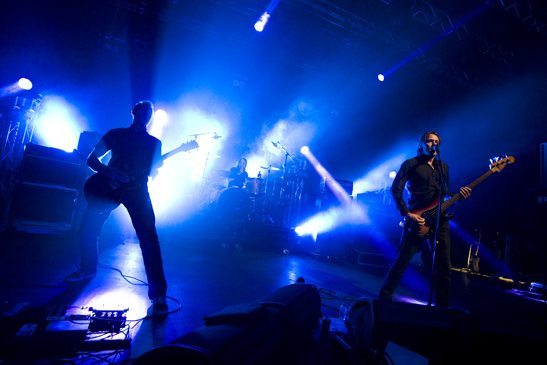
Candybar Planet is back in business!
Candybar Planet was founded in 1994 in Eindhoven and was at the base of the Eindhoven Rock City movement together with Peter Pan Speedrock and 7 Zuma 7 later joined by The Spades and other bands. With their ruthless grooves and catchy vocals they’ve spread their stoner vibe across the Dutch venues for almost a decade.
After their famous "army tent" performance at Dynamo Open Air in 1996, the band was in a winning streak. With their full album 32 BiTCH and the untitled EP they soon gained fame in the rest of Europe.
Candybar Planet decided to retire at their top in 2002 leaving the stoner fans in grief only to re-appear for a one time reunion at the official opening of the new Effenaar in 2005.
Because true rockers never die founding members Murphy van Oijen on guitar and vocalist/guitar player Richard 'Luke' Plukker are re-emerging in 2011, with Koen Rijnbeek on drums. With their first shows at the Effenaar, Paaspop and Speedfest, Candybar Planet has proven it is still representing the international stoner top.
In september 2013 they released their first new album since 2000: Timelapse.
Watch here the exclusive premiere of the new video for 'Murky Water', which was shot at the Evoluon in Eindhoven.
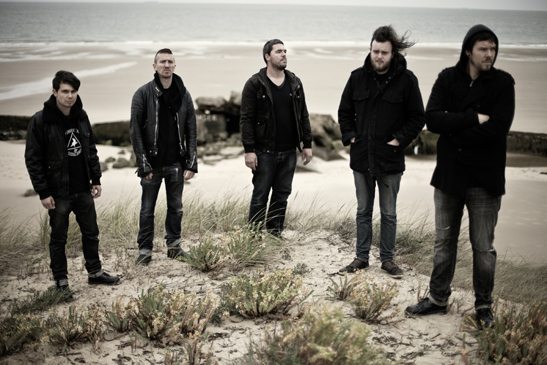
Amenra is one of my favourite bands ever. Their bleak, dark and grim sounding mix of sludge, doom and post-metal always hits the right emotions in me. It was also my first ever review for Ech(((o)))es and Dust when I reviewed their Live album. The Belgium band has been going for many years and is involved in various musical and artistic projects. I asked singer Colin H. van Eeckhout some questions about the band, Church of Ra, his art and their upcoming show as part of Beyond the Redshift festival.
(((o))): Hello Colin, thank you very much for doing this interview with Ech(((o)))es and Dust. First of all, you are one of the founding members of Amenra. Do you remember how it all started?
Colin: I played my first show with Kristof J. Mondy (also founder/ex-bass) when I was 14 (‘92/’93). That wasn’t Amenra yet. It took us a while to form ourselves, to know what we really wanted. So in a way it started then.
Amenra itself got formed in 1999. We hooked up with Mathieu J. Vandekerckhove (guitars) around ‘97 when he joined our band ‘Spineless’, we called it quits in ‘99 and he brought us to Bjorn J. Lebon (drums).
We knew we wanted something different than what we were used to in Belgium. We wanted to be part of something bigger than a band.
(((o))): I love the whole community feeling I get from reading about Church of Ra, about the gigs/tours you all organise together and how lots of people are guest musicians on each other’s recordings. How did the Church of Ra community develop and who is involved in this?
Colin: It started when Amenra started working with different artists of all sorts. We met a lot of kindred spirits along the way, and connected with them. We started working together in different projects with Amenra and sideprojects Kingdom, Syndrome, etc. When Lennart Bossu (guitars) and Levy Seynaeve (bass) joined Amenra, Oathbreaker and Hessian got formed. We worked together with Tomas Lootens and Valentijn Goethals, from Webecameaware for layouts artwork etc, they are also in The Black Heart Rebellion. Treha Sektori from Paris also works with us a lot. I started talking to him in 2009, and soon thereafter we formed Sembler Deah. New projects CHVE, Harlowe, Caan, Darak, Wiegedood are being formed. Through the years photographers like Stefaan Temmerman, Jeroen Mylle, Thomas Sweertvaegher worked with us as well, dancer choreographer Thomas Steyaert, visual artist/graphic designer Tine Guns and so much more.
Church Of Ra isn’t quite about namedropping, everyone we work with and supports us in any way are a big part in who we are today.
(((o))): You are playing the Beyond the Redshift festival in London, which has an amazing line-up. What does it mean for Amenra to be part of this?
Colin: I saw one of the best shows in my life at the Forum in London, Neurosis with Jarboe. It’s a great honor for us to be standing on that stage. I’m really stoked, more and more festivals of that pedigree are being formed.
(((o))): Are there any other bands you are looking forward to seeing at Beyond the Redshift?
Colin: Not really.
(((o))): What can we expect from your show at Beyond the Redshift? Will there be new material in your set?
Colin: No we won’t play any new material, no. You can expect the same thing as always. An honest representation of the band Amenra.
(((o))): You are obviously a very interesting artist and I take it you are a lot involved in designing the Amenra cover art and posters, t-shirts etc?
Colin: I make all the decisions concerning the visual and philosophical aspect of Amenra before I take it to the group in its entirety. Except for the live visuals, that’s Mathieu’s area of expertise.
(((o))): A lot of the Amenra art looks very bleak, dark and grim and it fits the music just perfectly. Where do you get your inspiration?
Colin: Everything I see around me or happened to me through the course of life. Everything that brings a person to his/her knees.
(((o))): Do you have an artistic background, like did you go to art school or anything like that, or is it something you’ve developed all by yourself over the years?
Colin: No one in Amenra has a background in art or music. We’re self-taught. But we cannot deny we get great deals of help from other people. As far as the graphic side goes.
(((o))): I really love the whole Amenra package. The music, the artwork, the posters, the videos, it is all part of the experience. How difficult is it to get everything to work perfectly together?
Colin: Extremely difficult, and what makes it difficult is it takes an awful lot of time. We’re musicians, but our work doesn’t end when a new album is written. We do everything ourselves from beginning to end. And we all do this besides our full time jobs, and family life.
(((o))): Amenra is not a black metal band, but the grim atmosphere it breathes all over the artwork can make people think Amenra is another Norwegian black metal band or something. Do you ever get mixed up? Do you or any of the other Amenra guys listen to black metal at all?
Colin: I think Levy and Lennart have some musical knowledge in that direction. Levy started a “black metal” band not so long ago, called Wiegedood. You’ll hear about that soon.
It is true you can find some grey areas in both worlds, the no compromise lo fi recording for instance, the sincerity of it, the importance of esthetics, and so forth.
(((o))): What can we expect from Amenra this year? When can we expect a new release?
Colin: Depends what you see as ‘a release’. Amenra releases something new every couple of months. Now we have two split 10 inches coming with Eleanora and Treha Sektori, another split 12” with VVOVNDS, live DVDs, a second live album on vinyl and CD. We’re also working on our second book, and on an ambient album and art film. We’re working on a next Mass as well as a second acoustic album.
(((o))): Colin, you are obviously involved in a lot of other musical projects, at least your Facebook page mentions a lot of them. How do you find the time and inspiration to be so heavily involved?
Colin: I know I won’t be around for a long time, and I feel I have to make the little time I have worthwhile. We all have to answer to the force that drives us.
(((o))): I’ve noticed that there are quite some fans with Amenra tattoos, using logos and album artwork. What does this mean to you?
Colin: I am truly honoured that people put so much faith and trust in what we do. We will do everything within our might, to not or never let them down. It urges us to fight hard for them. We make each other stronger.
(((o))): And related to this, and I just have to ask this as I am intrigued, what is the meaning behind the huge piece you have tattooed on your back?
Colin: Let’s call this our talisman. A visual representation in what I believe in. It gives me strength and protects my family.
(((o))): Coming back to Amenra’s music. You are one of not the favourite band within the sludge/post-metal genre for me. I can’t listen to Amenra without getting emotionally involved and I can’t therefore not listen to your music all the time. I have to be in the right state of mind. Have you ever cried listening to your own music?
Colin: More than you can imagine. Sometimes after a show, twice on stage. It depends on the mental state.
(((o))): What music does emotionally hit you?
Colin: Music that comes from the heart, music that heals. Whatever style or genre.
(((o))): On a lighter note, I absolutely love Belgium beers. Are you a beer drinker? If you are, what are your favourite beers we should know about?
Colin: I’m not. I’ve been straight edge for over 20 years now, meaning I don’t drink, smoke or do drugs at all. Same goes for Lennart. You might want to ask the other band members about beer.
(((o))): What is it like to be part of the Neurot family now? And are you still involved with the ConSouling Sounds as well?
Colin: Neurot, ConSouling, Hypertension Records, all the labels back us up like no other. But it’s a fact that we really felt like coming home, when we got signed to Neurot.

Monolord's debut album Empress Rising is one of those releases that just completely blew me away when I first listened to it. This resulted in a very positive review and I was eager to find our more about this Swedish heavy psychedelic fuzz creating doom band. I asked guitarist Thomas V. Jäger a bunch of questions.
(((o))): Can you introduce Monolord to our readers please, like who’s in the band playing what?
Thomas: Hey, of course. Esben Willems plays fuzz drums, Mika Häkki plays fuzz bass and I play fuzz guitar.
(((o))): You play heavy crushing doom but with a huge psychedelic older 70’s feeling to it. Would you agree with this?
Thomas: Yeah I guess so. As said in other interviews, we didn’t really decide what genre to play. It is just a classic ‘go with the flow approach’.
”Hey, let’s tune down to b and play some heavy stuff?”
”YEAH!”
The result is this album.
(((o))): Let me just take the opportunity to congratulate you with your album Empress Rising. It’s an amazing release and I’m sure it will end up high on the end of the year lists, especially with fans of doom. Did you expect it to be received so well?
Thomas: A massive THANKS! We felt that the songs were really good and that was one of the main reasons we decided to make more of it than just a side project. The first song we wrote was ‘Empress Rising’ and that set the tone for the rest of the songs.
(((o))): Is there an underlying message you want to tell us with Empress Rising, or was the whole purpose of the album purely to melt our faces in a hypnotic doom induced trance?
Thomas: Face melting was our primary goal; just to make a record that was really really heavy. No other boundaries were set. Just bring out the heavy and play a riff for four minutes with just a couple of small variations. Then add another riff for four minutes and keep it going until the end for another four minutes.
(((o))): How does a Monolord song develop? Do you guys simply jam endlessly till there are some riffs that just feel right or is there a person in the band who writes everything or parts of songs and then takes these into the practice room?
Thomas: I have had ideas for a doom band since… well maybe almost 10 years back. The main riff for ‘Audhumbla’ is about 6 or 7 years old. It was in my riff vault and was dying to get out.
The first 10-15 minutes (or more) at rehearsal, we jam. That sometimes leads to parts that we use. Or, someone brings a riff or a song to the rehearsal room. We play it through and everyone is putting their ideas and creative touches into it.
(((o))): Can you tell me something about the gear Monolord uses? What sort of effect pedals for example? Are they custom made to create the heavy fuzz guitar sound?
Thomas: Mika and myself really like pedals and effect boxes. But we have no more room on our pedal boards. The main fuzz pedal I use is the Boss hyper fuzz. It just sounds evil and I feel good every time I stomp it in. And I rely on my Suzuki Flying Vee’s. Mika mostly uses a fuzz by Death by Audio that really fits his sound perfect.
(((o))): How did you end up on EasyRider Records?
Thomas: I was checking EasyRider Records out on Instagram at first. I contacted Daniel, mailed him the first demo version of ‘Empress Rising’. He said to come back when we have more songs. I sent a rough mix of the album a few months later and he liked that a lot. And then it was on!
 (((o))): Who made the cover art for Empress Rising and what particular Empress does she depict?
Thomas: The cover was made by this awesome dude called Nik Dudokovic. We had some ideas that we mailed him. He sent us back an idea and we went from that to the whole artwork. Lots and lots of mail were sent. It was almost insane at some point. But it turned out really really well. We had a feeling of this old hag that he made come to life perfectly.
(((o))): What is the Swedish music scene like? I’ve noticed a lot of good and heavy music coming out of Sweden lately, but also from other Scandinavian countries. What’s going on over there?
Thomas: We get this question a lot. I really don’t know why Scandinavia has so much good music. It is exploding on so many levels and in so many genres. I don’t have any good answer. But it is actually pretty easy to get a rehearsal room. That might be one answer. The one we have is not big, or fancy, but we do all our recordings there.
(((o))): What’s so special about Swedish meatballs?
Thomas: Nothing really. We don’t eat meat. Animals are friends, and we do not eat them.
(((o))): If you had a time machine, what 10 gigs would you go back in time for and why?
Thomas: Black Sabbath. With Bill Ward. Without Bill there’s no Sabbath. DO YOU HEAR ME?!? BILL SABBATH!!!!
(((o))): If you were asked to organise your own one-day festival, who would you ask to play?
Thomas: I would mix the perfect blend of rock and heavy. The Hellacopters (RIP), Gluecifer (also RIP), Goatsnake, Conan, Moon Curse, Blue Oyster Cult doing the entire Secret Treaties album and Status Quo only playing the extended version of ‘Forty-Five Hundred Times’.
(((o))): How does a Monolord live gig look like?
Thomas: Lots of smoke, green light, rumbling bass, pounding drums and the guitar, fuzzed out into oblivion.
Well actually, we are playing our first gig, the release for the album in Gothenburg, the 12th of April.
(((o))): Any plans to do an UK or EU tour anytime soon? If you do I’d love you to play in Scotland!
Thomas: There are some plans in the making but nothing for your ears or eyes at this moment. But, we wanna tour everywhere and all the time. Stay tuned for that.
(((o))): Thank you very much for your time! All the best with the new record and I hope to catch you live at some point!
Thomas: Cheers!
Extreme heavy doom band Of Spire & Throne is about to release their new EP Toll of the Wound on US label Broken Limbs Recordings. I am very excited about this as the band is based in Edinburgh and I've seen them live many times and I've always enjoyed their shows and music. I asked guitarist/singer Ali Lauder a bit more about the band, their music and the new EP.
(((o))): Tell me about the band. Who’s in Of Spire & Throne and how did the band come together?
Ali: Of Spire & Throne is Matt Davies on bass, Ali Lauder on guitar and vocals and Graham Stewart on drums. The band came together gradually as my friend and ex-guitarist Steve and I started exploring slower and weightier sounds around the mid 2000s (we'd been making music since high school). After a few years of finding our sound we eventually met Graham through our original bass player Nick, and played our first gig and recorded our demo shortly after in 2009. Matt replaced Nick in 2010 and we changed to a 3-piece in March 2013.
(((o))): How would you describe your music?
Ali: Unrelentingly heavy, punishing and difficult.
(((o))): How does an Of Spire & Throne song develop?
Ali: Most songs start as riffs that I hear in my head - usually at a really inconvenient time like in the shower! I might get a burst of parts or maybe just a couple of riffs. I'll work on these then bring them to practice and we'll slowly jam them and knock them into shape. A song's not finished until we get the right feeling from it, so it can take a long time until we know it's done. We're constantly making tweaks and changes.
(((o))): You recently did a UK tour with Dutch post-metal sludgers Ortega. How was Of Spire & Throne received during this tour?
Ali: I think we were received pretty well at all of the gigs. We met a lot of really cool people who had positive things to say which was great.
(((o))): Do you have any particular highlights of that tour?
Ali: Glasgow was the best gig for us. We were running late and I got stranded in the middle of the gridlocked motorway. I was bursting for a piss so I jumped out to go against a pillar on the motorway and then the traffic started moving when I was in mid-flow. I ran after the van to catch up then tripped over and fell flat on my face and put a hole in my hand. I was fucking raging by the time we got to the venue so we did a particularly brutal set. Another highlight would have to be Newcastle because playing there is awesome and we stayed up after the gig drinking Buckfast and watching my favourite film, Highlander. Ortega may or may not have been wearing animal onesies too.
(((o))): Will you go over to The Netherlands and mainland Europe to tour with Ortega or some other band there?
Ali: I'm hoping we can do some gigs in Europe soon and would love to play with Ortega again. Playing mainland Europe might not happen for a while, but it's part of my plans for the future. We've got a few things we need to cross off our to-do list first though.
(((o))): How difficult is it for an Edinburgh-based band to get some recognition in the vastly growing UK doom metal scene?
Ali: I'm not sure to be honest, but I don't think where a band is based has that much to with it. I think there are a lot of factors that come into play - how active the band is, how active your local scene is, who you know and sometimes luck. Recognition can come off the back of playing a certain gig or getting a review from a certain place. So far we've just tried to focus on keeping busy and doing our own thing.
(((o))): You got recently signed by Broken Limbs Recordings. I was honestly surprised to hear this news and it is extremely exciting to see a local Edinburgh band getting signed by an US label. Can you tell us how this deal was done?
Ali: Well firstly, we're not signed to Broken Limbs. We're working together to co-release the new Of Spire & Throne EP, Toll of the Wound, which is still super exciting, but it's not as grand as being 'signed'. I'm not 100% sure how Pete at Broken Limbs came across our stuff, but I think it was off the back of the tour with Ortega or the split-tape Tartarus Records (Richard from Ortega's cassette label) put out. Pete got in touch and asked what we were up to and after a few emails back and forth we agreed to work together to put the new EP out.
(((o))): Where was Toll of the Wound recorded?
Ali: We originally recorded the EP completely by ourselves with the help of my good buddy, bandmate (in my other band, Acatalepsy) and all-round musical genius, Will. We had to abandon recording a couple of times for various reasons before we decided to keep one of the songs we'd done with Will and re-record the other two at Chamber Studio in Edinburgh, run by Graeme Young.
(((o))): Can you tell us more about this EP release?
Toll of the Wound is just over 30 minutes long, with 3 songs in total. It sounds huge and brutal and features some new sounds we've never explored before. It'll be available on vinyl, tape, CD and digital download and is released on May 13.
(((o))): Will there be more releases on Broken Limbs in the future, like a full-length for example?
Ali: I couldn't say. We're off to record an album in November but we've not talked about release plans yet. We'd certainly be interested in working with Broken Limbs again.
(((o))): Ok, so what inspires Of Spire & Throne?
Ali: For me, inspiration comes from a search for a particular sound and feel, and finding a place to explore all of the things that weigh on my mind. It's hard to pin down, but I feel that in creating the music I'm able to tap into something and find a place for a lot of worries and woes.
(((o))): Are there any bands from your local scene our readers should check out?
Ali: There's plenty, but right now I'm going to mention Jackal-Headed Guard of the Dead, an Edinburgh 3-piece who make smoked-out, instrumental, Lovecraftian space doom, or something like that! I got their new album Exaanum last weekend and have been listening to it constantly ever since. It's raw and heavy, tripped-out and packed full of great riffs and well-written songs. It's got a real 'don't give a fuck' sound, which I haven't heard in a long time. Check it out!
(((o))): Will you go to the US for some gigs now you’re releasing your EP by a US label?
Ali: I'd love to go to the US to tour, but we have nothing planned right now.
(((o))): What have you planned for the rest of this year?
Ali: We have a few local gigs coming up, including one with Primitive Man and Opium Lord in June, and we're putting a tour together in support of Toll of the Wound. We're also working on our new album, which we'll be recording in November.
(((o))): Thank you very much for your time. Is there anything you would like to add?
Ali: Thanks a lot for the interview Sander and thanks to everyone who supports us! If you're a promoter please get in touch as we're always on the lookout for gigs and still looking for dates for our tour. We hope you all like Toll of the Wound.
Cheers!

John Wesley is a name familiar to most in the prog community. His live work with Porcupine Tree, co-writer with ex-Marillion singer Fish and his own solo work are testaments to his abilities and skills as a side man and solo man. With his latest album, Disconnect (reviewed here), we asked John about the state of prog in 2014 and just what it was like working with prog royalty.
(((o))): You began you career in the early 1980’s, a time when progressive music had suffered the backlash from punk and new wave. Why do you think that 34 years later, in 2014, progressive music is experiencing such resurgence in popularity?
John: There are several reasons really, number one is that people are tired, worn out from insincerity and cloning, lack of effort. I love a great pop song, but a clone of a clone of clone of great pop song can be very wearing. The other reason is access, now more than ever in history people have choice, not only can you find great progressive music, but you find exactly the niche of the great progressive music or just music in general that speaks to you. That give artists more chance to be free and cater to their own muse, knowing that the audience may be smaller, but more in tune with what they as artists can offer.
(((o))): 'Any Old Saint' features a guitar solo that, to my ears, rivals Gilmour's 'Comfortably Numb' solo in terms of emotion and dynamics. How do you create a solo? Do you sit down and write them out methodically or is it a stream of consciousness jams and refined later?
John: I was a frustrated vocalist for most of the 1980’s, I wrote lyrics that were sang by someone else because I had not developed my voice. The guitar for me became that voice and I gravitated towards players like Gilmour and Lifeson and Beck that conveyed emotion and melody through the solos. I hear melodies... and after I have written the vocals, I sometimes hear a continuation of the vocal theme in subject matter and melody. In a song like ‘Any Old Saint’, I had said with the words all I could say verbally, but I was hearing more in my head...so yes the solos are developed as “stream of consciousness jams” and then the motifs that speak the most are brought out to create the body of the solos. I don’t really “write” solos, it is all very stream of conscious expression.
(((o))): You've worked with some notable names in the prog world. What are the pros and cons of being a supporting artist within an established band/artist as opposed to being the focal point in the solo career?
John: The pros are that you get to tour and play. And I love to tour and play, which brings me to the biggest con… You can become so caught up in bringing someone else’s vision to life... that you lose focus on your own vision. That happened a lot with me. I loved those gigs and all of those shows, and so I was happy internally. I was always writing and recording, but never focused on my own vision enough to get that vision to the forefront. Also the time factor is a con, I literally spent years focusing on the vision of others, which was incredible. I loved every minute of it, but at the expense of my own writing. Now I seem to have found a balance, because there is a balance where both worlds can exist. I can honor my vision and still be a part of another’s vision and “all will be well in the shire” (spot the prog joke...)!
(((o))): You were the primary co-writer on Fish's album Fellini Days, which features one of my fav prog tracks of all time, 'Clock Moves Sideways'. What was that experience like working with him?
John: Fish is a “Big man”! By that I mean...big personality, big ideas and a big vision...and he can be big fun! So in the studio he has a lot of ideas...very stream of conscious ...to the point that some days he would come in with ideas that were so far out it overwhelmed me. So to work with an artist that is so creative, you have to learn to take a step back when the ideas get so far out that you can’t process them and try to corral them in your head. Then channel them in a way that makes sense to the songs...and his vision. The danger is that if you don’t carefully “edit the idea stream”, you run the risk of losing some great moments in the maelstrom. You have to be careful to not over edit as well. You don’t want to lose that gem; you have to really work to find it in the stream. I was very tired when I finished that album!
(((o))): Your latest album Disconnect features a captivating blend of sounds and styles. Do you find that writing songs comes naturally or do you have to "work" at it? Is there ever a point when it feels like a struggle to articulate an idea?
John: I have to work at it… nothing comes easy. Some things come faster than others and require less editing as ideas. But I do at times struggle and then other times it is like magic, as if some “music fairy” just taps me with wand and the song is there. Of course on the Fish album it wasn’t the music fairy tapping me, it was usually Fish tapping me on the shoulder and saying, “ PUB!, It’s time for a pint of 70 laddy, off we go...”.

(((o))): Lyrically you've been likened to Roger Waters. How do you go about writing lyrics? Do they start with a theme or concept?
John: In my twenties I was looking for more streamlined methods of writing, I guess we always are searching really, and I started to read a lot of Hemingway. He was very good about sharing his methods and one of the things I adopted was “periods of input and output”. This develops into the flow of in and out so that you are always writing...sometimes taking in all around you, observing, meeting people, sitting and having a beer with them as you take in their story, reading, watching the news, and just listening really. Then all of that cooks in your brain as you go about your days and themes and concepts start to assemble subconsciously. Then I do the same sort of thing on the guitar...search for ideas and melodies that speak to me...and then the two worlds start to meld. Some guitar parts will start to connect with words and things will happen. As on Disconnect, there was no thought of that theme at the beginning, but unbeknownst to me... one was taking shape internally because I was observing so many forms of Disconnect all around me. When I took a step back and looked at the collection of songs...there it was.
(((o))): What is your earliest musical memory?
John: My mom playing the piano, she always played to us when we were little, and she would sing to us.
(((o))): If you could only listen to one album for the rest of your life, which one would it be and why?
John: Wish You Were Here. It is not my favorite album of all time...it just has enough of all the elements musically and lyrically I would need to keep me happy.
(((o))): Much has been said over the past 15 years about the negative and positive effects of illegal downloads on the music industry and on individual musicians. What are your thoughts on the subject?
John: Pandora’s box here... I could go on for hours. People that download your music for free and don’t pay for it...were never going to pay for it to begin with. They just don’t care enough about you to see you do well, they were only ever going to pay for music of the masses, the music that is was either properly promoted so you had access to it or it was pushed upon them by the labels. It is a double-edged sword. Now we have the ability to choose exactly the music we like, and the creators have had the gatekeepers removed and now more people can make music than ever before. But that also means less people pay for music... and income creation and sustainability for artists is the lowest that it has been in many years. It’s a true problem, so on one hand… it was good in that it shook everything up, but on the other hand… now we can barely afford to create.
(((o))): Other than your own, what is your favourite song(s) to play?
John: I really love playing the Incident as piece on the last Porcupine Tree tour...I found it really enjoyable.
(((o))): What does 2014 hold for you?
John: Hopefully some shows... touring... more new music... more shows....
(((o))): What are you currently listening to?
John: Today it was Amplifier’s Echo Street.
(((o))): Is there anything else you'd like to share with our readers?
John: I hope you enjoy the album and get to come out to a show... we hope to see you all soon!
I am at a bar. I am on your phone. I am live at Wembley. I am-in-your-head. I am an irritating advert. I am that anthem. I am your sorrow. I do not judge and I will not abandon you. I am everywhere and your heart keeps...keeps...keeps time. So, tell me...ARE YOU READY??!
As technology advances it offers us heady tide of information that is continuously streamed to our brains via screens/phones/tablets/digital radios/TVs. Music is always high in the mix – tapping our shoulders, disrupting conversations, distracting, embracing, comforting and inspiring us as we go about our daily business. Imagine your favourite film with a completely different soundtrack. Imagine “Jaws” without the “duh-duh, duh-duh, duh-duh” that, more than ANY rubber shark, quickens the viewers’ adrenaline rush to a state where we feel real fear well before we actually witness any of the horror that the music signals? Music is an emotive tool that we seem to be invulnerable to and that, I would argue, is no bad thing.
I recall sitting in the TV room of an acute psychiatric ward listing to music, as I often did, through my headphones. A nurse popped her head in the room and came over to sit beside me. We were the only people in the room and, as the TV was off, she asked me what I was listening to. I passed over my headphones and she found herself immersed in the (rather dark) world of Soundgarden’s “4th of July”. “Maaaan” she said, “NO wonder you’re depressed – that’s HORRENDOUS! Hey, you need to listen to something positive...maybe some upbeat dance music or something?”
I smiled. That, for me at that time, was pretty much ALL I could manage. I just didn’t have it in me to explain to her that this music, THIS MUSIC, was telling me in a clearer voice than ANYTHING else that was swirling in my head, that it was possible to be in THIS place – a place that God help me, I could not find a single chink of light from which to believe that there, just might be, a way out of this alive – was NOT forever, NOT the “always” that I expected it to be with every single breath that my worn lungs grudgingly coughed. This music spoke words and rhythms of empathy, comfort, compassion, comradeship and, yes, even the distant spectre of hope. Upbeat dance music??! That could have, quite possible, been the death of me.
As with so many things, context, in music, is EVERYTHING. We are all different and, in this arena, NO ONE is wrong. It’s absolutely okay to like, or not to like, the kind of music that your best friend insists will change mankind and bring about World peace. It is okay to be YOU. Music is intrinsic in times of joy, of celebration but also, in times of suffering and confusion. It can be the crutch that helps us stand. Lyrically, melodically and rhythmically music can reach us even when chaos abounds elsewhere and, for me, it is then, when all seems lost, that music – the music that I NEED/YOU NEED – is a welcome companion on the loneliest of roads.
The call and pull of music takes me further. It is a cornerstone, not just of my life, but of how I express myself when I feel my mental health slipping away. I play the guitar/bass and (kind of!) sing. And, over the years, I have taught myself to record my songs on my BOSS porta-studio. These songs are never going to make me rich, but to dismiss their value to me on those grounds would be remiss! These songs are long forgotten pages of a diary filled with emotional frailty and dangerous impulses. They help me. And as many people who suffer from mental illness know, ANYTHING that (realistically and beneficially) helps is a very valuable tool to have in your mental health arsenal! Catharsis is, indeed, a wonderful thing!
So, noisy/quiet/emotional/upbeat/miserable/rock/pop/classical/hip hop/country, WHATEVER you like to listen to – even if it’s silence – take the opportunity, when you’re well, to find something/ANYTHING that makes even the slightest positive impact on you because, as you listen, and maybe mouth the words or tap your foot, that music becomes a part of your physicality and your mental health. It becomes a reason to stick around – even just to listen until the song/piece of music ends. And THAT, crucially, can be the most IMPORTANT thing of all.
Suzy is a director of The Cairn, who provide mental health education and help programmes for a wide variety of audiences.