(((O))) INTERVIEWS
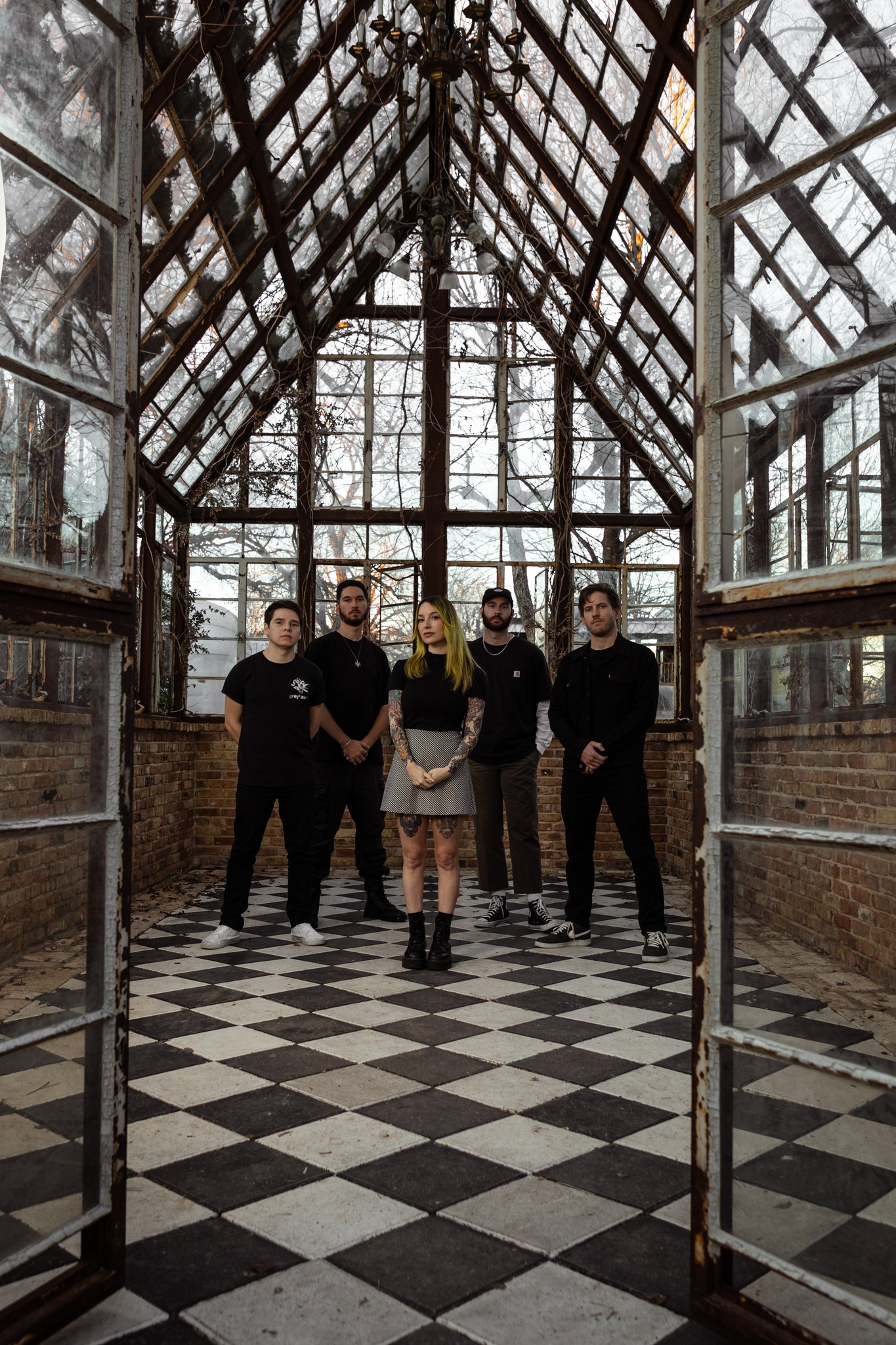
Brooke Hampton from Slow Pulse
Gavin Brown had the pleasure of talking to Slow Pulse vocalist Brooke Hampton to hear all about the new material, the return of the band, how the hardcore scene in Texas is currently and who her biggest vocal inspirations are.

One of the highlights of the FOCUS Wales festival this year was the no wave noise created by a pair of musicians who seemed to pin their badge to the noisy Black Flag stylings and chaotic sounds of an underground post-punk movement. Whatever their influences, the music speaks for itself with its energy capable of throwing you back against the venue wall and even clearing it of people who are not quite sure what is happening. It's time to meet Furrow and they deserve your attention.
(((o))): So, first and foremost, who are Furrow and what are your musical backgrounds?
Richard: We have no musical background at all. I only started playing the drums when we started Furrow. I’m still learning now how to play. We keep things very simple just drums and a bass guitar and see how far we can go with that.
An area that we are learning more in is self-recording. We got our hands on a few cheap four tracks when we started and worked out how to use them with our friend Ben Sawin from Mowbird. We record anywhere we can; namely in the caravan where we practice, the local village hall and more recently our kitchen. Times New Viking are a huge influence on us by the way they recorded just using four tracks and simply getting on with it without the use of a studio.
(((o))): How did the band come together?
Richard: both meet in college doing art before we went our separate ways to uni we would often create art for local exhibitions for our good friend Jamie Davis.Making and creating art is all we really wanted to do. Once we both finished art school we got stuck in shitty jobs and the creativity just died so we moved back home. My art has always been influenced by music and surrounding so we just brought a cheap drum kit and my old bass guitar that I got when I was 14 and thought lets work on another art project. We are not musician at all we learn by mistakes and add that into the creative process.
(((o))): Please describe your sound in poetic form.

Thom: This Question is pretty cool because we’ve been really into concrete poetry recently, it was a bit of a challenge though (our friend Jamie helped us out a bit).
(Ed’s note: This is the BEST ANSWER EVER)
(((o))): Do you think your local music scene has had any impact on Furrow as a band?
Richard: We seem to know more people that make art instead of music. Band wise Contact High and Wrexham’s Mowbird are great.
(((o))): What do you think is the most difficult challenge facing new bands starting out today?
Thom: Balancing band and work is a pretty big one I guess, if you’re travelling to a lot of shows you need to work to fund it and if it’s a big distance sometimes it’s hard to get time off to make it, then there’s getting back at stupid o’clock and having to get up for work again a couple of hours later. It can be pretty wearing.
Richard: It’s up to you as a band I guess. Some bands want the fame and others just do it for the joy of it. We look at The Fall and think we hope to just keep on doing what they do. Just create and keep on creating. It’s like anything in life, you have to put the effort in to make it work you can’t expect people to do all the work for you.
(((o))): Every band has different aims, and sadly very few decent ones get proper fame and recognition. What would have to happen for you to feel like you have ‘made it’ as a band?
Richard: I feel just picking up instruments and actually playing shows of your own material; then I think you have ‘made it’ even if it’s playing to an empty room. When you actually write a song for the first time it’s quite an accomplishment. I remember we were amazed out how all the parts of the first song we wrote fitted and trying replicate that live and the way the song involves the more better you are at playing. For bands today they seem to focus attention on how many likes on Facebook or plays on Soundcloud they have, what label you’re on and if you have a booking agent. All that is irrelevant to us. We prefer to do just do everything ourselves and not force our music onto people some people will like and some wont. We just keep our heads down and work at it and if you like us then thank you.
(((o))): Where did the band name come from, it's almost classic in a sense, do you like to plough?
Thom: I suppose it depends what you’re ploughing. I thought Furrows to start with then we realised it was also the name of a car dealership where we live but our friend Wills dad said ‘just take the s off’, so I guess he should get the kudos really.
(((o))): We have another column called Echoes of the Past in which we get people to talk about albums that strongly influenced their musical outlook. If you had to pick a single album that strongly influenced your music then what would it be and why?
Richard: Two records that I admire are R.E.M’s Reckoning and Murmur. I have a really soft spot for 80’s R.E.M. Growing up in the country those records depict my youth. I would play them while waiting for the bus to go to college and sound tracking my journey on the long bus ride.
Thom: I don’t think there is a single band or albums sound that consciously affects everything we do. People hear things differently though, we get told a lot we remind people of The Cure but I can’t hear it and they’re definitely not a conscious influence, I can’t remember the last time I listened to them. When we started we were listening to a lot of stuff like Thee Oh Sees and No Age so I guess it would be something like ‘Help’ or ‘Nouns’, not so much sonically but their ethos is what made us start Furrow and being inspired to start something must be the strongest influence you can have.
(((o))): This is ostensibly a column for introducing new bands. Who do you think we ought to include in it in the near future?
Richard: Shopping from London. They’re an amazing band made up of Rachel from Trash Kit, Billie from Wetdog and Andrew from Goldbars selling post-punk hits for the consuming lost pop generation and it’s all buy one get one free.
Thom: Beta Blocker & the Body Clock, Playlounge, Mowbird, Fawn Spots, there’s too many great bands to list really.
(((o))): What are the band’s plans for the near future?
Richard: Just record everything we have written throughout the summer and try and put it all out for people to hear. Make more art and finish my PGCE so I can teach art.
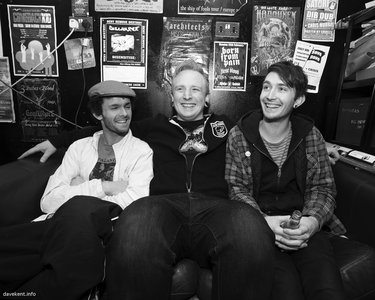
Having enjoyed their spiky alt-rock at 2000 Trees Festival earlier this summer, Benjamin Bland thought it was time to give Woahnows the Echoes of the Future grilling...
(((o))): So, first and foremost, who are Woahnows and what are your musical backgrounds?
Myself (Tim) and Wherly basically learnt to play together as kids in one punk band or another. We moved to different towns then I played in Crazy Arm for a few years while he concentrated more on jazz. Dan’s always in heavy bands with rad names like ‘Deathlehem’ or ‘Bear Fight!’
(((o))): How did the band come together?
Dan and myself just jammed for the fun of it one day with Simon the ex Crazy Arm drummer. Then we did it again with Wherly instead. This carried on very infrequently for quite a while before it started to feel anything like a band.
(((o))): Please describe your sound in poetic form. (Haiku, rhyming couplets, acrostic, etc - take your pick)
Little bit loud,
Little bit quiet,
Little bit sketchy,
Trying our hardest.
(((o))): How has your local music scene impacted upon Woahnows as a band?
Massively, most things I’ve learnt about music came from playing shows as a kid in Plymouth. We were lucky enough to have great local bands and the golden era of Household Name Records bands touring through all the time, with us blagging support slots. Dan has put on shows for years and runs the White Rabbit which is the main venue in town, so the heart of our operations and the heart of the scene are pretty much one in the same.
(((o))): I believe you have an album coming out in the near future. Tell us a little bit about it...
It’s more like a new EP on 12” with the first EP as a B-side. It’s coming out on Big Scary Monsters, the perfect label for us. I’m a really big fan of so many bands on the label past and present so seeing our name with theirs is a real joy. It will be out on 2nd September.
(((o))): What do you think is the most difficult challenge facing new bands starting out in the music industry today?
Getting shows out of town. If you’re good, and you play, people will catch on, but unless someone thinks you can pull a crowd it can be really hard thing to do.
(((o))): Every band has different aims. What would have to happen for Woahnows to make you feel that you’d “made it”, so to speak?
I always think this is a funny subject, so much so I seem to proclaim we’ve ‘made it’ all the time, like when we first got a rider, or sold a tape. Fame seems like a funny thing, something a lot of people chase but I can’t imagine it really changes all that much of the important stuff when it really comes down to it. I guess our main goal would be to play most places and have decent amount of people come to see us. That would be a great feeling.
(((o))): You’re given the opportunity to create your own All Tomorrow’s Parties Festival. What would be the first five bands on your list?
It would be a weird one that’s for sure. They’re probably too big for it but Arcade Fire and Modest Mouse. Then I’d be asking The Sidekicks, Built to Spill and Fucked Up.
(((o))): This is ostensibly a column for introducing new bands. Any suggestions as to who we ought to include in the near future?
Axes, The PJP Band, Break-ups.
(((o))): What are the band’s plans for the near future?
The record comes out 2nd September. We have some shows building up to that, then we tour Europe for a month straight in some really interesting places such as Greece and Serbia along with more of the more usual places. Then we get back and hit the UK during October. After that we’ll be looking to tour more and finish all these new songs!
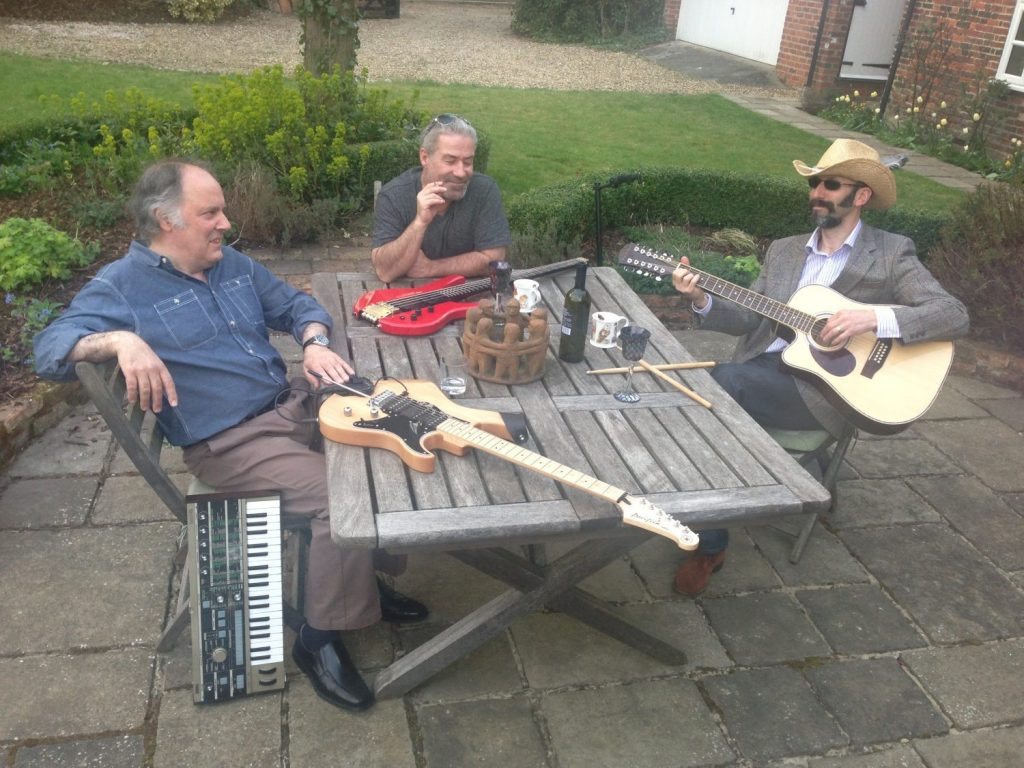
After reviewing Return, the first release in 30 years from East Anglian proggers Airbridge, Sam Ham wanted to know more, so we packed her off to talk to them.
First off, I wanted to thank you for taking the time to do this interview with me. And I would like to also extend an apology to Lorenzo. I made a mistake during my typing I put your name as ‘Lorenza’ in my review instead of ‘Lorenzo’. Sorry about that!
Now for a little back story. Lorenzo Bedini and Sean Godfrey started off in 1980, debuting in 1983 with “Paradise Moves”. After the addition of Stephen J. Bennett, they released one more single and that was it for thirty years. After doing numerous side projects and keeping in contact, Lorenzo and Sean got back together with a new drummer, Dave Dowdeswell-Allaway.
(((o))): Were you guys nervous about getting back together and starting over again?
Dave Dowdeswell-Allaway (DDA) – Not in the slightest. In fact, it felt extremely natural playing with these two. With any new venture comes uncertainty but, for me, I like that challenge and the creativity that follows.
Sean Godfrey (SG) – Once we started rehearsing it was fine; then when we played the first gig [2012] I was a bit nervous until we played the first few bars, and then it was grand. Although I clearly remember us selling out the Marquee Club [1982 & 1983] I still was nervous until we got underway.
Lorenzo Bedini (LB) – Not at all, except for a few moments before the first gig- that worrying question: Will people still like us after all these years? What are their expectations versus the about-to-unfold reality? But once we got going it was a breeze.
(((o))): How did you, Dave, come to join these two in their journey?
DDA – I first met Sean in 1979, then Lorenzo in 1981. From February 1982 to November 1983 I was the live sound engineer for Airbridge and enjoyed an intense period of gigging and touring as well as studio time. I’d been playing piano since age 5, guitar since age 9, and hitting cushions with knitting needles since Cozy Powell hit the charts with ‘Dance with the Devil’ in 1974. But, as a musician, I didn’t gain my confidence until my early 30s when I formed a couple of bands and started gigging in the north-west of England. Having lived in various places for 27 years, I returned “home” to Norwich, met up with Sean, talked music, played him some of my recordings and he suggested that I join he and Lor in a new version of Airbridge. I jumped at the chance and am so glad that I did.
(((o))): Now you, Sean and Lorenzo, went on to do your own thing after AIRBRIDGE initially broke up. What was that like for each of you?
SG – Airbridge was very different after Lorenzo left: the writing process was very different and the whole sound changed with it. After Airbridge split I formed La Host with Stephen J. Bennett [Henry Fool, No Man], and Fudge Smith [Pendragon, Steve Hackett], and Mark Spencer [Twelfth Night]. After La Host I tried various other bands but, in truth, stopped enjoying playing music until I got back together with Lor.
LB – I felt directionless, to be honest. I think that was where the inspiration for Quiet Sky came from. I remember feeling that I was sinking into a quagmire of middle class mediocrity.
(((o))): Lorenzo, your opening song, ‘Return the Light’, I stated in my review that I wanted to ask you the inspiration behind it. Was the song meant to be religious?
LB – I work at a psychiatric care home, and on my first Christmas there I was asked to entertain the residents with my guitar. “Sing a few Christmas songs”, they said. I only knew three, so I hurriedly wrote one of my own. It’s about that time of year that has had a special significance for the inhabitants of the Northern hemisphere since long before the birth of Christ: the return of the light after the winter solstice. In spite of these celebrations having been hijacked first by Christianity, and later by the consumerist markets, somehow something of its ancient magic remains.
(((o))): Dave, you penned “Who Pays the Ferryman?” and I wanted to say that it has been one of my favorite songs in a long time. I happened to listen to it not but a couple of weeks after my 16-year-old brother-in-law’s funeral. And it made me quite emotional. What inspired you to pen this song?
DDA – Firstly, Sam, I’m sad to hear about your b-i-l: a tragedy to lose someone so young. Thank you, however, for validating my reason for writing music. I write to express what I feel, and most of my songs have a strong autobiographical focus. If someone else is affected by my music then my job is done. ‘Who Pays the Ferryman?’ is a song of hope and, I believe, a song of reality. I have worked as a therapist for many years and my experience tells me that many people struggle and rage against the world as if “the world” has to pay for how they feel. The truth that I have noticed is really that we pay with our pain, with our love, with our rage, with our kindness. All there ever is, is here and now … is the time to be happy. It never ceases to amaze me at how much people will cling to their anger and/or pain, terrified of what they may become if they were to let it go. This song is about letting go.
(((o))): Lorenzo, you commented on my review that you didn’t really care for your vocals on “To Absent Friends”. To be honest, your vocals weren’t bad, it really just didn’t blend with the backing music. Is there any song, on either this album or your original, that either you, Sean or Dave, felt could have been better?
DDA – “Better”, now there’s a tricky word. For me, we have the music, the playing of the music, and then we have the recording of the music. Musically, I love all four songs on the EP and wouldn’t want to change a thing about them. As for playing, I’m always improving, looking for new techniques, striving to express myself. I can play better now than I could when we recorded and I hope that is always the case. The recording aspects are at the mercy of time and money. We were able to record some of the parts in Lorenzo’s home studio using Cubase, and we were very fortunate to have access to the main recording studio at the University of East Anglia, courtesy of Stephen J. Bennett [Deputy Head of the School of Music, former keyboard player with Airbridge, LaHost, and currently playing with Henry Fool, and No Man]. I had very little studio experience and so, if any aspects of the ep could be better I’d say my drumming and the time spent in the studio coupled with the quality of our home-recording equipment.
SG – Well, recording wise, because I’m more of a “live” player, recordings never quite match the way I perceive a track to be, but I continue to strive to reach that perfection. I’m really happy that ‘Return’ encompasses the raw feeling of the band.
LB – At a time when it cost £15,000 (about $20,000) to record a cheap album, we recorded Paradise Moves for £240. Needless to say, there were a number of ideas that couldn’t be put into practice on that budget! On the other hand, Return is a much more accomplished recording. The vocals on To Absent Friends could have been better, but you can’t have everything.
(((o))): Sean, I don’t think I happened to really go into what you were doing between 1983 and now. Would you care to share some of what you have been doing before you guys got back together to make this amazing EP?
SG – Musically, I was involved in various bands and projects but after a few years I withdrew from the music industry and focused on working on other commitments.
(((o))): Lorenzo, during the last song, you say that it always seemed that someone was with you. Was this like you always felt like God was with you?
LB – I’m not a particularly religious person. Spiritual, maybe. This song might reflect the notion of what Jung would have called the ‘higher self’; that part of us that watches us as if from a distance, and sometimes comes to our rescue when one of life’s wheels comes off. Or perhaps it is God… or Allah… Buddha… a ghost. The answer is in the ear of the listener. I like people to make up their own minds. That song is enigmatic and I don’t want to spoil the enigma.
(((o))): You guys should be so proud of where you have come from to where you are now, not that I have to tell you that obviously. You guys have exuded the true nature of patience and determination. What is your secret? (laugh) But seriously, how in the world have you guys come back from thirty years ago to be this amazing?
DDA – (Blushing) That’s very kind of you, Sam. I’m really the “new kid on the block” in that I’ve only been involved in writing and performing music for 14 years. You need to ask these two really serious fellows.
SG – My continued love for music, I never lost that, and working with some extremely good musicians. Initially, it was hearing ‘Quiet Sky’ that got me back into it. Lor played it to me and I thought it was brilliant and that definitely tipped the scales for me and made me want to play again. He and I started writing again and it went from there.
LB – Sean, and later my brother Alessandro, showed me that Paradise Moves was selling for over £150 on the net (remember it cost only £240 to record!). If there was that much interest in something that I had thought consigned to my distant past, perhaps it should be revived. It would have been rude to say ‘No’. Also, having in the interim, lived a bit more life – which often is nothing like you think it will be; things feel very different when they actually happen – I had so much more to write about. Also, I never stopped writing songs, so when we did reform I, and the others, had a backlog of material from which we could cherry pick.
(((o))): What can we expect from AIRBRIDGE in the future?
DDA – Well, we have a live set that is over 2hrs long, so we’ve plenty of material all ready to be laid down in the studio. Last winter we had a short writing period and so we have four new songs that need to be polished off and added to the “to be recorded” list. Add to that, the re-working of Lorenzo’s songs, my songs, and music that Sean and I have worked on and we’ll not be short of music to come. We’re building up our live performances and it looks like we’ll be getting into the excellent festival circuit in the UK next year, and we are organizing a short European tour for the summer of 2014 with dates in, at least, France, Belgium, Luxembourg, Germany, Austria, and Italy. If we had the chance to come over to the States and tap into the fine musical tastes of those that enjoy ‘Echoes and Dust’ then I’m sure that we’d jump at the chance!
SG – Certainly I’m looking forward to playing more gigs and recording a full album, with other associated projects in the pipeline connected to music. I’m excited and optimistic, very optimistic about the future of the band.
LB – Nothing. Nothing at all. It’s way passed my bedtime. Where’s my cocoa? What’s happened to my slippers? Aaaaaghhh!!!!!!!!!!
(((o))): When do you expect you guys will be releasing another album with your amazing new trio?
DDA – We are going to release a full album in 2014 and are in conversation with a few labels interested in supporting that.
SG – I agree with Dave, that is the aim and we’ll make it happen.
LB – We have got the beginnings of new recordings already on the way. The outcome of the ‘Return’ recording project and the positive response to it paves the way to a promising future.
(((o))): Is there anything you guys would like to say to everyone out there?
DDA – I’d love to hear from folk, get some feedback, find out what we share, so please join us on Facebook (www.facebook.com/AirbridgeOriginal), and support our investment into new recordings by downloading, or ordering a cd copy of ‘Return’ (www.airbridgeprog.bandcamp.com ). Finally, since we’ve already paid our way, you know all that “stuff” that can consume your sleeping and waking thoughts? Let it go, and notice how different the world can become J
SG – I don’t want to make this too cheesy, but thank you for your support and loyalty, we’ll do our very best to come up with the goods.
LB – Thanks for listening!
(((o))): I want to thank you guys for taking the time answer my questions, and I really hope that you guys release more albums for years to come. Because I can’t get enough of AIRBRIDGE.
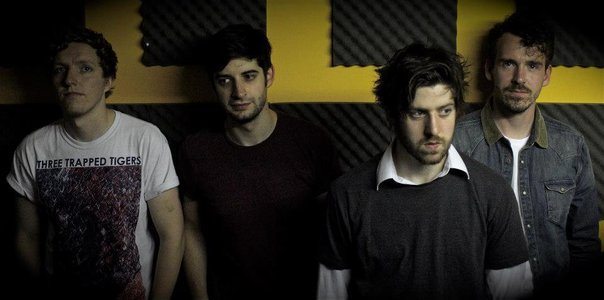
Up and coming North Eastern prog quartet Cauls caught Benjamin Bland's eye with their stunning set at 2000trees Festival earlier this summer, so it was no surprise to see that they had been added to the bill of the forthcoming ArcTanGent as well. Bassist Andrew McCaffrey answered our questions...
(((o))): So, first and foremost, who are Cauls and what are your musical backgrounds?
Cauls are a band from Newcastle upon Tyne made up of Michael Marwood – Vocals, Graham Morris – Guitars, Chris McManus – Drums and Andrew McCaffery – Bass. We have all played in bands previously – Chris still plays in another band called Pure Graft and Michael still writes and plays his own solo material.
(((o))): How did the band come together?
Myself, Graham and Chris had been writing and practicing instrumental music but we felt that is was obviously missing some vocals. Around that time Chris, who works as a studio engineer at Blank Studios in Newcastle, was recording Michael’s solo stuff and really liked his voice. We all had a listen to his stuff and thought it would be really interesting to ask him if he wanted to get involved.
(((o))): How has your local scene affected you as a band?
We have been playing locally for two years now. Newcastle seems to be a place where quite a lot is going on for the size of the city. I wouldn’t say it’s had a massive impact on our music but being part of scene of loads of other bands has been encouraging and allowed us to play plenty of decent gigs around the north-east with some really good bands.
(((o))): Your latest release was nearly a year ago. What can you tell us about that and about any new directions the band has moved in since then?
The last release came out last August and we were surprised by how well it was received. We are a band that takes quite a while to finalise our material and I think ‘Ahsonuttli’, from EP2, took 11 months to complete. We are in the process of writing more material and we currently have a few songs finished which are in our live set. The new material is turning out to be both more epic but at the same time more melodic than the last EP. We’re aiming to record at the end of this year or, at the latest, the beginning of next.
(((o))): What do you think is the most difficult challenge facing new bands starting out in the music industry today?
It’s probably the same challenges that have always faced new bands such as establishing a fan-base, playing decent gigs, recording and releasing music but I do feel that it’s easier for new bands to initially get their music out there and listened to today. Obviously there is less money in the music industry than there has previously been but I don’t think it will put people off from being creative and playing music.
(((o))): Every band has different aims. What would have to happen for Cauls to make you feel that you’d “made it”, so to speak?
I don’t think we have a big vision of ‘making it’ we just seem to be focussing on the next few challenges. We’re touring in August and currently writing the next recording so I think as long as those are successful then I imagine we’ll be happy. I do feel that Graham has a big vision of making it though which probably involves a Cauls rock opera written by Ben Elton in the West End.
(((o))): A caul is a membrane that can cover the head and face of a new-born baby, but is ultimately harmless. What are Cauls covering up and are you just as harmless?
The idea we liked about a caul is that, although they are a product of human biology, they have been considered to be good luck charms throughout history and sailors also used to buy and take them to sea with them as they thought they would stop them from drowning. So they are something that is both macabre and mystical. I’m not sure how this reflects on us though - I think it just means that we are completely harmless!
(((o))): You’re given the opportunity to create your own All Tomorrow’s Parties Festival. What would be the first five bands on your list?
Mars Volta, Fleetwood Mac, Radiohead, Deftones and Tears for Fears.
(((o))): This is ostensibly a column for introducing new bands. Any suggestions as to who we ought to include in the near future?
I’m not sure how new these bands are but the more low key bands who we feel need way more attention are Crash of Rhinos, Richard Dawson, Humanfly, Future Horizons and Pigspigspigspigspigspigspigs .
(((o))): What are the band’s plans for the near future?
We are playing a small UK tour in August and are currently writing new material for the next release which we’re going to record as soon as we are ready. If anybody wants to keep in touch of what were up to please check out our Facebook, Twitter, Bandcamp pages.
Our tour dates for the rest of the month are:
15th August - The Hairy Dog, Derby
16th August - The Miller, London
17th August - Fallow Café, Manchester
18th August – TBC, Carlisle
31st August - Arctangent Festival, Bristol
 (((o))): Did you ever consider reaching out to other musicians to try and form a different type of band , or was it a desire to have full control and something without the hassle of finding a practice space, time to schedule etc?
I met Peter Pawan at a gig and, after knowing him for some time now, I can easily say “where else?” He’s one of those rarer than you’d expect people, who will go wherever the music is, relying solely on trusted recommendations. This shouldn’t come as a surprise - after all he’s been involved in Sofar Sounds for the past four years and is responsible for bringing Sofar to Brighton. The reason we meet at the Phoenix Artist Club however is Presana Music, a consortium founded by Pawan to bring some long awaited change to the independent music industry.
“There needs to be a team effort. If everyone contributes a little bit, we can go a lot further. We’re trying to educate people into that way of thinking, but because artists and artistic talents have always been exploited, it’s quite hard”, Pawan says as he starts to share his vision. Revenue and equal share sound extremely important to him. We start our conversation with an anecdote about George Lucas who introduced a completely new way of thinking about royalties with ‘Star Wars’. “Because what George Lucas was doing at the time was so different to what everyone else was doing, there were a lot of people who were thinking ‘meh, it’s not really gonna go anywhere’”, Pawan laughs. “So he put two options on the table for all actors: one - you’d get your lump sum fee, done. The other was - you’d get no fee, but you’d get a share of merchandise in perpetuity. All the actors - Mark Hamill, Harrison Ford - were jobbing actors, if that. They needed the money, so they took the fee. Alec Guinness, who’s a great thespian, didn’t need the money. So he waved his performance fee in favour of the merchandise rights. Every year for the rest of his life he earned millions.” Pawan admits that it would be too big headed for him to say that Presana Music is going to get to that stage; however he is very much focused on the fact that everyone should be able to enjoy the share of royalties.
Online Presana Music says it’s more than a label. I endeavour to find out what exactly it is and whether it is a label at all. Pawan, in a very matter-of-fact tone, asks back “What is a label?” With experience in head hunting in financial services, Pawan sure has his business head firmly screwed on and it really shows. His attention doesn’t escape the smallest detail of his enterprise. He begins to explain how he came up with the name itself, and the story involves charts with arrows pointing to feelings certain words evoke. The process took him over a year. Eventually he explored the idea of going on a journey, which led him to associations with mission. Suddenly David Beckham’s Sanskrit tattoo became a source of huge inspiration, taking him back to his ancestors. “A lot of Sanskrit words have multiple meanings”, Pawan elaborates. After a long Google Translate session, Presana came up. “Presana has a lot of meanings, but one of them is ‘mission’ and suddenly that felt right - Presana Music. The idea is to create the necessary infrastructure to identify and develop support for emerging music around the world. That’s the mission.”
We carry on exploring the current understanding of labels and publishing companies. “The old model obviously didn’t work, otherwise the industry wouldn’t be as fucked as it is today”, Pawan states bluntly. He goes on to explain that Presana is more of a brand, a stamp of approval and an investment fund rather than a label. His idea is that whatever genre the audience is into, if it is attached to Presana then that means it’s good. “The other side of Presana’s definition of a label is providing the financial support that is needed to help artists achieve a certain thing. Take Tall Ships, who are on the roster, and have gained a significant following. They can sell out Scala in London and they played SXSW and other festivals in the US. They need to go back to the US, but they need five grand to do it. That’s where Presana’s label side comes in. We can raise that money and invest in that band to go on that tour.” Pawan anticipates my question about what does Presana get back from it and continues to elaborate that Presana claims their backing to begin with and that helps to push the brand out there from publishing and synchronisation angles. “Pushing Tall Ships out there is beneficial for everyone. They can build up their fan base, and they can sell a few more records. Presana has nothing to do with mechanical royalties or publishing royalties, but what we do have, and what we’re glad to have, is that we have an amazing band, that should be heard all around the world, on our synchronisation roster, and if we can help them to develop their name - absolutely we will do it.”
Synchronisation keeps coming back in the conversation and I keep getting more intrigued by it. What does it have to do with Presana’s mission? “Given what is a completely different background than most of the people in the music industry, I was thinking how can I mix my experience of being an actor for many years, a guitarist for a bit with the pretty hardcore world of head hunting in a quite volatile and highly competitive sector which is the financial services. I was also thinking that there are so many bands that I go to see, artistic friends that I have, who make amazing music, but make no money out of it. The current (the old) music model doesn’t work per se. A technology company controls the music industry, which is amazing”, Pawan adds sarcastically. “You’ve got the live side, which is great if you’re The Rolling Stones or Radiohead, or any of the amazing bands that builds up a massive following over many years, or you’ve got the backing of a major label. Then you can charge £30, £40, £60 a ticket. But if you’re an emerging band or you’re on an indie label - you just need to pick up a copy of Time Out or any digital site to see how many different bars have live music as a novelty act. They don’t give a shit who plays. You pay £3 or get in for free; music should be for free, right?” he throws in another sarcastic comment and passionately continues to explain his frustration.
“Bands take out credit card loans to hire a van to do a tour of the UK with a minimal fan base. It’s a very risky strategy to go out on a live circuit and think you can sell t-shirts for £15, or a tote bag with their logo. There is so much choice for bands and there are so many tote bags that you can have”. He mentions CDs as another revenue stream, with a note that that’s another dying habit. He does optimistically note that vinyl seems to be coming back with force though and goes on to reminisce how the tangibility of music releases meant so much to him. We seem to share the love for CD sleeves and bring back the memories of great disappointments when the lyrics where not printed inside. The idea of listening to an album in a certain order, which Pawan observes doesn’t happen that often anymore, has a romantic value to him. He does see how the digital format is accessible and convenient and he encourages that, but he does point out that people don’t buy music in a visible form as much as they were.
Pawan lists publishing as one of Presana’s revenue streams and mentions that Presana just became a publishing house and that area will be actively explored. Synchronisation will remain Presana’s main revenue stream though. “Synchronisation can provide the finance necessary for other aspects of a musician’s career. If you land synchronisation of a piece of music that you’ve written with a big brand that is doing a global advertising campaign, that could be a six figure income, which in itself could fund your tour, or serious time in a proper studio with a qualified engineer with a massive experience. That itself will gain you exposure. The really cool thing about technology is if you see a very cool advert, you can very quickly find out what song is on that advert. With my background as a head hunter, which is going out and finding the opportunities that are out there, understanding the needs of a client, scouring the entire relevant market to present a long list and then a short list of options for that client, is totally transferable to providing music supervisors and the broader creative industries with music. Going back to the team idea, visual image without music has got not as much of an impact as visual image with music. So the music industry as it has been can continue down that road and the major labels, like massive battle ships, will take forever to turn.”, Pawan firmly states his view of the industry. However he does see the silver lining and believes that now is not only the perfect time for the independent music, but also for an independent way of thinking about independent music.
The team effort seems to be incredibly important to Pawan and I find out that the team at the moment consists of Pawan himself and three people starting up in Brazil - and the bands and their managers, who are not a part of Presana’s movement, but it’s in their best interest to help out. Presana’s website encourages people to get in touch if they want in, from whatever creative field they’re coming from: writers, photographers, sound engineers… “If they have strong interpersonal skills, if they are good networkers with a real passion for music then I’d love to hear about them. No one’s skills are left unrewarded. The idea is to build a partnership in the likes of John Lewis partnership, which means whenever there is a success, everyone who is a part of that organisation gets a reward” Pawan paints a broader picture of his vision, which obviously includes artists themselves.
However, there are certain criteria they have to meet. “I’m looking for artists who, when they’re writing their music, are thinking about visual images. From roster and synchronisation angle, we need to be able to take those words and melodies and see pictures from them. From Presana’s point of view, acting as a synchronisation business, and also a publisher and a label backer, these visuals build a scene. We’re not gonna be the right company to support a band where we can’t see those visuals. That doesn’t mean that the music isn’t great, but I can only sell a roster of a music that I absolutely love and believe in. Otherwise Presana just becomes another music business that does exactly what everyone else is doing - takes on all this stuff, shelves most of it and forgets what it’s got most of the time… I’m not interested in that”, Pawan states definitively, with an obvious passion and a clear vision of how to right many wrongs that became somewhat staple in current music industry.
Another part of Presana’s activity is the live side. Following a launch at The Sebright Arms on the 1st of June 2013, Presana Presents seems to become a regular night with a second gig of the series on the 7th of August. The focus is not on the quantity, but the quality of Presana’s nights and they’re not about to become monthly anytime soon. “We’re not a promoter. There are plenty of promoters out there. But we want to support, develop emerging music talent. One of the ways in which we can do that is to put on Presana Music nights in London and other parts of the UK, and soon overseas, where we are presenting a very small selection of our synchronisation roster and some of the publishing roster to market. That is to music bloggers of course and also to the music industry. It’s great opportunity for people who buy music for film and advertising and gaming to come out and actually meet some of these bands and be completely blown away by the quality of stuff and the eclectic range of the music we’ve got on the roster. So we’re doing it as a way of giving a platform to the acts on the roster.” The bands that performed during Presana’s nights include The Young Aviators, who are signed to Electric Honey, the label responsible for the early Biffy Clyro and Franz Ferdinand releases.
We talk about the channels Pawan uses to find talent for his business and that brings a whole new discussion shedding more light on his disillusionment with the current state of affairs in the music industry and his determination to do something about it. Despite previous praises for technology, Pawan boldly declares “As Peter Pawan, I’m not a facebook fan. It’s there and I don’t mind other people using it, but I don’t judge a band by how many facebook likes they have - you can buy that stuff. I wanna hear it. I’m an old school guy and the business that I do is based on picking up the phone and having human conversations with people who are in the position to actually make decisions on this. So in terms of developing the knowledge of what Presana Music is about around the world, whilst yes, there is a facebook set up, the is a twitter account, there is a Google + account, there’s a Spotify account, we’re not a company that’s on them all of the time. I’m not gonna spend my time updating all the social media platforms when I could be putting music into film.”
I catch myself thinking that it all sometimes sounds too idealistic to be true. Then again I’m an idealist myself. It’s obvious that the change in the industry is desperately needed and it’s refreshing and inspiring to see that instead of standing in the corner and moaning about the state of it all - people like Peter Pawan take all their experience, add passion and a good business plan and put it into action. It will be fascinating to watch Presana take off and hopefully create an anticipated stir.
Melbourne progressive instrumental band The Nest Itself released their splendid debut album last year, and after reviewing the record and catching them live a couple of times, Gilbert Potts put some questions to the five-piece.
(((o))): Can you start by telling us who's in the band and a bit of your history. What roles do you have in the band, musical and otherwise?
Jason Hutchison (Hutch)- guitar
Jason Peacock (Peaks)- drums
Jon Pittas - keys
Tim Rouse - guitar
Tom Vero – bass
We all met in highschool and played in various shitty school bands together, it wasn't until 2010, 5 years after school, that we got together and started seriously making music. We try to share the roles and responsibilities equally throughout the band, working democratically and everyone having an equal input is very important to us.
(((o))): What are your individual musical histories?
John and Tom have solid groundings in musical theory. Hutch and Peaks have been playing their respective instruments for over ten years, learning mostly through practical experience. Tim is a primary school music teacher.
(((o))): What's the most beautiful sound you've ever heard?
Being a music teacher working with young children, I would have to say the silence after a long day of shitty recorder playing is just sublime. I also think a well placed trill can be very beautiful.
(((o))): What sort of music do you listen to?
We all listen to a pretty broad spectrum of music. Radiohead and Pink Floyd are two pretty big influences on us but we all love post-rock (even though we dislike the term), experimental, classical, progressive, instrumental, electronic and anything in between. Aphex Twin is another huge influence on all of us, especially Peaks and John.
(((o))): When you go and see other bands or listen to their records do you tend to focus on whoever plays the same instrument as you? Do you think playing music affects how you listen to it and if so is it a blessing or a curse?
When watching a good band, I always find it hard to not watch the drummer. Being a guitarist, you always have to check the pedal boards and guitars, but it is more of a comparison of sounds rather than intently watching the guitarist. Playing music definitely affects how you listen to it, you become much more critical. New music takes a while to digest as you like to pick apart the songs and hear every little melody. Its a blessing and a curse.
(((o))): What colour is your music? What shape is it?
"Any colour you like" - Pink Floyd, that came very close to being our album title but Tim is a cunt and doesn't like the word 'like', he prefers useless parenthesis.
Due to our immaturity, the shape would probably resemble some sort of dick related object. (Hey Ed, I get to use the 8=====> tag again! GP)
In seriousness, I would describe it as an expansive space because we try to leave it very open for interpretation. We try to set moods with our music but leave the rest of the feeling for the listener to decide. The colour would be white, a blank canvas for "any colour you like" that you feel when you listen to any of our songs.
(((o))): How do you go about composing your tunes? What role does melody play versus texture and rhythm.
Usually someone comes to the group with and idea or melody, we jam on it for a while and piece it together from there, some songs do just evolve out of jamming though. We try to be very conscious of giving each instrument and melody the space it deserves and not overcrowding our compositions. Melody and rhythm usually take the song where it needs to go whilst texture fills out the body of the songs.
(((o))): Do you tend to create songs in their live form, then add layers for the recorded versions, or picture them more in that recorded form? Is your record “(in) constant search” a collection of individual songs or were they composed with an album in mind?
The seeds for most of our songs are definitely sewn in their live form, with minimal studio layering intended, however, some songs are written purely with the studio in mind. The songs on the album were definitely composed individually over a period of about a year, then a great deal of thought was put into which songs would make the album, and how they would be pieced together into one cohesive body of work. Once we chose which songs would be on the album, we also worked on how they would best complement each other through linking them and getting the track list right.
(((o))): You use dynamics more than a lot of post-rock - not just with volume, but with the speed of the songs and their intensity. Is this about creating strong and contrasting emotions or is the emotion simply a consequence of the light and shade?
Creating strong emotion in our music is something we all consciously strive for when composing, dynamics are just useful device that we employ to elicit these emotions. Fucking good question!
(((o))): You cut back on some of the dynamics and contrast in the live show, by not playing 'Unfix' for example, or at least you have the couple of times I've seen you. What's the difference between what you seek to give the listener live, and on the album?
Cohesiveness is important to us when playing a set, we like to try and play as if it is all one piece of music. This presents a challenge as we try to never play the same set twice. We use our quiet songs like 'Unfix' as interludes to allow for tuning breaks and instrument swapping. The line up on the night and the venue play a big part in the composition of our sets, playing more intimate shows usually allows us to play the softer songs, at larger shows people tend to talk through the quieter parts and the dynamics suffer as a result. Its all about trying to hold the attention of respective crowds.
(((o))): What can music without words do that music with words can't? Is instrumental experimental rock self-indulgent wanking?
Instrumental music allows the listener to engage with the sound on a deeper level and interpret their own emotional response. They can feel the music for themselves rather than having someone tell then what they are supposed to feel. Instrumental rock is sometimes self indulgent wanking, but not all the time. Evoking an emotion or creating an image is much more subsequent in music without words.
(((o))): What are the band's high points so far? Low points?
Creating an album with our best mates has definitely been the high point so far. We had such a great time recording the album, but it was a period of realization about how under-prepared we were. There was heated debate within the band over whether it should have been released at all. Reading someone trash the album in our first review was easily our lowest point, but it gave us a lot to reflect upon. We are looking forward to making the next one.
(((o))): What do you wish you'd known before?
Just how deep an understanding you must hold of your own songs before you go into the studio and attempt to record them. In hindsight, we would have liked to spend a lot longer dissecting our compositions to perfect them.
(((o))): If you were an animal, what would you want to be? What would you actually be?
Hutch - would like to be a Clydesdale , but would actually be a pony
Peaks - would like to be a hybrid of a kebab and a dog called a babdog, but would actually just be a kebab.
Jon - would like to be a household domestic cat, but would actually be a horse for undisclosed reasons.
Tim - would like to be a firetruck, but would actually be a sloth.
Tom - do pokemon count? Tom wants to be slowpoke, would actually be magikarp.
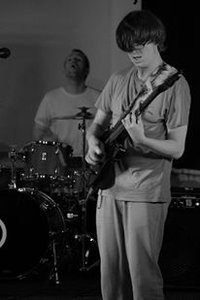
(((o))): So, first and foremost, who are Cleft and what are your musical backgrounds?
Cleft are Dan on Guitar and bendy legs, and John on Drums and flailing.
John: We’ve both been playing in bands for years, I think this is band number 37 for me which makes me look like I have ADHD. I started learning keys a long time ago, but found drums at the age of 14 and decided that being noisy was lots more fun than playing a bossanova consistently at 92bpm.
Dan: I first started playing guitar obsessively when I was about 14 too. I used to sit and learn whole albums by bands I was a huge fan of at the time like Deftones, RATM and Tool – driving my parents mental with my little 10w practice amp cranked up, windmilling my hair around my bedroom. God I was cool! I was initially a bass player in my first band which probably explains my love for massive sub octave laden riffs.
(((o))): How did the band come together?
John: We moved to Manchester at exactly the same time, and ended up finding each other on the internet, but without the romance (well, maybe a little) and awkward dating.
(((o))): Please describe your sound in poetic form. (Haiku, rhyming couplets, acrostic, etc - take your pick)
Dan:
There once was a band called Clef(t)
Who tried to make people deaf
The guitars went SHOOOOWWWAAAAANNNG!
And the drums went BAAAANNGGG BAAAANNGGG!
That ludicrous duo called Cleft
(((o))): How has your local scene impacted you as a band?
John: Because the amount of bands playing the math/progressive circuit is quite low compared to mainstream rock for example, we've got to know a lot of them on our travels which is really nice. I've found that there's a great community feeling as a result, and bands will do a lot to help each other out. We've been bringing bands to Manchester for our own gigs recently, to try and help buoy the scene for those that are interested in this kind of music. I've started running my own nights in Manchester under The Drum Tamer (www.facebook.com/drumtamer) banner with the aim of creating high-quality gigs at good venues that people want to come to.
Dan: Yeh, oddly enough the best gigs we've played have been out of town (we recently did a Scottish tour with Vasquez and Alpha Male Tea Party which was easily my best gigging experience to date). Manchester has a really thriving indie scene (perhaps due to the city's musical heritage), but there doesn't seem to be that many people into the instrumental, proggy, mathy guff that we make. We have chummed up with a few local bands that are making music in a similar vein to us like Trojan Horse and Halfling's leaf who are both awesome and good chums of ours.
(((o))): You've had a couple of EPs out so far. What can you tell us about them?
Dan: Well, our first EP was ‘Utter’ which we released digitally for free in April last year. We were only just starting to work out what we were trying to do as a band when making this as we'd only been playing a few months before hand. Like all of our material, we recorded it ourselves in our rehearsal room.
Our second EP is ‘Whale Bone’ which we released for free download and super cheap on CD (with ludicrous artwork by my girlfriend Jessica based on a Stewart Lee reference). We both feel this EP is far stronger than the previous, mainly as we had played a lot more gigs between the two recordings so we were a lot tighter and road hardened. As we track everything live (with a few overdubs in post production) the recordings really are reflections of what we sounded like at the time, which is something I have always liked about listening to classic recordings of the 50s and 60s, they are sonic snapshots of us two sweaty idiots making a right racket above a garage in south Manchester.
(((o))): As just a two-piece do you feel like it’s an extra challenge to create the epic sounds you do or does it just come naturally?
John: You do feel the need to fill the space a bit more without extra members, but at the same time we try to avoid over-playing stuff. Being a two piece gives you more freedom to think about how you approach songs, and it's also a lot easier to learn our stupid tunes when there’s only two of you.
Dan: For me as a guitar player, I have had to approach my instrument in a fairly unusual way to try to keep the overall sound we produce not sound too thin like something is missing, but also varied enough tonally so that after listening to just drums and guitar for half an hour the listener isn't bored witless. John is really REALLY good at filling all the little gaps with little tricky fills and his array of cymbals. We have loads of fun experimenting with different sounds. Our main aim is to entertain ourselves really, it's all highly self-indulgent!
(((o))): What do you think is the most difficult challenge facing new bands starting out in the music industry today?
John: Not getting bogged down in thinking they have to appeal to massive audiences all the time. It's music, it's meant to be enjoyable and not a chore. Write stuff that you like and have a shit-ton of fun doing it, and there's likely to be a few others out that share your brain juices.
Dan: Yeah exactly, the budding musicians that seem to be the most stressed out or dejected by what remains of the music industry seem to be obsessed with success. The concept of “making it” is really an outdated idea. Very few of the general music consuming public pay for music anymore, therefore there is very little money for artist development from labels and/or publishers. I think if you are breaking even as working musician (i.e. the money you spend on gigging and recording etc is eventually coming back to you), you have “made it” already! Music is awesome; it should be the most fun ever. So there.
(((o))): Every band has different aims. What would have to happen for Cleft to make you feel that you’d “made it”, so to speak?
John: Already there in my book. We're playing gigs that we love, making music that we love and have met so many nice people over the last year or so. We're always trying to move things on though, so playing more supports with bands that we want to see and releasing new music in interesting ways is something we're always looking forward to.
Dan: Oh, I've already answered this one! What John said! We'd love to get over to Europe and tour places where people can't understand a word we're saying but still allow us to flail about and deafen them.
(((o))): You’re given the opportunity to create your own All Tomorrow’s Parties Festival. What would be the first five bands on your list?
John: Tough choice as there's loads I'd pick. Off the top of my head today I'd go with Vasco Da Gama, BATS, Vasquez, Mutemath & Laura Marling.
Dan: That is TOUGH. As this is a fantasy, alternative universe type situation mine would be: Nick Drake, Miles Davis, Slayer, Pantera and Deftones (with Chi Cheng). Although choosing an entirely dead line up does seem quite morbid now I think about it.
(((o))): We’re looking forward to seeing you at ArcTanGent Festival in August. Who else on the bill should we check out?
John: My top five are Fat Goth, Axes, The Physics House Band, Future of the Left and You Slut!
Dan: I can't bloody wait for this!! My most excitable moments will be watching Three Trapped Tigers, That Fucking Tank, Future of the Left, Zun Zun Egui, and And So I Watch You From Afar. That being said, I am a fan of more or less every band on the line up. I am beside myself about this festival, it is such a privilege to be playing it.
(((o))): What are the band’s plans for the near future?
John: Finish recording this album we’ve got simmering away and then release that little blighter. We keep being asked to do gigs though, so we really need to knuckle down soon.
Dan: Yeh the album is definitely our main priority at the moment. It is probably about 80% written. We are of course super excited to be playing ArcTanGent festival in Bristol in August and Carefully Planned festival in Manchester in October.
(((o))): Thanks!
No, thank you. Big sloppy love to Echoes & Dust.
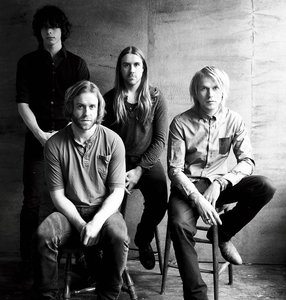
(((o))): So, first and foremost, who are The BlackWhite and what are your musical backgrounds?
The BlackWhite are Ed Broad (drums), Guy Prall (guitar), Josh Bray (guitar and vocals), Harry Deacon (bass) and Ashley Krajewski (keys).
(((o))): How did the band come together?
We have all been full time musicians for the past seven or eight years. We all coalesced through various mutual friends and various bands we or friends or friends of friends had been in in a very serendipitous process. Josh first met Guy at a charity gig in his native Devon and poached him off his then band. Guy knew Ed, Ed knew Harry and we recorded with Ash. It was as easy as that. We all were looking for each other, musically and were lucky enough to find each other at just the right time.
(((o))): Please describe your sound in poetic form. (Haiku, rhyming couplets, acrostic, etc - take your pick)
The BlackWhite are free
Like the wind we are not afraid
To find our flow
(((o))): Has your local music scene had any impact on you as a band?
There are loads of great bands in London; however, the scene itself is extremely unhealthy due to the politics of it. We won’t go too far into that but most bands will have had a similar experience.
(((o))): Your EP came out recently and you’ve got a single coming up soon. Tell us a little bit about them…
We recorded our eponymous debut at Konk studios in London. The EP is an attempt to represent some of the diversity of our sound in one place to showcase ourselves to the public. We have a first single in ‘Cut through the Middle’, a song about surviving the anonymity of the big city for a couple who feel anonymous, even between themselves. Then there are two songs in ‘Embers’ and ‘Feed the Night’, which we like to think encompasses the dark, experimental elements of our sound.
(((o))): What do you think is the most difficult challenge facing new bands starting out in the music industry today?
Money. Money. Money. Every band is judged on virtual statistics online. ‘How many people like this?’, ‘who has watched this?’ etc. If you can’t afford good PR it can be difficult to even gig outside of your hometown because promoters look at your online draw as a band in their area. It feels back-to-front; we’d rather gain fans from gigging than gain gigs from ‘fanning’ so to speak, but we’re still loving the challenge!
(((o))): Every band has different aims. What would have to happen for The BlackWhite to make you feel that you’d “made it”, so to speak?
We just want to be a band, one that people pay to come and see live. Some of our favourite bands would only be known to 1 in a 1000 people, are never on the radio and don’t shift massive units BUT they play great gigs, all year to serious, die hard music fans. What could be better than bringing your music to the world and feeding off the positivity of an honest and dedicated audience?
(((o))): White cannot be black, nor black can be white. Does the oxymoronic nature of your name reflect anyhow in your music?
This is the exact point. White can be black and black can be white. It all depends on belief. The name comes from 1984 and is an example of newspeak, the language of Orwell’s dystopian future. It is also an example of doublethink, which states that an individual can exercise a choice and not only believe that black is white but beyond that, immediately excise the previous belief from their mind that it was ever otherwise. This is a statement on the world in which we live. We are The BlackWhite, all of us.
(((o))): We have another column called Echoes of the Past in which we get people to write about albums that have particularly influenced them. What would you guys choose to write about in that column?
HD: The Beatles - Abbey Road
EB: Mew - …And the Glass handed Kites
GP: Soundgarden - Superunknown
JB: Rage against the Machine - Rage against the Machine
AK: Miles Davis - Bitches Brew
(((o))): This is ostensibly a column for introducing new bands. Any suggestions as to who we ought to include in the near future?
We like Face of God, Stray Dogs and Mt. Wolf, all of whom we have played with recently.
(((o))): What are the band’s plans for the near future?
We are putting together some content to run an online PR campaign to promote the band including some cool videos, free downloads and some self recorded demos to compliment the EP. We are doing this all ourselves with no money and hopefully it will all provoke some interest and keep us moving forward.
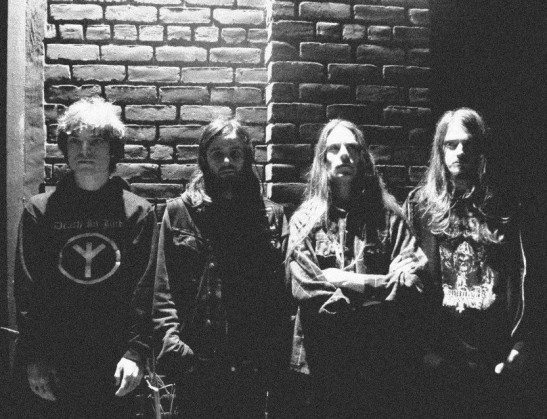
One of this year's great releases is Tempest by American doom metal band Lycus. They have been touring extensively through North America after their album release, but still managed to find the time to answer some interview questions Val LittleJohn asked them.
(((o))): Not all of our readers are familiar with Lycus, so can you please introduce the band to us and tell us a bit about the history of Lycus?
Lycus: We initially formed back in 2008 as a 3 piece in the Sacramento area. In the following year we released a 2 song demo and played live locally a few times. Due to the difficulty in maintaining a reliable line up we disbanded in 2009. Myself [Jackson Heath] and other founding member Trevor continued to jam together and eventually decided to relocate to the bay area. In the bay we played together under the moniker Temple of Saturn for a few months before deciding to reform Lycus. We reformed in February 2011 and soon recorded Demo MMXI with 2 new members.
(((o))): Who would you say your biggest influences are musically or otherwise? What inspires you to create the style of music you do?
Lycus: We really just play what we love. That should be the only inspiration a musician needs.
(((o))): How has it been working with 20 Buck Spin? Are you a fan of a lot of the other artists on the label?
Lycus: We couldn’t have asked for a better label to work with. Dave has been extremely good towards us. We were already fans of the label due to the high caliber releases he continually puts out, and now we’re working together, pretty sweet.

(((o))): Who are a few of the other bay area bands you recommend checking out that are similar in style or just worth hearing in general? Do you have a kinship with any in particular?
Lycus: Yeah definitely. There’s Brainoil (Greg Wilkinson on bass/vocals, who recorded both our albums). Laudanum (really fucked up noisey doom, recently disbanded)… Noothgrush, Black Fucking Cancer for really solid black metal, and also our buddies in shoegaze band Whirr who we’ve toured with and are doing a record release show together with on July 27th.
(((o))): Who are some of the bands that influenced you in your youth that may have helped shape your love for music or your style in general?
Lycus: I couldn’t possibly list our collective influences but they range from Jazz to Black Metal, encompassing everything in between.
 (((o))): Aside from him being an incredible artist, what made Lycus go with Paulo Girardi for the cover art for Tempest?
Lycus: We were familiar with his previous work and Dave at 20BuckSpin had worked with him for a couple releases as well. Seemed a logical choice as the artwork for the demo was much more gray scale and simplistic, we wanted a clear change in artwork to go with the different vibe of this record.
(((o))): Any plans for additional touring aside from the west coast dates? East coast? Europe? Etc.
Lycus: We plan on hitting the east coast soon and hopefully Europe in February if we can afford plane tickets in time haha.
(((o))): What is the most memorable moment of the gigs you’ve played so far? Do you have any amusing anecdotes or great stories you’d like to share with us?
Lycus: The first time we played Seattle about a year ago (The Comet Tavern) Daniel collapsed during the last minute of our final song. He claims he was playing and his leg just gave out, though to the audience it must’ve looked like he was totally wasted. In falling down he managed to entangle Trevor’s cymbal stand in his chord and unplug a few of my pedals. Luckily Adrian from Bell Witch was in the audience and assisted Dan in getting to his feet whilst I fixed my pedals. The ordeal was hilarious and Dan didn’t miss a note through the whole thing.
Another highlight was a recent local show where our guitarist Dylan lit himself on fire during our set, and in Portland a few days ago when he decided to wear a dress.
(((o))): What do you feel sets you apart from other bands playing within the same genre?
Lycus: Unfortunately, there’s not much you can do in doom to be too original, but you can twist it to sound unique. To remedy this we try to not confine ourselves to a particular style and I feel the record is inspired by many different genres we enjoy. We will continue to push the boundaries of genre-hopping in the future to create unique doom.
(((o))): Where do you draw inspiration for your lyrical content from? Ex: Books? Religion?
Lycus: Well Demo MMXI was much more politically tinged in lyrical content, and consisted of general hatred for industrial civilization. Tempest draws from that realm but with a much more personal approach, and is a complication of our lives experiences, both good and bad.
(((o))): It seems as though Tempest has been well received in general by the metal community. Did you expect such an incredible response to the album?
Lycus: I try to go into a record release with no expectations in mind. We had a great label by our side, were really meticulous when writing and recording, and overall did our best. To me that’s all that is important, whether we are satisfied with the record. We would never release something we weren’t proud of.
(((o))): Thank you very much for you time. Do you have anything to add?
Lycus: Yes. The vinyl release of Tempest got delayed by a month but they are finally here! Order over at our bigcartel page or at the 20 Buck Spin web shop. They look gorgeous and are available on black and limited amount of clear vinyl.
Read Val's review of Tempest here. And she also reviewed one of the recent Lycus gigs here.
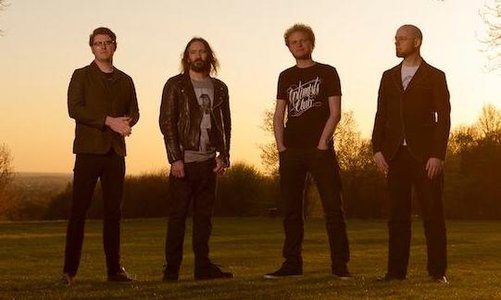
(((o))): So, first and foremost, who are Anta and what are your musical backgrounds?
Joe Garcia (Bass): We’ve all known each other for ages and have been playing in various different bands in the rather incestuous Bristol noise/rock scene for the last 10 years or so. Alex (Bertram-Powell, Organ & Synth) is also in Drokk and Boxcar Aldous Huxley. Steve (Kerrison, Guitar) is in Zun Zun Egui, Bronnt Industries Kapital, Iron Crease and formerly Safetyword. James (King, Drums) and I toured and recorded with Rose Kemp for several years.
(((o))): You had a line-up change before this record when Stephen Kerrison joined. How did that change the dynamic of the group?
James King: We stopped playing Slayer riffs when mucking about, and started playing Queen riffs instead.
(((o))): Please describe your sound in poetic form. (Haiku, rhyming couplets, acrostic, etc - take your pick)
Downtuned massive riff,
Synthesizer, heavy bass,
Amp blows up again
(((o))): Your local scene in Bristol seems very vibrant and productive at the moment. How has that impacted upon you guys?
JK: A lively music scene is defined largely by how well everyone in that scene is connected to one another. You don’t get a good scene if bands all play in a vacuum without working closely with one another. As we came to the physical aspect of making this album (recording, duplicating, etc) we were able to call in favours from just about everybody we know, people who were all more than happy to help because we’ve helped them out in the past, or whatever. Some people lent us mics. Some people lent us amps when our own ones died. Some people gave of their time and helped us in other ways. We certainly couldn’t have made this record without the wonderful scene that surrounds us, and we hope that the fact we’ve been able to record, design, duplicate, release and promote a record seemingly entirely on our own steam is a testament to how vibrant the Bristol scene truly is.
Alex Bertram-Powell: Yep. It’s hard to think of a way that the local scene has been anything but positive for us the past few years. Whenever we’ve needed to get something done there have always been supportive people around who know how to make it happen and we’re always happy to respond in kind. It’s funny because Bristol is often touted as a unique and vibrant place, but usually that’s put in terms of a very media-friendly “urban” image; some successful creative types come from here, and we get a bit of tourism out of all that, but really what makes Bristol special is the stuff you don’t see. Musicians and artists and thinkers who don’t fit in with that image the local government & stakeholders are so keen on. Consequently they don’t have its support, so they find new ways to make it happen and support each other. We hear about the city’s “independent spirit” in the press all the time, but as you can probably guess most of what that explicitly refers to has a guided walk associated with it by now. What you can’t immediately see because it isn’t behind a bit of perspex: that’s Bristol, and for the most part it’s wonderful.
(((o))): Your latest album has just come out. How does it differ from previous material in your eyes, both in terms of the end result and the writing and recording process?
JK: The first album began life as a bunch of jammed-out riffs that we then took into the studio in order to produce a demo. It was simply “we need stuff to put on the internet”, so we had a very short (2 day) session in order to do just that. We liked the results so we made it into a CD, which then became, by extension, “the first album”. We certainly didn’t set out with that in mind. The new album - we set out from the start to write an album, then when it was complete we booked studio time with the intention of recording that album. We planned it to be on vinyl from the outset, which gives clear boundaries for how long each side can be, and that definitely influenced the writing.
ABP: ‘Centurionaut’ is really the first example of us actually intending to make a record rather than throwing all our existing live material at a recording session. Although, the focus on live performance is always there when we’re writing too.
(((o))): What do you think is the most difficult challenge facing new bands starting out in the music industry today?
ABP: Aside from the obvious answer - The Music Industry - then funding. Plenty of struggling musicians could do a lot better, given the cash to pay for the manufacture and distribution of records. They're not getting that seed money from playing gigs, which is what's supposed to happen. Most low-to-mid level promoters are in the same situation, living from gig to gig trying to save money. Ideally music promotion should be a salaried institution and those promoters would have the wherewithal to support the artists they work with, which could help them develop what is essentially an enterprise - even if you're just doing it for a bit of fun. That's not going to happen anytime soon, so... small bands need to pool their funds and learn how to roll that into more funds, or find a big pile of cash in the road. That happened to me once, but I handed it in. It's a good story.
(((o))): Every band has different aims. What would have to happen for Anta to make you feel that you’d “made it”, so to speak?
JK: I don’t feel that “making it” is something that happens, really. It’s a continued effort. Once upon a time, the major labels used to sell this dream of signing a contract for a million quid and never having to work ever again. That dream wasn’t very true to start with, and I don’t think they’re even trying to peddle it anymore. There isn’t some great milestone, where up until that point it’s all hard work, and after that point it’s plain sailing. It’s always hard work; if it isn’t you’re not doing it right! But there are lots of milestones, a year ago I’d have said “getting an album out on vinyl” as the next thing to achieve, and now we’ve done that, and we’re about to tour it around the UK, my next answer would be “tour Europe”. After that? Tour further afield. Make another record. Just, basically, do more and better things, and keep doing more and better things.
ABP: I never really thought about it like that. I was just going to say “kid covers our songs on Youtube”.
(((o))): You’re given the opportunity to create your own All Tomorrow’s Parties Festival. What would be the first five bands on your list?
Swans
Goblin
Sleep
Goat
John Zorn
(((o))): This is ostensibly a column for introducing new bands. Any suggestions as to who we ought to include in the near future?
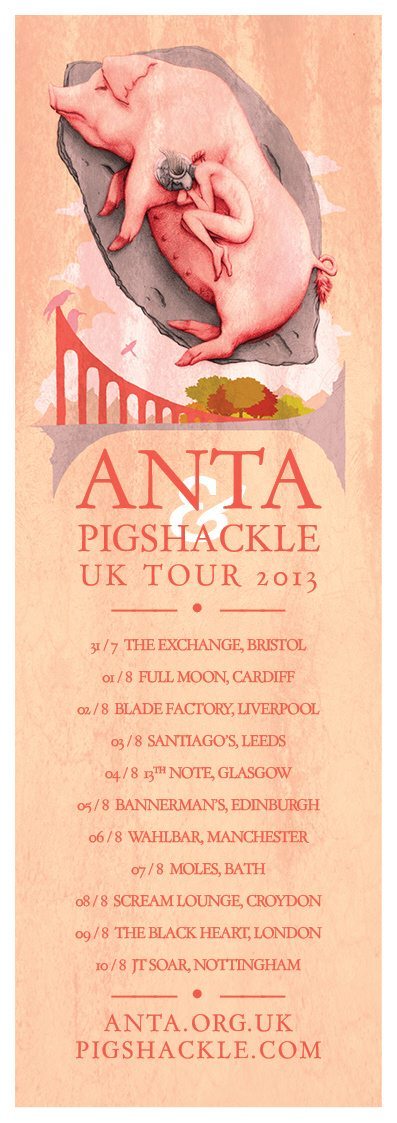
JG: Our most excellent friends Pigshackle who we are lucky enough to be touring with imminently.
(((o))): What are the band’s plans for the near future?
We’re off on tour! Did we mention? Come and see us at one of these places, soon. (Ed: Also see them at ArcTanGent with us!)
Autoheart - Soundcloud - Facebook
Recently our man Darren reviewed the new Autoheart album. To say he quite liked it is something of an understatement so we packed him off, tape recorder in hand, to talk to them & find out a bit more. Have a listen.
By Grayson Hale
Maschine are a young prog rock band from England who are about to release their debut album Rubidium on the Inside Out Music label. Grayson Hale reviewed the album recently and he took the opportunity on board to ask Luke Machin, the creative force behind Maschine, a couple of questions to find out more about the band and their music.
(((o))): Firstly, please tell us a bit about the band - who are the members and how did you come to form Maschine?
Luke: I started the band when I first came down to Brighton Institute of Modern Music (BIMM) in 2007-08. After a few different line-ups I eventually found a strong unified group of musicians that have motivation, drive and the musical ability to match. We all studied at BIMM including our current drummer James Stewart.
We recently changed drummer because Doug Hamer who plays on the album as he went to pursue Law, so we auditioned around 8 drummers and fell upon James, the only guy who could play the pieces note for note and have fun with them, putting his own stamp on the tracks. I met up with Dan Mash the bass player after we were auditioning for an end of term gig together and I immediately asked him if he wanted to join after I heard what he could do on the bass. Soon after, Dan and me were both in BIMM's house band and Georgia Lewis, our backing vocalist and keyboardist was the keys player in our house band too. After hearing what Georgia could do and hearing her voice too I soon asked her to join the group. Then finally Elliott Fuller was a good friend of ours anyway and he had seen us live a few times and I knew he was a serious guitar player, he basically has the same influences as myself so it was with ease to draft Elliott in to the final mix.
(((o))): You’re releasing your debut album, Rubidium, on Inside Out Music. What was the recording process like?
Luke: Great. Previously I had a lot experience at school since I was 12 on Logic's recording software and being in recording studios all the way through school and college. I also recorded all the guitar parts and co-produced The Tangents last release COMM so I knew that I could create a good sound in my home studio for guitar and vocals. I love to produce too, even as much as playing guitar. I find it fascinating the amount you can learn from a mix and limitless ways to record. I'm pretty good at achieving the sound I want to create on record after hearing it in my head. I could only do so much with COMM having co-produced it so now I could finally produce something full on and really get into the details of production.
When writing for the album I created decent sounding demos that included all instruments. I then sent the demos to the band and they would internalise what the basic structure of the song would be and what I would have in mind. Then I would work with each member of the band incorporating their ideas and getting prepped for recording. Firstly, we recorded the drums at Aubitt studios in Southampton where Rob Aubrey engineered and got an incredible drum sound. I received all the files back and then I produced them at my home studio in Brighton. In my studio we recorded everything else. It's a great little setup and perfect for recording guitars, vocals, bass etc. It was an amazing experience and a really fun process when all the songs start to take shape and eventually it starts to sound like an album, replacing all of the demo instruments with real ones and real musicians.
(((o))): How long have some of these songs been in the works? I’d imagine there would be at least a few you’re very happy to finally have on record?
Luke: Yeah, some of these songs have been with me for around 5 years, so it was a good day when hearing the finished product through my system. Having some songs around for that amount of time and composing others more recently, at both of those periods I have been into different styles and other genres of music. That’s one of the reasons why this album is so diverse, not that that’s a bad thing, I think it keeps it fresh and this happens a lot I guess for debut albums, unlike 2nd releases that have a lot shorter amount of time to compose and record.
 (((o))): The album art is very evocative of the music: very mechanical and calculated but also very expansive and atmospheric. Who designed it? In what ways do you feel it reflects the album’s general sound and philosophy?
Luke: I came up with the concept of the city at night. I wanted something that is vibrant and has energy running through it and I sent it over to the artist who is Thomas Ewerhard who is Inside Out Music’s in house design guy and I gave him a very short brief and he sent that back after 30 minutes or something and I was floored with how well he understood my concept and we immediately said "That’s it". The CD booklet itself has a great vibe to it too. Neons pulsating through each page giving a kind of aura that it is electrically alive, so I was very impressed and extremely happy with the way that it all turned out it's an incredible looking album.
Yeah, the artwork does reflect the sound of the band. It is very thought out and systematic but at the same time it has this raw energy that runs through it that is quite unique. It's a very unique sounding album and I think the artwork reflects that.
(((o))): The progressive music scene is convoluted with similar-sounding bands. How do you set yourselves apart?
Luke: Each band has influence from some place and we take influence from some pretty far out places. Our foundation is rock music and prog rock, but progressive rock by its very nature is a sub genre of many different styles and has no borders or boundaries. Our sound has jazz, metal, indie, pop, classical, all different styles that hint at those genres and I use the genres to compose without using the typical traits you hear from these styles. For example in classical music there are recurring themes or melodies throughout a piece of music called “leitmotifs” and “ritornellos”. I use this as something that could run through our music to tie all our melodies and sections together. I love metal because of the sheer energy that you don't get with any other genre so I incorporate the dynamics involved with metal. Most of the band likes to improvise so I write sections hinting towards jazz that allow a bit of freedom and space in a composition and all these characteristics that make up the “Maschine” sound. Having said some of these tracks were written over a period of time and this album is fairly diverse, I can already hear our sound taking shape, which is really exciting, so the next few albums you'll start to hear our unique sound grow into a more solid form of music.
(((o))): How would you describe one of Maschine’s live performances? What do you hope to bring to the experience that you can’t replicate in studio?
Luke: A Maschine concert is very powerful and extremely energetic. I think that’s what we all love the most about being in this band. Every character in the band has something unique to offer so at times it's hard for the audience to know what to look at, so I've been told. We create a real experience for the crowd and take each individual member of the audience on a journey through light and dark passages. I like to come up with different sections or put a different spin on certain parts of songs so that the audience has a unique experience over a studio record.
(((o))): Who are some of the bands that inspire you and, given the opportunity, who would you most like to share the stage with?
Luke: My main inspiration for most of my life has been Francis Dunnery (It Bites). His music has been the soundtrack to a big part of my musical journey. Another big, more recent inspiration of my musical career is Pain of Salvation. Daniel Gildenlöw's music is hard to get into at first but when you delve in deep there's something about that band that no other band has. Both Francis and Daniel aren't scared to try out different styles in their music but they utilise them in such a way that they create their own unique sound and that’s the most important thing, to create your own sound from your inspirations and hopefully that’s what I've accomplished with our debut record. I've possibly been one of the luckiest people in the world to have already played with both of my main influences, Francis and Daniel, but I would love to have a gig where Maschine support Pain of Salvation and then Francis Dunnery's It Bites to headline which can never happen of course but one day hopefully we can get something as close to that, as it's not impossible.
(((o))): The female vocals by Georgia are an interesting addition to your sound. Did you specifically want a feminine voice for some of the parts?
Luke: Yes, to my knowledge there aren't many bands currently that pull off entwining melodic, harmonised vocals. I'm a huge fan of vocal melody, I listen to a lot of older pop songs that incorporate great melody such as 'Zoom' by Fat Larry's band. I love the simplicity of the line but the melody has so much impact and extremely memorable that you immediately sing along. I've been listening to a lot of early Genesis recently and Peter Gabriel's vocal melody is so strong that those melodies remain tattooed deep inside. Dunnery is a huge Genesis fan so I guess that’s why his vocal melody is so strong. In Dunnery's solo albums there has always been very strong male and female vocal harmony and I thought it would be great to get a female voice involved that adds another dynamic to the band and Georgia has a great voice and I think our vocals work great together and match up well.
(((o))): As a survivor in the post-apocalyptic world, your car’s CD player is jammed and you have to drive around listening to the same album for the rest of your life. What album would you want it to be and why?
Luke: Personally, it would have to be Once Around the World by It Bites. Firstly, because I have a lot of good memories with that album growing up and always transports me back to my youth. Again, that album has everything, it has great vocal melodies and a very diverse array of tracks and the title track and 'Old Man and the Angel' take you on the most incredible journey. It Bites don't ram technical ability down your ear they subtly extract it in their songs and execute it in an extremely mature way. For example, I bet most of you didn't know there was something called "metric modulation" happening in 'Calling all the Heroes'. For anyone who's interested, It's a different rhythm which occurs over the original tempo called a cross rhythm creating a new tempo. Now that sounds like a technical thing but it's so subtly put in that it's not about the technical ability, they use it as a tool to vary their music and that for me not showing off and never speaking about these things but knowing what they're doing is a very cool thing which I will never get bored of.
(((o))): Thank you for taking the time to speak with me and congratulations on releasing a truly great album.
Luke: Thank you, it was a pleasure!
Read Grayson's review of Rubidium here.
The Pulmonic
Bandcamp | Facebook | Soundcloud | Twitter
The Pulmonic are a new experimental rock band from London. We spoke to drummer Niall Brennan to get the lowdown...
(((o))): So, first and foremost, who are Pulmonic and what are your musical backgrounds?
All three of us have very diverse backgrounds and cultures. We have all played a variety of different music and styles, and are very open to new ideas. I come from London, by way of Northern Ireland. Filipe from Portugal and Graham is from Australia.
We all have different tastes in music which makes it fantastic to play as everyone is throwing lots of ideas in the pot. Our common ground seems to be playing loud.
(((o))): How did the band come together?
Graham and I met through a mutual friend at a Slint gig, had a jam and then Filipe joined a little later.
(((o))): Please describe your sound in poetic form. (Haiku, rhyming couplets, acrostic, etc - take your pick)
How about a quote?
“I would like our act to be like a thunderstorm” (John Bonham)
(((o))): Has your local music scene had any impact on you as a band?
As far as I can see, the music scene in London is really bad. Most promoters don’t do anything to help (i.e. by actually promoting their gigs) and other bands see you as competition. In one sense its good because out of the fray there will be bands who will fight it to the top, which means there will always be good bands coming out of the country. On the other hand a lot of good bands will get lost because of the lack of a real scene.
(((o))): I believe you’re in the planning stages for an EP. Can you tell us a little bit about your plans? Any songs that are definitely going to make the cut, etc?
‘Headlights’ and maybe the new one we jammed out in the last rehearsal. The writing process for structure and tunes tends to be very fast and then we refine, refine, refine.
(((o))): What do you think is the most difficult challenge facing new bands starting out in the music industry today?
There is no industry or the industry doesn’t know what it is yet. Most bands in the future will be doing it themselves or using music in different ways to make a living. The internet is a double edged sword (easy to share and promote but hard to sell your tunes), but at the moment I think we’re in a transitional phase.
(((o))): Every band has different aims. What would have to happen for you to make you feel that you’d “made it”, so to speak?
Being able to make enough revenue from merch that would allow us to release our own records and tour Europe and the States. Having one of our songs associated to a defining moment in history, and in the end just being a well respected band.
(((o))): We have another column called Echoes of the Past in which we get people to write about albums that have particularly influenced them. What would you guys choose to write about in that column?
Led Zeppelin - ‘Led Zeppelin BBC Sessions’
It’s a live album, gives you a real idea of how amazing they could be. Obviously being a hard hitting drummer like me listening to a track like ‘Thank You’ where the drums grabs the rest of the band by the scruff of neck and says “fuck it I want to go to this place”, still makes me smile.
Billy Cobham – ‘Spectrum’
When I first heard this I didn’t know what the hell was going on, blew my tiny mind as a kid. Still listen to it today, do the dishes to it, play along to it…don’t have sex to it though, girls don’t seem to like jazz fusion crazy drumming whilst you’re getting your freak on.
Christian Scott – ‘Yesterday you said tomorrow’
Listen to it, that’s all I’m going to say.
Glenn Branca - ‘The Ascension’
Dissonance is bliss. Leans more towards classical then rock music.
(((o))): This is ostensibly a column for introducing new bands. Any suggestions as to who we ought to include in the near future?
I am very impressed with a black metal band called Leucosis. They are unsigned, only have around 400 likes in their FB page and sound amazing. Also Written in Waters and Silver Arm.
(((o))): What are the band’s plans for the near future?
We would like to mature our song-writing skills and release and EP this year. We are also looking to do a small tour of the UK as playing in London is becoming a drag and there are loads of people we would like to get out and play to. We are also getting a little promo video together.
Gareth is from the Bristol area and has been playing bass from an early age. He was in a band known as Lillydamwhite who were a notable Bristol band back in the day. Gareth also has been good friends with cult Bristol band The Heads for many years. In fact he engineered their 'Under the Stress of a Headlong Dive' LP. Lillydamwhite actually shared a couple of seven inch records with the band, one of which in 1997 was the very first release from Rocket Recordings, who have recently released the wildly successful Goat album. In more recent times Gareth has worked for various bands on the road such as High on Fire, Boredoms and also Melvins who Gareth has booked to play at Bristol venues the Croft and the Exchange several times over the past two or three years. A live recording of one of these shows is upcoming on limited vinyl on our Greasy Trucker label sometime soon.
(((o))): Your debut full-length came out last year. Tell us a little bit about it...
(((o))): You also play live with Paul Allen from The Heads as Anthroprophh I believe. How did that come about? How does your approach differ for those gigs?
Big Naturals were originally a three piece with Prof (Paul Allen) on guitar and electronics, for almost a year I think, so he's played with the band before and he'd been holed up doing his solo album and I think he wanted to get out and play, so he started getting up with us at gigs and doing the last few minutes of the set with us which would be a huge blow out and then he had a couple of launch gigs booked for his album launch and he asked us to back him up. That meant adapting his album material for a three piece which was quite tricky because Paul's record is actually quite introspective in some ways, but when the three of us play it's actually quite frenzied so the songs changed a bit and I think that we all had to adapt. In the Big Naturals Gareth and I had got used to playing as if we're at gunpoint, playing for our lives and Prof would get on that vibe, so the first few gigs must have sounded a bit schizophrenic or something. Gradually over the last six months we've started to level some of the dynamics out and I think we're starting to learn how to let it breathe a bit, the material has changed a bit too so it's more like the three of us as opposed to us trying to adapt Prof's solo album.
(((o))): What do you think is the most difficult challenge facing new bands starting out in the music industry today?
(((o))): Every band has different aims. What would have to happen for Big Naturals to make you feel that you’d “made it”, so to speak?
(((o))): Yours has to be one of the worst band names to google in the world. Have there ever been any unfortunate misunderstandings that have arisen as a result of it?
(((o))): We have another column called Echoes of the Past in which we get people to write about albums that have particularly influenced them. What would you guys choose to write about in that column?
(((o))): This is ostensibly a column for introducing new bands. Any suggestions as to who we ought to include in the near future?
(((o))): What are the band’s plans for the near future?
(((O))) FEATURED INTERVIEW
I’ve had some real problems in my lifetime dealing and living with mental health issues. I’ve not really felt comfortable talking about it until more recently. I feel like it’s important to talk about these things because people consider them ‘awkward’ topics. I used writing music as a means to channel it and I felt a lot better for writing music and going to shows and being able to put my time and energy into something I loved so much really helped me.