(((O))) REVIEWS
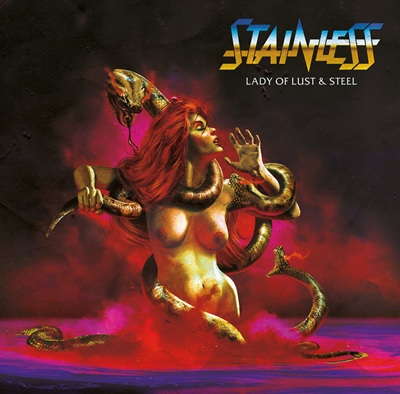
Stainless – Lady of Lust & Steel
This is Stainless’ moment. Their time. One of the best hard‑rock debuts I’ve heard this year. Give them a thunderous round of applause. They’ve delivered a monster of an album to kick off the summer with a bang.

It is not often that you will find a band that has the ability, energy, and forethought to create an epic song that will have a run time of over 33 minutes. It is a bold challenge and I think very few bands could actually succeed in creating an entertaining as well as engaging song. What is the process that even goes into trying to achieve such a significant feat? Does it start out as a jam session that morphs into a colossal musical achievement? I don’t have the answers to these questions, but what I do know is We All Die (Laughing) have found a way to create an opus that keeps the listener engaged, entertained, and immersed in a grand song that when it finally ends, leaves the listener wishing for more.
We All Die (Laughing) is multi-instrumentalist Déh (Maladie, C.O.A.G.) and Arno Strobl (6:33, Carnival In Coal). Thoughtscanning is the name of this monolith and it is one of the most interesting songs I have heard in a long time. Categorizing this song is difficult because as one can imagine in 33 minutes the song moves through doom, post-metal, progressive metal and much more. Starting off on a slow pace with a comfortable doom appeal into a guitar intro straight from the blues handbook. It is an interesting opening as you just can’t quite feel where the song is headed as the clean brooding vocals begin. Throughout the song the vocals alternate between clean singing, screams, growls and even some cries that ebb and flow with the mood of the song and evoke depression, anger and rage with beauty and confidence. Thoughtscanning transitions from the slow intro to the mid paced middle of the song, alternating back and forth at times from melancholy to pure anger. At the 16:30 mark the songs seems to be coming to a final climax but transitions sharply back into despondency and aggression as the song continues down it’s dark path. As the song reaches the outro it’s scope is solidly in view and the album finishes just as it began, full of melancholy.
I will say that Thoughtscanning is one of the harder albums I have had to review in a long time. The single song was not something that I was expecting when I chose to review this album but it has turned out to be one of the most satisfying albums I have come across. This song, epic as it may be, is so well put together that you will find yourself forgetting how long it is as you become immersed in the sound. An ambitious song that doesn’t challenge the listener’s patience but rewards them with a strikingly solid genre bending accomplishment of massive proportions.
Do yourself a favor and take the time to listen to this album/song from We All Die (Laughing) you will not be disappointed. I am confident you will find yourself, like me, listening to it over and over again forgetting just how long it is and immersing yourself in the journey.

By Rob Thompson
Oscillator Records have just released the third full length album from Concave, entitled Time Is The Fire In Which We Burn. Concave is the solo instrumental project of James Findlay a multi-talented musician who for the past few years has written some excellent tracks which mix metal, post-rock and indie together; think of a mash-up between Pelican, Don Caballero, High On Fire, Built To Spill and Isis. The nine tracks on offer here clock in at around 37 minutes and present a more cohesive sound set than it's predecessor, 2011's History Is The Future.
Time Is The Fire In Which We Burn is a difficult album to digest and admittedly the first time I listened to it I wasn’t exactly in the mood to hear it. I’d decided to listen to the back catalogue of many great bands from my youth, mostly from the NWOBHM genre, and had been doing so immediately before I flipped on Time Is The Fire In Which We Burn and perhaps my tiny metal mind was still processing greats such as Priest that I found myself making unfair comparisons; in other words my brain wasn’t calibrated to absorb the songs on offer here. After shaking my head and clearing the contents, in a similar way to an Etch-a-Sketch, I persevered and upon the second and third listens I began to appreciate just what a good record this actually is. The sonic fury of Concave with heavy guitars, thundering drums and creative bass lines is interspersed with thoughtful melodies. All are conveyed through effects laden guitars that complete the soundscape of this instrumental rock music.
Each of Concaves previous releases show a progression and build upon each other. The release of A Journal Of Civilization in 2006, a self recorded and self released effort that showed promise for the future and after a long silence a major leap forward was taken and a clearer, more concise picture of the Concave sound emerged with the 2011 release of History Is The Future. Featuring six tracks of noisy post-rock that was recorded and co-produced by Aaron Rauber at Franklin Street Studio in Monterey, CA, this album again tipped its hat to bands like Hum and Pelican but had other influences like Dianogah and Don Caballero shining through.
Back to the present day and Time Is The Fire In Which We Burn is definitely a grower. Some albums are immediate but for me the best records don’t explode in your face like an atomic blast, rather you get into them over time. You notice the nuances, the extra dimensions, the tones and subtleties which you don't pick up when the notes first enter your earholes. I think that listening to classic, familiar tracks from the past, as I was at the time, then trying to “get” this album, then putting on yet another formative album from my youth, such as Painkiller, was a fairly ill thought through idea. This is exactly why my first listen fell flat.
Another interesting concept I noticed was that the ambience of the album is created from not only the noises contained within each track but from the way the tracks are arranged and ordered. This record undulates, it ebbs and flows and that in itself creates an atmosphere. This is what sets this release apart from say the songs in the typical black metal release where, in my opinion, each song tries to incorporate the contrast of lights and shade, then so does the next song and the next, etc. Time Is The Fire In Which We Burn uses the entire album to do this. And for the most part Findlay appears to seem happy enough to let the songs saunter off in their own direction, multiple climaxes build on multiple levels and harmonies. For sure, this isn’t easy listening as the catchy hooks, chorus and riffs aren't immediately apparent and this may put the casual listener off but like anything if you’re prepared to commit and get yourself in the correct frame of mind then the anodyne music is immersive, memorable and hypnotic. The overall mood and feel of the album is understated and yet penetrating; this is ultimately why Concave has created a stand out album. Each song feels restful and sedate but with inferred hostility locked tightly together.
Top tracks on the album, in my opinion, are the 'Keeping Score' and 'Bastard's Smile'. Take a listen and leave a comment letting us know what you think.

By Edgärd Reyes
Have you ever heard an album that you don't know how to describe? Well, when I found Waking Up To The Fire of North American band Drop Electric I didn't find the words to accurately say what it made me feel. It was until the 10th time that it started to be clear to me what these musicians are doing and it’s pretty good. I tried to go deeper into their music and history and even when I did not find much, I understood that having multicultural members is the reason their music is that different.
Waking Up To The Fire is their second album but first one released by Lefse Records; for this effort they decided to change their perspective, fans will notice that the dramatic post-rock/ambient soundscapes disappeared and instead we find a bunch of electronic atmospheres blended with distorted beats, tribal percussions and now in the foreground the structured and dynamic voice of Kristina Reznikov that leads the Drop Electric’s project into a world full of darkness and desperation.
'Other Planets' is the opener, a song that welcomes us with a solemn atmosphere that combined with Reznikov’s voice sets the perfect start. It is followed by the song that gives the title to this album, where synths, some monotone loops and distorted voices create a catchy melody. The third track is 'Blue Dream', a synth-pop melody that even when its sound is happy and danceable, hides a somber hint that is perfectly pictured in the official video that was produced as promotion for this LP.
'Wack Rapper Meets Defeat' comes as an instrumental interlude that lasts only a little more than a minute. Some trip-hop can be listened in it. After this experimental break 'Higgs Boson' fills the air with a nostalgic and reflective ambient that extends to 'The Coming Storm', another instrumental interlude, and to 'Carl Pagan' a song that seems slower than it really is, the voice sounds extremely sad and expresive but doesn't fit the rest of the song because the beats are too fast and noisy.
At the end of that confusing moment 'Starfox' begins with an explosion of synthesized beats that try to hide the anguish of the vocals and actually make us forget about the almost unrecognizable lyrics and get us to dance for a while. 'Lucille' has an intense electro pop feel, the driving beat is good but at this point the overuse of keyboards start to be too repetitive and again the lyrics can't be completly understood. The 10th track of the album is 'Stack Overflow', a piece that uses too many elements and I honestly think that the album would be better without this odd track.
The last cut of this record is called 'Among Dying Dreams', an instrumental song that reminds us of their debut, its peaceful atmosphere and piano crescendos deliver a quite remarkable melody, it is simply the most beautiful song of the album.
With Waking Up To The Fire, Drop Electric showed that they did not want to repeat what they did in their debut, the question now is ¿For their third album will they try a new sound or will they go back to their roots and recover the Post-Rock influences?
By Willie Cross
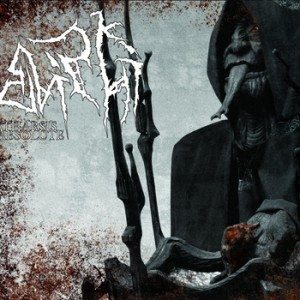
A critical act, large or small, can be crucial to realigning or reorganizing one’s thought process. This applies to most things in life, but as it pertains to this article, it refers specifically to music. On the battle scarred warfront of American black metal, or USBM, the marks of progress are constantly rehashed or thrown aside. It takes an album like Avichi’s Catharsis Absolute to allow USBM’s devotees to once again see what it is to progress, yet remain true to the roots of the admittedly foreign genre of black metal.
Avichi is Andrew “Aamonael” Markuszewski, a metal veteran once deeply involved in Nachtmystium and currently putting in work for Lord Mantis. Avichi is Aamonael’s solitary pursuit for perfection and progress in black metal. In the tradition of one man black metal outfits Xasthar and Leviathan, Avichi allows Aamonael’s supreme talent and proficiency to flourish on its own. Catharsis Absolute is a strong progression over Avichi’s previous releases The Devil’s Fractal (2011) and The Divine Tragedy (2007), both solid releases themselves.
The album was reportedly fraught with delays in release date, enduring seemingly endless returns to Aamonael’s chalkboard. In the end there seems to have been no other option, as Catharsis Absolute very plainly reflects Aamonael’s strife for perfection. The album opens with ‘Repercussion’, a haunting track occupied only by a piano progression fit for the most haunting horror films. It acts as a gentle but foreboding dip into the murky waters of Catharsis Absolute, which immediately juxtaposes into the fury of ‘Flames In My Eyes’.
‘Flames In My Eyes’ sets the pace for the first half of the album with sweeping tremolo guitars reminiscent of Wolves In The Throne Room and deep choral backing vocals. Its unflinching ferocity doesn’t quit for the entire length of the song, which slips into the album’s best track, ‘Lightweaver’. The track provides a great example for Catharsis Absolute’s strongest trait: variation. Aamonael doesn’t allow the repetitiveness some black metal albums encounter to define his music. ‘Lightweaver’ switches between vocally driven passages to charging Hellenic black metal inspired verses.
The following songs, ‘Voice of Intuition’ and ‘All Gods Fall’, push further into Aamonael’s variation and experimentation. ‘Voice of Intuition’ is a wrathful track, marked by complex guitar progressions and Aamonael’s grisly vocals. ‘All Gods Fall’ is a desolate, lengthy track that builds from a guitar riff into a chugging, recurrent nearly thirteen minute long saga. Aamonael switches vocals style to something closer to howling to match the apocalyptic landscape of the track.
The album closes with the title track, ‘Catharsis Absolute’. Aamonael once again employs the piano theme from the opening song. Piano is an unlikely instrument to make use of on its own in a black metal album, but the song expands upon 'Repercussion' to create something even more haunting. His utilization of a solitary piano progression is an ideal metaphor for Avichi’s music: something profound and arcane can be conjured through the power of a single individual or instrument. And Catharsis Absolute stands as a testament to what patience, skill and the journey for perfection can lead to.

Ambient/chillout/downbeat music brings the name of Der Waldläufer, an artist able to create amazing soundscapes full of doses of nostalgia, color and universal tonality.
If you don't know who he is, Der Waldläufer is an independent artist from Kassel, Germany, who started producing his music in 2010 when he self-released the debut album Completely Near & Far Away. Those of you that had the occasion to listen to it should have noticed the ability that the artist has to bring you far away with his music that exhorts you to take the most relaxing and peaceful journey you can imagine. As Der Waldläufer says, his music “is always influenced by the dialogue between nature & technique”. Think about it and I'm sure that you cannot disagree. Just press play and in a bunch of second you are elsewhere and the nature will display the most gorgeous scenario. The peaceful journey of Completely Near & Far Away continues with the second album of the German musician titled Wanderlust.
Wanderlust is a beautiful album with a slow pace and a sense of vast spaces and light with electronic beats here and there that give a bit of rhythm to the overall atmosphere. 'En Route' is just an example of what I'm saying. The sound is more or less the same through all the 13 songs but here the electronic touch pushes the boundaries of ambient music to create something different. 'Eclipse Illumina' follows the same path of 'En Route' with a deep sound as intro that gently will lead you into the beauty of the ocean till you'll get lost in it. I particularly like the central part of this track. The nature and space that Der Waldläufer loves so much are here, perfectly blended and transformed into evocative notes.
The mesmerizing soundscapes of Wanderlust evolve song by song because each time they take the shape you want; they could recall a bright sunrise or a red-tone sunset, or the view of the rain through your window. 'Innercircle', 'Sleepover', 'Naranja Nubis', just to mention some song titles, are all example of the evocative power that Wanderlust has. The shape that those songs possess it's up to you.
'Flores' is one of my favorite track from Wanderlust because I feel in it a sort of nostalgia or melancholia and therefore is to me deeper than the other songs. Wanderlust is a great album where the lack of variation is the only weak point, if it can be considered really a weakness, and for this reason I really like the acoustic elements that the artist introduced, as something artificial in the beautiful and immaculate nature that the Der Waldläufer's ethereal atmospheres evoke.
I cannot say when is the right moment to listen to this album but every time you feel the need of a slow paced emotional journey, Wanderlust is there for you.
By Rob Thompson
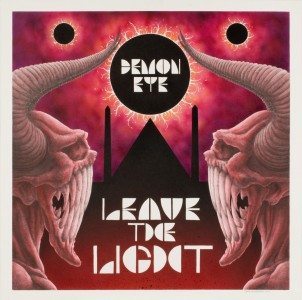
Taking their name from one of the darker tracks from Deep Purple’s back catalogue, Demon Eye currently consist of four men, two New Yorkers, two Southerners, with one shared love for old school metal. How best to describe the sound? Well, have you ever wondered what Deep Purple would sound like if they decided to play Black Sabbath covers while drinking Trooper beer? If so then you need to stop taking those types of drugs and start listening to Demon Eye. Demon Eye use a simple, but effective formula:
A * B + (C + D) = E
where:
A = colossal Sabbath riffs on each song
B = understated Ozzy influenced vocals
C = the fist banging shred of early ‘Maiden
D = Purple’s heavy grooves and thunder rhythms
E = an 8 / 10 rating from me.
The guys are making a name for themselves after sharing the stage with the likes of Loincloth, Mike Scheidt (YOB/Vohl), The Sword, Hour of 13, Pilgrim, Samothrace, Kyng, Uzala, Mount Salem, Colossus, Thunderlip, Salvación, Horseskull, and Solar Halos.
The first thing that strikes you about Leave The Light is the artwork. Two gruesome demons on each side of the cover, horns and massive pointed teeth snarl into the distance. Discernible is the silhouette of a pyramid and a hole in the universe. Perhaps they entered our dimension through this hole? Or perhaps they're leaving our dimension after annihilating it - returning back to their satanic home, dancing with glee? Who knows, but it certainly sets the scene for the music.
Generally, throughout the album the vocals are really understated in the overall mix and its actually quite difficult to discern the actual words themselves. However, I’m going to guess that they’re about the occult and all manner of evil goings on. ‘Hecate’ kicks off proceedings and the melodic almost stoner type of riff chugs into life with enough tempo changes and variation to amuse the listener. Flourishes of Maiden are present with a change in pace halfway through this first track. This opening song is the blueprint for all that comes after. ‘Shades of Black’ introduces us to screeching solos, while ‘Secret Sect’ is much more NWOBHM influenced, with the riffs being some of the best on the album. Excellent harmonising on the guitars provide a nice foundation for the complementary solos. ‘Adversary’ follows with its descending riffs which bounce around completing the excellent percussive work which. The track also includes the use of cow bells (how can you not like a track with cow bells in it). What a groovy track! ‘Edge of a Knife’ follows with its cheeky guitar breaks and use of an acoustic guitar. ‘Witch's Blood’ leads into ‘Fires of Abalam’ which channels the spirit of Sabbath. The band must have sacrificed a goat or chicken or two at the altar of Iommi to steal a few of his awesome riffs for this song. ‘Devil Knows the Truth’ has more of a vocal emphasis and ‘The Banishing’ is kind of a spaced out cosmic ballad with a rather catchy chorus. ‘From Beyond’ and then ‘Silent One’ end the album.
Overall a solid release with dark thick riffs, Sabbath solos and Maiden influences on every track. Slightly doomy and stoner at times these guys stand out from the recent onslaught of retro seventies bands with the strong songwriting on display. My only criticism is that it's probably 2 -3 songs too long but that’s excusable. With an official release date of January 24th this diabolic hard rocker should be on your Christmas wish list.

“Surf pop”. I am aware of the existence of this genre, but I know absolutely nothing about it. Okay, I know some Dick Dale, basically because Quentin Tarantino glorified the man forever with the use of ‘Misirlou’ in the opening of Pulp Fiction, and I know the Beach Boys obviously, but that’s about it. Oh and apparently some Pixies songs can be considered to be surf pop/rock. So why would I pick the new Deathcats EP The Raddest for reviewing? Well, firstly the band is from Glasgow and as I’m living in Scotland, Scottish music always grabs my attention and secondly because I’ve heard some good things about this EP recently on various social media networks.
So these self-confessed noise makers and lovers of cats (who doesn’t love cats these days?) bring to us three tracks and one thing is very clear after listening to The Raddest a couple of times: this is a lot of fun! Music is supposed to create emotions and in the case of the Deathcats it makes me over the top joyful and happy. It’s toe-tappingly good stuff, which kicks off with the short track ‘I Wish It Was Summer’, with contagious lyrics wishing it was summer, which is something every person living in Scotland wishes for every bloody day of the year! The sound is recognisable, having that surf pop characteristic Fender reverb. It’s nothing too complicated but goddamn, this is so much fun!
The next track ‘Surfing In My Head’ starts with those Beach Boys sounding harmonies, and actually make me think of the great U.N.P.O.C., who now I think about it has quite a bit of a surf pop sound on his only record to date Fifth Column. Anyway, this is another great and cheerful track. “There’s something in my head tonight” sings the vocalist, and it doesn’t need an intellectual to conclude that this surfing is exactly what he wants in his head. The last track on this EP ‘Cowabunga Beach Party’ is the longest clocking in just under 5 minutes and continues with the joyful cheery surf sound, bringing a bit more surf punk to the mix as well. There’s even a bit of an Arctic Monkeys sound in here at times, but sort of midway through the sound of waves are heard with, wait, is that Dick Dale I’m hearing on guitar here? It could very well be!
This EP is so much FUN! It is an eye opener for me, for someone who usually listens to various kinds of metal, noise and prog and I am definitely going to see these guys live when I get a chance. This is music for dancing to and getting a huge grin on your face while you’re at it. Get this EP now through the excellent DIY label Fuzzkill Records. Support your local scene!
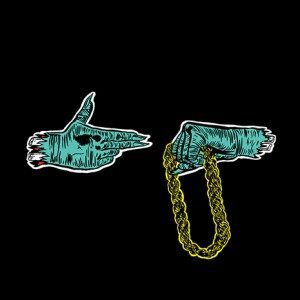
Run the Jewels for any newcomers is Rapper/producer El-P & Killer Mike. I can't really express my appreciation of El-P without turning this review into an essay. Way back in 199something is when I first heard him with the ground breaking Indelible MC's/Company Flow and spearheading the Rawkus records domination of independent hip hop.
After splitting from the Rawkus label, El-P founded the Definitive Jux records, creating another movement of forward thinking rap music and releases. Although Company Flow disbanded El-P's solo work has seen him continue to stand apart and is the most consistent hip hop artist of recent times.
My faith and interest in hip hop has faltered over the years but El-P releases have always sparked my interest and never disappointed. As my hip hop credentials haven't been up to scratch (pun not intended!), when El, got involved with Killer Mike to produce his 'R.A.P Music' album I didn't know much of his previous work. Although that changed with Killer Mike proving to be one of the most impressive rappers I'd heard in years.
So when Run The Jewels was announced anticipation was high. The fact the album was released digitally for free last year with a limited physical release via Fools Gold was most welcome. However It was also surprising, given how good it is and as much as I wanted to grab a cd copy U.S shipping costs proved prohibitive. Step in Big Dada records who are releasing a deluxe version on all formats and will make distribution throughout Europe much easier.
The album itself is the one Hip Hop release I included in my end of year list and has been widely acclaimed. What makes it special is apart from the typically futuristic funk beats produced by El, is the chemistry between him and Mike. Their flows and styles compliment each other perfectly and they sound like they have been together for decades. Killer Mike's southern drawl battle rhymes bouncing off El's NY wiseguy style and vice versa. It's so damn good people might be disappointed when either next releases a solo album and the twin attack isn't flowing over all tracks.
The track itself "Run the Jewels" introduces us to their world of ultra-violence, hallucinogenics and good times. Straight away it's apparent this is special with El' spitting syllables at a furious rate and Mike letting his considerable presence be felt. The entire album is a condensed non stop quality affair no filler, no unneeded interludes just verse after verse of quotable rhymes and bass heavy beats. If I had to single out more, "Banana Clipper" is an obvious favourite and contains the classic "producer gave me a beat, said it's the beat of the year, I said El-p didn't do it so get the fuck out of here" from Mike. "Sea legs" is a slower paced anthem filled with atmospheric flourishes. "Job Well Done" is just crying out to be juggled on turntables with it's aggressive opening lines, and even legend Prince Paul has a cameo as Chest Rockwell on "Twin Hype Back".
Enough reasons to buy it if you haven't already, but the Big Dada release includes exclusive remixes and a specially recorded bonus track "Pew, Pew, Pew" featuring alien turntablalist maestro Q-bert. With a range of various formats and bundles available there is even more reason to pick this up. Ninja Tune/ Big Dada have some of the best prices and postage rates of any label I've seen also so get on it.
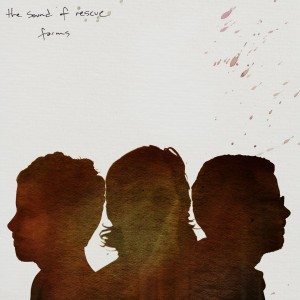
“We are simply 3 brothers intent on making inspiring and engaging music. We try our best to write music and make sounds that reflect both the joy of today and the hope of tomorrow…you will not find the production, the excess, or the artificial in this music. It is our hope that you will find the same kind of happiness in our songs that we felt while writing and recording them in our own unique fashion.”
Don't you already love them? Brothers Michael, Andrew and Stephen Tasselmyer are from Baltimore, MD, and together they are The Sound of Rescue.
From 2010 to date these three guys have released four albums and one single - “a polytonal and ambiguous mess” - and if you know them you're already in love with their experimental, ambient and post-rock sound. In case you still don't know who they are – and you are very lucky to have landed on this page then – I'll bring you into their music world starting from the latest episode because they have just released their fifth full-length album that is amazingly beautiful.
The New Year has just started and there are so many amazing releases coming our way this year and Forms is definitely among the best ones. The new record from The Sound of Rescue is a lovely journey of approximately 40 minutes through greenish-blue landscapes under a bright sun. Getting excited for instrumental/ambient records is hard but it easily happens in front of artists with this kind of creative rock sensibility that The Sound of Rescue demonstrate through the 10 tracks that compose Forms.
Easily named with numbers from 1 to ten, each song flows softly into the following one like the album was a unique great diamond and each song a piece of it that makes the whole composition shining but having also it's own bright light.
The first track is captivating and made me curious to know where the rest of the record could go. It's a good teaser. But the next track, 'ii', really made me come to attention by somehow beautifully combining rich guitars, electronic beats and post-rocky riffs. The intro of 'iii' is an incredible sonic journey with some dark vein also into it and gets you really excited about what’s possible with the rest of the tracks by letting you know loud and clear, this isn’t going to be a let down.
The following 'iv' and 'v' continue on the same path of the previous track; it's with 'vi' that the gorgeous green and blue landscapes become something different and start getting smaller surrounding the listener. Guitar reverbs and amazingly great drones are the protagonist of this track to create something really unique. The spread and echoing vocals give a surreal touch to the whole atmosphere and the greenish-blue valleys take the shape of gigantic masses of water moving towards you.
Forms reaches its peak with 'vi' but it doesn't decline after it because 'vii' is a sort of prosecution of the previous track and together they are stunning.
I've listened to Forms countless of time and I think that each song sets the plate emotionally, they are each moving and beautiful, not incomplete but they yet leave room for the listener to reinterpret them.
'x' is a perfect closing crescendo for the album and it sounds like an orchestra breathing or an echo crossing an abyss.
The mesmerizing sounds of Forms captivate immediately broadcasting a sound that hypnotically transports listeners into another dimension of worship, encounter and awareness.
The new record from the three brothers ends here and from now on Baltimore has The Sound of Rescue.
Highly recommended.
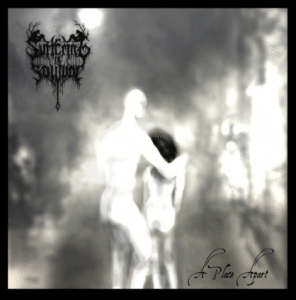
With a name like Suffering In Solitude with its spikier than thou logo and the descriptive term of “Depressive post black metalists” being offered, it’s fair to say I was expecting some depressively bleak aggressive blasting.
This couldn’t be further from the truth.
But to back track a moment.
The afore mentioned Suffering In Solitude came into being in 2009 as the brain child of Californian native Christopher A. who has since recruited a few extra members for this their debut album A Place Apart.
Which although it is described as “six sprawling odes of grief, longing, broken promises, and mental breakdowns” is actually a very pleasant experience, a predominantly instrumental affair with melodic guitars at the forefront painting a soundscape that is probably supposed to suggest isolation but to me comes across as uplifting soundscapes (possibly to stark beautiful locations).
That would be the “post” fan in me so I will say it’s all down to interpretation, especially as I lean towards being a post-rock rather than black metal fan so I picked up on the uplifting traits straight away.
That being said it’s not all windswept gazing as tracks such as 'Entrance' and 'Exit (Time Lost)' include segments of black metal blasting and scathing vocals but they are wrapped up in the afore mentioned “post” melodic guitar lines to be genuinely abrasive.
With a very lo-fi production that adds to the charm it is a well-crafted effort that is essentially defined by your pre-existing frames of reference.
On a side note for some reason the intro to the final track 'Sunken, Placed Apart' reminds me of Wham's ‘Last Christmas’ (I’ll get my coat).
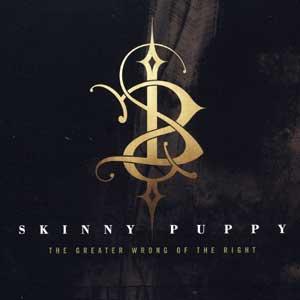
I wanted to review this ten-year-anniversary reissue of Skinny Puppy’s comeback album
partly because I remember such ambivalence about their 2004 return at the time. First, being so
excited about any new activity, having only discovered the band’s trippy, dark industrial dystopia
after their apparently terminal demise; and then subsequently being pretty disappointed on hearing
this album (and barely listening to it since). Then, I was skeptical about the band’s world tour,
but dutifully bought a ticket to their show at the London Astoria even though I kind of expected
something horrible, and was blown away by a spectacular expedition through the dark alleyways
and subterranean tunnels of the band’s back catalogue, with the new album (in my experience at
least) scarcely referenced. So it seemed that for me, Skinny Puppy were always best listened to
somehow from a distance, years after the fact: time to revisit The Greater Wrong of the Right.
At an appropriate volume, the opening of first track ‘I’mmortal’ is pleasingly disorienting in
familiar style, with hissing static building and giving way to a jerky rhythm, the threat of convulsion and
collapse balanced with steely, undead compulsion. As the track develops, it becomes clear that the
2004 reanimation has Skinny Puppy, as before, grafting electronic dance beats with gothic synth
swirls and industrial menace, though here assimilating an updated drum’n’bass sound, in a similar
vein to Pitchshifter’s attempts at enlivening distorted metal guitar sound with urban dance rhythms.
The vocals, treated but clearly audible in the repeated chorus line “just looking for something” are
quite a leap from Ogre’s earlier unhinged barking. Though the electronic modification of the voice
itself fits just as well with the sonic post-industrial, cyborg dystopia, it has the effect of making
the lyrics - gasp! - easy to follow. There are even some complete sentences!
‘Pro-Test’ has the familiar big, big drums, stabs of guitar distortion and floating, ominous synths which jolt
into freefall before being recombined into the industrial dance beat, but again the voice jars with what
otherwise seems like development from earlier Skinny Puppy. This time Ogre’s vocal delivery is all
streamlined wordplay flowing more like toasting or rapping than his earlier deliberately abrupt snarl. On
‘Goneja’, the same flowing lyrical delivery appears as on ‘Pro-Test,’ after a classic Skinny Puppy sci-fi synth
intro breaking into an all-over-the-place beat created by electronic samples, keyboards and treated
percussion. But while I specifically remember being turned off ten years ago by a cheesy rapid-fire and
repetitive chat, listening again reveals a catchy rhythm and melody that seemingly embedded themselves
like a parasite years ago and lay dormant, ready to be reactivated.
However, for most of the record I find the vocals grate and obstruct full enjoyment of the sounds. While I
admittedly prefer the earlier style, the issue is not so much the phrasing or accent of the voice itself, but the
fact that the vocal line then has the responsibility of leading in a much more conventional pop-song style,
rather than being left submerged in the background to shriek of poisoned and perverted nature from an
iron cage of neglect and abuse. In ‘Use Less’ the message has already been hammered home in the title of
‘Use Less’, even before the lyrical lecture begins, 18 seconds into the song. Far more interesting are the
vocals that take a slightly more restrained role, such as later in the same song when a shouting but struggling
voice strains to be heard over a massed but still somehow indistinct chorus, or in the evocative last parts
of ‘Past Present,’ where cyborg wails mesh with the synths and relentless beats to occupy an uncanny space
between the severe industrial austerity and the trippy, hedonist abandon of a
psytrance rave.
Skinny Puppy’s signature style was always an experimental melange of heavily-processed
and enormous-sounding drums, unnerving and disconnected samples from horror movies, opulent
synth melodies and barked vocals. It seems unfair to criticise such an innovative and wildly creative
band for changing style, experimenting and updating their references, particularly given the
necessity of personnel changes since the tragic death of Dwayne Goettel in 1995. But translated
from the 80s and early 90s to the early 21st should sound exactly like that again, or if they should be
fiddling with the latest in studio gadgetry and sounds from more contemporary musical styles. ‘Ghostaman’,
for example, has a familiar soundscapey introduction, but the beat which enters feels rushed, perhaps
anxious to fit in with more modern dance culture, rather than continuing the unhurried, almost stately yet
relentless drill rhythms married with ethereal synth cycles which made Skinny Puppy tracks from
‘Smothered Hope’ (1982) through ‘Deep Down Trauma Hounds’ (1987) and all the way to ‘Inquisition’ (1992)
so darkly compelling and also so danceable.
The dynamics of The Greater Wrong of the Right in comparison to these previous excursions
seem a little flat, and despite the more atmospheric start to ‘Neuwerld’ there’s not much variation in
the tempo. This might in part be down to the production, or a desire to fit in as many bits and pieces
as possible, rather than create a dense and threatening but still varied atmosphere haunted by
keyboard melodies. It might be that there was a little too much concern over the album being ready
for what was a rabidly anticipated return amongst the diehard fans at least, and this resulted in a
slightly too polished, too finished result. But there are still irrepressible glimpses of Skinny Puppy’s
incredible gift for evoking mutated, radioactive, weird worlds: the best moments in each track are
all subtle bits at the edges, halfway-point interludes or the dying echoes at the end of a song, when
the heavy percussion machines breakdown to allow climbing and humming synths to emerge like
strange weeds with delicate flowers recolonizing the cracks between the concrete. Listening to a
reissued comeback album in retrospect, especially after that comeback became an ongoing project,
was always going to highlight continuities and differences with the unique legacy of 80s/90s Skinny
Puppy. The band themselves have recently played with this myth-remaking, by including a new
version of 1982 song ‘Solvent’ on their 2013 album Weapon, for example. I enjoyed revisiting The
Greater Wrong of the Right: maybe I’ll listen to the rest of the new record as well, in ten years or so.
A chapter I wrote about Skinny Puppy’s earlier recordings, ‘“A Spectre So Violent: Monstrous Logic
and the Malevolent City in the Music of Skinny Puppy” will appear in the forthcoming book Urban
Monstrosities, edited by Alexandra McGhee and Joseph Lamperez (Cambridge Scholars Press).
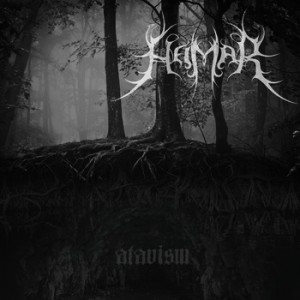
I was given this tape by a Justin Coleman, member of the main project of this band, Krigsgrav. I am always interested in listening to new music, especially locals from my homeland, the great state of Texas and after chatting with Justin - a really awesome guy who knows his black metal, I was excited to listen to this tape.
Atmospheric black metal is always a genre that is just thrown and labeled on a lot of bands. Some do it well, some seem just to drone on, which in the end gets boring. I always think the label means more than just "We play long intros to be spooky". I think to really capture the term "atmospheric" you have to have a little emotion, whether it be bleak, sorrowful, ominous, or dark. It has to really hit the listener in the feels and project a kind of image in the mind.
The beginning track, 'North' opens with the howls of wolves and the sounds of a crackling fire, the emotion it brings is primitive. A perfect entrance to the rest of the album which continues the archaic pagan tone.
Heimar's "atmosphere" is epic and is not at all boring! The album is a polar wind of raw aggression. Their sound reminds me of the old Norwegian black metal sound. Symphonic guitar rhythms, raw growling vocals that sing of elder gods who's names and stories are lost in time, blasting the drums of hostility. Most of their songs hit above the six minute mark, but capture the listener, like an ancient bard telling of epic battles and archaic narratives.
'Into The Fray' is a track which really stands out for me. For being 10 minutes long, it seems not long enough. This track has it all, running double bass, weaving guitar work, a thunderous bass line; a soundtrack in which you can ride into battle and slaughter all your enemies before you.'Forgotten Sons' is also another mind blowing track, with the ambiance of an oncoming storm, the track erupts into a fury.
Their album continues weaving a story, a tale that excites the mind and embodies a truly ancient aggressive sound. Atavism is an album that any fan of black metal will truly, I think, enjoy. I highly recommend this album to anyone who is a fan of black metal and support your local scene!

'Rape'. That's the title of the opening track of From All Purity, the 5th full-length from Chicago's Indian. It's immediately clear from the maelstrom of bludgeoning noise that escapes the speakers within the opening minute that this will be a listening experience that is as deeply unpleasant as that crass choice of title. Harrowing howls, squalls of feedback and abrasive riffs all ensure that you're never comfortable for a single second, and even in the less outright confrontational passages the intensity never dims one iota.
They follow much the same template on 'The Impetus Bleeds', with more painful feedback and thunderous percussion backing some genuinely disturbing vocal interplay between guitar/vocal duty-sharing duo Dylan O'Toole and Will Lindsay. It may not exactly be anthemic, catchy, or even listenable in a conventional sense, but it's the highlight of the whole album for me. Unfortunately that's because things go steeply downhill from here...
For a song called 'Directional', this track never seems to actually go anywhere; there's a distinct lack of recognisable riffs, and the plodding pace make this a pretty uninspiring trudge through 6 minutes of drudgery. Following track 'Rhetoric Of No' is a model of dynamism in comparison, the ferocious vocals and staccato bursts of distortion immediately going for the jugular. The track's dalliances in ear-piercing noise effects do enough to unsettle the listener, but it never quite distracts from the lack of interesting rhythm. I mean it does have a rhythm, but you'll be falling asleep mid-headbang, it's so bland and uninspired.
'Clarify' begins with screes of feedback and drones, the textures interesting in themselves, but it goes on a little too long to really qualify as merely an intro, and just gets annoying after a while when you realise that this is what the whole track consists of. The rotten ranting of the heavily-distorted vocals recalls similar recent releases from Gnaw and Culted, who in all honesty do the noise-inflected blackened doom thing far more effectively and interestingly.
Ultimate track 'Disambiguation' is a return to structure, and even features some excellent subtly melodic guitar work, but it still feels too tightly constricted. Instead of revelling in the foreboding atmosphere that all the best doom is shrouded in, Indian just sound weighted down by it; turgid, sluggish, and worst of all bored. I don't know if it's the performances captured here, or something else that I can't quite pin down, but even after several spins I still find the majority of the album to be lacklustre.
I really wanted to like From All Purity. On paper it sounds like it could've been my new favourite album, and I'm genuinely disappointed that it's not. Whilst I am a fan of all the various genres they incorporate into their sound, Indian don't seem to have any idea where they want to take their unsettling racket, and despite technically ticking all the right boxes, it just feels lacking somehow.
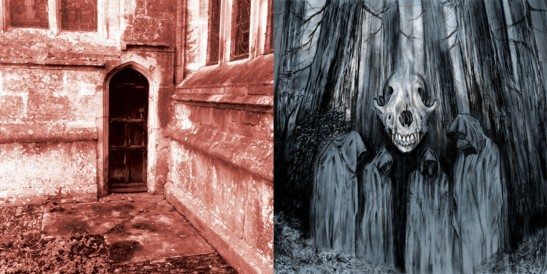
It's not a chance that Amarok and Hell have chosen a burning forest for the cover artwork of their split cassette. Holy shit, if this is not a burning album I have no idea which other album can be considered to be one! The label Peasanta Urfolk is now going to release the vinyl format of the split album that sees the collaboration of two bands that are for sure different but that work so well together like in the best puzzle.
Amarok is a four piece doom, black metal and sludge band from Chico, California, that has been spreading its music since 2011. Hell is a duo from Salem, Oregon, that produce its heavy, doom and sludge music under a really good name. Both Amarok and Hell have already released a split album last year, respectively with Pyramido and with Thou, so this collaboration follows a path they have already explored and that, according to what I heard, worked perfectly.
Two tracks spanning a length of about 40 minutes is what the two bands are offering with a LP whose main tag could easily be killer, burning, engaging and highly recommended for fans of bands such as Thou, Northless and Lightbearer.
With a total running time of approximately 20 minutes, Amarok brings the listener into the heaviest world you can imagine. The whole LP is a vulcan and the first part of 'V: Red Oak Wisdom' is the most impressive eruption you have ever experienced. There's no intro and there are no delays: the song starts burning from the first notes. Everything changes around the eight minute mark when Amarok offers you the scene after the eruption. Everything is quiet and your steps are heavy among the consequences of the cataclysm. It's a beautiful and deep sound with metallic riffs that give intensity to the already touching atmosphere. When the vocals slowly come back you have the confirmation that the enemy is behind the corner and the space created by the suspended notes are full of tension.
There's no space instead in the second half of the split LP. So forget the illusion offered by Amarok and start diving into the heaviest music that Hell has delivered to date. On their half, Hell deliver three songs – 'Deonte', 'Oblitus' and 'Dolore'. - and if you are in the mood of something suffocating and crushing here it is what you need. Approximately 18 minutes of sonic molestation, offering no escape for the entranced listener. Somewhere there are also some savage harsh vocals that I'm sure will blow black metal lovers away. The last four minutes of the Hell side are the darkest of the LP and are so heavy and exciting that it is like if the vocals come in and just pick you up and throw you into a wall. The violin makes the last minute epic.
I listened this LP countless times before starting writing about it and I enjoyed it a lot. What at the beginning scared me, ended up conquering me. And now I love it and I love its contrast and I recognise in it a huge emotional power.
Amarok and Hell, again, demonstrate that great collaborations can happen.
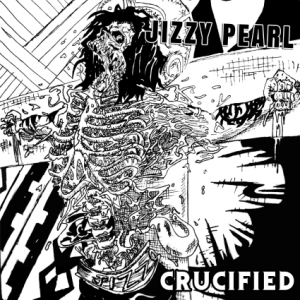
There are few things better in life than re-living one’s youth and through metal a lot of us are able to do that every day. Sure, most of us don’t have the hair, the earrings, or in some cases the hairspray anymore but nevertheless sometimes something comes our way that creates an instant flashback to the bygone days of zero responsibility. While I was perusing the Ech(((o)))es and Dust submissions I came across a new promo from one of my all-time favorite guilty pleasures, well, the singer of one of my all-time favorite guilty pleasures anyway. Jizzy Pearl, former singer of Love/Hate is releasing a solo album, when I saw this I was instantly transported back to 1990 and cruising around town with the windows opened and blaring 'Why Do You Think They Call It Dope'. The album Blackout in the Redroom was one of my favorites at that time. It was the simplicity and stupidity that initially drove me to the album but as I listened more and more there was, at times, something deeper to the songs themselves. This feeling only increased in my opinion with the 1992 album Wasted in America a very nice compliment to their debut album. But alas, as with most of the Glam bands of the ‘80s and early ‘90s grunge and internal infighting made Love/Hate no more.
So how does Jizzy do on his own? Well, I had high hopes and little confidence in what this album would sound like. But in complete honesty there are some very good things on the album; Crucified is a solid mid-tempo rocker with a really good guitar solo and a pretty catchy hook associated with it and it has the feel of the old school sound that I grew to love from this band. The opening track 'Hanging You Out To Dry' has the proper Jizzy Pearl lyrical liberties that make this album fun to listen to and try and translate. I mean who else remembers the lyrical gems like “She’s a knock down blue eyed slut psycho virgin tease” from the song 'Rock Queen'? Jizzy does not let us down on this little album either. But in fairness Jizzy does stay true to the blues sound that was the foundation of Jizzy’s previous band.
It did come as a surprise but this 6 song album gets better and better with each song and there really is some potential to these songs. Plus, even though I have jokes, there is some interesting musical directions in a few of the songs and Mr. Jizzy at least tried to expand the sound of his music. The overall likability of this album is that it still sounds like an album that Jizzy’s previous band would release and it does take one back to the early ‘90s. For as much as the temptation had to be there to mess with the sound it seems that restraint won the day, which is nice. Songs like 'Love is All' and 'You’re Making Me Nervous' show some promise and the lyrical content and concepts are fun.
Look, much like it was back when I had a mullet, four earrings, and wore nothing but black concert shirts, black jeans and converse high tops sometimes we have to grow up. By the sound of this album Jizzy and his band (whoever they are) have done just that. Crucified allows you to be a little nostalgic of the past while enjoying an album with a little bit of a current sound. I say give this little album a chance if you liked any of Jizzy’s previous band’s albums even a little.
(((O))) EXCLUSIVE STREAM