(((O))) REVIEWS
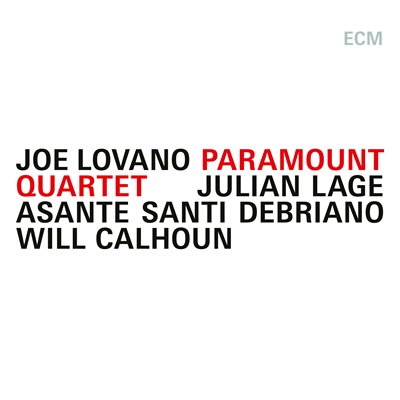
Joe Lovano / Julian Lage / Asante Santi Debriano / Will Calhoun – Paramount Quartet
Whether or not it becomes the album of the year, it’s already one of ECM’s most compelling offerings of 2026, and a beautiful entry point for anyone discovering Lovano’s artistry.
By Dave Guzda
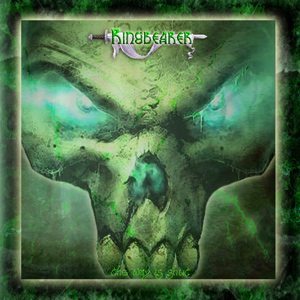
J.R.R. Tolkien's inspirational trilogy the Lord of the Rings has been inspiring musicians for decades. Most recently Tolkien's pre-eminent work of fantasy has inspired Canadian solo artist Vultyrous, (working under the band name Ringbearer) to release ten tracks influenced by the trilogy. Those familiar with Vultyrous and his other musical endeavour Funeral Fornication might be expecting a jagged Black Metal influenced take on LotR. Well, tones of Black Metal do bubble to the surface occasionally, but, this is very clearly a fantasy themed dark ambient release. Ringbearer's album is entitled The Way is Shut which is based on a popular quote from Tolkien and The Return of the King: "The way is shut. It was made by those who are Dead, and the Dead keep it, until the time comes. The way is shut." Tolkien's world seems well suited to adaptation to dark ambient music.
The Way is Shut's journey begins on 'The Dimholt Road' which literally means 'dark wood'. And it is dark indeed. Ringbearer immerses the listener into a creepy cauldron of orchestral synth and heroic strings with hints of something ominous lurking in the undercurrent. The Way is Shut's music is often grand in scope, with vivid, albeit subtle instrumentation which is immensely evocative in the vein of Fantasia. You can sense the dark spirits beckoning at the end of 'The Dimholt Road' with the majestic rising passage repeating then slowly fading out. It's very striking and powerful. By comparison the next track 'Treebeard' is full of chirping birds and forest atmospheres, well befitting the mighty Ent. Even with the cheerful forest ambiance Ringbearer works in some subtle lingering deep synth tones and gentle dreamlike keys that hint that more is afoot here. Possibly struggle, conflict or slow pondering in Oooooold Entish. Next 'Lady of the Goldenwood' takes centre stage and I felt the depiction accurately hit on the nature of her character with the unsettled piano, mysterious flute and sudden start/stops. I was a little surprised the track didn't, at some point, include some stronger instrumentation since she is 'greatest of Elven women'.
I felt the second half of The Way is Shut is where Ringbearer was at his best. The darker themed content allowed for slightly more aggressive, more Black Metal influenced instrumentation and it really worked. Starting with 'Caradhras', which is one of the mightiest peaks in the Misty Mountains, the ambiance really soars. The blowing winds, the long solemn notes and eerie ambients create a soundscape which is simultaneously dark and beautiful. Then the deep, distant slow drum hits: dum...dum...dum... which lead the track out to a perfect ending to one of my favourite tracks on 'The Way is Shut'. Then there is the track 'Nine Riders'; the Nazgûl, the wraiths... possibly Tolkien's most ominous creation. Ringbearer appropriately unleashes the most dramatic "black metal" tinged blasts for this song. The song starts off with upbeat keys and wispy, mysterious tones as if coming from a small town unaware of the impending doom of the 'Nine Riders' circling high above. Then *bam!* the terror of the Nine are let loose as frantic double bass drum combines with swirling screaming voices in a vivid fearsome and angry tonal torrent. This combines with snarling chaotic ambiance for a provocative and impactive composition.
The well conceived ambiance continues on the long walk through the 'Dead Marches'. Once again Ringbearer's portrays a grim, hopeless land with strained tones and unsettling percussion. The track really starts to feel like a long wander in a hedge maze on a gray foggy day which aptly depicts the undead marshland. The album ends with the climactic 'Lord of Angmar', who is the Lord of the Nazgûl, one of Tolkien's major antagonists in Lord of the Rings. The track contains the only lyrics on 'The Way is Shut', presumably a dire decree from the Lord himself. "Will this place which you now seek is so impermanent/ Not after tonight, not ever again/ Have your riots, convene your armies/ Rant, rail, gnash your teeth/ I will allow you that, for you need time to grieve your world ... There is only the world, and the whole of humanity / This is the end of your world..." *Gulp!* The music is dramatic and tense magnifying the wrathful words of the Nazgûl. The final minute of the track rings a positive tone however as it echoes with the warm tolling of bells and a gentle piano exit as if suggesting the hope of the Fellowship.
Ringbearer's musical undertaking is replete with engaging textures; some triumphant, some mystifying and mysterious, others ooze with the malignant wickedness of the Dark Lord. The themes and imagery of Tolkien's worlds are consistently and vividly realized through the colourful music composed by Vultyrous. The songs portray the drama and fantasy of Tolkien's masterpiece visiting both places and characters within the books. Listeners looking for imaginative and expressive dark ambient, or fans of Tolkien will want to give this 'precious' release a listen.

Easily my favorite description of Inquisition frontman Dagon’s vocals is “ALL GLORY TO THE HYPNOTOAD.” The vocalist of the Seattle-based (formerly from Colombia) black metal duo often receives amphibian comparisons for his vocal tone, but the Futurama reference also captures the droning, hypnotic monotony with which his vocals are delivered, sounding like a man enslaved by demonic magic. And considering the ritualistic, mystical nature of Inquisition’s music, his style works perfectly.
With that said, Dagon’s croak certainly turns off its share of listeners. Those who have previously found his vocals disagreeable would do well to listen to Obscure Verses for the Multiverse, Inquisition’s newest offering in an extremely consistent discography. Dagon has upped the harshness of his vocals, and they now bear a striking resemblance to those of Immortal’s Abbath, another prominent black metal vocalist with a croak (croakalist?). The transition began on Ominous Doctrines of the Perpetual Mystical Macrocosm, and is furthered here; the hypnotic droning is still present, but with an added layer of distortion mixed in to provide some extra force.
And, of course, Inquisition still brings the riffs as always, though they have evolved a bit. The band’s murky, swampy black metal is supplemented with psychedelic influences, with some passages – like the odd bends in ‘Master of the Cosmological Black’ – resembling Oranssi Pazuzu’s early material. The more dissonant moments – ‘Darkness Flows Towards Unseen Horizons’ and ‘Joined by Dark Matter Repelled by Dark Energy’ are good examples – betray a bit of influence from the chaotic “orthodox” black metal of Deathspell Omega and related bands as well, though the end result is considerably more orderly and traditional.
Longtime fans of the band may read the above and become concerned that the band has completely shifted styles, and I can confidently say that is not the case. These are still Inquisition riffs, black and twisted and dripping with Varathron, Mayhem, and Sarcofago as they were on Magnificent Glorification of Lucifer and Inquisition’s other classics. However, they are a slightly weirder, more dissonant version of the Inquisition riffs we’ve come to know and love, and the result is very, very refreshing.
Inquisition already stood out as unique amongst their black metal peers. With Obscure Verses for the Multiverse, they have become even more so, taking some of the advances the genre has been made and using them to progress their own sound in a way that is still exclusively theirs. Each of the duo’s five previous albums was a top-notch entry to the black metal canon, and the duo of Dagon and Incubus have added a sixth, further cementing their legacy as one of the genre’s greats.
By Gareth O'Malley
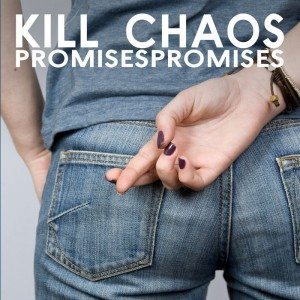
Lesser bands probably would have broken up by now, but it's a testament to Kill Chaos's self-belief that they're still hanging on by the skin of their teeth after so long. You see bands throwing in the towel because they don't have enough momentum, but the Nottingham/Mansfield/Sheffield trio have stuck at it for 6 years, and all this hard work looks set to pay off. It's been a long enough road for the band since they formed in 2007, but much of that can be pinned on the fact that they've only been playing with a stable line-up for the guts of 2 years.
That line-up is Darren Clewes, Gavin Treliving and Tom Waddingham, and PromisesPromises is the sound of a band who have spent as much time as possible honing their craft. Compared to previous years, the last 2 have gone by in a flash for the band - half that time was spent making the album, and suddenly, here we are. The trio have made music that takes influence from some of the alternative rock greats of the last decade or so - Sucioperro, Hundred Reasons, Reuben (the ex-frontman of whom is bringing them on tour with him next month) - and they find themselves in good company.
The album thrives on minor keys and buzzsaw riffs, with Treliving's distorted bass kicking things off on 'Boy Done Good', whose stomping drums and muscular chorus immediately signal that Kill Chaos are a force to be reckoned with. Their music relies on contrasting dynamics, but they're just as comfortable with the jagged rhythms of the likes of 'Got A New Drug' as the surprisingly straightforward pop of 'Falling Down', which is an ideal entry point for those unfamiliar with the band. If you're seeking something heavier, though, lead single 'Crush' is well worth 3 minutes of your time.
The band are quite fond of keeping the listener on their toes, with 'Futures' making great use of some unusual time signatures, an air of unpredictability ensuring that the track's melodically powerful conclusion has the desired effect; they also have a knack for throwing curveballs and playing with conventional song structures, as they do to explosive effect on 'Let's Play Politics', a sure-fire album highlight.
On a record that possesses so much forward momentum, one would expect one or two songs to fall through the cracks, but there's enough energy here to ensure that Kill Chaos hit all their targets. They display enough songwriting nous and pure commitment to lay the groundwork for what's to come - PromisesPromises is the work of a band who know exactly what they're doing. They've got a great future ahead of them.
By Grayson Hale
2013 has seen the release of some truly massive albums. Everything from the massive sounding (Ulcerate’s Vermis) to the massively ambitious (Kayo Dot’s Hubardo), this year has been appreciative of grandiose, high-risk compositions.
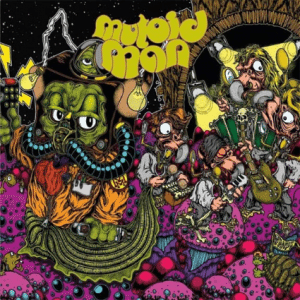
With that said, Mutoid Man’s arrival couldn’t be more perfectly timed. Helium Head consists of seven quickfire bursts of hardcore-driven, psychedelic pop metal that somehow manages to combine unrelenting heaviness with pop hooks and a good dose of prog-rock madness thrown in for good measure. It sounds like a lot to take in but Stephen Brodsky and Ben Koller masterfully execute their vision by providing absolute cohesion to the project’s aesthetic.
Mutoid Man seem intent on putting a little bit of fun into the darkness we’ve become accustomed to with extreme music. Much like their peers in Torche, Mutoid Man are a zany, entertaining and highly enjoyable act who just want to sound like they’re loving what they do. Everything from the band name (a reference to the 1990 arcade game, Smash TV), to the trippy artwork, to the extremely well performed cover of 'Don’t Let Me Be Misunderstood' by The Animals (humorously appearing here as 'The Manimals') accurately conveys this attitude and prevents Mutoid Man from being just another novelty act.
'Gnarcissist' begins proceedings, sounding like an energetic Queens of the Stone Age track, and proves to be the perfect introduction to the rest of the songs here. 'Scavengers' continues the trend and it isn’t until the last thirty seconds of 'Scrape the Walls' that the origins of the two band members come to the fore, with a flurry of harsh vocals and chaotic drumming reminding us that these are members of Converge and Cave In we’re talking about here. This all culminates in the sheer head-bashing of 'Lost in the Hive', by far the heaviest and fastest track on the album, before Helium Head comes to a blissful close with the aforementioned bonus track, 'The Manimals'.
Mutoid Man is just what this year needed; something fun and unusual to counter the darkness and oppression surrounding us. There are doses of that here too... but Mutoid Man just grows another limb and smashes them into a pulp. Just like in the video game.
World off, music on.
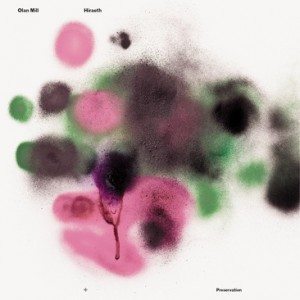
We all need those moments when we shut off the lights, turn up the volume and we completely forget the world around us. Well, those moments, require a special music, the one that Olan Mill is able to produce and that enchants me each time I listen to it. I’m a fan of Olan Mill since I heard Paths, his second album (Facture 2012) but, I do confess, only last year I discovered that Olan Mill is a solo project of a man not named Olan Mill! So, for those of you that don’t know it yet, Olan Mill is a project name for the Englishman Alex Smalley that has been composing and releasing music since 2010 when he established his name in the music scene with his first album, Pine. Now the Preservation label presents Hiraeth, the fourth album from Hampshire’s Olan Mill and I’ve no doubt that those of you who are familiar with his sound will fall in love with it. Hiraeth is a Welsh word with no direct translation in English and it’s defined as "homesickness" for a home to which you cannot return. And the album is a beautiful meditation fulfilled by a melancholic sense of loss.
Hiraeth is a narrative sound of five songs for a total time of approximately 40 minutes. The dreaming journey starts with ‘Neutrino’ that is a soft lullaby made up of fractals of echo-drenched synths. It has a mesh of exquisite, competing melodies and wonderful echoing vocals and it’s one of the loveliest things the British artist has ever done.
‘Echo of Tomorrow’ is an incredible picture. Starting with the sound of a warm rain in a bunch of seconds turns into a lovely light that is so intimate and deep that you’ll feel that rain and the sun just after it warming your body. It’s a short track but so damn beautiful. Behind each track of Olan Mill lies a story enveloped in some deeper emotion transporting the listener into their inner world or to their dreaming places.
With ‘Cultivator’ Alex Smalley gave birth to so much magic on his keyboards that is impossible not to fall in love with it. The sense of loss and the melancholy is in each note of it and this is not a bad thing at all. It’s like floating in a light blue ocean and, even when the music ends, the listener somehow intuits that the music is still continuing somewhere, as constant as the tide. The piano notes at the end of ‘Cultivator’ are simply stunning.
The intro of ‘Nature For Equal Rights’ transmits to me am intense sense of tension and when the piano notes appear is the best thing can happens. It will move you more than you could hope to expect. The several moments of the song make it like if it was more songs in a unique composition. Intimacy is the key player here.
‘Soft Furnishings’ concludes the magical journey of Hiraeth and it is as calming as still waters. The echoing in the distance vocals seem raising you and you’ll feel weightless. It conjures up an atmosphere of intimacy that offers an undeniable solace and refuge if you're looking for such things.
Hiraeth is full of evocative light and space encouraging its audience to indulge in mental journeys of their own and it may just be one of the best musical experiences you could encounter.
By John Deasey
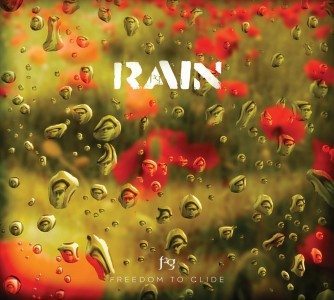
If you look careful at the album artwork above, you can see the faces of soldiers in every rain drop.
So my brothers fell like rain
Every rain drop bears a name
The storm will rise, the sky will fall
A bitter lesson for us all.
Rain is the culmination of 3 years work by Pete Riley and Andy Nixon, both members of a Pink Floyd tribute band who realised they had more than a shared interest in the music they were playing.
As they explain on their website, musically they just clicked and before long they were exchanging ideas, laying down tracks and realising they were on to something outside of the tribute band.
And my, how they were on to something.
Taking a step back for a moment, I remember when Roger Waters released Amused to Death and being totally floored by the opening track ‘The Ballad of Bill Hubbard’. The beautiful, subtle guitar fills from Jeff Beck, the mournful backing to the spoken word of a British veteran soldier describing the horrors of war in a gentle, frail, breaking voice …… very moving indeed.
Other tracks such as ‘It’s a Miracle’ and the closing title track are similarly outstanding and have stood the test of time.
Admittedly some of Waters’ anti-war tirade gets a bit tiresome and a little bit theatrically obvious on that album, but there is a stunning tone and feel to the overall piece of work that stays long in the mind.
It is no surprise, given the background of Freedom to Glide, that there is a distinct Floyd / Waters vibe to Rain, but it avoids any of the cheap shots or crassness of Amused to Death and instead infuses the whole piece of work with an elegance and subtlety that is perfectly in keeping with the respectful air for the subject matter.
My copy of the album arrived at 10.50am on release day, 11/11/2013.
So apt. So appropriate.
The sweeping keyboards of the title track immediately set an atmosphere and within a few moments we are taken into a magnificently moving piece of work that absorbs, transfixes and takes us on a journey that I, for one, found hard to let go off.
Seldom have I played a new album on repeat so many times.
We have clear, crisp production, with lyrics that can be heard clearly.
We have background sounds of radios, soldiers speaking, swathes of gorgeous keyboards, Middle Eastern sounding woodwind, military drumbeats low down in the mix and the beautiful Floydian textures of strummed guitar whilst a delicate lead guitar adds shimmering tones …..
We also have rockier tracks such as ‘Path of Reason’ which roll along with a strident beat but even these sections are done with class and quality – nothing is out of place and there are no sudden distortions or jarring distractions to annoy.
Tracks such as ‘Riders on a Wave’ display superb, uncomplicated song writing that is a joy to listen to with a subtle depth that adds to the unfolding and building atmosphere.
This takes on a more dramatic and sinister turn as we head into ‘Price of Freedom’, which recounts a soldiers journey on a vessel from Liverpool to “…halfway round the world, a universe from home” and really sets the scene for the second half of the album.
From here, this is where the music becomes powerfully emotional and at times, incredibly moving without ever becoming maudlin or crassly over-sentimental.
‘Angels and Stones’ is a case in point. A steady beat with gorgeous textures weaving in and out underpinned by a forbidding deep rumble whilst the vocal refrain mournfully tells us :
Fly like an angel, fall like a stone
Whilst the subject matter of the album could have led to a bitter tirade of rhetoric and barely concealed anger, we are instead treated to a beautifully restrained, elegant and respectful tone as exemplified on ‘When the Whistle Blows’.
This is a stunning track about the young men answering the call. Unaware the rain would fall. Not knowing the rivers would turn red.
Lyrically, musically and atmospherically this is a minor masterpiece.
The spoken words of the soldier are reminiscent of ‘The Ballad of Bill Hubbard’ with a similar hauntingly sad feel.
It is actually difficult to put into words how moving the final part of Rain is, whether or not you agree or disagree with the whole Remembrance issue, but to hear the veteran soldier on ‘Home Again’, speaking, whilst warm keyboards wrap his elegant words like a shroud, is something else.
As you sit in silence, taking in what you have just heard, the album closes on a fitting note with an uplifting and reassuring track that despite the horrors, wounds and damaged minds of war, we can emerge ‘Not a Broken Man’.
So there we have it – a majestic and beautifully judged piece of work from
Pete Riley and Andy Nixon who should be proud of what they have achieved. This is certainly one of the most enjoyable and moving albums I have had the pleasure to listen to for a long long time.
Highly recommended

Formed in 2011 and hailing from Italy Dotzauer attempt to prove there’s more to Italian metal than Cristina Scabbia’s face.
Deep is their debut album and they have set their stall squarely in the post-metal camp with obvious influences of Cult of Luna and The Ocean as well as flourishes of emotional doom metal plied by Ghost Brigade and Swallow The Sun. The influence of The Ocean has been taken one step further in that Deep is a marine concept album about drowning (Cheerful!).
The opening two tracks ‘Organic Silver’ and ‘Water Buries The Skyline’ follow the well-trodden formula of atmospheric melodic guitar lines building into a crushing crescendo with impassioned growled vocals, Although they wear these influences on their sleeve this doesn’t detract from the conviction of the interpretation.
Upon fist listen track three ‘Deepster’ appeared to be a pointless piece of interlude music however after several listens to Deep it becomes a bridge of sorts between two distinct halves.
So if the opening salvo is pure influenced worship then the interlude signals when Dotzauer begin to show their stripes as they incorporate their own ideas into the template.
Such as on ‘Air Hunger’ when they throw in a Russian Circles style bass riff or ‘Shred of Consciousness’ when it reaches an absolutely stunning melodic doom metal crescendo.
So in essence, this is can be categorised as a pure genre piece, but along with finale of ‘When the Soul and the Abyss Wave to Each Other’ the final three tracks of Deep show off enough sparks of individuality to make this a worthy addition to your collection and also encouraging to keep an eye on them for the future.
As a side note, interestingly every track appears to reach its respective flourish or crescendo around the 5:30 mark which I like to think is an intentional development or perhaps just a band in-joke.

By Edgärd Reyes
GLACIALS is a five piece band from London comprised by Jaemi Zahra-Hall (Guitars & Electronics), Kenneth Joseph (Guitar), Sen Xu (Drums), Ozon (Bass) & Kathryn Mae (Vocals), a multicultural set of musicians that claim to play Post-Rock, Math-Rock and Shoegaze but instead have created an eclectic sound that evokes some great bands like Good Weather For An Airstrike, Mogwai, Aphex Twin, Nirvana and At The Drive-In, all mixed with soft female vocals that may sound like Sinead O’Connor but with a warmer feeling.
On October 22nd they released their first EP, We Are Serious and We Mean It, a six track collection that was recorded with David Jackson on bass and Arielle Renwart on vocals instead of the regular members. I find this EP really refreshing because even when we can sense a little bit of all their influences we never know what is going to happen next, one track can be calm and full of distorted guitars and the next one might start with screams and powerful riffs. It is an exciting experience that lasts only 26 minutes!
'Sweet Tooth Pink Wrist' is the first track, it welcomes us with an ambient atmosphere and the seductive voice of Arielle setting a beautiful environment that at some point speeds up but remains calm until the end. This lovely song was chosen as the first single of the album, the video is a piece of art, written, produced, directed and shot by the talented artist Tyler Hurd. 'SE-Laiyf Horse' continues with the melody of the previous track but in an organic way; a guitar takes control trying to hide the darkness that rides behind its friendly sound. 'Away At Pace' and its happier rhythm travels through gorgeous crescendos and melodic guitars while the voice amazes us with its incomparable flexibility going from desperation to desolation in the same track.
Heavily distorted guitars open the fourth track 'Appreciator', which sounds more like a post-Apocalyptic song mixed with the old but awesome screamo, the riffs are impressive, drums and bass create a powerful setting that all the headbangers will enjoy; suddenly it morphs into '(ride it like a cowboy)' a bunch of synthetized sounds mixed with distorted guitars and some other electronic noises that act as an interlude; ‘Poindexter’ is the final song and my favorite of this EP. This song combines all the features of this great band; it starts with a piano playing a slow rhythm but as soon as the voice enters more sounds start to appear and in the middle of the song an electronic buzz leads to a crescendo that delivers a powerful riff that accompanied by strong drums sets the perfect ending to this short but amusing EP.
We Are Serious And We Mean It is available on a beautiful clear 12" Vinyl limited to 200 copies and as Free Download through their Bandcamp.

Fans of the Swedish Shining please move along, nothing to see here…
Although forming in 1999 it was the 2010 release of the rather stunning Blackjazz that brought the Norwegian Shining to the attention to the metal world in general. The combination of industrial metal, Muse-esque guitar tone, off kilter jazz based rhythms and of course those ridiculous saxophone breaks proving to be a winning combination with the more open minded. Happily they also backed this up with an incredible live show which is in fact how I came across them at Hammerfest 2010.
So after the buzz and word of mouth hype the follow up One One One has dropped and ‘I won’t forget’ picks up exactly where they left off with industrial rhythms, of kilter vocals and electronic samples and yes the saxophone makes its welcome chaotic appearance.
And now for a surprise as ‘The One Inside’ kicks off with a brilliantly filthy disco industrial stomp, the type that goes down a storm in goth clubs. Just when you think they’ve written a ‘normal’ song the saxophone kicks in… but this time it’s actually in time playing an actual melody (the late night jazz club variety) before leaving us to finish on the hook laden stomp.
‘My Dying Drive’ delves back into their “Blackjazz” signature sound but is fairly restrained by their standards which becomes a theme for the next couple of tracks as ‘Off The Hook’ contains a very Nine Inch Nails style riff with even vocalist Jørgen Munkeby channeling his best Trent Reznor impression while ‘Blackjazz Rebels’ is their interpretation of a Marilyn Manson rock anthem with its big guitar riff and anthemic refrain of the song title and a lyrical reference to fish eye.
Despite the mentioned reference points it still sounds unmistakably Shining but by this point the saxophone is noticeable by its absence.
It reappears on its own at the beginning of ‘How You Story Ends’ but in the sultry jazz fashion as heard in ‘The One Inside’ before a metallic riff first accompanies and then the industrial stomp takes over again with hints of off kilter rhythms until the saxophone reappears to finish off.
The chaotic saxophone break makes its presence felt in the horror theme electronic infused ‘The Hurting Game’ which channels the more chaotic aspect of Shining to devastating effect, while closing salvo ‘Walk Away’ and ‘Paint The Sky Black’ are straight up industrial metal stomps camouflaged under the pretence of chaos, which in itself is pretty large compliment to the musicianship at hand.
So in case you’re forming the opinion, no they haven’t sold out but the overt chaos and off kilter-ness has been refined, even hook laden into bombastic industrial glam metal. The type of album that Marilyn Manson and Trent Reznor should be making themselves.

Yeah Saint Paul (or Angel River to give him his real name) is one of those musical wunderkinds. The sort of person who plays every instrument on his records and demands total control. Sometimes it works, sometimes it doesn’t and in the case of Women Are Stoned it’s a rather mixed bag of results.
Opener 'The Good Ones' has a pleasant Kinks feel about although the uncanny resemblance to Pete Doherty mixed in with the mad urge to burst into 'Daydream' by The Lovin’ Spoonful throws you a bit.
It’s a strong song though and bodes well. That is until Yeah Saint Paul sort of loses the plot a bit and sinks into sub-funk and scratchy guitars.
'Gold' is OK although the strange Gallic sound that seems to invade the next few songs does start to grate. It’s lo-fi for a generation maybe grown up on Serge Gainsborough and it doesn’t quite work. There are charms and parts of 'Reform' and 'Needle on Plastic' do lift the momentum.
A swift diversion into Country for 'Tellstory Eyes' works a treat and the Yeah Saint Paul show is back up running. It’s a fantastic turn of events and one that lifts the album out of the doldrums although 'New Winter', a few songs later, is an unmitigated clattering mess.
Thankfully this is a low point before a rather great end to the album where Yeah Saint Paul seems to explore as many genres as possible. 'A Universe in the Grain' lifts off with its funky beat and rhythm whilst 'Soul' & 'The Footsteps' takes on upbeat garage rock. The best track is 'Gone' though as its slowburning psych unfolds into a nightmarish epic. It’s a great end to an album of ups and downs and demonstrates there is a keen ear for music and an ability to get it right sometimes. Just not all the time.
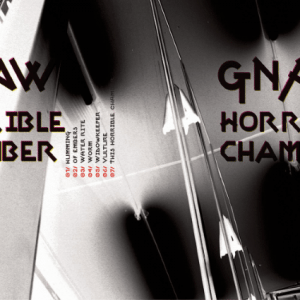
New York extreme noise terrorists Gnaw feature such disparate luminaries as Khanate's Alan Dubin and acclaimed sound designer Jun Mizumachi, so when their debut recording This Face stuck sharp aural objects into everyone's ears a few years back, no-one was really too surprised at how unpleasant an experience it was. With their follow up album Horrible Chamber, released via Seventh Rule Recordings, they're back like a recurring nightmare. Even if you think you know what to expect, nothing can prepare you for what lurks within...
The intro to opener 'Humming' is comprised of some of the most unpleasant sounds imaginable; atonal piano, monolithic mechanical crashes, harsh industrial noise, and Alan Dubin's voice. Yes, that's the sort of company his piercing shriek deserves. His vocal style could loosely be described as the midnight rantings of an entire psychiatric ward filtered through a single acid-gargling larynx. It is not an enjoyable sound.
Even when they take things into more 'traditional' territory on 'Of Embers', there is still an abrasiveness that almost all modern heavy bands lack. Well, it's not that they lack it, it's just that Gnaw sound genuinely dangerous compared to the endless parade of staid metal bands fucking around in forests with makeup, or mistaking 'slow and unimaginative' for 'atmospheric'. When was the last time you feared for your life on a nature hike, or felt threatened by some stoner showing off how loud his Orange cabs are? Gnaw are the sound of urban decay and the horrors wrought by humanity.
The swaying rhythm could be loosely likened to something approaching doom, or to fellow terrifying New Yorkers Unsane, but the demented delivery puts them in a category all of their own. Closing out with a distant end-time klaxon and electronic glitches, you'll be so fucking happy it's over.
That brief feeling of elation will soon be crushed by the pounding drums and distorted screeches of 'Water Rite'. When Dubin's dreaded vocals arrive, they're filtered through en effect that sounds like that bit in The Matrix where the liquid mirror runs down Keanu Reeves' throat. This track is just as cold and horrifying as that would feel, 7 agonising minutes of violent, angular noise that will scrape it's crooked claws along your spinal cord.
'Worm' writhes just as slimily as it's namesake, while 'Widowkeeper' is even more unsettling for the fact it is mostly whispers and noises so faint you'd swear they were audio hallucinations. Not for the first time you may question the toll this album is taking on your mental state. When almost halfway through the colossal cymbal crashes and buzz of distortion arrives, you'll be thankful just to be hearing anything you can define as 'definitely not my slowly crumbling psyche'.
The remainder of the track lurches wildly around like the heroin slaves on the 3am bus out of whatever dark city you live in. A pretty apt analogy, as just like in that scenario, you'll be drawing your knees up and cringing into your seat praying that the track doesn't notice that you're there.
Penultimate track 'Vulture' is another creature of a vaguely classifiable nature, it has a discernible rhythm and everything! Even if that rhythm happens to be roadworks being carried out on your cranium. From the inside.
That mechanical atmosphere is present throughout the entire album, but it's only here that it draws close to what most people would classify as 'industrial'. By that I mean closer to the likes of Ministry than the Einstürzende Neubauten end of the spectrum, yet somehow heavier and more unsettling than either.
When the sparse guitar introduces 'This Horrible Chamber', the fact it has something approaching tuneful quality is suspicious. Gnaw are lulling you into a final false sense of security, so you have time to brace yourself for whatever lurks within the chamber. The sense of unease builds and builds until it's almost unbearable. You'll beg before the end, to be put out of your misery, however, over the 12-minute running time, it feels like that misery is destined to be interminable. Howls and moans, dissonant creaks, ghostly echoes, feral feedback, all expelled with the intensity of grindcore, but far more punishing than that genre could ever hope to be.
Horrible Chamber is an experience I have no desire to repeat any time soon. But that doesn't mean you shouldn't.

By Gary Jackson
I've always been a fan of thrash music, ever since I was a young 'un. Much like the premier league there was the big 4 and then everyone else. Death Angel obviously fell into the everyone else category but for me they were not far off the top. I first heard them in 1990 with the absolutely awesome Act III album which was a great blend of thrash with loads of funk stylings it really did kick ass and still to this day is an album that stands up really well. As the musical landscape changed along with my musical tastes the obsession with only thrash changed along with my music collection, I admit I didn't keep up to date with the thrash movement apart from the big guns. So I was quite surprised to see the new offering from the Death Angel camp The Dream Calls For Blood up for review so I snapped it up quick sharp for review before anyone else got their paws on it.
There has been some line up changes in recent years with only Rob Cavestany on guitar and Mark Osegueda on vocals being the founding member and longest serving of the guys with Ted Aguilar on guitar joining in 2001 after the band reformed after a 10 year split. The addition of Damien Sisson (bass) and Will Carroll (drums) both in 2009 has remained the line up and seems pretty stable. So on to the music and having great memories of the previously mentioned Act III album I was excited to check it out.
'Left for Dead' opens the album with some clean arpeggio's before BOOOM!!!! powerful speed riffing aplenty with great drums whammy bar solo's and great vocals. In short this is a perfect opener and is proper thrash just the way Death Angel do it. 'Son of the Morning', 'Fallen' and the title track 'The Dream Calls for Blood' and 'Succubus' are next and the guys prove that power and heaviness can be achieved without the need for drop C or B tuning as these songs are HEAVY as shit and faster than a speeding bullet. 'Execution / Don't Save Me' is next and starts of as if it is the ballad type track, luring you into a false sense of security before the power riffing kicks in and rips your face clean off your face. 'Detonate' proves that Death Angel can give something slightly different but still be Death Angel. The album closes with 'Territorial Instinct / Bloodlust' a slower tempo number that still retains its power and heaviness. Overall the album has all the hallmarks of a great thrash record, precision playing in all areas with Mark's clear, powerful vocals.
The Dream Calls For Blood, simply put is just a great album that proves that the guys still have it and in my eyes still deserve a top place in the league of thrash. No compromise and no changing the style to fit the fads. Death Angel have delivered great music here and with this album at least one of the 'big 4' would need to watch out as their place is under threat after hearing some of their recent musical output. Know what I mean Dave.

Nottingham’s The Cult of Dom Keller are, like there name suggests, a bit of a cult in psych land. Building up from a strong live performance we now have a chance to own their music on whatever format you please. This is a good thing although be aware that The Cult of Dom Keller take no prisoners. This is one dark, twisted ride.
Uncle Acid and the Deadbeats are brought to mind for the first couple of songs, ‘Swamp Heron’ and ‘Eyes’. All murky guitars and doom laden riffs, it is at time difficult to discern what is actually going on. This soon comes to a head on ‘Worlds’ though as the searing guitar bursts into life and the music takes off. It’s a wonderful moment and one that is guaranteed to get every psych head nodding in approval. It’s nothing new and has been done many times before from The Stone Roses to Lucid Dream but when you feel a spiralling guitar take you up you can only grin and join in.
‘Heavy And Dead’ is another epic with its driving riffs and swollen synths performing a cavalcade of noise to twist your mind. It needs to be played loud to get the full effect and that’s why maybe Dom Keller will always be more of a live concern. It just works that way sometimes.
After a while the album sort of turns into a wall of sound and can get a little samey but then this is psych and the idea is to get lost in the blasts of noise. There are a pile of interesting moments which lift the album to greatness such as the excellent ‘Nowhere to Land’ which sounds like early Bauhaus or final track ‘All I Need Is Not Now’ which sets off on a nightmarish weird trip which is both scary and fascinating. A slowbuilding avalanche of dystopian sound which, whilst very much tied down to 1970’s space rock, is absolutely thrilling and a fitting end to a good album.
Given time The Cult of Dom Keller will no doubt make a classic album and we can very much look forward to that. In the meantime enjoy the first stirrings of a band to watch and don’t get too scared. It’s only music.
By John Sturm
The phrase used on the information listing in the reviews pool here at Echoes & Dust, described From Tomorrow by The Oscillation as sounding like “Syd Barrett-era Pink Floyd”. Bloody hell, they weren’t half right. Well...... for the first track on the album ‘Corridor (Part One)’ at least anyway. With more than a passing nod (more like a hearty handshake and tongue kiss) to 'Interstellar Overdrive' from The Floyd, The Oscillation begin their journey through psychedelic rock in a comfortable fashion. So far, so Roger.
It’s the fact that track two, (the cunningly titled ‘Corridor (Part Two)’), is much more expansive with its stabs of keyboards and watery guitar lines that gives me the sneaking suspicion that The Oscillation know full well what pigeon hole people will try to put them in so have deliberately put the most Barrett-esque track first on the album. Everything that follows is more ethereal and kaleidoscopic. And much less pastoral. ‘Descent’ shimmers into view with a riff not a million miles away from that band’s space opus ‘Set The Controls For The Heart Of The Sun’, but thanks to some great percussion feels more Middle Eastern than Milky Way.
Just when you thought it was all going to be lava lamps and the aroma of incense, ‘No Place To Go’ ambles over with its fuzzed up guitars and bass riffing back and forth. A welcome upbeat, up tempo track albeit it with suitably trippy lyrics (both in language and effects used). This track, along with ‘Chrome Cat’, are perhaps the most straightforward rock songs on the album but with all manner of echoes and delays and drones that you might well guess.
The standout tracks on the album are ‘Dreams Burn Down’ and ‘Out Of Touch’. Both esoterically wonderfully in their execution and fascinating journeys into what space (the musical concept) can do for a track in terms of heightening expectation and dynamics. The former floats into existence on a bed of keyboards and wails whilst the indistinct vocals add a texture that combines to make a startlingly sparse, almost non-song. The latter an 7 minute master class in how to build an atmosphere using layers of sound effects, instruments and instrument effects. So engrossing are these two tracks that it’s easy to see why the band wedged ‘Chrome Cat’ in between them. It acts as a palette cleanser for the ears.
What a wonderfully broad vista is created on this album. Don’t let the Barrett tag put you off, yes there are certainly shades of Piper At The Gates Of Dawn (and also Saucerful Of Secrets) dotted throughout this record but it’s so much more than that. It’s an (at times) wordless journey thought a musical landscape that begs to be filled by your imagination. This is both an album to share but also one that is intensely personal. What more can you need?
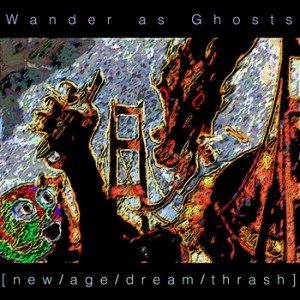
Lance Wyoming and Tony Haitch are two guitarists/producers from Leicestershire and London and are the duo behind the alternative, electronic and metal sounds of Wander as Ghosts. Their debut album [new/age/dream /thrash] has been released through Jungle Records. When I first listened to this album it started to be a bit of an enigma. The title alone may raise an eyebrow, these are words that you don’t usually see in the same sentence.
The opening intro is a mellow spacey piece of music with the engaging voice of the guardian who lives on a floating island but don’t get to comfy because your about to be hit with the first heavy pounding thrash, electronic track of the album, 'The Plasticine Du Jour'. Start that helicopter head swinging and enjoy the Japanese rock guitar and thumping drums.
'Ketsuban’ and 'Spiders With Human Teeth’ (best track name on the album!) are for the industrial and electronic fans. Full of beeps, chimes, drum machine, guitar riffs, whispering and growling vocals, back ground chanting and a shit load of other things. I still have to remind myself that this is a duo doing all this. Track five I can’t even type so I’m skipping to track six, not literally though. 'UtU’ is again a screaming, growly vocal electronic mix. A bit like the Aphex Twins on acid which ends on some funky prog. Yes you read that right funky prog.
One of the catchiest tracks on the album is 'Mass’. This song is very well arranged and I bet there are a lot of commercial bands out there that would have loved to have written this track, Underworld being one I think.
'Pindaya’ is a techno ambient tune that just flows effortlessly along with the addition of a short but very sweet bass line. The ending of 'Pindaya’ is seamlessly stitched to the start of 'Vipassana', which is another techno ambient track but with just a bit more bite. That bite coming from heavy kick ass guitar and floor thumping drums, two songs that were made for each other.
'Lum’ is the last track on [new/age/dream/trash]. It has some really good sections to it but the main tune is just a bit to pop compared the all the other tracks. You have to play it through though because the Guardian returns with a final message. I love that guy, more please.
This album is not really an enigma, it is two music loving guys that don’t want to be pigeon holed into any one genre and instead have done a mash up of lots of genres. Using their laptops, 808, guitars and anything that they can get their hands on they have created everything from ambient to death metal, including some video game music that I think I can pin point but I’m not telling you where. I hope that there are enough people out there that will listen to this album and enjoy it for what it is, a musical creation by two talented musicians in two tiny rooms.