"Art is not made to decorate rooms. It is an offensive and defensive weapon against the enemy"
~ Pablo Picasso, 1943
It’s easy to see why some people might see all sound art as being almost reprehensibly pretentious. Working with sound in lieu of what we must, amusingly simplistically, call “music” demands a certain philosophical outlook as well as an artistic one. To attach purpose and meaning to the arrhythmic or the atonal is to seek a certain understanding of sound as it exists around us every day, to ascribe a certain intent to snatches and fragments.
This is something Tim Hecker has been doing for over a decade now. His discography is one of haunting drones gently coaxed out of the ether from whence they came into the sharp, unrelentingly clear cut, outlines of the “real world”. Despite this he seems to have largely avoided accusations of pretentiousness, gaining almost universal acclaim for his 2011 effort Ravedeath, 1972; it even won in the electronic album category at Canada’s Juno Awards (their equivalent of the Brits). As a result of this mainstream acceptance, one could be forgiven for worrying that Hecker might stray into coffee table territory on album proper number seven.
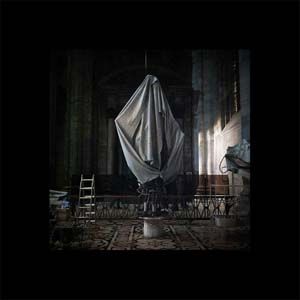
Thankfully Hecker’s staunch determination to present his music in as challenging a format as is possible, given that he’s become a relative superstar of the experimental music underground, means that there’s no later Eno-esque meandering on Virgins. If Ravedeath was the most dystopian of his works to date then Virgins is perhaps the most wilfully obtuse. This is something marked most clearly in a steadfast rejection of the atmospheric synchronicity that was so particularly noteworthy on Ravedeath and its sister release Dropped Pianos, largely the result of a stripping back of the distorted layers that have, after a fashion, become one of Hecker's main calling cards.
Rather than burdening himself with the need to create something uniform and whole it appears that Hecker has returned to the slightly more disorientating approach of 2005’s Harmony in Ultraviolet. This is cyclical, but not necessarily consistent, soundscaping, which is, roughly speaking, shorthand for saying that it’s just as rewarding but twice as daunting. Blurred lines come suddenly into focus in the shape of genuine instrumentation, before dropping out again at the most unexpected of moments. It’s like taking an ultra-slow rollercoaster ride in the dark... and there’s nobody sitting next to you to hold your hand.
Yet out of all this gloom emerges something passionately human. Hecker doesn’t need to make his music confrontational, but he continues to take the less obvious of the paths available to him, which tells us plenty. Virgins judders and shakes enough to make it potentially the least ambient of all his releases to date, but perhaps that also makes it more like the aforementioned “real world” than anything Hecker has put his name to before. If his collaboration with Daniel Lopatin (Oneohtrix Point Never) last year was a psychedelic dream trip through hazy underground passageways, then Virgins is waking from that trip to find oneself submerged in cold water. A struggle for air ensues; and, ultimately, a struggle for true consciousness.
Virgins then, more than ever, sees Hecker apply immense meaning to sound. It’s a series of rough abrasions rather than clean incisions which, in their brusqueness, communicate a startling array of genuine feelings. Icy cold this album may be, but over time it rewards repeated listening with an intriguing new insight into both your own psyche and that of its creator. In short, Hecker remains pretty much as purposeful and inventive a “sound artist” as is active today. Whether this most adversarial of his records means that he’s now on the attack or the defence is up to you to decide.