One of the biggest pitfalls that can befall a band is lack of focus. This can take many forms, such as the modern “prog” band that gets so caught up in complexity that they forget to write something with a coherent vision. Or the post-rock band that gets absorbed in their own ambient soundscapes and forgets that post-rock is supposed to rise and fall in intensity.
On their 2009 debut Metazoa, Bay Area extreme prog metallers Cormorant dealt with it in the form of the band with several disparate influences that they hadn’t quite figured out how to blend. However, in their case, the messiness of that album was part of its charm; the songs were a little all over the place in relation to each other, but despite some abrupt transitions each song still felt like it had a place, and sheer variety of the material on the album made it a fun ride. Still, 2011’s follow-up Dwellings was an improvement in all respects, trimming the fat and combining everything more seamlessly, and the result of their maturation was a masterpiece.
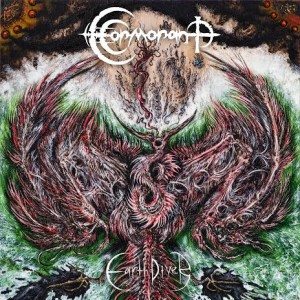
Earth Diver, the band’s third album and first with new bassist/lead vocalist Marcus Luscombe, sees the band working with some different influences and expanding on some old ones. The end result is an album that is messy much like Metazoa was, and like its predecessor it is also appealing because of that messiness; Cormorant has these shiny new toys that they haven’t quite figured out how to work, but the enthusiasm they show when playing with them is so powerful that the flaws are easy to overlook.
The first and most obvious question most Cormorant fans face is how the band has changed following the departure of founding member Arthur von Nagel, who was in many respects the face of the band both due to his position as the frontman and also his status as the most public member of the group. From a strictly performance-based standpoint, Marcus Luscombe fills the void more than capably, being similar to von Nagel in both vocal and playing style without cloning him. Lyrically, the band loses a little bit of grace, but Luscombe and guitarist Matt Solis are able to conjure up much of the same beautiful imagery that von Nagel did.
Musically, the band has undergone a seismic shift. Most notable is the black metal that has taken a stranglehold over the band’s sound, with tremolo picking and blast beats all over the album. In digging deeper, you find a fair amount of doomy riffs, most obviously in ‘The Pythia’ whose intro riff betrays some serious Cirith Ungol influence. Meanwhile, the traditional heavy metal leanings present in the band’s prior albums have been downplayed significantly, and when you trade out most of your Slough Feg influence for a whole lot of Monarque and a decent-sized chunk of The Lamp of Thoth, your music instantly takes on a darker tone. And this is by far the darkest work Cormorant has ever done.
In experimenting with these new sounds, the band struggles a bit with making them their own. The black metal parts in particular can be a bit ham-handed at times as the band doesn’t always transition smoothly into the blast beats and trem picking. Normally, this would be a problem, but the riffs are just so damn good that it doesn’t matter. Cormorant’s biggest strength has always been in the raw emotiveness of their music, and Earth Diver is incredibly powerful.
To me, though, the best part of Earth Diver is the promise it shows for the future. Cormorant has shown the world that they are not scared of evolution or experimentation, and they have also proven that they can produce exceptional music even when the territory is a bit unfamiliar. If, between Earth Diver and the next album, the band can undergo the same maturation process they went through between Metazoa and Dwellings, then the next album will be absolutely stunning, and I couldn’t be more excited.