Beastwars | facebook | twitter | bandcamp |
Released on April 22, 2016 via Destroy Records
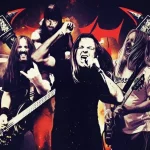
If this is the final Beastwars album, it’ll be a hell of a way to finish. Because The Death of All Things is a near-perfect monster. It crushes, it soars, it makes your head nod as well as think – and it even wows you with melody. But above all it still obeys the riff, the mantra that Beastwars have adhered to since their inception in 2011. But with The Death of All Things, the third album in their apocalyptic trilogy, they not only obey the riff, they stretch it, twist it, turn it down and teach it a few new tricks.
As good as their first two albums were, there was always the nagging thought that they sounded like someone else; a bit of High on Fire here, a little Mastodon there. And the relentless riffery bordered on suffocating if you weren’t quite in the mood. Not so with this album. Sure, they have continued with the elements that made the first two albums great, but they have brought in stuff like dynamics, tunes, clean(ish) guitars and – shock, horror – actual singing, to make this album sound utterly epic.
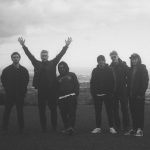
It is with a certain amount of poignancy that they have honed their racket to this point, because speculation has been rife that this could well be the last one. Apart from this being the completion of the trilogy, Nathan Hickey, the drummer, is moving to London. Although the band insist that it doesn’t spell the end, (Hickey said in an interview with Australia’s Beat magazine that “the Beast will never die!”), it is a hell of a lot harder to arrange a practice session when one of the members is on the other side of the globe.
But let’s not wallow in sorrow, let’s enjoy this one while we can. And where better to start than the opener, ‘Call to the Mountain’, a bellowing monolith of a song that has a chorus, which will leave you in danger of wrecking your neck. ‘Devils of Last Night’ follows and its loud-quiet pattern is underpinned by James Woods’ churning bass. The song is made even more brooding by having only bass and drums (and the occasional wail of guitar) accompanying vocalist Matt Hyde in each verse. It also has a few twists, like morphing into a throbbing, angry industrial-sounding noise for the last minute and a half.
It is the end to this song and the beginning to the next, the chilling ‘Some Sell Their Souls’, which recall some other bands from the town Beastwars hail from, Wellington in New Zealand. It has long been a hotbed of noise, and Beastwars‘ explorations beyond the riff recall Bailter Space, who honed their icy drone in the Kiwi capital after moving from Christchurch, and Shihad, whose angular heaviness in their early albums made audiences’ jaws drop.
Anyway, I digress.
‘Witches’ and ‘Disappear’ bring some stone-cold songcraft to the party but make no mistake, just because we now know that Hyde can sing and the rest of the band can lay off the noise a little, it doesn’t make them any less moody – or heavy. In fact when Hyde sings “I hear her say oh trouble, it knows your name” over a quiet yet malevolent backgrround, it sends chills up you.
The big surprise (which won’t be for you, after you read this) is the penultimate track, ‘The Devil Took Her’, which consists of an acoustic guitar, violin and a flute accompanying Hyde singing a morbid Southern porch song. It is no less dark than the rest of the album, but the switch in volume adds new depth to the band. The closing song, the title track, is frankly enormous. But the fact that the vocals and guitar step back in passages enables the song to breathe – like a mammoth’s breaths, but breathing nonetheless.
And it is at the end of this song when the album’s only flaw comes to light: it’s too darn short. You’re left wanting more of what may lurk down this new avenue that Beastwars have taken us.
We’ll just have to hope that this isn’t the last we hear from them.