It’s been two years since Klaus Schulze left this planet on April 26th at the age of 74, leaving an incredible legacy. Not just as a composer and a musician, but as a member from Tangerine Dream, Ash Ra Tempel, to the Cosmic Jokers.
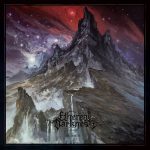
His final studio album Deus Arrakis was the perfect send-off release for the SPV label. Based on Frank Herbert’s 1965 sci-fi classic Dune, which he would make as an album from 1979 to the X album as a tribute to Frank released the previous year in 1978, a conceptual album on six musical biographies.
But something has reached upon the stars that’s coming through our galaxy. 16 years ago, a German film production company asked if Klaus would be interested to write a score about a documentary on computer hackers. Filmmaker Alex Biedermann, used small parts of Schulze’s music for his film Hacker as soft background music which would later be known as 101, Milky Way, completed in 2009.
Now, available for the first time, it is the perfect greeting from Klaus as it arrives to the SPV label with a surprising view of what he had been doing during that time frame. And portraying the soundtrack of our solar system into the silvery river that’s waiting for us to return.
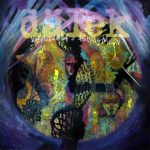
101, Milky Way feels like a continuation to his Ohr years with his first solo album Irrlicht released in 1972. The five pieces; ‘Infinity’, ‘Alpha’, ‘Multi’, ‘Meta’, and ‘Uni’ view a futuristic wasteland that is unveiling right in front of our very eyes. The passages take a wider expansion as if Klaus was continuing where Vangelis had left off during the sessions for the Blade Runner film, followed by California band’s Health and their score to the 2012 video game Max Payne 3.
Schulze takes us on a journey to create this visual, forming landscape as the way he sees it in front of the screen. There are moments where you begin to see that you’re not only surviving human being on the planet Earth, but the trance sequences to come out of nowhere makes it well-worth exploring.
You can hear those sequences between ‘Multi’ and ‘Mena’ where Klaus adds in that situation where everything becomes a signal of hope to send messages across the globe with its perplexing ride into the unknown. It is unexpected, and whatever you may think about those two tracks, Schulze gives Tom Dams a chance to go through a stress-relieving dance throughout the two compositions as he visions dancers getting down to the groove and keeping up with the pace that he and Klaus are envisioning.
However, he still keeps us going through the moments of meditating to take us into these ambient worlds which is shown on ‘Infinity’. Thomas Kagermann’s violin and middle-eastern vocalisations detail this post-apocalyptic nightmare that’s unfolding right in front of its very eyes, knowing things will be different, and things are about to get surreal.
Things takes a different approach where we go inside the planetarium and view the planets on the dome screen as ‘Alpha’ sets up the perfect mourning Schulze envisions in one of its shorter pieces that clocks in at 4-minutes. It also revisions elements between the Blackdance-era by continuing where he left off during the events of ‘Some Velvet Phasing’ that comes to mind.
Schulze’s legacy keeps growing more and more for younger generations to discover the man’s music and how much he kept the sounds of electronic music alive. The best place where you want to hear 101, Milky Way in all of its glory, is probably at the Planetariums where you would go for a midnight showing, and prepare yourself to be in awe of what Klaus has left in store for us.