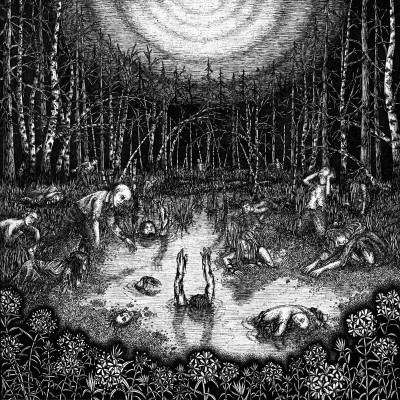
Comprising field recordings taken from abandoned churches and swampland in northern Russia, plus the thickest, murkiest tones that they could lay their hands on, the debut album from Moscow drone/doom/dark ambient duo Voidwards is the kind of album that you listen to when you get tired of hiding from the darkness and decide to immerse yourself in it, letting it seep into the pores, lungs and, most importantly, the eardrums. Bagulnik takes inspiration from the hidden landscapes of the “Otherworldly Russia” as well as the diary of Ilya Perfiliev, a rural teacher who documented his village’s gradual descent into insomnia, madness and eventual self-destruction in 1900 (or so the notes claim), and if the aim was to capture this sense of despair and desolation on tape then it’s an unbridled success.
From the outset, ‘Bagulnik I’ is an uncomfortable listening experience, a miasma of blackened drones, chants and static crackles that ooze and ripple from the speakers, the occasional howl that could be the groans of the damned but then again, might just be the wind, weaves to and fro. Gradually, glimmers of melody make their way into the mix, little snippets of gothic ambience that provide a semblance of structure, something tangible to cling to within that weightless gloom, yet it never veers too far towards traditional doom nor the blackened mindfuckery of the likes of Gnaw Their Tongues. Instead, this feels like the soundtrack to some long-lost experimental horror film, the audio counterpart to grainy scenes too odd and disquieting to ever really make sense of. As Lejonis van Haaske’s voice rises to near-clarity, so too do the waves of distortion climb steadily upward, further accelerating that downward descent into the abyss.
In contrast, the album’s second half is a much more structured affair, even if it does retain the same morbid air of loss in every possible respect. Yury fon Ungern’s bass is pushed more to the fore, his droning chords guttural yet with a certain sense of restraint that feeds into the almost cinematic vibe that Voidwards tend towards. Likewise, van Haaske’s tones are richer and more varied, great swathes of sustain piercing through babbles of voices that echo and swell like so many lost souls trapped in infinite wells. With a brisker tempo and a denser sound, by the album’s close it feels claustrophobic, as though the voice of the swamps that drove a village into insanity a century before were crying out once again.
If there’s one word that could be associated with what Voidwards have done here, it’s disquiet. This isn’t a record that sets out to be more evil than the competition, nor is it a particularly harsh listen – hell, in the right frame of mind this could be positively meditative – but there’s a pervading sense of unease in the way that the drones, moans and groans seem to slither and ooze. Maybe there’s a sense of misplaced personification in there, but that’s just how the mind works sometimes – if a swamp can call people to their demise, why can’t that same cursed spirit inhabit a drone doom record?