After a spot of folk prog voyaging in the company of Finnish adventurers Circle (on 2021’s Henki) and opening his last album with a vast forty one minute song (‘The Hermit’), Richard Dawson plonks back down on the sofa with a mug of tea for something a little more understated this time out. End Of The Middle is an intimate and domestic record, just his voice and sparse accompaniment. The cover suggests we call him ‘just Rich’ as if Richard is too formal, a nice touch that matches the familiar tone of the songs.
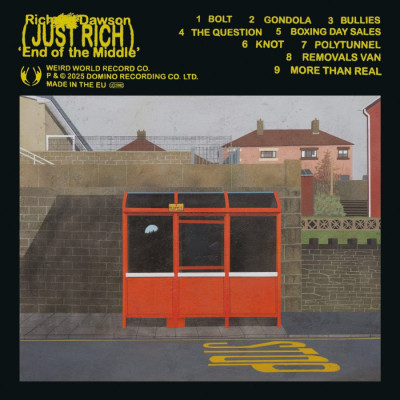
The cover painting shows a bus stop on a housing estate that could be anywhere in the UK, a handful of common elements under the flat light of the grey sky. This is the world of the album’s everyday drama, small moments mark out still space, daytime TV, lonely meals and drink. Dawson has suggested it might concern generations of the same family and while the songs venture out, (to school, the shops, the allotment, to hospital) it sometimes feels as if it’s all being remembered in the same front room. Years of worry scorched into the walls by the lightning that hits the roof at the start of the album.
Musically things are dialled right down, his guitar gently meandering, almost slowcore, Andrew Cheetham softly drumming in another room, maybe even out in the garage. Back when Dawson was performing completely solo his set would swerve into sudden outbursts of free form guitar improv, here Faye MacCalman’s contributions channel the wilder energies at work, most wonderfully on the clarinet solo in ‘Boxing Day Sales’. The wobbly unformed instrumentation serves to push forward the writing and it too is more pared back than much of Dawson’s previous work, its vocabulary more conversational. Sketching his character’s inner voices in small details, the songs are very carefully made but flow so naturally they feel like they’re simply happening, not building to dramatic revelations as much as drifting off like someone mid thought, they don’t overly impose themselves on you.
A lot is left open to interpretation, it’s not always clear what is happening or who is speaking from one verse to the next. Occasional lines poke through the mundane minutiae like flares of emotion, brushed past like we do when we say something that makes us feel vulnerable, that we’d rather not discuss. He keeps this in balance with an incredible lightness of touch, this is an album about the way hurt moves through families and how things go unsaid, so its songs leave things unsaid and let you infer. He doesn’t overplay it, there is much pain and sadness in these songs, not melodrama but the ordinary, everyday pain and sadness that runs through all our lives, that we try not to think about, that we put a brave face on.
And so the prevailing mood is warm and bright, if fragile. Life’s misery and beauty sat together, watching daytime telly. ‘The Question’ is an actual ghost story but other ghosts haunt the rest of the record, sometimes things go unspoken because we’re not even aware of them until they loom out of the darkness. Like that lightning bolt, shocking but suddenly understandable. On the last track ‘More Than Real’, feelings finally overflow when faced with the stark facts of life’s beginning and end. The reserved instrumentation switches to lush clouds of synth, Sally Pilkington sings the second verse, and I suspect it’s impossible to remain unmoved.
I’ve resisted quoting from the album’s lyrics here because I feel it would somehow do them a disservice and the openness to personal readings seems important to it, but there is some degree of resolution there. End Of The Middle is another extraordinary achievement for Dawson (or Rich), it’s compassionate, smart and unfailingly human.