There’s a lot of micro-indie out there, musicians releasing albums recorded in their bedrooms or at the local pub, unnoticed often by any except a handful of friends, so you can be forgiven if you haven’t heard of Hilliat Fields. But especially now, when solace is hard to come by and peace elusive, it’s time that you did.
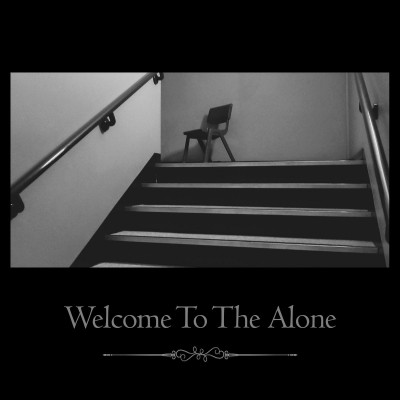
Hilliat Fields is the project of Marcus Druce — also an indie author whose Scraping Faeces off the Wall: An NHS cleaner’s COVID memoir is surprisingly moving and heartening. As Hilliat Fields, he’s released several dozen albums, 23 of which could be found on his Bandcamp page at press time. Most of these are some flavour of ambient, though they range from low-key songs with vocals to effervescent guitar instrumentals. Druce is a master of several instruments, and on the live-recorded Welcome to the Alone. he plays bass, guitar (with and without EBow), and a variety of analog and digital synthesizers.
Welcome to the Alone. is nearly as ambient as you can get — it creates and sustains a sense of space. You can forget that it’s playing. What you won’t forget is the impact on your troubled soul.
‘2000 Days’ leads the album off with soft, bell-like tones that wink on and off like fireflies in a forest. The shortest track on the album at just four and a half minutes, it feels even shorter. Before that ending can feel abrupt, though, it’s followed by the title track, which softly throbs into warm drones. As it loops and unrolls, a tiny ticking percussion line can be detected, and then, gradually, more subtle lines of sound appear. Five minutes in a repeating synth motif recalls Steve Reich, but this is no copycat work. The motif swims up from the background but never dominates; a counterpoint bows in as well, dovetailing in some places and clashing in others, and then they both drop back to the muted glory of the final few minutes. There’s a sense of loss in this stepping-down, but it’s one that underscores the theme; and the song finishes with a gentle footstep percussion.
‘Of Silence’ plays with cheerful arpeggios over a bath of synth pad, seeming to imply that quiet holds delights. Both ‘No You and Me. No Us’. and ‘Alone Not Lonely’ have a pleasant tone. Could it be that the “Alone” is, in fact, a desirable place to be? ‘Rainfall Joy’, complete with a variety of tinkling and percussive “raindrops”, seems to answer the question in the affirmative. And if ‘Everyone Dies Alone’ seems like a sad thought, this simple, restful track, with its distant-thunder coda, suggests that it’s perhaps a comforting one as well — it is all part of the human experience. We are neither more nor less alone in death than anyone else.
The album concludes with ‘Joy’, which brings together several elements of the earlier pieces — drones, gem-like rhythmic ping-pongs, synth washes and gentle percussion to nearly-invigorating effect — like being awakened from a meditation.
These pieces have shape — they wax and wane effectively, which both provides room for closer listening and allows one track to drift almost seamlessly into the next. The listener is lulled into the soundscape so effectively that one loses track of time, very like being in a state of creative flow. One emerges feeling cleaner and clearer — no small gifts — and at peace with alone time.