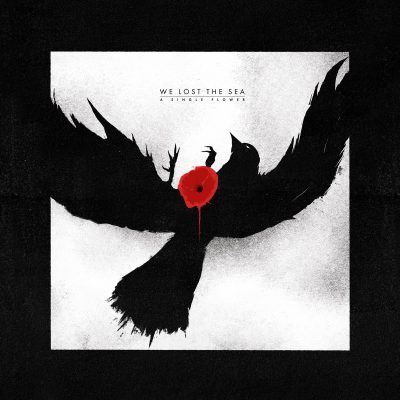
I have an uneasy relationship with post-rock. For all its lovely peaks and troughs, crescendos and diminuendos, it has, over the years of a billion advertisements and nature programmes, devolved into music for Audi-driving centrists.
I know, this is all on me – it is not the fault of the musicians that their work has been co-opted by people who care little for the art.
Maybe the tipping point was when a very close imitation of Sigur Rós was used to sell Coca-Cola. Or a single This Will Destroy You track providing the dramatic accompaniment in four separate Hollywood films. Or it could have been when former comedian turned anti-woke culture warrior Ricky Gervais used the gorgeously sad ‘A Gallant Gentleman’ from We Lost the Sea’s Departure Songs in a TV show.
Or maybe it is that we have arrived at the state where the machine has realised that this is what the people want: a mildly satisfying riff or chord progression, gradually building a crescendo, a dynamic change here, an effects pedal and a melancholic violin there, throw in a few ethereal vocals and hey presto.
And yet. And yet. Here I am, enticed in by a new We Lost The Sea album. Their first one for five years and a full decade after Departure Songs (if you haven’t heard it, please do – and if you need convincing, there is a superb review of it here).
And for the first couple of minutes of If ‘They Had Hearts’, the opening track to A Single Flower, things seem straight out of the Post Rock For Dummies manual. A repeated guitar vamp played progressively louder. Then the low – like room-shakingly low – hum of the bass comes in, along with a piano, and another guitar, the drums get a bit lively and we have a slow-burn crescendo.
The theme continues on ‘A Dance With Death’. A simple bass line gets things started, joined early in the song by a palm-muted riff, as new drummer Alasdair Belling hits his instrument with the first of three different implements (felt mallets, which he follows with regular rock sticks and brushes). The effect is great – and the drumming in the album is a huge highlight. But again, the music gets progressively louder, before the release – another post-rock trope – and an atmospheric interlude, before another build-up and a return to something closely resembling the original palm-muted riff.
Which is fine, but therein lies the problem. “Fine” isn’t an adjective that you want to hear (or write) about a new piece of music. Especially considering the band clearly poured their hearts into, judging by the promo notes, in which they said: “The world lay wrecked before us, a quiet ruin of things lost and things that never were. The mornings came like the grinding of old gears, a slow turning toward some unknowable purpose. And yet, in the stillness of despair, the nameless rose. Not for hope, nor for meaning, but because something in the marrow of our bones whispered that to rise was the only rebellion left.”
Maybe they were so weighed down by events that they just wanted something comforting; safe. Because that is how it sounds. They welcome violinist Sophie Trudeau from Godspeed You! Black Emperor on ‘The Gloaming’, which is moody and spooky – music that provokes a genuine reaction, as opposed to “this is nice”. But it makes up only three minutes of the entire album.
The final song is a weighty bugger. It carries the title of a famous Shakespeare quote from Macbeth, ‘Blood Will Have Blood’ – where the protagonist feels duty bound to follow murder after murder in his (or his wife’s) relentless pursuit of power. In the context of this album, it is presumably a statement on the state of the world and the various madmen in charge of the weapons in it.
It has more false endings than the last Lord of the Rings movie and about as many peaks and troughs as a Tour de France alpine stage. And if I am being frank, it could do with being about 10 minutes shorter than its near 30-minute duration.
There are some brilliant bits in it, the metallic middle(ish) section, the skipped beats (in my head they’re pop-punk-leap beats, as they were popular among that ilk in the 1990s) after the first fade-out, to name but two. But it is unwieldy and seems content to lull us up, let us down and do so again. And again. And again.
Maybe that is what post-rock is these days – safe, predictable, with the veneer of jeopardy by way of a few riffy quirks, or variation in instrumentation, but I want more. I want shivers, goose-bumps.