Interview: Agnostic Front
We're grateful, people love us, but we also are so passionate about what we do, and we're genuine about what we do.
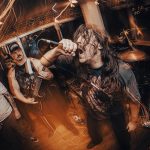
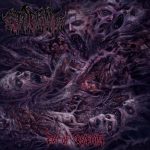
Agnostic Front, the undisputed kings of New York hardcore, have recently brought out their thirteenth full length album Echoes In Eternity and it sees the band sounding as powerful as they always have on its fourteen energy packed hardcore anthems. Gavin Brown has the pleasure of catching up with Agnostic Front vocalist Roger Miret to hear all about Echoes In Eternity as well as discussing everything from hardcore, hip hop and New York to his books and other bands in an interview with a true hardcore legend.
E&D: Your new album, Echoes In Eternity has just been released. Have you been happy with the reaction it’s had so far?
Roger: Absolutely. So far, so good, everything I’ve seen has been pretty positive.
E&D: What does the title of the album refer to?
Roger: We completed the album, and we were most likely going to call it Way Of The War because normally we name the album after the first song on the record, but I wanted to do something different this time. I was watching Gladiator 2, and in the opening, when they’re about to go to war, there was a big speech saying, “what we do now echoes in eternity”. I was like, whoa. Echoes In Eternity. Agnostic Front Echoes In Eternity which is a true statement. So I called the producer, Mike Dijan and he said, Wow, that’s great, and that’s what we called it, Echoes In Eternity.
E&D: The track ‘A Matter Of Life And Death’ features DMC from from Run DMC, how did that collaboration come about, and how was the experience working with him on the song and the video?
Roger: It was a great experience. Darryl loves rock, loves heavy music. Obviously, they did the Aerosmith collaboration, and, if you follow him, you see he’s always doing rock stuff. He saw our documentary The Godfathers Of Hardcore and he loved it. He’s calling me, saying, Hey, Roger, we live parallel lives, man, you do hardcore, I was doing hip hop at the same time. We were both in the city. You were in the Lower East Side, I was in Hollis, we have more similarities than everything. He loved it. He loved singing. Was always yelling Stigma! He started coming to our shows, and he kept saying, I want to do a song. He had a song, but we were in the middle of touring, and then we’re going to do it and start recording. I said, let me get through this tour, and let me get through this recording. Then I’ll hit you back up. When we were doing the writing, this song just popped up. Originally, I sang both the first and second verse, and then Mike Dijan said, how about we get Darryl do the second verse. We sent him the lyrics in the song, and he’s like, Wow, I love this song. Man, is this for me? I’m like, yeah, man, do what you want to do. We showed up to the studio, he did his style. Nobody told him what to do, I wanted him to be him. We did the video after. We’re going to do the song together really soon, here on Vinnie’s birthday in New York City on December 6, it will be the first time we’ve actually played this live.
E&D: With hip hop coming up at the same time as punk and hardcore in New York, was it something you’ve always been around and been a fan of?
Roger: Absolutely always around, been a fan of the early stuff, for sure, I started losing faith, or disconnected with the more gangster stuff, bitches and hoes and guns and drugs, that wasn’t the earlier hip hop bands’ message in the very beginning. I grew up in the whole early New York scene going all the way up to Run DMC, Public Enemy, Rakim. Beastie Boys were on the same label, and they were switching doing hip hop. We were both on Rat Cage Records, their first seven inch and the first 12 inch were on Rat Cage Records, and we came out right at the same time, then they started doing hip hop stuff. The culture was there, the big boom boxes. We would always be in the park blasting hardcore and hip hop, because that was the culture. It was just music from the streets talking to the streets. It just became a little bit different.
E&D: The track ‘Sunday Matinee’ also features on the album. Did you want to immortalise those legendary days of CBGBs with that song?
Roger: Well, that track itself, ‘Sunday Matinee’ is a special song for us because it’s really a celebration of our live shows and who we are, and how we made lifelong friends at those Sunday matinees. We met bands at those Sunday matinees. It was very important for us, and that’s a celebration of our live show still today. That was what ‘Sunday Matinee’ is pretty much all about. But at the same time, it’s paying homage to CBGBs. You can see in the video, we’re playing in front of CBGBs. We’re probably the band who played the most at CBGBs ever. I think we were the last band to play at a hardcore matinee, Hilly wanted us to play.
E&D: I was lucky enough to make it to CBGBs a few times when I went to New York with my dad. The first time, you were playing with The Disasters which was brilliant. It was a dream come true just being there with all the history the club had.
Roger: Oh cool. Yeah, it’s a shame the club is gone. It should have never gone. It should have been saved by historians, but there’s greed there, and where there’s greed, you can’t do nothing about it. The funny thing is, that it all had to do with it being too loud. You moved to New York City. You’re in New York City. What do you expect? Peace and quiet?! I can see if you moved to a farm, you want peace and quiet, but you’re living in New York City, everything is loud?
E&D: What were some of the greatest Sunday matinee shows that you ever played and saw?
Roger: Well, originally the matinee shows were all Saturdays. I think it was 85 where he started switching to Sundays, which was better because the shows would go on a little bit later, like 3 or 4 because Sundays was always the audition nights, late at night. Saturdays used to be two shows. A matinee early, followed by a regular club show, because this is Saturday. It was a decision to move it to Sundays by Hilly, and it worked out because it made it more like we could do anything we want. We have almost a whole day to do anything we want. We actually had many great bands there. I mean, too many to list, to be honest with. Minor Threat, Bad Brains, SS Decontrol, and then later on, you start with all the touring bands from the West Coast, Adolescents, NOFX, even Rancid got to play there too, It was just incredible. But it was always much better when it was just a straight New York hardcore show. It was just more intimate for us.
E&D: Was it like a second home for you and Agnostic Front?
Roger: Absolutely, It was somewhere to go on Sundays. People go to church on Sundays, we would go to the matinees.
E&D: Can you tell us about your latest book With Time?
Roger: The third edition just came out now. What’s really cool about it, if you pick up the Generation Records one. It has our very first flex that we ever did. It has the original singer, John Watson, singing from a song in 1982 recorded at CBGBs with Agnostic Front and The Abused, which is cool. With Time was something I took my time doing. It was during the pandemic, so there’s a lot of time to do a lot of things. After my own autobiography, I really said everything I had to kind of say. So I didn’t want to do another book that was a written book. It took a long time to do my autobiography. It took ten years. I wanted something visual, because we had our documentary The Godfathers Of Hardcore, which was a beautiful film done by Ian McFarland. I think it’s a gorgeous film, not because we’re in it, but I just think cinematically, it’s beautiful. He told a great story. It’s a very different documentary than your typical music documentary. This was a real beautiful, laid out documentary. So I wanted to do something as beautiful in a book term, but I wanted the photos and the story in a timeline, to tell the story of a very special time of Agnostic Front before its creation, leading into when we go on tour in 1986. Things were so personal back then, like everything, when everybody was involved, from all the zines, all the flyers, all the musicians, it was more of a collective and I wanted to show that. In the middle of it, I kept a diary on our very first tour, and that was what tells the main part of the story. There’s seven chapters in it. They’re very brief, and they talk about very explicit historical moments, then this tour, you got to see what the tour is like with us. You see notes from the tour. You can see photos. I wanted something special like that, that actually told the story. In the new edition, the third edition, Vinnie has a little ending in it, a foreword in the end. Each edition has add ons, there’s more photos, there’s different flyers, there’s different things, different artefacts. I’m really happy with this brand new edition, everything’s in it. It’s really still a beautiful book, still heavy, still great.
E&D: Was it a cool experience, looking back at that time with the book and your autobiography as well?
Roger: Yeah, doing my book was very therapeutic for me. I didn’t know it would be. I kind of didn’t want to talk about some stuff, but I had a friend who, after ten years, taught me, helped me, which is the best thing I ever did, it was great. He said let me help you. I want you to finish it, because I know you, I didn’t have time to finish it, and I’m glad because it’s the best thing that ever happened to me. He pulled some other stuff out of me that I probably would have said, it was very therapeutic, and I did it. Then the moment comes when it comes out and it’s it. I live with it. It is what it is. I only did that for my own family, for my children, so they understand our legacy and what dad has done. But of course, the masses got it, and the documentary actually complimented the book in a weird way, because we didn’t know what’s happening with the film, but if you saw the film and you read my book, you get extra of those moments, those times that I talk about in my book. So doing With Time was kind of the same thing. It was awesome, because it’s all of my artefacts, all the stuff that I saved, and then piecing it together by tattoos. That’s how I did it. Oh, I had this tattoo here, these tattoos later, I started putting the photos to shows, and it was just reliving that whole life, going back in chronological order, putting it all together and piecing it together. It was cool. It’s very therapeutic.
E&D: In the documentary you mention at the start of it how creative the hardcore scene was a time when New York was magical. Do you still look back on those early days of Agnostic Front and NYC with fondness?
Roger: Absolutely, I always look back at the early days. I’m grateful I still have my memories. Those are the best days and most magical days of my life, and where I made some of my lifelong friends. I’m grateful to have lived that time. It was a special time in life to live, I’ll tell you that much. It ain’t nothing like it is today. If you read my book, or read lyrics on some of these early records, and you go see New York City today, it’s like, what is this guy talking about? It’s very different. Back then, a whole city block, for example, let’s just say Avenue C, between Fifth and Sixth Street, there was just one building standing. It could have been either occupied or abandoned, and everything was just crumbled. Now, everything is new. Everything is nice. You can’t even believe what it was. It was like a bomb hit the Lower East Side. If you go back and look at pictures from the 1980s or 70s, you’ll still see it. That’s what it all looked like. That’s what it was like. It was our giant playground for us to have the time of our lives, to be honest with you,
E&D: It must also make you feel good that Agnostic Front is still going strong, every album’s as strong as the last one, and you still seem so energetic, even with how long the band’s been around. Do you still get that same buzz each time you bring out an album and play live?
Roger: Yeah. I mean, we definitely do. There’s a lot of bands. There’s very few of them that give back as much as we do, because we’re grateful. We’re grateful, people love us, but we also are so passionate about what we do, and we’re genuine about what we do. So we’re always, constantly writing and giving back. There’s bands that go out there and they’ll only have one or two albums, whatever, God bless them, whatever they’re doing, but you can see Agnostic Front is a different band. It’s a band that is current, and still living the passionate, genuine life that we still do. We continue putting out new stuff and a lot of the new younger bands, they all want to hear the stories. We love sitting around talking, shooting shit, telling stories, but at the same time, these bands are inspiring us too, because we watch them play every night, watch what they do every night. So having that contact, and being on the road so much, and seeing so much with our own eyes. We’ve got to travel the world. Some people never leave their cities, that together, collectively, is what keeps us genuine and real. We love giving back.
E&D: You are playing a few shows before the year is out and you’ve already got lots of shows planned for 2026 already. Do you still love getting out there and playing live, especially playing new material that people haven’t heard before?
Roger: That’s exactly what we’re excited about, because we want to play. We’re hoping to do at least three new songs on this December tour, and hopefully six by time February comes. We didn’t get to do that with Get Loud, because once that album was released, which we love, we got hit with the pandemic, so we never got to back that album out. So we’re excited that now we have a fresh new album, we could go out there, and just enjoy the times, enjoy the music. That’s we like to do. We just like to express ourselves and enjoy and play music and welcome people, and hopefully everybody has a great time.
E&D: With another new album out, is choosing a setlist a difficult thing to do?
Roger: It’s funny, you say that, I’m trying to figure it out because we got to play our classics that do really great in our setlist but we also want to introduce new songs and see how they how they work. We got songs that we feel very confident about, but they may not work live. Maybe this other song works better live, and not till we’re actually out there playing them and seeing hitting, will we know. For example, probably my favourite song on the whole record is ‘Divided’. It’s a great song, and I’m dying to play it live, but it might not be a live song. and doesn’t click live. There’s songs that I’m excited to play. I have a feeling that’s gonna click, and we know we have some that, we’re gonna go in and out and figure out what works. This is a hardcore band. It’s not like a like a heavy metal band of some sort that could play for an hour and fifty/hour and a half. Hardcore has always been about the aggression! I want to go up on stage and I don’t want to stop and I want to hit everybody in the head with a baseball bat. That’s my show, right? So you could only do that so for so long, Like, it’ll bum you out because you didn’t get to hear your favourite song, or whatever but we have thirteen albums of favourite songs to pick from, and at the same time, we’re not standing there. We’re giving you a show. If we were standing it, man, we could play it for a long time, I guess, but we can’t stand there. I cannot stand there and sing. I can’t do it, mentally, I can’t do it. I gotta run, I gotta move, it’s going through me. So hopefully we’ll be able to jam as much as we can through, or we’ll ease our way into it and alternate songs and get it cool.
E&D: With Vinnie recently releasing a solo album, is that something you’ve ever considered doing, obviously you’ve had your other bands The Disasters and The Alligators?
Roger: Disasters was my solo record, pretty much. I also did a country song with The Disasters way before Vinnie did! It’s called ‘…JR’. It’s actually a song I wrote for my unborn son. I remember my wife waking up, she was like, what are you doing? I’m like, I got a song in my head. I was writing the lyrics and I was doing the music. It was three in the morning! Vinnie’s having the time of his life. Vinnie’s just out there. Everything we do on the side is always just that, on the side. Our number one priority is always going to be Agnostic Front obviously, and with Agnostic Front being so active, I haven’t had enough time to jump back into The Disasters. We have an album though, but we just haven’t had time to jump back into. That’s something that’s going to happen in the future. Rhys from The Disasters has been playing in The Alligators with me. The Alligators never intended to be a live band because of where we all live geographically. We can’t really rehearse. It’s just a really fun project with people that love hardcore. Maybe someday we’ll play show that’s be interesting, but there’s so much going it’s there, and I enjoy The Alligators a lot. It’s a lot of fun.