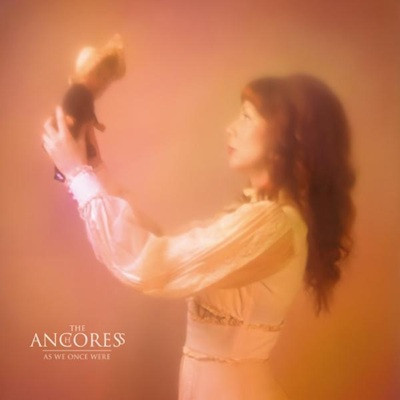
Can you believe it’s been 10 years since Catherine Anne Davies, better known as The Anchoress, released her first solo album, Confessions of a Romance Novelist? It has. In the decade since, Catherine has shown no signs of slowing down when it comes to her work as The Anchoress. She has released two studio albums between 2016 and 2021, a 2023 cover album titled Versions, a live album recorded at the London Palladium, and collaborations with the Manic Street Preachers and Suede’s Bernard Butler. You can tell that Catherine Davies isn’t backing down without a fight.
She has also won three Music Producers Guild awards for Self-Producing Artist of the Year between 2022 and 2024, as well as two PROG Awards for Best Newcomer and Album of the Year in 2021 for The Art of Losing. With Catherine, you never quite know what to expect. Now, five years after her second studio album, she returns with her third: As We Once Were.
Believe me: if you think 2026 is going to be an excellent year for music, you are absolutely right. Moving from her time with Kscope to the independent label Last Night From Glasgow, As We Once Were finds Catherine exploring motherhood, family trauma, and the complicated history of four generations of women.
At the centre of the album is a recovered recording of Catherine’s grandmother, originally made on cassette for a school history project. That discovery places the listener directly in the middle of the parallel worlds of these generations and gives the album an intimate sense of history.
With contributions from Eaves Wilder, composer Hannah Peel, Manic Street Preachers’ James Dean Bradfield, and Welsh-Cornish musician Gwenno, along with vintage synthesisers from Pete Townshend’s collection, Davies brings together an extraordinary collection of sounds and collaborators. More importantly, all of these elements feel connected to the long and winding road she has traveled to bring this album to life.
From the moment ‘Throw Over Your Man’ kicks things off following the surreal, gentle lullaby of ‘Du Temps Perdu,’ the album immediately grabs your attention. ‘Du Temps Perdu’ opens with fragmented vocal dialogue and the voice of Catherine’s grandmother before ‘Throw Over Your Man’ arrives like a blaring alarm in the middle of London. Its guitar textures and ascending chorus, enhanced by the arrangements she shares with Bradfield, create a huge sing-along moment that hits you straight in the stomach and refuses to let go.
When you see a title like ‘I Had a Baby Not a Lobotomy’, you already know you’re in for something confrontational. Catherine turns the frustration of motherhood into futuristic synth-pop, addressing the ignorant advice and dismissive comments women can receive after having a child. Being a mother isn’t easy, and for Catherine, that reality becomes a source of both vulnerability and defiance. She doesn’t shy away from the frustration or the rude remarks she experienced after becoming a mother; instead, she turns them into something sharp, energetic, and unapologetic.
Both the title track and ‘Damsels’ see Catherine diving into the deep end, with echoes of Goldfrapp and Massive Attack’s Mezzanine-era atmosphere. These songs swim across different emotional oceans, reflecting on moving forward, refusing to look back, and finding a way back to the surface. Catherine makes zero apologies. ‘Damsels’ also becomes a kind of history lesson, turning the familiar damsel-in-distress archetype, we grew up hearing about into something far more complicated.
In fact, I could easily imagine ‘Damsels’ appearing in DC’s ongoing comic-book series Barbara Gordon: Breakout, written by Mariko Tamaki. If Confessions of a Romance Novelist and The Art of Losing could serve as alternate soundtracks to Gail Simone’s run on the New 52 arc of Batgirl, then ‘Damsels’ feels like the perfect companion for Breakout.
You can almost picture Barbara Gordon—out of costume, having already lived through her time as Batgirl and Oracle—being arrested for aiding the Bat-Family and sent to Supermax, a maximum-security prison operated by a new GCPD commissioner under the authority of Mayor Poison Ivy. From there, Barbara is forced into a dangerous undercover operation to bring the prison down from the inside. As she navigates the prison cells, confronts her enemies, and struggles to hold on to her identity, ‘Damsels’ would provide the perfect soundtrack to Barbara’s journey through Supermax.
‘Happiness Don’t Show Up Like It Should (Prologue)’ sounds as though Catherine could have written it for Motorpsycho during their Heavy Metal Fruit era, while also feeling like a continuation of the atmosphere established by ‘Close Your Eyes’. Its sombre, ominous piano ballad drifts through a steampunk-like atmosphere, almost as if it is descending from the heavens.
Catherine then moves into Steven Wilson territory, occupying the space between Porcupine Tree’s ‘Lazarus’ and The Raven That Refused to Sing‘s ‘Drive Home’. On ‘All I Really Want Is Peace,’ Beatles-esque melodies collide with Floydian textures, creating another fascinating turn in the album’s journey.
You can almost imagine Steven Wilson being pleased with what Catherine has created. There is a sense that she has taken the lessons of her Kscope years and carried them forward into something that is entirely her own. But there’s more.
The angelic chorus and the sound of children playing and giggling with their mother send the synthesisers into a whirlpool of ambient textures behind ‘Stop the World’. Catherine moves toward the piano, honouring the spirit of John Lennon’s arrangements as she sings with remarkable warmth. The song eventually returns to its lullaby-like qualities, incorporating double-tracked drums, classical strings, and a deep bass presence that seems to pour through the heart of the West End.
The clicking and clacking percussion effects make ‘Hand to the Tide’ all the more sinister, transforming the track into a gothic landscape filled with Fleetwood Mac textures reminiscent of the Rumours era. Catherine channels Stevie Nicks’ ‘Gold Dust Woman’, adopting some of that song’s dark, mystical energy. You can almost picture Catherine in a flowing Bohemian dress, tipping her hat to the legend while carrying that torch forward and discovering where she can take it next.
Then comes the rumbling metallic punch of ‘Justice for Saint Mary,’ which carries the chaotic energy of Diablo Swing Orchestra’s Pandora’s Piñata. It is another reminder that Davies refuses to remain in one musical lane. She moves between synth-pop, progressive rock, gothic atmospheres, folk, ambient music, and heavier textures without ever losing sight of the emotional centre of the album.
The spirit of David Bowie also makes its presence felt, particularly in the space between The Next Day and the Heathen era. Mellotrons and acoustic-folk textures create an almost angelic ascent before the album reaches its farewell. Its 3/4 time signature gives the song the feeling of a lullaby waltz, dreamy and deeply emotional as Catherine says goodbye to her grandmother. It becomes more than a closing statement, it is a tribute to someone whose life and memory helped shape the woman Catherine Davies has become.
And perhaps that is what makes As We Once Were so powerful. This isn’t simply an album about looking backward. It is about understanding where you came from while figuring out where you are going next. Catherine Davies takes memories, family history, motherhood, grief, anger, and love and turns them into something expansive and cinematic.
As I sit here writing this, with Batman issue #12 beside me and the introduction of Batman’s new butler, Verity Pennyworth, the great-niece of Alfred, carrying the Wayne family legacy, I can’t help but think about legacies of another kind. The Anchoress is back in action, and Catherine Davies is building a legacy of her own.
It is always a joy to see what Catherine has up her sleeve, but As We Once Were feels like something more significant. It is intimate without being small, ambitious without losing its emotional core, and powerful without needing to shout at every opportunity. Catherine has taken the experiences of four generations and transformed them into a record that feels both deeply personal and remarkably universal.
As We Once Were is not just another chapter in The Anchoress’ story. It is a statement of where Catherine Davies has been, who she has become, and where she intends to go next. And if this album is any indication, as I’ve mentioned earlier, The Anchoress isn’t backing down without a fight. She’s only getting started.
With the determination of Wonder Woman, she’s kicking ass, carrying the Lasso of Truth, and charging headfirst into whatever comes next. You can almost picture her standing alongside the Birds of Prey, leading the team with Huntress, Spoiler, and Black Canary at her side, ready to take on whatever the world throws at them and getting Barbara out of prison. That same fearless spirit runs through As We Once Were: Catherine knows where she has come from, she knows what she has survived, and she knows exactly where she wants to go.