Before Genesis became one of progressive rock’s defining bands in the 1970s and later embraced a more pop-oriented sound throughout the 1980s and into the ’90s, they began as a group of gifted young musicians who dreamed of making it big. Nearly six decades later, their earliest recordings offer a fascinating glimpse into the formative years of a band whose members would eventually become known for their innovation, ambition, and willingness to push musical boundaries.
During Peter Gabriel’s tenure as frontman from 1967 to 1975, Genesis developed an extraordinary musical identity, combining theatrical performances, storytelling, intricate compositions, and adventurous arrangements across classics such as Trespass, Nursery Cryme, Foxtrot, Selling England by the Pound, and The Lamb Lies Down on Broadway.
But before all of that, Genesis began as a group of Charterhouse School boys who wanted to make their mark on the world. Growing up in the strict environment of a traditional English boarding school gave them plenty of reasons to rebel against the rules and expectations imposed upon them. Music became an outlet for that rebellious spirit, even when the school authorities disapproved.
“I was banned from playing the guitar for most of my career at Charterhouse“, Mike Rutherford explained in the 1998 VH1 documentary accompanying the first volume of the Genesis Archive box set. “Because it was a symbol of the revolution. Anarchy’s about to break out in the school. Maybe that made us even keener“.
Something about the psychedelic movement of the late 1960s clearly appealed to these young musicians. According to the VH1 documentary, Gabriel would sneak out of school where he could experience the clubs and emerging music scene.
Meanwhile, various school groups were forming, playing songs by The Beatles, the Rolling Stones, and other artists whose music had captured the imagination of British teenagers. Although the future members of Genesis loved the sounds coming out of Britain during the decade, Anthony Phillips eventually encouraged his fellow musicians to take the next step and start writing their own material.
“Whenever you start playing music as a teenager, you stand in front of the mirror and imagine a huge audience. All the fantasies are there“, Peter Gabriel would explain in the VH1 documentary.
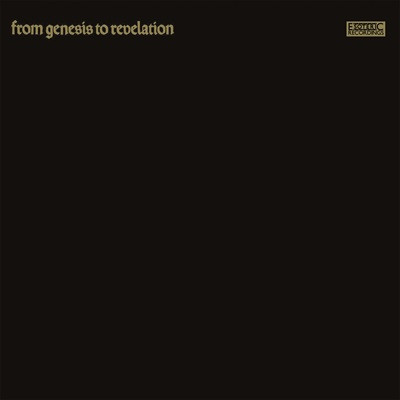
That youthful fantasy of performing for an audience would eventually become a reality. Peter Gabriel, in particular, was beginning to develop his own personality as a performer and songwriter. Whether he was experimenting with his voice or immersing himself in music, he was serious about pursuing his ambitions. The band was about to embark on its first major recording project, which would become the 1969 debut album, From Genesis to Revelation.
“We had this friend called John Alexander, who was a bit more spirited than perhaps the rest of us, and he just rushed up to him [Jonathan King] and said, ‘Listen to this!’” Tony Banks recalled the encounter when discussing how he and his fellow musicians approached Jonathan King in the VH1 documentary, the successful songwriter and record producer who would become instrumental in getting Genesis their first recording opportunity.
King had already enjoyed a major chart success in 1965 with ‘Everyone’s Gone to the Moon’, a song he wrote while studying at Cambridge University. Although he played a significant role in helping Genesis secure its first recording opportunity, King’s later convictions for sexual offenses against underage boys cast a dark shadow over his legacy in the British music industry.
After listening to the band’s tapes, King recognised something interesting in their music. He suggested several possible names, including Gabriel’s Angels and Champagne Meadow. Eventually, in 1967, he proposed Genesis, and the rest, as they say, is history.
With King involved through his publishing company, the group began recording demos that documented its earliest attempts to find a musical identity. Some of these recordings would later appear on the fourth disc of Genesis Archive, Vol. 1: 1967–1975. They reveal a young band experimenting with melodic British pop, psychedelic textures, and vocal harmonies that occasionally recall the Bee Gees. One of the clearest examples of this early approach is ‘The Silent Sun’, which reflects the melodic sensibilities of the group’s formative period.
Featuring Anthony Phillips, Tony Banks, Peter Gabriel, Mike Rutherford, and drummer John Silver, Genesis recorded the material that would become From Genesis to Revelation during 1968. The sessions included orchestral arrangements involving strings and brass, added without the band’s direct involvement in shaping the final sound. The result was a production that the musicians reportedly found disappointing when they first heard it.
Originally released on the Decca label in March 1969, the album struggled commercially. It was reportedly placed in the religious section of record shops because of its title, an unfortunate misunderstanding that did little to help its prospects. Only around 650 copies were sold, making it a difficult beginning for a group that would eventually become one of the biggest names in progressive rock.
Listening to From Genesis to Revelation, you can hear a band that is still finding its feet. The musicians were young, and their songwriting had not yet reached the sophistication of their later work. Nevertheless, there are fascinating ideas scattered throughout the album. Its blend of psychedelia, pastoral folk, British pop, and baroque-inspired arrangements hints at the direction Genesis would eventually take. Even the Bee Gees-inspired vocal approach has its place within this early musical identity.
It would not be until Genesis signed with Tony Stratton-Smith’s Charisma Records that the band began moving decisively toward the progressive rock sound that would define its early 1970s output. Their second album, Trespass, was released in 1970, with John Mayhew replacing John Silver on drums. The contrast between the two albums is striking: where From Genesis to Revelation often leans toward concise pop songs and psychedelic experimentation, Trespass opens the door to longer compositions, darker atmospheres, and more ambitious instrumental passages.
I remember buying Foxtrot and the first album at Borders 26 years ago. Revisiting From Genesis to Revelation takes me back to those days, when I was first discovering the band’s remarkable musical journey. Even though the debut was a far cry from the masterpieces that followed, I have always found something compelling about its sound.
You can hear Genesis gradually realising that the psychedelic pop world in which they began was no longer enough to contain their ambitions. They were ready to move toward the underground progressive rock movement that was gathering momentum around them.
For years, the debut album seemed like a skeleton in the band’s closet, a chapter in their history that was difficult to reconcile with the music they would eventually create. Yet time has given these recordings a different significance. Around a decade ago, multi-track tapes that had seemingly been lost came to light, opening the door to a fresh examination of the album’s creation and sound.
This 4-CD/1-Blu-ray edition from the good folks at Esoteric Recordings brings together the original stereo / mono recordings, alternative material, and new mixes, with the reissue approved by the relevant Genesis members. Stephen W. Tayler’s new stereo mix offers a fresh perspective on the 1969 debut, allowing the arrangements and instrumental details to emerge with greater clarity.
Listening to this material again brings back memories of December 2000, during my freshman year of high school. It reminds me of how much I enjoyed discovering Genesis and how powerful their music could be, even when I was exploring the earliest chapters of their career.
This is not the first time these demos have surfaced, of course. As mentioned earlier, some were previously included on the fourth disc of Genesis Archive, Vol. 1: 1967–1975. Nevertheless, having this material presented within a dedicated archival release makes it easier to appreciate the evolution of the band’s sound.
The set includes mono and original stereo mixes, along with demos that reveal how the band’s ideas developed. One particularly fascinating example is the pastoral, mid-tempo version of ‘Visions of Angels’. Its delicate folk textures caught me completely off guard, presenting the song as a work in progress before Genesis transformed it into the more expansive composition heard on Trespass.
The demo offers an intriguing glimpse of Phillips’ compositional ideas and Banks’ piano work during the band’s formative period. Although the piece did not appear on the debut album, its later development demonstrates how the group was learning to expand its arrangements and explore heavier, more dramatic textures.
When you listen to Tayler’s mix of ‘The Serpent’, you can hear the beginnings of ideas that would eventually emerge in later Genesis compositions, including ‘Twilight Alehouse’. There is also a dark, almost Bo Hansson-like atmosphere, with percussion that suggests a galloping journey through a Tolkien-esque universe. The song then moves into a shadowy guitar passage, driven by the powerful interplay between Phillips and Rutherford.
Its rumbling D-minor character and forceful opening riff hint at a band beginning to discover the dramatic instrumental language that would become one of its trademarks. The composition also evolved from an earlier acoustic demo titled ‘She Is Beautiful’, making the recording particularly interesting for anyone fascinated by the group’s creative development.
The B-side ‘That’s Me’ explores alienation through Gabriel’s perspective, with vocal inflections that bring Robin Gibb to mind. There are moments when the song evokes Love’s Forever Changes, and I can easily imagine Arthur Lee bringing his own distinctive vocal character to this material.
Gabriel sings from the perspective of an outsider, someone who feels excluded from the fashionable crowd and struggles to find a place within it. Musically, the track moves beyond the more polished orchestral pop of the album, embracing a stronger psychedelic edge and a more emotionally exposed performance.
The distorted guitars on ‘In the Beginning’ sound like a launch into outer space, immediately establishing a powerful psychedelic rock atmosphere. Banks’ pounding piano adds a sense of urgency, while the instrumental interplay evokes the expansive, melodic territory explored by the Moody Blues. Silver’s drumming and Rutherford’s bass provide a steady foundation beneath the arrangement, pushing the song forward with an almost cinematic momentum.
Then there is ‘In Limbo’, where Genesis explores a more soulful direction, bringing Motown-inspired elements into the mix. Tayler’s new mix adds depth and atmosphere, particularly through the treatment of Gabriel’s vocals, where the delays help emphasise the song’s emotional character.
The lyrics touch on ambition and fear, themes that would continue to appear in different forms throughout the band’s career. Tayler has clearly put considerable care into these new mixes, giving the material a more spacious presentation while tightening the overall sound. The result is a debut that feels freshly illuminated rather than simply polished for another reissue.
The rough mix of ‘Build Me a Mountain’ provides another glimpse of the direction Genesis was beginning to pursue. Its references to kings and queens, Hendrix-like guitar textures, rumbling acoustic chords, and exploratory instrumental passages point toward a heavier and more progressive sound.
Phillips’ improvisational playing brings to mind the adventurous spirit of Love, while Gabriel’s vocal performance places the listener inside a hall of mirrors, confronting distorted reflections and inner demons. The track may still belong to the band’s early psychedelic period, but its musical ambition suggests that Genesis was already preparing to move beyond it.
Stripping back the overproduced sound of ‘One-Eyed Hound’ also reveals a different side of the group’s early identity. I remember hearing the song as a bonus track on the Discus version of From Genesis to Revelation, and it is fascinating to hear how much its character can change depending on the mix. Tayler brings a sharper, more immediate attitude to the performance, emphasising its baroque-mod structure and pop sensibilities. There are also hints of Ray Davies’ lyrical approach, with a distinctly British observational quality running through the song.
Meanwhile, the flute-jazz-like improvisation on ‘A Winter’s Tale’, supported by harmonizing background vocals, adds another dimension to the band’s early experiments. These details may seem far removed from the elaborate theatrical epics that Genesis would eventually create, but they demonstrate how freely the musicians were absorbing influences and trying different approaches.
The orchestration behind Banks’ piano-led hymn ‘A Place to Call My Own’ provides one of the album’s most reflective moments. Gabriel delivers a heartfelt performance centred on a tragic figure searching for a place in the world.
There is a sense of uncertainty in the song, as though the protagonist is beginning to realise that the road he has chosen may be reaching its end. Yet there is also a suggestion of liberation: the possibility of discovering his true self, accepting his circumstances, and choosing how he wants to live. The arrangement gives the song a solemn, almost theatrical quality, foreshadowing the emotional storytelling that would become central to Genesis’ later work.
The 1967 demo of ‘Patricia’, which would eventually evolve into ‘In Hiding’, is another worthwhile discovery. Its melodic character reminds me of Simon & Garfunkel during the Bookends era, and I can imagine Genesis absorbing that kind of songwriting as they developed their own musical language. The recording is a reminder that the band’s early influences extended well beyond British psychedelia.
From there, the collection moves into darker territory with ‘The Mystery of the Flannan Isle Lighthouse’. The song draws on the real-life disappearance of three lighthouse keepers from the remote Flannan Isles off the coast of Scotland in 1900.
The mysterious circumstances surrounding the disappearance provide an evocative foundation for the band’s storytelling, allowing Gabriel to explore a more unsettling atmosphere. It is an early indication of his fascination with unusual narratives, psychological tension, and the darker corners of the human imagination.
Gabriel would continue developing these interests as Genesis entered its golden era as a five-piece band.
His increasingly theatrical presentation, including the distinctive reverse-mohawk hairstyle that became part of his stage persona, helped transform the group’s live performances into something unlike those of most other progressive rock bands. The early recordings in this collection are fascinating because they allow us to hear the beginnings of that creative transformation.
The theme of betrayal and a relationship falling apart comes through on ‘Hey!’, whose energetic arrangement gives the song a particularly forceful character. The performance recalls the band’s Central Sound recording period in 1968, with its driving momentum and an almost confrontational sense of urgency.
The narrator pleads for forgiveness, but the woman in question is no longer willing to listen. She has reached her limit and calls the relationship off for good. It is a relatively straightforward scenario, yet the song’s emotional tension gives it an edge that makes it stand out among the band’s early pop-oriented recordings.
But it is ‘The Magic of Time’ that takes Genesis into especially interesting musical territory. The arrangement suggests an appreciation for the jazz language associated with Miles Davis’ ‘All Blues’ and the distinctive harmonic world of Thelonious Monk.
Banks’ playing introduces a swinging three-beat waltz feel, while Silver’s brushed snare work adds a lighter, more fluid rhythmic texture. It is an unexpected direction for a group that would later become synonymous with elaborate progressive rock compositions, but it demonstrates how much the musicians were willing to experiment with different styles.
We also have to return to the soulful character of ‘Try a Little Sadness’. Gabriel’s apparent affection for Otis Redding and classic American soul comes through in the song’s expressive delivery. Its energy recalls the musical traditions associated between the two labels; Stax and Motown, giving Genesis another opportunity to demonstrate that its interests extended beyond psychedelic pop. Even at this early stage, the musicians were absorbing different sounds and trying to find ways to make them their own.
As I sit here typing this review and watching Pokémon Concierge on my XBOX Series S, I cannot help but reflect on how many memories this album brings back. Revisiting From Genesis to Revelation takes me straight to my high school years, when I first began exploring the band’s catalog and discovering just how much I adored their music. There is something deeply satisfying about returning to an album you have lived with for so long and finding new details to appreciate along the way.
Is From Genesis to Revelation Genesis’ greatest album? Absolutely not. Was it a rocky start for a band that would eventually create some of progressive rock’s most celebrated records? Without question. There will always be hardcore fans who draw a line in the sand over whether the debut deserves a place alongside the band’s later classics. Some may dismiss it as an awkward first attempt, while others will hear the seeds of the brilliance that followed. That debate is a discussion for another time.
For me, the album’s importance lies in what it reveals about Genesis before the world knew what the band would become. These recordings capture five young musicians learning their craft, absorbing influences, experimenting with arrangements, and gradually discovering the creative possibilities that lay ahead.
The songwriting is uneven in places, and the original production sometimes obscures the band’s intentions, but there is genuine charm and musical curiosity here. With the new Esoteric Recordings collection, those qualities are easier to appreciate than ever.
Released on October 9th of this year, this new archival edition offers a timely opportunity to revisit Genesis’ 1969 debut and give it the recognition it has long deserved. Stephen W. Tayler’s mixes bring renewed clarity and depth to the recordings, allowing listeners to hear the material from a fresh perspective. Rather than rewriting history, the collection helps us understand the band’s beginnings and appreciate just how far these musicians would eventually travel.
Hopefully, this reissue will encourage longtime fans and newcomers alike to lift the curtain on Genesis’ earliest years and discover the album for themselves. It may not possess the grandeur of Selling England by the Pound or the conceptual ambition of The Lamb Lies Down on Broadway, but it remains an essential piece of the band’s story. Sometimes, the most rewarding part of revisiting a legendary group’s catalog is hearing the first sparks of creativity before they become a blazing fire.
And now, I have another wish for Stephen W. Tayler: please give the classic Genesis albums the same thoughtful treatment. I would love to hear new updated mixes of Trespass, Nursery Cryme, Foxtrot, and Selling England by the Pound. I would also welcome a reconstructed version of Genesis Live that includes ‘Supper’s Ready’ from the Leicester show on the Foxtrot tour. The 1970–1975 box set from 2008 remains in my collection, and I will never let it go, but there is still room for fresh perspectives on these extraordinary recordings.
Who knows what 2027 will have in store for the Genesis catalog? For now, I am keeping my fingers crossed. If this new edition of From Genesis to Revelation is any indication, there may still be plenty of musical treasures waiting to be rediscovered.