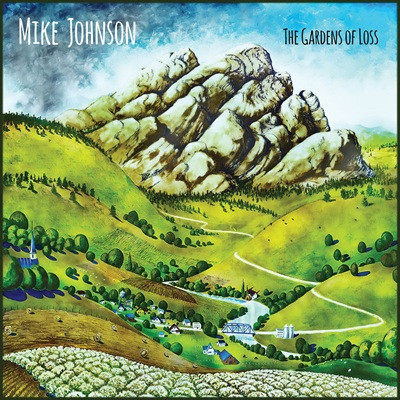
Since co-founding Thinking Plague in 1982, Mike Johnson has been taking the compelling wonders of the band’s music within the defying sounds of what is known as the Rock in Opposition movement. It’s clearly taking it a step further with his next challenge on his next album on the Cuneiform label The Gardens of Loss. Influenced by 20th century classical music, complex compositions, and taking the orchestral boundaries into 2026.
Mind you, this isn’t a Thinking Plague album, this is Mike taking it a big leap forward to see what the new year will hold for him. With the who’s who from Morgan Agren (Zappa alumni), Kimara Sajn, Bill Pohl (Thinking Plague), Dave Willey and Mark Harris (Hamster Theater), Simon Steensland, Caitlin Hilzer (Stratus Chamber Orchestra), and Elaine di Falco on vocals to name a few, they know right away on what Mike wants them to do, and take it a step further by heading into some darker territories that’ll wake the neighbors up and have them shit their pants, constantly.
Listening to The Gardens of Loss is like looking through the works of Schoenberg, Present, The Grand Wazoo, Henry Cow, and Univers Zero, rolled into one. This isn’t just a complex album, this is an intense yet mind-thralling release that’ll wake you up, nonstop.
The ominous piano chords behind ‘Destitution Meal’ weaves into a one-woman operatic song inside an apartment in the heart of the Big Apple, meshes Pierrot Lunaire and the tragic downfall that’s about to happen as Elaine heads deeper into a confrontation with her younger self as Johnson blares out these strange noises on his guitar, reflecting the chance to move forward and not looking back.
‘Transcience’ puts the listener inside a cell with its double-tracking vocals Elaine pours her heart into the song. You can hear elements of The Northettes, who were at one time a vocal trio (consisting Amanda Parsons, Ann Rosenthal, and Barbara Gaskin) worked with bands such as Hatfield and the North and Egg during the Canterbury scene. But this isn’t Canterbury, this is as heavy as you can really get.
The rhythm section creates this clock-ticking arrangement, adding tension to the beat with unexpected twists and turns Mike conducts with the twelve-tone technique in the serialism genre. When you think of ‘Boys with Toys’, its Mike doing this alternate score to one of the Ren & Stimpy shorts, Space Madness and Marooned with a Mr. Bungle twist.
That, completely took me off-guard, but Mike has the power and the glory to go beyond the four-letter P-word and go beyond this fast-paced time changing momentum with Elaine going in this rap-like beat poet which speaks of Allen Ginsberg in this dada-like effect. Meanwhile on ‘The Lords of Creation’, has this dark epic boundary with Elaine doing this melodic vocalisation with the instruments.
It sits perfectly well in what Zappa himself would’ve been proud to see what Mike has done by following in the Wazoo’s footsteps during those earlier albums from Weasels Ripped My Flesh, 200 Motels, Uncle Meat, to Burnt Weeny Sandwich.
When we get to the title-track, you feel as if we are witnessing an aftermath of a city in decay, rubble piling up, and the once utopian world of once was, has now collapsed. You can imagine Elaine walking through the rubble, singing about dreaming being at a summer’s lake, getting away from the chaos, but heading back to reality, knowing she will never get out. It has this eerie, surreal, yet Goyaseque illustrations coming to life, that sends goosebumps really quickly with its John Barry-like score momentum from the 1975 film, The Day of the Locust.
The profound work Mike has elaborated here with The Gardens of Loss is not for the faint of heart, but it carries you within reach to see what he will come up with the next chapter in his stories that will unfold in the mid-to-late roaring ‘20s. And we got to experience it.