When I was 11 years old back in 1996, this was 30 years ago, my mom and I went to Soundwaves as she went to buy the original London cast of The Phantom of the Opera starring Michael Crawford and Sarah Brightman. As I purchased the soundtrack to the 1981 adult-animated cult classic, Heavy Metal. My mind was blown of hearing the heaviness and raw attitudes of bands such as Blue Öyster Cult, Grand Funk Railroad, Cheap Trick, Journey, Devo, and Black Sabbath. Dio was my introduction to the world of all heaviness.
I was introduced into the world of hard rock. Dio came first; Ozzy came second. Dio was known as having a “towering set of pipes” with soaring, powerful, and incredible vocals that would give birth to what was known as the power metal genre. Fast-forward to 2026 and here I am, being re-introduced once more into the world on his time with Rainbow.
“By the time Rainbow gets going, you got the Mount Rushmore of heavy rock; Purple, Sabbath, Zeppelin. All of them shared a common denominator in the sense of all they were coming from the Blues. Ronnie James Dio and Ritchie Blackmore, wanted to explore this kind of neo-classical heavy rock music that is something way beyond“. Dio biographer Mick Wall describes the direction of the genesis in what Rainbow was planning to do in the 2023 documentary, Dio: Dreamers Never Die.
After Ritchie left Deep Purple, due to a musical direction the band were shifting from hard rock into funk rock in 1975 following the release of Stormbringer, you can tell the power and the Fister that hasn’t existed before with this dynamic between the incredible guitarist and the singer that no one has never heard before. When you listen to the Ronnie James Dio-era of Rainbow, you can vision this movie inside your head when he sings these fantasy-like arrangements that you almost couldn’t let go, because it was simply marvellous.
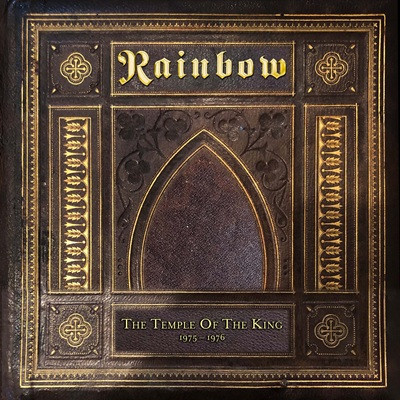
Even though it has been 16 years since we lost the pipes of hard rock, Dio’s legacy will never, ever go away. That and this 9-CD set from Edsel Records consists not just the first two albums which were originally released on the Oyster label in the UK, while being distributed by Polydor Records; Ritchie Blackmore’s Rainbow and Rainbow Rising, but three live recordings of the band’s first shows in Europe between Cologne, Dusseldorf, and Nurnberg from September 25th, 27th, and 28th of 1976. And Rarities which includes rehearsals for the World tour, rough mixes, Mono mixes, Stereo mixes, and a Pirate Sound tour rehearsal.
That’s a massive load of Rainbow’s music right there! The first line-up alongside Blackmore and Dio consisted of the late drummer Gary Driscoll, and former Elf alumni’s bassist Craig Gruber and keyboardist Mickey Lee Soule. Then on Rainbow Rising, line-up changes to Tony Carey on Keyboards, bassist Jimmy Bain, and the true maestro on the drums Cozy Powell.
Going through this box set, demands a true re-introduction to see how this band was so far ahead of their time. Listening to those albums again, is like going through an old scrapbook, going through your comics between DC, Marvel, and Dark Horse Comics, not to mention Heavy Metal magazine with Moebius handling the artwork and Dio writing the stories, bringing it to life.
We begin the box set with Ritchie Blackmore’s Rainbow, opening track ‘Man on the Silver Mountain’ has this mystical, bluesy, and high-powered anthem that’ll make you want to pick up a guitar and play those opening riffs as Dio comes down with fire and lift our spirits higher. Very epic, and yet fantasy-like as the band were getting down to business at the peak of 1975.
Plus, their take of Quatermass’ ‘Black Sheep of the Family’ becomes a gospel-like celebration with its sermon vocalisation done by Shoshana Feinstein, who has this soulful/R&B arrangement, lending the band a helping hand to play the rules with ascending grooves. The bluesy turned Hendrix-sque approach in a way Ritchie would honour not just Jimi’s spirit from the Axis: Bold as Love-era, but Robin Trower in its spaced-out prog orientation to ‘Catch the Rainbow’.
With the chorus featuring Driscoll’s galloping drums and Soule’s mellotron taking us into the castles and a time where the dawn is approaching, the battle is about to begin at any moment. Such amazing power chimed in with the speed and dynamic forces to burst through the flood gates with Blackmore’s attack for the ‘Snake Charmer’ to hunt its next prey, hitting those high notes on his Fender Stratocaster before hitting out the ball park once more with revenge and killing the Black Knight after kidnapping a maiden on ‘Sixteenth Century Greensleeves’.
But what’s this? Driscoll going nuts on the drumkit, Gruber’s bass goes into this train-chugging force, and Blackmore tackling The Yardbirds’ ‘Still I’m Sad’. You can tell Ritchie is going back to his roots during his time at 304 Holloway Road during the Joe Meek-era, during his time as a session musician, but blaring out those notes and using his techniques in a way that honors the 2112 years from Rush and The Tornados’ ‘Telstar’.
1976’s second album Rising is where the duo is at their peak with greatness, and powerful textures. Not to mention the incredible artwork done by the late Ken Kelly who did artwork for KISS’ albums Destroyer and Love Gun, followed by Manowar, Coheed and Cambria, and Ace Frehley. The artwork says it all, because it tells a story, like something dangerous is about to happen, or could be Conan the Barbarian’s hand grabbing the rainbow with all its might.
There are times where on the Rising album, Blackmore tips his hat to the Grand Wazoo, Frank Zappa as he casts a spell on him with the melodic funk ‘I Am the Slime’ from Over-Nite Sensation with ‘Run with the Wolf’. Why do you think Deep Purple were hypnotized during Zappa’s performance in Montreal before it all went down and became the inspiration for ‘Smoke on the Water’?
Speaking of Deep Purple, Dio channels Ian Gillan’s vocal styles in a bluesy-edgier rock orientation, going back into the In Rock-era, continuing where ‘Black Knight’ had left off with ‘Starstruck’ while going on this roller-coaster epic between UFO and The Who in its full-throttling roar on ‘Do You Close Your Eyes’. But we can’t forget Tony Carey’s spacey, synth-introduction on ‘Tarot Woman’ where he goes into this moogy space world for the first minute and twenty-four seconds before Ritchie fires off into the cosmos, thanks to Cozy’s ignition blazing off into our solar system as Dio tells the story about a powerful, supernatural enchantress who uses tarot cards for manipulation.
Now, we get to the holy grail of all holy grail’s. The live concerts on discs 3, 4, 5, 6, 7, and 8 at the three shows they’ve done in Germany. It’s almost as if you have a front-row seat at the venues, witnessing Rainbow at their peak and giving it all of their might to bring the arena’s down with power, electricity, incredible epics, and soaring live versions that beat out the studio versions like no other.
Most of the live tracks originally appeared on the live album On Stage back in 1977, followed by Live in Germany 1976 in 1990, and a remixed version of the shows in a 6-CD set entitled Deutschland Tournee 1976 in 2006. Now, with the complete shows, it’s almost like an expanded director’s cut of the live shows that’s on this box set.
The Kolner Sport Halle performances worth exploring. It includes a rockin’ version of ‘Do You Close Your Eyes’ where Rainbow goes into a fuller, more vibrant power to see where the band have finally found their niche. You feel Ritchie smashing up his instrument into this chaotic frenzy as Powell, Jimmy Bain, and Tony Carey give Blackmore, centre stage.
Almost like a metallic version Emerson, Lake, & Palmer’s ‘Rondo’ they get to the finish line with Dio leading the charge to bring it to a climatic end. They are on fire at the venue they’re playing at. One of them alongside the encore is ‘Man on the Silver Mountain’.
We hear Ritchie going back to his Machine Head roots in the style of the Blues playing snippets of ‘Lazy’ but laying down the law on whose running the show in the fast-paced take before returning to his skiffle routine of Elizabeth Cotten’s ‘Freight Train’ to The Shadows, then getting ready for the magic carpet for audiences to ride off in this tight-roping effect that we are put on to see if they can make it across the silver mountain.
Then, the last four minutes goes back into his 12-bar blues which we see Ritchie honoring the king of the blues, B.B. King, making his Fender cry out in the venue with a clean tone. Dio follows Blackmore’s medley as he hits those pipes to a complete jaw-dropping momentum.
The Düsseldorf and Nurnberg shows is also a big catch. They’re, as I’ve mentioned, on a roll here. Especially on ‘Kill the King’ which would later be on Long Live Rock ‘N’ Roll (the final album to feature Dio on lead vocals before embarking his next chapter with Black Sabbath on Heaven & Hell and Mob Rules), Dio channeling David Coverdale in this epic take of ‘Mistreated’ from the Burn album, ‘Sixteenth Century Greensleeves’, and a rare rehearsal for the 1976 world tour recording for ‘Catch the Rainbow’. The rehearsals have a rough quality, including the Pirate sound take of ‘Stargazer’ which originally appeared in the 2011 2-CD deluxe reissue of Rainbow Rising, but you get to have the front-row seat where they were going to take their music into.
The ninth disc are the rarities which feature centrepieces including a blaring mono version of ‘Man on the Silver Mountain’ and ‘Starstruck’ which enhances Dio at his power along with the proto-progressive metal beauty on the Bolivian mono take on ‘Temple of the King’ which speaks of Uriah Heep’s ‘Lady in Black’.
The Temple of the King isn’t just an incredible box set, it’s a journey to the myths and wonders of how this band were revolutionary, amazing, and having the balls to bring their story-telling arrangements to fans in its true metallic foundation. Whether you had a stressful day, Rainbow’s music can lift your spirit up. The lyrics are like movies inside your head, the keyboards, drumming, Blackmore and Dio’s intriguing yet hypnotic roar can really get you going.
While Ronnie has left this world back in 2010, you can feel the love and the influence he carried with the Metal community many years later. Whether it’s Elf, Black Sabbath, or his solo career, you can’t let go of Rainbow. Because it is simply a true form of heavy music that remains unique, eruptive, and tour de force. It’s like what Babe Ruth once said from the 1993 movie The Sandlot, “Heroes get remembered, but legends never die“.