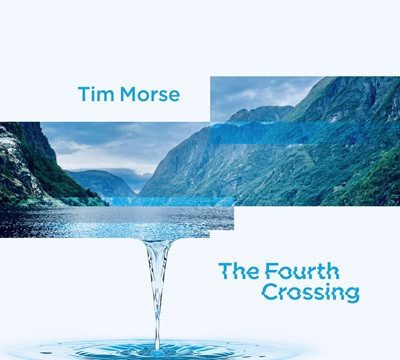
As it emerges through an open landscape, occupying New Age territory somewhere between the worlds of Vangelis, Klaus Schulze, Tomita, Rick Wakeman, Kraftwerk, and Mike Oldfield, Tim Morse prepares listeners by embarking on a cosmic voyage into parallel worlds. The result is a perfect blend of synthesiser-driven kosmische music and classical influences, evoking elements of the late ’70s and early ’80s on his new album, The Fourth Crossing.
Through his keyboard arrangements, accompanied by guitar, percussion, and vocoder, Morse interprets a video game-like soundscape that often recalls the Halo universe, as if envisioning himself composing for the franchise and continuing where Master Chief left off. While The Fourth Crossing isn’t a concept album per se, each composition explores a different adventure, allowing listeners to create their own interpretations.
From the epic, overture-like opening of ‘Vibration’, it’s clear that Tim is continuing the grand tradition of progressive rock, almost as if picking up the cape left behind by the prog masters to craft his own sequel to Journey to the Centre of the Earth. The piece blends harder-edged passages, symphonic textures, electronic drums, and the promise of a new dawn before venturing into Karlheinz Stockhausen-inspired chaos during its opening moments. It then settles into the unmistakable pulse of the Berlin School, particularly on ‘Assembly Line’.
The crystallised caves and underwater, celestial textures of ‘Dreamcatcher’ evoke a beautiful sense of wonder before transitioning into the mountainous, almost pastoral atmosphere of ‘Hieroglyphics’. That journey continues with the acoustic warmth of ‘Eternal,’ where Tim constructs a score that vividly captures the majesty and grandeur of these imagined worlds.
When I think of ‘Structure’, I immediately think of 1950s science fiction films such as Queen of Outer Space, Forbidden Planet, and The Day the Earth Stood Still, but with a jazzy twist. Tim adopts an almost vaudevillian approach, channeling Fred Astaire’s tap-dancing elegance through his keyboards and, I believe, the vocoder featured on the piece.
The first two minutes present a delightfully twisted vision of those classic films before giving way to an oceanic landscape, as though Tim were scoring the Sega Genesis classic World of Illusion Starring Mickey Mouse and Donald Duck with Rick Wakeman enthusiastically giving his seal of approval.
Then comes ‘Zephyr,’ which delivers a planetarium-like experience, inviting listeners to gaze across the planets in all their splendor. Its spacious atmosphere even recalls Pink Floyd’s sessions for ‘Shine On You Crazy Diamond’, serving as a respectful nod to the late, great Rick Wright.
‘Space Station Lounge’ captures the spirit of Kraftwerk’s Autobahn era, expanding its kosmische textures before drifting into the realm of De Wolfe library music. As the drums enter, the music invites listeners to look beyond the window and admire the breathtaking beauty of the stars and planets stretching out before them. Closing the album, ‘The Celestial Cathedral’ returns Tim to cinematic territory, expanding upon the album’s grand scale with a moving farewell. The addition of pipe organ and choir creates a haunting blend of power, science fiction, and spirituality that provides a fitting conclusion.
There’s far more to The Fourth Crossing than first meets the ear. From the listener’s perspective, it’s an immersive and rewarding journey through cosmic landscapes, retro-futuristic imagination, and symphonic grandeur. This is an album that deserves to be experienced in a planetarium, where audiences can sit front row and become fully immersed beneath the stars, witnessing the wonder, atmosphere, and limitless imagination that Tim Morse has brought to life.