Interview: Bad Pond
You can ignore the female musicians that are out there, due to your own unconscious biases or you can wake up and make a real conscious effort to look outside of the obvious places and proactively seek out interesting and talented female musicians to book
Earlier this year we posted something on Facebook that took a look at the gender balance on the lineups of a number of ostensibly ‘math rock’ festivals. We randomly selected 5 examples and looked at what percentage of women were on the bills, not just by number of bands with a woman in but actual headcount. Let’s just say the results were not encouraging, with an average of 92% male.
When we published the results we had a mixture of reactions from those that we’d picked as examples; ranging from the almost hysterically angry and defensive to those that have taken the criticism on board and asked what they could be doing better. The folks behind Bad Pond Festival got in touch to say it was something they were already aware of and were working to improve this year & for the future, so we asked Vlad and Rosie from their team a few questions to find out more.
(((o))): Bad Pond Festival only came across our radar last year, can you tell us a bit about it?
Vlad: It started as basically a big gig line-up for weird, odd, and surprising music. As the venues, format, amount of days it takes place over grew it evolved into a slightly more complex entity.
The Math Rock Community (whatever that means) has seemingly adopted us, and I guess that is because we came from it – playing in bands, putting on shows, releasing records, etc. This gave us an incredibly friendly and open-minded niche foundation to grow out of and start morphing the event to represent even more of what we like, listen to, and want to do with our free time.
We try and balance the bills so we don’t take it too far into the experimental domain – even the most adventurous people who are wanting to get out of their musical comfort zone and discover and enjoy new things need to come back to effortlessly enjoying something they can easily grasp.
Bad Pond is an excuse to see some familiar acts, discover mind blowing new music, eat some good fast food, get a bad tattoo in Brighton, go for a morning swim to clear the hangover, buy merch from the coolest band you came across just so you can help them get to their next show – it’s just a pretty fucking good time, you should come chill.
(((o))): What made you want to start a festival?
Vlad: We are music kids with big dreams and ambitions – if you ever play shows or put them on there’s just no way that doing something like this doesn’t cross your mind at some point….
Oh yeah and the other big element was ignorance. We were dumb enough to take something on that was beyond our capacity to pull off at first, and throw ourselves into the deep end, and through learning on the fly we were able to grow it and nurture it every year and turn it into what is now a two-day festival at the awesome old seaside venue Concorde 2.
(((o))): Who is on the team & how did you all meet?
Vlad: The Bad Pond gang is made up of the core team who work year-round at Small Pond in our studios and label. How we all met is tricky to answer in a short and readable way… but here are a few samples. I met Liam at a birthday party and we got really drunk and talked about compressors for most of the evening. I think my first chat with George was about the best Mastodon album, and I met Dave in Leeds because I slept on his floor after a show before he moved down to Brighton. It’s all weird, varied and wonderful – we have become a big dysfunctional family, despite our best efforts to resist it, and we are stuck with each other for a good while to come now…
(((o))): There are a lot of festivals out there now of all shapes & sizes; what makes Bad Pond different?
Vlad: This is a fair enough question, and it is a good opportunity for us to outline our USP, but we don’t really want to do an elevator pitch on how we are different, or perhaps an even less creative one saying we are not different, we’re just better…
Bad Pond is an extension of Small Pond – we are just a group of friends doing what we love and working our ass off to push forward a certain approach, set of ideas, and love for boundary-pushing music.
It’s going to be for some people, and not for others. But it seems like there are a lot of people out there who are like us, because every year there are more people who come back, and new ones that come for the first time.
With so many options for entertainment, or with so many opportunities to spend their limited budgets, it seems people are taking less of a punt to go out there and see new music. If you want to stay at home, get a deliveroo and go to the pub the next day and that is how you spend your ¨play¨ money then fair enough; if you want to eat a hot dog, watch some weird music and then find the band and ask them what the fuck they were doing, get a beer with the organisers, and feel a part of a thriving music community you should probably come along. If you do I think you will be along for the ride with us every year.
(((o))): One of the reasons we got chatting was in response to a post we made about gender balance at math rock festivals. Last year’s Bad Pond was one of the examples we used to illustrate our point & although it was better than most it was still pretty male heavy. What are you doing for this year & the future to address that?
Vlad: We looked at our line-up last year and realised that we had to make more of an effort to seek out and book more non-male talent. Although we had a handful of female acts on the bill, they were not in prominent positions, and you could go for a whole stretch of hours without seeing anyone on stage but men. Honestly though, it took a bit of a kick up the ass from some of our team (spearheaded by Rosie) to make the rest of us acknowledge this point, and more importantly to realise we actually could do something about it by making a concerted effort and changing our outlook (rather than falling back on the “we are just booking bands we love and if they happen to be male then that’s not our fault” way of thinking).
Rosie: While it’s true to say that women are under-represented in the math/heavy/alt scene (as in lots of other scenes, and areas of life), we all know they are definitely there and they are doing awesome stuff. You can ignore the female musicians that are out there, due to your own unconscious biases and also the fact that these women may not currently be as easy to spot due to the lack of airtime/column-inches/stage space they are given. Or you can wake up and make a real conscious effort to look outside of the obvious places and proactively seek out interesting and talented female musicians to book (and put checks in place to monitor how you’re doing and ensure you’re not accidentally slipping back into the easy habits), and probably also open yourselves up to a more rewarding musical experience in the process. We’re doing the second option.
Tl;dr Basically, I forced them to step up and stop making excuses and start booking more women, or everyone would think they were cunts. Including me.
And they’re not. They’re some of the most excellent people I’ve ever had the fortune to hang out with and to work with. But they could easily let themselves fall in with the cunty status quo without really noticing or feeling any repercussions because privilege.
(((o))): The point in our original article was in regard to not just the number of acts with women in but specifically the actual onstage headcount. Where do you stand on this?
Rosie: It is an interesting one. Currently we’re counting acts with at least one female (or female-identifying) member. This is also the criteria used by the Keychange pledge, which we’ve just signed up to. It’d be awesome ultimately to have a 50-50 overall head count, but there are a few reasons why this doesn’t necessarily make sense as a target at this stage.
Firstly, we don’t want to overlook female musicians who happen to be in a band with a bunch of guys. Secondly (and related), there are fewer female-heavy or all-female bands out there than male-heavy or all-male bands. The reasons behind this are long (but also – like most cause and effect – completely fucking obvious and simple, if you really look into it). They include lack of role-modelling; the lack of female musicians being encouraged to pick up traditionally “male” instruments (instead often being funnelled into the role of singer and front-woman); a lack of encouragement for young girls, in the way they have been socialised to compete with each other for a fairly shallow type of attention/appreciation, rather than banding together and doing cool, fun, challenging, noisy stuff together and for their own enjoyment.
Hopefully, with the current effort to highlight and give stage time to the female musicians that are out there, as well as the raised awareness of the impact of girls and boys being differently socialised and encouraged when growing up, this is all changing… and in future it’ll be a much more feasible option to put as many individual women onstage as men.
(((o))): A lot of more defensive responses we got were along the lines of “we tried but we just couldn’t find any women” but when pressed about how they tried people weren’t able to say. How have you guys gone about it?
Rosie: I have a nugget of sympathy with those people, because society’s problems are not their fault. But they just need to sit with some uncomfortable truths for a little while, see if they actually care about them, and if they do then just get over themselves, stop hiding behind lame excuses and get on with it.
True, there are probably more male acts of a certain stature and profile than there are female ones, simply due to the societal factors that have made it easier for blokes to rise to that mid-to-well-known level. We did actually struggle to book quite a few of the female acts on our wishlist for Bad Pond, because they weren’t available (I guess this is a positive sign that more people are actually booking female artists?!). But instead of saying “Well we tried the female acts that we’ve heard of, and they can’t do it, so we’re just going to book a load of dudes now”, we carried on putting the word out and asking for recommendations, and finding out about new acts – discovering some cool new music in the process – and we eventually managed to book a not-too-horribly-embarrassing number of awesome bands with a strong female presence. But we still want to do better in future. And putting this aim out there publicly is already encouraging more female acts to come forward and apply to play.
(((o))): The aforementioned post drew a mixture of responses, the majority being very supportive but let’s just say there were some that were ‘less so’. What do you think the scene as a whole could be doing to involve more women at all levels?
Rosie: It’s so weird that this still isn’t obvious to everyone, but just: involve more women. At all levels.
If people need further guidance on this… look at what you individually have the power to change and change it. Try to ensure you have women on your staff, but if you aren’t in a position to just hire a bunch of new people right now then have some women in an advisory position. Eg talk to female mates, and music scene acquaintances. And *IMPORTANT POINT KLAXON* actually listen to them. Learn from their experiences and believe them wholeheartedly when they tell you what the problems have been for them and people they know, and what would make it easier to overcome these. Don’t try to invent your own solutions, just do what they tell you needs doing. Chances are they might have been saying these things for 10 years but nobody was listening. Now you’re interested, that’s great, but don’t make out like it was your idea.
Aside from the live promo side of things – if you are a PR, make sure you represent the work of women. If you’re a journalist, write about the work of female acts (and not in tokenistic or gendered terms). If you run a record label, make sure you don’t have an all-male roster. Think about what the things you do are saying to the outside world. Promote talented artists who are under-represented in their specialism – female MCs, guitarists, drummers; all-female bands – to create more role models.
Vlad: In all honesty – as we touched on earlier – it is only since having more female staff involved in Small Pond that some of us have seen that we collectively are part of the problem and made a more conscious effort to change our actions. We might not have noticed the oddity of a male-heavy line-up (and audience), or thought it was our place to try and do anything about it, but when a female colleague hammers home to you how that looks from their perspective, and that they won’t take any excuses, and you actually listen to them… then together you can make things happen. It shouldn’t have to be on them to hammer that home though.
Rosie: Yeah that gets exhausting.
Vlad: I would also say, in response to the wording of the question, I think there is a danger to discussing this purely as a matter of “scene” because it plays away from individual responsibility to implement changes. And at the risk of sounding cliché I think it comes down to “be the change you want to see in the world” – and yes, there is a degree of weirdness to using a Gandhi quote when basically just chatting about throwing a big party.
But if you see a disenfranchisement/inequality/injustice all you can do is fix your own approach and to try and do the right thing, and through this push those in your surroundings to do the same. It’s a matter of education, listening, and individuals taking responsibility for their actions and choices. Positive changes and good dynamics are contagious, and in the words of an Australian songwriter Paul Kelly, “from little things big things grow”.
Rosie: And just to take the total of useful but clichéd phrases in this answer to a tidy three: “if you’re not part of the solution then you’re part of the problem”.
(((o))): Some of the larger festivals have committed to balancing their lineups but needing several years to achieve it. What are your thoughts on that?
Vlad: Truly meaningful, profound changes are going to take some time to implement, and more likely than not this transition we are talking about is ultimately going to be a generational change.
Rosie: So a few years is a great starting point. As mentioned above, we’ve just signed up to the PRS Foundation’s Keychange initiative, which works toward a 50:50 gender split on festival bills. The target for festivals that sign up is to achieve this by 2022. We would like to think we can achieve it before then, but there’s no harm in having that as a target anyway. It’ll probably result in a lot more festivals being gender balanced by 2022 than they would otherwise, and it’s less off-putting for those who might have a bit more of a way to go. You can read more about Keychange on their website: https://keychange.eu/
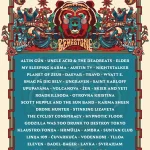
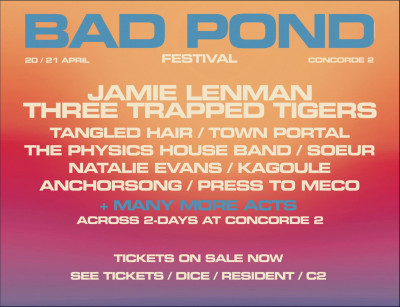
(((o))): The bands line up is pretty eclectic this year, swerving away from ‘pure’ math rock in to other areas. How have you selected the music?
Vlad: Experimental music takes many incarnations, and we don’t really think there is such a thing as pure math rock. We picked experimental and alternative music that we like – there are prog, metal, pop, electronic, post-rock type bands on the bill. The only common thread here is not genre, but the quality of music and the acts and the fact we find them exciting.
And those who consider themselves part of the math rock scene and lean on that group element in forming their identity will certainly get a fix that they are looking here, but we are going to push the musical boundaries beyond any genre to a place we consider experimental and interesting. I am sure not all of them will agree, but that is why there is eight of us at Small Pond – we can fight every fucking one of them. (sorry…)
Rosie: *rolls up sleeves*
(((o))): If you had an unlimited budget, who would your 3 dream headliners be?
Vlad: This is a fun question and to be honest I have never thought about this – coming from the background of DIY shows, money was always the primary limitation.
Instead of making this about money let me flop the question around and make it more about the process/experience. If money was really not an issue at all, how about giving away tickets to the festival for free, but asking everyone who gets a ticket to vote for 3 of their dream bands and we look at all the votes and give all the people who come to Bad Pond what they want.
Bad Pond started out of wanting to collaborate with others (namely an avid Bournemouth supporter and math rock knowledge powerhouse named Ryan Balch, from Bad Math, who was originally our co-promoter). The eclectic bills are reflection of what everyone involved and in our little weird scene wanted, and we hoped to stretch the event not only in size but with the feeling of everyone having belonging/participation/ownership – so if having a mass selection of headliners could ever be an option, why not give it a shot?
Rosie: That sounds idyllic, and yeah let’s give it a shot, but *BUZZKILL KLAXON* we would have to control for the fact that the world is unconsciously sexist and the festival might end up as a total sausage-fest again. The people are not always right. Yet!