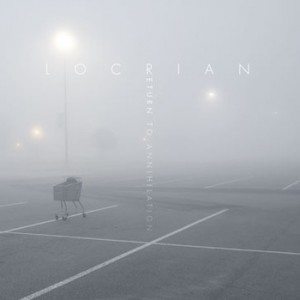
Chicago’s blackened experimental/drone trio Locrian have made a series of compelling albums that thrive on atmosphere and carefully controlled moods. Their new record Return to Annihilation finds them pushing into more structured and song oriented directions, without sacrificing any of their remarkable ability to create environments of sound. What they have accomplished here is nothing short of stunning and is a testament to their desire to push not only boundaries but also themselves into new territories.
Locrian has always dealt in bleak textures and sonic landscapes that defy traditional instrumentation. The surprisingly sunny album opener ‘Eternal Return’ shows Locrian letting little light in to the normal torturing darkness. Full of shimmering synths and driving drums it is a bold first statement for an album that is just as much of a journey as their previous efforts. The anguished bellowing buried in the mix reminds us that this is not going to be an easy listen, but it is a rewarding one.
Every Locrian record can function like a soundtrack to desolation or the lonely exploration of forgotten places, Return to Annihilation is no different. This time however instead of opening a door to a basement full of cobwebs and darkness there are flashes of light illuminating the shadows and emphasizing them. The serenely beautiful ‘Two Moons’ features simple, sparse guitar lines buffered by waves of fuzzy, warm bass that sounds like it is barely holding the darkness at bay. As it winds down and is replaced by the quiet menace of ‘Exiting the Hall of Vapor and Light’ the dynamic range and scope of the record becomes apparent.
There are bits of kraut and vintage prog rock sprinkled throughout the record. Especially in ‘A Visitation from the Wrath of Heaven’ and its relentlessly plodding, marching drums. Half formed melodies float in and out while the drums keep pushing and pushing towards the huge, explosive ending. The title track also blends elements of kraut rock with hints of black metal and ends up with something that sounds not unlike recent Swans viciously attacking early King Crimson’s equipment.
None of this should suggest that the harsh, bleak ambience of Locrian has mellowed or is diminished in any way. There are still moments like ‘Panorama of Mirrors’ that are pure tension that features that sporadic bursts of drums, atonal feedback and otherwordly screaming that Locrian has built their sound around. The final song on the record is the slow building ‘Obsolete Elegies’ and at 15 minutes in length it serves as a tour of everything they have done before. Rattly acoustic guitars, soft pianos and some magnificent mellotron usage lead the listener down a winding and twisting road from subdued, brooding beauty to an all out, reverb drenched, black metal assault.
All in all this is a remarkable record. It is unique in the way it walks the line between structure and experimentation. It is a rare band that can consistently push itself in new directions without sacrificing itself or sounding contrived, Locrian has accomplished this seemingly easily. This is a perfectly constructed, beautifully recorded and compelling record that stands out as one of this year's best.