(((O))) INTERVIEWS
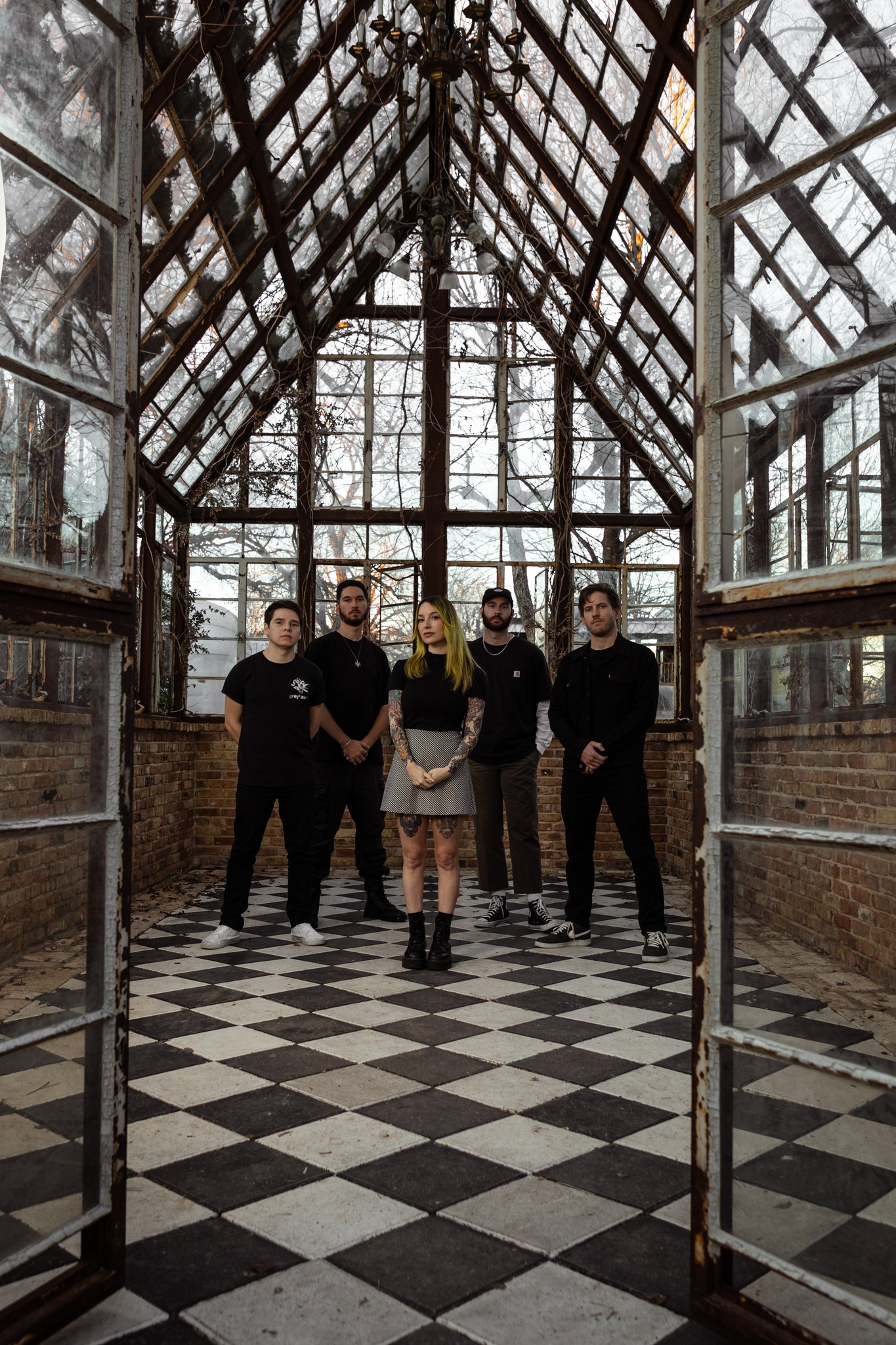
Brooke Hampton from Slow Pulse
Gavin Brown had the pleasure of talking to Slow Pulse vocalist Brooke Hampton to hear all about the new material, the return of the band, how the hardcore scene in Texas is currently and who her biggest vocal inspirations are.
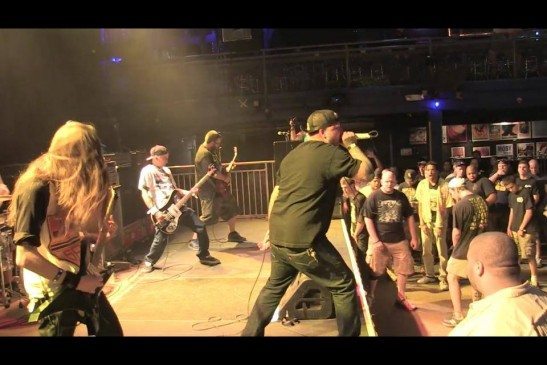
Last year American hardcore band Empire of Rats released their album on A389 Recordings and it is a total belter of a record, which made Berns von Bernington cnoclude "It’s hateful, brutal and crushes like a run-away cement truck" in his review of the record. Berns asked bass player Zac Miller some questions.
(((o))): Firstly I’d like to thank you guys for taking the time to do this interview on behalf of Ech(((o)))es and Dust and myself. Can you give us some background on who’s in the band and hat other projects they’re involved in?
Zac: Dustin Hysell (Pitboss 2000, Under One Flag, plus many others) on vocals, Chris Tatman (The Come Up, plus many others) on drums, Kurt Miller (Butchered Remains, and currently in one of the best death metal bands in Columbus - Arterial Mist) on guitar, Zac Miller (Under One Flag, Palehorse, plus others) on bass and Mike Lare (Ringworm, Under One Flag, and tons and tons of metal bands) on guitar.
(((o))): What made you guys decide to come together and start Empire of Rats since you guys are all already in all the other bands?
Zac: I went bowling one night with a whole bunch of friends including Chris and Dustin and I started talking to Dustin about doing another band. Turns out, he and Chris had been working on a couple songs. It just kinda all came together after that. I remember Dustin saying that he wanted to name the band Empire of Rats. We just talked about the band being really heavy, and kind of sludgey. I was on a big Eyehategod-Crowbar kick at the time.
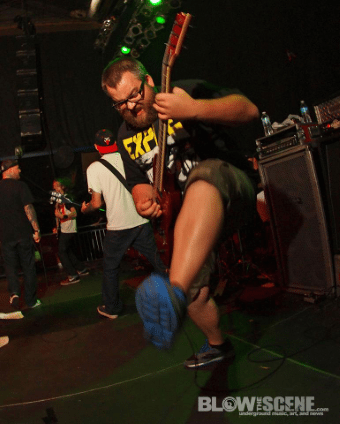 (((o))): The style of hardcore you guys produce is hateful, angry and just fucking ferocious. What atmosphere does that create within the band and what are attributing factors that lead you guys producing this style of hardcore?
Zac: It's honestly the kind of hardcore we've all loved for a very long time. A lot of the anger just comes from everyday living. I know that for me, it's really the only way I can take all of my frustrations out. The atmosphere within the band, I can only describe as solid. We've all been friends, and played in bands together for a very long time.
(((o))): Let’s talk influences. Where does the band’s roots stem from with regards to influences?
Zac: We all listen to so many different types of music. For this band in particular I would say Cold as Life, Slayer, early Hatebreed, Crowbar, with a ton of other bands thrown in there. I really don't even know where to start.
(((o))): How did you end up on A389 Recordings?
Zac: My fiancée sent Dom the No Peace EP. Dom ended up asking Dave Heck (Get This Right Records) if it was cool to ask us to do something with A389. I'm a big record nerd, so I was stoked. I knew the quality of stuff he had put out, and it's honestly the label that I would've picked for my own preference. So, I guess that worked out.
(((o))): As a band touring, what was This Is Hardcore Fest like? Were you guys well received?
Zac: We had a blast that entire weekend. There were still kids waiting to get in the door while we played, but we got a great response from the kids that were already inside. It was awesome, especially for playing at noon. I know that I passed out on our merch table (thanks to some friends...haha).
(((o))): Do you guys plan on touring parts of Europe anytime in the not so distant future?
Zac: We really hope that we can make that happen soon. I've always wanted to go to Europe, but everytime I've had the chance, something went wrong.
(((o))): The band’s name, Empire of Rats, what lead to the name and is there any meaning behind the band name?
Zac: We live in an Empire led by rats.
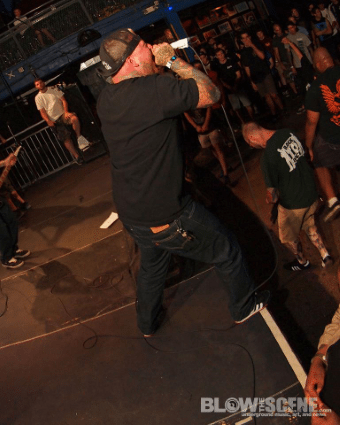 (((o))): Do members in the band have their own favourite song off the album? If so, what are they?
Zac: The first new track we started playing off of the album was ‘Leeches’. That's probably one of my favorite songs on the album.
(((o))): If you would be able to choose 5 bands to play with, what bands would you choose and why?
Zac: KISS.
(((o))): What’s the best place you’ve been to while being on tour?
Zac: We played a basement/house show at State College in PA with Full of Hell, Menace, Rock Bottom, and Benchpress. It was well over 100 degrees in that basement and it was packed. Kids were just going off at that place. I'm probably partial to that show in particular because I would rather play in a sweaty ass basement with no stage and horrible sound, than playing a big/medium size place with some giant stage. This is Hardcore and the Rumble were both awesome too! It's kinda weird, we get asked to play fests a lot more than we get asked to play smaller shows. We're okay with that, considering that we're not able to play a ton of shows. A lot of people travel to these fests, so it definitely helps get the word out about us.
(((o))): How important is the whole social media thing to the band?
Zac: In this day and age it's extremely important, I think for any band. I'm 35 years old, so I still hate dealing with the whole computer thing. I would much rather do all of our business over the phone, especially since I don't check my e-mail that often. I just can't seem to come to terms with the changes that the internet age has made.
(((o))): What do you guys do when you’re not in the band making music?
Zac: My brother and I own a bakery that's been in my family since 1950. Chris works at our bakery and takes care of his family. Dustin is a tattooist. Kurt is a machinist and plays in the ultra heavy, and amazing death metal band Arterial Mist. Lare delivers beer and spends most of his time being awesome.
(((o))): Lastly, we have this question at Ech(((o)))es and Dust we ask bands occasionally. If you would be an animal you’d be…?
Zac: My dog. Then, I could just live like a king!!
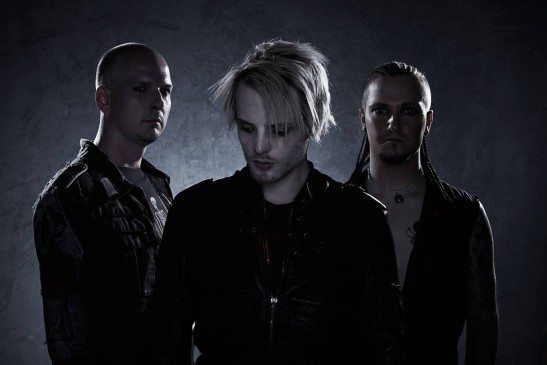
Late in 2013 French industrialists Herrscahft returned after a five year break with their new album Les 12 Vertiges which much to caught the attention of Andrew Rawlinson (read his review here) so much that he decided to find out more about them.
(((o))): So according to your biography you formed in 2004, how did the band originally meet?
Zoé: I was so young man. I remember we didn't know each other. Our singer BzD just released an advertisement in his school. I called him, MaX did too, and we all met in a bar. Some of us were drunk, others were sleepy in the bar, so it is where we decided to make music together.
MaX: In fact, the line-up turned out not to be the one we had initially expected but one thing is sure: as soon as we met with Zoé we knew we were sharing the same vision and would be doing some stuff altogether.
(((o))): How did you come to choose the name Herrschaft? It doesn’t appear to be a French word?
Zoé: Actually this is a German word, but it wasn’t the first goal. MaX found it in 2004. We liked the sound of this word, but moreover the meaning of it. Something about domination of the word, reign. It is a bit dated, but fits perfectly to the concept that we explored in our first two efforts.
MaX: Still nobody knows how to write it.
Zoé: And you probably don't want to know what was the first band name suggestions. Still a shame 10 years after (laughs)!
(((o))): Who are your biggest influences?
Zoé: Mostly recent movies and books. I personally try not to listen to too much music, I try to keep fresh ears and a fresh brain. For the rest, we don’t agree about influences with MaX. I loved Snow Piercer, he didn't, right?
(((o))): How is the industrial scene in France today compared to when you formed?
Zoé: Concerning our scene, it is full of boring stuff. Too many bands call themselves electro-metal but are just playing technical metal riffs with fast kick drums all the way and a tiny pad behind the noisy wall of sound to justify the “electro” or “industrial” side of the project.
MaX: When we formed, there were still two dedicated scenes, one for extreme metal, the other for dark electro, and a few bridges between them. Well we’ll see if this has changed and if we can reach a more open minded public today. For other bands sharing the same musical direction, well a lot of our previous friends resigned so I would have said exactly the same if our drummer Manu DK has not released a pearl few days ago with his new project. It’s called “F*** me I’m Dead”.
(((o))): There has been a five year break and member changes between you last album and Les 12 Vertiges, was this by accident or design?
Zoé: Everything happening in this band is an accident, man.
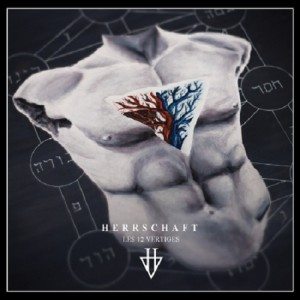 (((o))): Speaking of which, Les 12 Vertiges appears to be more aggressive than Tesla, was this a conscious choice?
Zoé: Really? I thought Tesla was more aggressive. Some of the quieter tracks on Les 12 Vertiges were started in the Tesla era, five years ago you know. For me with Les 12 Vertiges you have an album that has a first half album with the catchy songs and a more ambient part in the second half.
MaX: The approach of Les 12 Vertiges was definitely more “in your face”, more raw and more dancing, especially for the first songs. I don’t know if it’s more aggressive overall but we really tried to make it more “intense”.
(((o))): The overall concept of your material seems to focus on humanity’s darkness, has this come from personal or general experience?
Zoé: You get the point, buddy.
MaX: It’s pretty simple if fact, unlike what we used to do for our two first albums, for Les 12 Vertiges we just wanted to present twelve different experiences, strong, lost, addicted, violent but most of all, lively.
Zoé: This album is basically a diary of our last five years together, where have explored our limits, our souls, sometimes for the best but mostly of all for the worst. This album is way more personal and introspective than what we made previously.
(((o))): Since the emergence of Gojira, the UK has seemingly become more open and aware of French metal bands, has this been noticed at home? If so has it become an inspiration to the various music scenes?
Zoé: Why waiting for a worldwide success to check the other French bands? (laughs) Well, I can’t explain that Gojira phenomena. Trust me, we have a big bag full of bands that do exactly the same shit.
MaX: There are a lot of talented bands in France, but yes, too many struggle to gain an international respect and “name”. I love Gojira, I had the chance to discover them in the early years when they were still known as Godzilla, in the South of France. When you realise that when they just opened a few days ago for Slayer in New York, well, it’s stunning. Their work has been impressive from the start, nothing to say about that. The real problem is when you realise that there seem to be no place left for any other French metal band to be known. Considering the talent of French scene, of which there is a lot.
(((o))): What are your plans for the future?
Zoé: Live shows, live shows and more live shows. We are currently looking for some good venues. Do you know some?
MaX: And we’ll try to release a special remix edition for our 10th anniversary. Overall we have had a lot of remix activity for several bands during these last ten years, and as well as some jewels made by friends. It’s time to gather all these and present all the work done, so stay in touch for more news in 2014, just before the apocalypse.
(((o))): Are there any bands you feel our readers should check out?
Zoé: If you liked us, you have to check the old bunch of the French electro-metal: Tamtrum, The CNK, PsychoShop, Dexy Corp_, Temple of NemeSYS. All of them are friends, and just like all the good things, apart from The CNK and Punish Yourself, all of them are dead. Don't give a fuck, go listen to them anyway, in memories of good old times!
MaX: F*** Me I’m Dead!
(((o))): If you could collaborate with anyone you want on your next album who would you choose?
Zoé: We already collaborated with all the people we wanted on this album. The priestess Jessy Christ (PsychoShop) offered us her voice on three tracks. The almighty CNX (Temple of NemeSYS) helped us on another, and Heinrich von B (The CNK) did the best artwork in the world. Well, we can die peacefully!
(((o))): You’re given the opportunity to create your own festival. What would be the first five bands on your list?
MaX: White Zombie, Electric 6, Ghinzu, Ministry playing only old songs, and as headliners Death with Gene Hoglan on drums!
Next week North Carolina based retro doom rockers Demon Eye release their album Leave the Light, which Rob Thompson in his review described as "a solid release with dark thick riffs, Sabbath solos and Maiden influences on every track." Rob asked guitarist and singer Erik Sugg a bunch of questions to find out more.
(((o))): Thanks for agreeing to this interview with Ech((o)es and Dust. For who doesn't know Demon Eye, can you please introduce the band to us and who plays what etc?
Erik: I’m Erik Sugg. I sing and play guitar for Demon Eye. Larry Burlison plays guitar and is responsible for most of the leads you hear on the record. Paul Walz plays bass and does some backup vocals. Bill Eagen plays drums and percussion and sings backup as well. Our song writing is collaborative, but generally begins with riffing and then seeing how we can expand on our initial ideas. We try to make sure our tunes are a fine balance of heavy, groovy, dark, and melodic.
(((o))): So the story of the band is unusual, starting off life as a tribute/cover band and Erik being involved in children's entertainment. What triggered the switch to a full blown band writing your own original material?
Erik: First there was Corvette Summer, which is our cover band alter ego. Corvette Summer was Larry’s idea. Around the time when he and I first met he suggested it would be fun to start a band that did under-the-radar covers of ‘70s rock tunes for all the real rock geeks out there (covers by bands like Budgie, UFO, Humble Pie, all the good stuff you never hear on the radio). That was how I met Bill and Paul as well. We started playing together, and not to sound dramatic, but it was pure magic. There was an instantaneous musical connection. We found a common thread in all of the hard rock and metal we loved during our younger years, and then we started getting really tight as a band. After we had been together for awhile, I spent a weekend alone camping on a dark, wooded mountainside reading lots of Lovecraft and writing creepy, witchy riffs on an acoustic guitar. I came home to band practice and asked the guys if they’d humor me by playing along to something I wrote. I showed them the riffs to 'Hecate' and they nailed it. Demon Eye was born right then. The next songs to come were 'Witch’s Blood' and 'Shades of Black'. All of our Corvette Summer gigging helped Demon Eye come together pretty quickly.
In terms of my kid’s music, I’m a children’s librarian for the local library system here in Raleigh, North Carolina. I had been working in libraries for years and made the switch to working with kids because I thought it’d be something new and fun and would keep me from getting burned out on the job. It’s been a total blast. Kids have a natural inclination towards music and rocking out, so they love all of the goofy little songs I write for them. Occasionally I’ll even see story time parents out at Demon Eye shows, haha. Also, my niece and nephew’s favorite song to dance to is, 'Shades of Black'! It’s a trip when these two vastly different worlds collide, but metal isn’t as taboo as it once was. Parents seem to not mind Satan and witchcraft like they did when I was a kid 😉
(((o))): The new album is excellent, so congratulations on this. It contains songs previously found on your debut EP, were these remastered or re-recorded in anyway and why the decision to include them on the album?
Erik: Thanks! The decision to include that first batch of songs on our debut LP was a mutual decision by the band, our record label, and our engineers. Once we finished those initial songs we decided to share them free of charge via the Internet because our main concern was in just getting them out there for people to hear. We had zero idea as to how our music would be perceived by folks in the metal/doom community, and the response was overwhelming. Within a matter of days we were hearing from people all over the globe, telling us how much they dug our music. An Irish label, Sarlacc Productions, did a limited edition cassette of the EP, and a buddy of ours here in North Carolina, Chad Davis (from the great band, Hour of 13) brought us to the attention of Soulseller Records. That was how we started working with them. The label said we could save ourselves a lot of time and energy by including the previously recorded material for the debut, which worked perfectly for us because the material we were working on at the time was very cohesive with what we had just finished recording. We knew that if we included all of this music together we would have a strong record with a great flow. We were back at Seriously Adequate Studios a mere six months after finishing the earlier sessions in order to keep up the momentum we had gathered during that first run. Alex Maiolo and Pete Weiss, of Seriously Adequate Studios and Verdant Green Studios respectively, both did fantastic jobs in picking up where they left off. They both brought an amazing amount of sonic inspiration to the recording. And yes, Pete did remaster those original songs at Verdant Green in Vermont just to make sure the older songs were consistent with the newer ones.
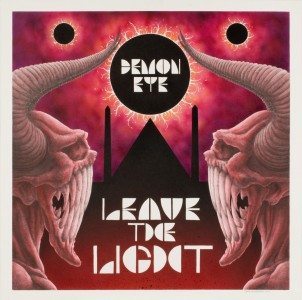
(((o))): I love the cover art, what was the thought process behind the images; what story are they trying to tell
Erik: The artwork was done by a local Raleigh artist/musician, named John Hitselberger. John has a natural talent for creating mindbending supernatural art, so he was always my first choice in doing something for us. I simply asked for something Lovecraft-esque and “occult” looking and he came up with that excellent design for Leave the Light. If you look at occult imagery throughout the centuries you’ll notice there’s always a some sort of beautiful symmetry to it. John included that symmetry in this design by having the demons facing one another and by having the pillars and the pyramid in the background. As for the demons themselves, there’s not much else to say other than they just look perfectly evil. I like thinking about demons in the biblical sense, where they were merely parables representing the darker sides of human nature, but I also like how they are depicted in classical art and supernatural literature as malevolent beings who prey upon mankind. This theme is rather prevalent throughout our record. Most of the lyrics share the Lovecraftian notion that human beings are in no way the center of the universe; that there is no golden rule, no benevolent higher powers, and that everything beyond our limited understanding is cosmically indifferent to us. I enjoy writing material like this because, even though I generally go about my day to day routine working with kids and trying to bring positivity into the world, there is another side of me that sees all the darkness in the world and thinks we are truly heading for the end of days, and I can’t seem to muster the energy to care. Classic doom metal themes, I suppose!
(((o))): Why did you pick 'Secret Sect' to promote with a video? Is this your favourite songs on the LP? I personally loved the tracks 'Hecate' and 'Shades of Black' as they really showcase what Demon Eye is capable of.
Erik: Well, 'Secret Sect' must have been my favorite song at that particular moment, because shortly before I made that video I tried doing one for 'Witch’s Blood' and messed it up, haha. No, but really I just thought it was a good idea to provide people with a video for one of the newer songs from the record. We have a video for 'Hecate' as well and I thought 'Secret Sect' would be a fine addition. Also, yes. I’m very fond the song, but really I love all the songs on the record. It’s hard to say which one is my favorite. I find myself listening to 'The Banishing' a lot lately, so today I’ll call that one my favorite.
(((o))): Let's talk influences. You clearly love the classic bands of yesteryear; which albums and groups have played the biggest parts in your lives and how do you incorporate these into your music?
Erik: Our biggest influences are probably Black Sabbath, Deep Purple, Pentagram, and Iron Maiden. Sort of the no-brainer resources if you’re playing this style of music, you know? To me, and I’m sure the rest of the guys in the band agree, these four bands had it all. They knew how to write songs with power and volume, and they knew how to make their music sound sinister and evil. At the same time, they also knew how to make it a good time for their audience. Anytime you see old footage of these bands performing during their hey day, what you’re generally seeing is people freaking out and having a blast over how awesome the music is making them feel, well, maybe not in the case of Pentagram, haha. Still, that was something we wanted to tap into, to just be able to write music that stays with you once you hear it, whether it’s the heavy riffing, the melodies, the rhythms, the sinister vibes, whatever. I think it’s also important to keep your mind open to lots of different music. Everyone in Demon Eye just loves music in general. Some nights we’ll go from having hour long discussions about ‘60s bands like Blue Cheer and the MC5, then the conversation will shift entirely to discussing Grim Reaper and Loudness, then we’ll kick back and listen to Thin Lizzy, then someone will mention Jake E. Lee’s guitar playing, and then I’ll go home and throw on a Laura Nyro record. Basically we just to try to write music that moves us, because no one else is gonna dig you if you don’t dig yourself.
(((o))): If you were to organise your own one-day festival, which bands would you ask to play?
Erik: Wow. This question is the hardest for me so far. I’ll try to keep the bands as contemporary as possible. Iron Maiden would be the headliners (mainly due to the fact that we, as a band, have had some stellar Iron Maiden road trip/concert experiences). I would also love to have Electric Wizard, Pentagram, Sleep, Uncle Acid & The Deadbeats, The Melvins, Graveyard, YOB, Witchcraft, Blood Ceremony, Church of Misery, Hour of 13, Sinister Haze and Windhand.
(((o))): How have you found the reaction to the Leave the Light so far in the press and from your fans?
Erik: So far most of the press I’ve seen has been very positive. I keep expecting to read something where we’re heavily panned, but so far that hasn’t happened. It will though. Not everyone is going to dig the record, and that’s fine. We are very proud of it and it seems to be striking a chord with a lot of folks, and that’s very cool. The greatest honor to me is when musicians I admire seem to genuinely like our music. But honestly, when anyone, any random person, takes the time to tell me that they’ve enjoyed our recording or our live performances it is an honor to me and it’s truly appreciated. We’ll try not screw it up by going out there and sucking!
(((o))): What plans do you have for touring, and most importantly, any UK gigs planned?
Erik: We definitely want to tour overseas. We have been contacted by some European booking agencies, but there are many variables we need to get worked out before we make that jump, like jobs, kids, families, money, etc. Still, a lot of folks over on that side of the pond have been very kind and supportive of Demon Eye, so the very least we can do is come over and do our thing. And yes, we would love to play the UK. Where do you want us?!
(((o))): Can you share a nice or funny live anecdote with us?
Erik: For one of our earlier gigs we played with a David Bowie cover band, who did the Spiders-era Bowie. They played Ziggy Stardust in its entirety (really well too I should say). It was looking like it was going to be an off night without a lot of people, so before the Bowie band started I went for a little walk throughout the neighborhood. When I came back the band had started and there were like 50 or so people who had arrived. I was thinking “Oh man, decent turnout afterall!” But then I saw that most of these people were early 20-somethings and didn’t look the slightest bit like the usual rock show goers, and they all sat there in this very studious manner with pens and notebooks and all. Some of the girls were even watching the Bowie guy with looks of sheer disgust on their faces, which was really cracking us up. Come to find out this was all just a field trip for a journalism class from the nearby university, haha… They all split after a few Bowie tunes, and later we played to an audience of the bartender, the sound guy, the door guy, and the “Spiders from Mars”. So far, that gig was the most bizarre to date.
(((o))): Thanks for taking time out to answer these questions. One last one: what's next for the band?
Erik: Our record release party for Leave the Light is happening in Raleigh on February 1st. After that we’ll be playing a show with our Relapse pals, Lord Dying, and then we plan on gigging regionally, writing new material, meeting new people and other bands, and hopefully will keep this momentum rolling well enough for us to make it over to Europe. Thanks for getting in touch and thanks for listening!
Leave the Light will be released on January 24th through the excellent Soulseller Records. Pre-order your copy here.

“Hippo. Yeah I've thought about this.”
I’m talking with George Clarke of Deafheaven about what animal he would want to be. The band is about to hit the stage in Melbourne as part of their four day tour that takes in Brisbane, Sydney, Melbourne and Perth, which often misses out on whirlwind tours due to the distance (see my live review here). As we chat in the noisy back street outside the stage door, a patient fan waiting nearby to say hello, I find a guy who is thoughtful, intelligent, patient (if a little bewildered with my Australian humour), and generous with his thoughts.
“So hippos have no natural predators, cause they're really mean. They're mean motherfuckers. But, they're also the biggest chillers so they just like lie around, they eat, they sleep and they have sex. No one fucks with them cause they're really mean, and then when they do fuck with them, hippos kill them, and it just seems like this total paradise. The hippo. I've been youtubing videos of them..."

'Silence Reprised' - Ellen Rogers
We've all had those moments where we hear a song or go to a gig or see some art and it changes our lives and Clarke tells me there's a lot of things that still inspire him.“I keep my eyes peeled a lot for things that inspire me and such. A recent artist that I’ve fallen for her work, her name is Ellen Rogers, she’s a photographer who was once based out of London and I guess lives in Manchester now, she does these analogue photographs. Alterations are done through (darkroom techniques), and she’s awesome! I’m a huge fan, I constantly reach out to her. I hope that the two of us will work together in some capacity.”
Is connecting the visual arts and music something we are getting better at?
“I think it’s certainly always been there, I think it just depends on the artist. Personally speaking, to put out music involves much more than just the music; it's the whole package including the visual representation. And I think all the greats, all the people that I’ve looked up to have understood that quality, so you pair the two. It's really just a matter of how much you want to give, how much care you're prepared to put in and the visual accompaniment to the music is still definitely a part of caring about your broader art or what have you.”
What's the most beautiful sound Clarke's ever heard?
“(thoughtful pause) Sometimes nothing. In fact given how chaotic things generally are, sometimes nothing. It's a rare moment. It really is the best noise – the low hiss of nothing”
Deafheaven are one of the growing list of guitar bands crossing over genre boundaries, and while this frustrates some of the purists, it's one of the reasons “Sunbather” has turned up near or at the top of 2013 AOTY lists from all over the metal and rock spectrum. It would be interesting to see how many music fans become lovers of hardcore vocals and drums because of this record, in the same way as Alcest introduced many alt/indie/post rock, and shoegaze listeners to black metal elements. But Clarke becomes a little frustrated at the mention of Alcest in that context:
“Stéphane (Paut) and I have talked tons of times, I mean he definitely showed me something at a certain point, but he knows, as well as I do, that we’re not the same, we’re not the same band, and he likes that and I like that but we get fucking annoyed at the comparison. I just want to get that out of the way – set the record straight”
It’s a comparison that’s clearly made often, and he's correct- they don’t sound or feel the same, a point brought home when you hear them live. Clarke also differs from Paut on a few philosophical aspects of music, and I wouldn’t be surprised if it’s their differences that are part of the reason they formed a strong friendship when touring together recently.
But it’s all cool and we get back to the matter of crossing boundaries, and I ask Clarke if people miss out by creating fences around genres and remaining within them.
“I think with heavier music – different kinds of metal – it definitely begins with a sense of community. I think that obviously these styles not being the most prominent styles in the broad scheme of things, those who do enjoy it sort of take on attributes to show each other non-verbally that they are on the same page and have common interests and I think that's a really important thing. But as a music lover and as a musician, I think it's a shame being narrow minded and it’s ultimately a bad thing. But I believe you can have both. You can look a certain way and identify with a single genre and what have you and listen to multiple things and be inspired by multiple things”
There certainly is a big group of music lovers who are hungry for new sounds and for experimentation and bands who use those “multiple things”, and I can sense Clarke getting into an area he could talk about for hours.
“I mean, why not? It’s so silly to think of it as anything else (other than experimenting)” He says it’s fine to become wedded to clichés but really you need to “enjoy the grander scope of things. It is what it is, and if you like it like it and if you love it you love it, and if you don’t you don’t.”
What about the way we judge music by comparing it with what a band has done previously or against other similar bands – does that again close our minds to discovering new experiences?
“I think if you truly care about a band you sort of grow with them. Even if you come in at a later album you check out their back catalogue and you love it so much and can see how it progressed over the years. I think if you truly care about someone you can see faults and you see growth and it’s interesting and all part of the grander experience. I think also that there’s such a volume of music and different styles coming out constantly, and always being bombarded by different artists that it’s hard to, you know, sit down with as many records of as many people as you can. So you’re going to naturally compare and write off and not think about something because maybe there’s no immediately strong connection. So those you really invest in I think you grow with and understand.”
“At least with records I’ve enjoyed, even with a band that I thought was fucking awesome and they fell off in my terms of what I think was good, I can still be at a certain point like ‘Oh well this is growing all the time’”
“I think with revival music (for example), it’s not really for me, but everything cycles and there’s no reason whatsoever to write off a new band because they sound similar to another act.”
I ask Clarke if there is in fact anything at all new at all? Aren’t bands by law of averages going to come up with stuff that reminds someone of something else? For example the song ‘Sunbather’ reminds me of ‘Retreat! Retreat!’ by 65daysofstatic but I don’t think Deafheaven sat down and thought ‘how can we use that sound’?...
“No no no no. I think that’s how things evolve. You take from what you enjoy and I guess when you reach a certain skill level, which takes years to develop, you have your own ideas and so on. Since the dawn of blues and rock ‘n’ roll it’s all people have ever done, they’ve taken an idea, they’ve interjected a new one, changed the style in some way… (imagine sound of Harley Davidson thundering past ). The idea of something new, to be completely unheard of, I don’t think it exists. No you’re just evolving.”
“And I don’t think people give that credit, and I think that’s terribly annoying, because I read reviews and I see people get written off all the time, comments like ‘the writer’s not investing in that’ and it’s not fair to the artist who’s trying to do their own approach to something they love.”
How important is it to Clarke for listeners to understand and feel what a song means to him personally?
“It’s not. It’s not. And we’ve always been that way. I’ve said this a million times and I’ll always say it- Deafheaven is nothing but what I like, what I feel, what I want and is a totally selfish endeavour. Now, when people connect with it, enjoy it, that makes it much more enjoyable for me because it’s enlightening to see something like that, but in terms of the creation, it’s not.”
I ask Clarke if he feels the record had come along at the right time?
“In terms of time I think it’s so hard to judge. I mean from a totally musician’s standpoint I could never envision I would do something that wasn’t like this because I enjoy it so much, so many things about this band and this type of music, I guess this was always our thing.”
“But yes this is a good time for music and I think that it’s important to do what you want, it’s important to not care about anything else, not be confined to genre limitations or anything like that, and if you are honest about what you’re doing and you are honest with what you love it will at least result in personal profit. Anything else like the tours we’ve done and the success of the album - we just did something that we wanted to do and didn’t give a fuck about anything else and happy that at a certain point had the balls to do it and feel good about it and put out something that I truly though was honest and soul-bearing if nothing else. It’s a good time for music, I feel very positive about the years to come and that we will enjoy new sounds. Music is soul and it’s never gonna die.”
On a completely different subject I had promised to ask why Kerry hated video games so much:
“It's just because we had this room mate who was obsessed with them and literally got woken at like four in the morning to guns shooting and it's fucking crazy, and that's all that was. Play video games all you want but if you wake me talking shit to a dude...”
I guess this is exactly the sort of stuff in life that makes a man want to be a hippo.
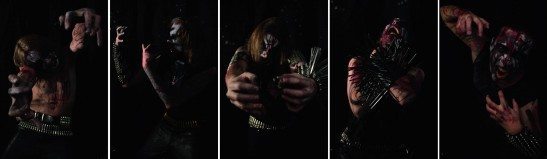
Graveborne is preparing to unleash their fantastic new album, Through The Window Of The Night, a nonstop barrage of throwback black metal from the country of Finland. Raato, the singer and a founding member of the group, shares the grisly details of Graveborne’s new album, as well as touches on what it means to be a Finnish black metal band. Raato makes it clear that Graveborne are not playing music to make anyone happy or tour the world, rather they only desire to let loose the fury of black metal of yesteryear.
(((o))): Please describe, in your own words, Through The Window Of The Night.
Raato: It is pure, heavy and dark. An ode to all the timeless classics and a fine example of the genre today. I would say it pretty much ties the knot between the past and the present of black metal. For us it is a clear sign that we are making progress.
(((o))): Some reviews have referred to the album as being a bit too conservative in its aggression and power… obviously I disagreed in my review. What pushed you to make such heavy, uncompromising album?
Raato: Why settle for anything else? Compromising destroys purity, and as far as I am concerned, music without honesty is worthless. We are not bothered with pleasing anyone.
(((o))): In terms of black metal compositions most of the songs on Through The Window Of The Night are very concise, and the album is relatively brief at just over 35 minutes. Was there any purpose behind keeping the songs and the album short?
Raato: I think we just wanted to keep it straight to the point. Besides, the songs usually write themselves and you except what comes out naturally and with ease.
(((o))): You have expressed the belief that Norwegian and Finnish black metal aren’t all that different. Was proving that statement a motivating factor behind Through The Window Of The Night and your previous releases?
Raato: In the beginning it must have been different, most of the influence obviously coming from Norway and Sweden. At the moment however, both scenes are influencing one another and it’s almost impossible to detect any specific characteristics that would separate one from the other. Maybe Finnish bands are sometimes leaning more into this whole “folk” thing. However, to get back to your question, I would say no. We don’t need to emphesise any “scene” or influence, our work will speak for itself.
(((o))): What influences beyond the realm of black metal played a part in Through The Window Of The Night?
Raato: Outside music, just about all the misfortune and true evil I find myself surrounded by and plagued with. By watching the evening news you can pretty much write an entire album on the spot. Also the beauty of Nordic nature is essential. I am an avid reader of history and that proves to be an endless source of inspiration.
(((o))): Was independently producing the album an important part of the process of creating Through The Window Of The Night, or was it simply a circumstance of being an independent band?
Raato: It’s an interesting development in general that seems to be becoming more and more the norm of new bands. For us it just works perfectly, we don’t have to make any compromises and the end result still sounds fucking great without the need of a huge corporate-machine behind us.
(((o))): Graveborne has gone through numerous lineup changes and stages of evolution since Marchosias and Pentele founded the group. Has this had any effect the band’s purpose and musical direction?
Raato: Well, the core has been almost the same from the start. I got involved late 2009, had a small break and rejoined. Our previous guitarist, who left the group late 2013, had quite an influence on some of the material. But this is all part of the natural progression of the group. The purpose and direction are very clear and have been from the start.
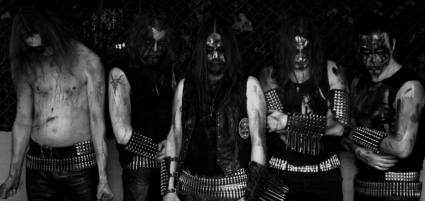
(((o))): The abrasive lyrical content on Through The Window Of The Night are an integral part of the album. What were Raato and Pentele's motivations behind the lyrical themes of anti-Christianity and blasphemy?
Raato: I have been interested in these matters for as long as I can remember. Pure intellectual consideration and thought combined with observations of our surroundings. I try to find links between the past and the present. However, some of my lyrics are influenced just by pure hatred toward the human race. Of course, these themes have been one of the main reasons the music sounds as it does, and one of the main reasons we got into it in the first place.
(((o))): The underground Finnish metal and rock scene have been flourishing as of late. What has your experience been as a band in an environment that is so welcoming to music, especially metal?
Raato: A thesis could be written about this subject. To answer short, I find the political and religious freedom we have in Finland to be one of the main factors. Economical prosperity, to some extent, combined with the frustration of the youth, probably has an effect. For rock music in general, these elements seem to be quite important. For black metal I believe them to be a necessity. Also, the historical and well documented tradition of substance abuse cannot be stressed enough, especially in Finland
(((o))): From other interviews, it doesn’t sound like you’ll be playing many shows at this point. As Graveborne grows more well-known, do you plan on playing more gigs?
Raato: I think previous misfortunes have made us more careful in when and where we want to play. There are vast sides of this country that we have yet not explored as a band, and obviously it would be a great pleasure to play abroad for our fans that cannot travel long distances. For the past year, we have been completely focused on releasing and promoting this latest album, so there has simply been no time to organise any gigs. After the release the situation will most likely change.
(((o))): As band and as individuals, how important are theatrics (corpse paint, costume etc) to a live show?
Raato: I think it is important. Personally, I find it easier to get into the atmosphere, when all of us are conjuring all the negativity and strength out there. Loyalty to the traditions of black metal play an important part. Also, I believe it is more entertaining for the crowd.
(((o))): Thank you for your time and I wish the best for Graveborne. Cheers!
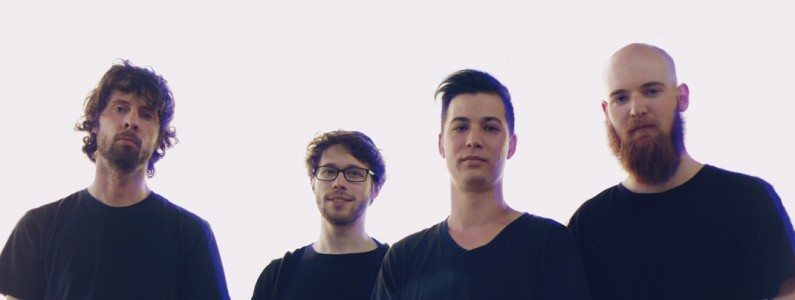
Last week we posted part one of our latest interview with Alex Wilson of Sydney instrumental rock band sleepmakeswaves. Two years ago when we first interviewed Alex, they were yet to tour overseas and most of the handful of writers we had at (((o))) had not heard of the band, let alone seen them. We now have 50 writers here, and sleepmakeswaves' recent tour of Europe and UK supporting 65daysofstatic gave the chance for some of them to finally get to see the band live, like Sander in Edinburgh, Dani in Rome, and Magda who got to their only headline gig of the tour, in London. It’s been great to keep in touch with the band and see them grow almost exponentially over these last two years. This week in part two we talk with Alex about the future of music, side projects and of course the band’s recent tour.
To give some perspective, for most Australian bands made up of musicians with day jobs a tour means spending three consecutive weekends taking Friday off to drive or in some cases fly to the nearest city which is probably between 700 and 3000km away, and play one or two gigs. A tour might have a dozen dates, but more likely half that, so when you find yourself doing 37 shows in 40 days, what is it that makes one day different from the next?
“Whether it's vodka Monday or gin Tuesday of Kahlua Wednesday or Bourbon Thursday (much laughter). That was 65daysofstatic's rider I think from memory, they worked it out really well so they had a good selection on the bus at all times.”
I immediately have images of a dozen guys lounging around in a tour bus wearing pyjamas and dressing gowns drinking White Russians and answering to “Dude”. Alex continued:
“I think you just have to do things, you have to try to be active doing things in that place that are kind of like a signpost for your memory, at least in the short term so they don't just blur into endless trips on the bus or as it could really easily become – playing a show, loading onto the bus late, starting to drink because you're with a rad band and you're having a really great time, getting to bed at five or six in the morning then sleeping through most of the day until you need to load out into the new venue again not seeing anything. That's a pattern you can really easily get into and we would really make as much effort as we could to try and interrupt that and so at least for me if I had some kind of brutal hangover or whatever I'd be like 'Fuck it! I'm in Rome. Never been here before. Let's go see the Colosseum', or like try and break into Vatican City, which we did and got chased out. When you go and do something like that it marks the day and makes it more than just another day on the bus.”
I remembered an entry in the band's tour diary and asked Alex if he signposted places he'd been in terms of how long it took him to find somewhere to take a dump in the morning (an act forbidden in the bus toilet). With a laugh he observed that particular morning in Frankfurt had been a particularly difficult one. Reminiscing done, he continued:
“It's not just about places, it is the people as well and people react to your music differently and they react to you differently and it's all just different kinds of positive because as a musician people treat you differently from a tourist. They're quite willing to open up to you and take you out to a bar where the locals drink or tell you something cool about their town. People do have a very different kind of character and it's easy to sit back in your dressing room and not really talk to anyone, but we just had so much fun on the tour. It was kind of a blessing in disguise having to sell our own merch because we ended up at the desk after every show and talking to a bunch of really cool kids and music fans who had come out to see us and it's just like being at a bar, you know you're drinking at the merch desk, selling stuff, talking to people, having a really good time. Some nights that was really incredible like this unreal night in Ghent in Belgium where it was just this complete swamp of happy people at the merch desk. Those nights really break it up as well.
“But then at the end of the day there's only so much that you can do and I think part of touring well is being stoic and giving yourself over to the logic of it. It warps your mind. It reduces your needs down to really simple things like drinking, eating a really minimal amount of food from a rider, playing a show and trying to play it well, selling your merch, trying to chase girls at the merch desk. It's not a complicated life you know, and it repeats day in, day out and the same demands are placed on you from day to day so you try and add to it and interrupt it where you can. The other secret is just trying to be Zen about it and finding the satisfaction in the repetition.”
For most bands gaining a following involves playing gigs and being seen, and despite the internet and easy access to music from around the world your average instrumental band is going to be best known and best loved in their own country. Because of the isolation it's not cheap for Australian bands to tour overseas and as a support band the crowd is clearly not there to see you. So were they surprised at just how many punters did turn up to the shows who were completely familiar with their music?
“Yeah. Totally. It's flabbergasting really. I suppose it ties back to what I was saying earlier where you're confronted with the reality of the situation where people are familiar with what you've done, and I feel there's an obligation to respect that back and I think that's really important. It's always surprising and I think honestly if it ever stops having a sort of other-worldly, dreamlike quality to it I think that's the moment you should stop? Maybe? You know, when you get complacent with people's passion about something that's really important to you would be a worrying development, at least for me. So that was one of the best things about the tour because obviously we're very into connecting with people – that tangible evidence that something you've done really mattered to someone is amazing and we certainly weren't expecting it.”
If you haven't read the band's tour diary it's worth having a look. As expected there were continual references to grog and stories about people they met, but playing tricks on Otto had clearly died down this tour - according to Alex he gets his own back these days; “our little boy is growing up”. Alex had written the first two of the four instalments and suddenly for number three Kid had taken control, no doubt in an effort to show how to do it. But the novelty wore off quickly and Otto took the reigns half way through part III, with Alex taking back writing duties for the final instalment.
“I think I'm the only one who's verbose enough and navel gazing enough to really be able to keep it going for the whole time and I'd have Mike Solo (their manager) behind me cracking the whip so I'd get it finished. So I mean I think the question was, yeah we did drink a bit of grog and 65 certainly put us through the paces in that way because they're from Sheffield and Manchester and thereabouts and they know how to drink well and show you a good time and play all of the best worst songs over the bus PA at 4 o'clock in the morning when you're driving. I suppose as an opening band one of the only things on your rider that you can reliably count on is beer (laughs) so it's a staple.”
In the diary Alex also spoke about the need to have a few drinks before playing but not too much. So what is the yellow zone and has he calculated the exact blood alcohol content where he switches from, if you like, playing like Lemmy to just being the drunk guy with the bass?
“(Laughs) Oh man, if only I could be Lemmy. I think probably two solid beers in the hour leading up and two drinks of scotch just before I go on I think that will have you nicely sauced to the point where you don't really care about who's in the crowd and your nerves have gone but still able to play. For me it's totally a nerves thing, like on stage I know I play a very physical show but a lot of it is not really conscious so when I play I can know people are enjoying it but I feel very exposed. I can play reasonably comfortably in front of a few hundred strangers, but especially if there are people I know that have seen me just as an ordinary person who I work with, or a friend of a friend, or someone’s cousin, it's a bit of a dramatic side of yourself that you introduce to them so I suppose, for me, having a few drinks certainly puts me in the headspace where that stuff doesn't matter so much, so that means I can play the show I want to play and people want to see.”
I had noticed that any reference to “playing cards” in the tour diary attracted the correction from Otto that what Alex meant to say was “playing Magic: The Gathering”, the original trading card game. Just who were the players in the band?
“Time doesn’t play at all. He’s the least nerdy one in the band. Otto takes it more seriously than anyone else. For me and Kid MTG was definitely in our childhoods but we’ve eased up a bit as we got older and are not so worried about some of the rules. Otto’s a serious stickler for the rules, like if you tapped before you picked up your cards, Otto will untap your mat and make you pick up the cards (becomes unintelligible here due to the laughter). He does win more than anyone else – he has this lead goblin deck that will totally own your arse. (more laughter)."
Did they get any converts?
“Yeah Neil Bunn, or Lord Bunn, who has an amazing beard and full sleeves and sells merch for 65daysofstatic – we tried to teach him to play Magic and it basically ended up with him taking the piss out of Otto the whole time and he even came up with a song about Magic (which Alex refused to share with me)”
And which member of sleepmakeswaves is the most impossible to live with on a long tour?
“Oh, me hands down. I’m not just being self deprecating but I am. I have the highest highs and the lowest lows.”
The topic turned to side-projects of the band members and what role, if any, they played. Tim, the drummer, also plays in Sydney band Pirate, with their looped-saxophone and vocal led math-rock/progressive metal, and they've been working on new material. Kid harbours a long term dream of starting “the world’s most brutal sludge doom band” and the name he had chosen did in fact become the name of their album; “…and so we destroyed everything”, Otto would probably like to do some sort of acoustic project, while Alex is interested in playing around more with the electronic side of things. He describes how difficult it can actually be to find that separation:
“One of the hard things about it is that I can come up with something that I really like in an electronic form with drum machines and chords and melodies that I think are really nice, and then my brain starts fucking it all up, and it's like; 'You know what, you could really easily imagine this with guitars' and I'll start experimenting with that and it sounds really good and eventually becomes something that could be part of a sleepmakeswaves track.
“Part of the way we write in the band is imagining ideas being interpreted in five, six, seven different ways and writing for us takes a long time because it's about experimenting with all those ideas and selecting the best ones, the best interpretation of a melody or riff or chord progression or the best structure to string it all together. And that makes side projects difficult because it become this repository of riffs that you steal back into your main band. I'm spending a lot of time writing music that isn't sleepmakeswaves and I'd really like it to encompass some of may many interests outside sleepmakeswaves, but putting a boundary around that and drawing a line under it – I haven't figured out how to do that yet.
“I would love it on the level that I'm an absolute control freak and being in a situation where I did not have to compromise on anything at all, being able to pursue my own interests would be really satisfying to me. And that's not to say that compromising on what you want is a bad thing at all – it leads to incredible results. I remember Steven Wilson from Porcupine Tree saying once that he got bored with his own record collection and one of the reasons he loves playing with a band is all of the ways of doing things that he wouldn't have thought up by himself, but then again he's got probably seven thousand projects that are all about what Steven Wilson likes.
“We've sort of been talking about, in the trajectory of the band, where perhaps the best way to do it is I need to develop a really serious drug addiction and then do a series of commercially unsuccessful but critically acclaimed solo records about the recovery and everything like that, so maybe that's the key?”
There's no shortage of composers and songwriters who have shed their band in an effort to do what they want because of the need for compromise, but often something gets lost that you can't make up for with that freedom alone. Alex was a massive Smiths tragic growing up and talks about how the magic of that band came from everyone, not just Morrissey, or Johnny Marr or Andy Rourke. He was given Morrissey's autobiography by a friend and says you get the impression Marr got sick of Morrissey getting all the attention and so decided to go out on his own, but with that neither of them could recreate the magic they had with The Smiths. Similarly, Alex considers sleepmakeswaves greater than the sum of its parts and that when they play together it's a feeling he just doesn't want to ever go away, in the same way as being in love. Doing all this touring has made him realise that “all the people that are in the band right now are the people that need to be in the band pretty much forever.”
When Blur pulled out of the Big Day Out the band tweeted to promoter AJ to offer their services – it was pretty funny. Needless to say the offer was not acknowledged taken up, but it did make me think about the fact you can't headline an Australian festival unless you were formed before about 1995 (and Beady Eye is just Oasis so don't go there). Does this mean when all these bands eventually die there will be no more festivals?
“I think it's an ideological shift in the way people perceive music. I think the whole internet thing and everything it represents has changed the idea of there ever being any more classic bands in the way that Blur or The Stones or Zeppelin or King Crimson. In 1970 there were like five classic bands that that were all awesome that had big record deals and got played on radio that were two of the avenues for getting big and those bands that got into those avenues were there and you only needed a handful. But now it’s totally different and you can choose any sub-genre of music and there are 200 bands in the world that are world class, and you are right in that you can’t get a headline in Australia in some ways without being one of those bands, but when these groups die I wonder if it’s going to be a situation where other bands are going to fill the holes that are left or whether those gaps are going to be filled in for good and we end up having what I think we’re heading for which is a really cosmopolitan kind of music scene where it’s more about specific stuff, like the logic of the internet facilitates your own really quirky musical tastes and puts you in touch with people that are really into that too so you can explore all that weird stuff.
“I don’t think there’s anything to worry about with the idea that you might not be able to be Blur and heading a big festival or something like that because I think we’re gonna do just fine. I think we may not have bands that are the equivalent of those massive corporations like we did in the past, but we can have bands that are the equivalent of hardworking cottage industries. Bands that don’t make a lot of money and they have to work pretty hard, like anyone does, but the rewards are there and they stay afloat and they live their lives and they do something good as a result.
“There are roadblocks to work around like how Spotify works and how bands get paid but I’m certainly not mourning the fact that I was born in a time where live bands not playing headlines to a massive festival is a possibility. That doesn’t particularly faze me.”
A lot of this makes sense. There’s always talk about rock and other forms of music dying, but perhaps music is going back to a form that’s more community and household based. Before TV and the internet and downloads and mp3 people would gather round the piano and sing or play some other instrument. In the late ‘50s there were estimated to be some 30-50,000 skiffle bands in the UK. Bands still play at parties and the local pub is still a defacto back yard shed for those with intolerant neighbours. Alex talks about the way geographic music communities are thriving and despite music being available everywhere people are linked to local scenes.
“This is the most amazing time to be alive for music, because there are literally no rules. There is more music being created and transmitted than ever before and there’s more possibility that your unique vision will find its audience and could grow into something bigger than you imagined it could be. No time is ever perfect and there’s things to figure out, but from my perspective it’s just incredible. There’s more chance I think for people to feel included in these smaller indie communities that have become really self-sustaining, than they can with that big rock stadium kind of thing.”
The term ‘music industry’ makes it all about production, consumption and profit – these are not the lifeblood of music and nor have they been in the past. Perhaps it’s better thought of as the “music world”? Alex takes it a step further and questions whether the term “music” has become too restrictive for what’s happening and how artists go about creating. He feels music journalism misses the point in asking questions like “What gear do you use” and “What are your influences”, which, as it happens, I asked in my first interview with Alex. He explains that the very personal way someone creates music is not built around those thoughts and constructs, so the term ‘music” doesn’t accurately encompass everything that’s happening when people get up on stage and make sounds for the entertainment of others. For example it doesn’t take into account the differences between someone like Girl Talk and sleepmakeswaves and that personal connection someone has with music.
“I believe that when you understand music on those levels and you try to understand the different reasons musicians have for making it, it actually becomes a method for helping you connect with different kinds of people as a whole. It opens you up to whole new ways of being a person that you might not have really thought about.”
Great – now I have to rethink everything again!
Thanks to Alex for making the time for a chat (I finally used that new-fangled Skype thing the kids are using). This is our third annual catch-up and we intend to continue reflecting on each year as it passes. As a big fan of the “Smiley” films of the late ‘50s I was super pleased that Alex used the word “flabbergasting”.
The band starts their support stint for the Karnivool and Dead Letter Circus tour this week. They will be killer shows so make sure you get there. Details on facebook.
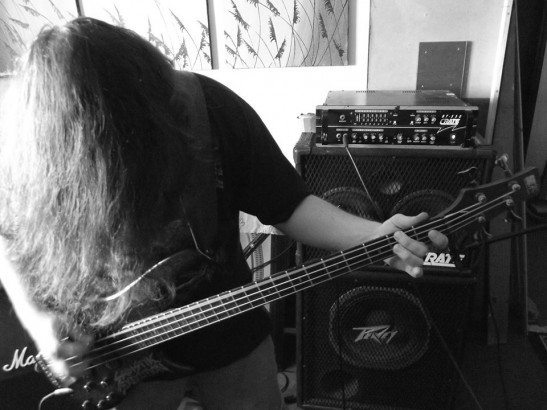
Israel’s Promiscuity just believe in good, honest riffs, and having no time for trends or idol worship means they can pump out plenty of them. The blackened-thrashy-speed metal trio spared no expense and made no compromises in the recording of Basic Instinct (reviewed here), and the results speak for themselves. Bassist/backup vocalist Werewolf speaks on his band’s ideals when it comes to making the music they enjoy, as well as digging into some of the details of the recording process and hinting at future live activity…
(((o))): It's fairly easy to pick out your musical influences. What is it about these bands that speaks to you? Why do you love this music so much?
Werewolf: The music itself was written solely by Butcher [vocals and guitar] for Basic Instinct, but since our tastes in metal have a rather small common denominator, it would be fair to say that Promiscuity reflects only a certain part of what we listen to ourselves. We are into anything from Iron Maiden and Judas Priest to Nifelheim, Incantation and other bands that have a backbone, a personality of their own. Memorable riffs, an atmosphere that feels honest and convincing, guitar solos with a lot of feel, well written lyrics and sometimes even just a powerful production is what can make a metal band stand out and sound attractive to me. It’s not so hard to figure out who is riding a trend and who has something genuine to offer, if you listen carefully.
As for influences - it seems that many people think that an “influence” means “your favorite band”, “bands that you’ve been listening to most, lately” or “one specific band that you plagiarize like there’s no tomorrow”, but I don’t think that a namedropping would contribute much. We don’t play anything too complicated from a technical point of view, but we do our best to use our own ideas and not to sound like this or that “influence”. Similarities to some other stuff are inevitable when you play primitive metal, but they aren’t intentional. Some people claim that we sound like a NWOBHM band; others consider us “pure thrash” or “old school black metal”… I assume that it means that we don’t sound too “influenced” by something specific, which is great.
(((o))): Are there any bands (or non-musical things) that influenced Promiscuity that fans might not expect?
Werewolf: Probably not. I find black humor quite inspiring, but this is probably pretty obvious anyway.
(((o))): You've mentioned before that you're looking to have Basic Instinct pressed to vinyl. Has any progress been made here?
Werewolf: Unfortunately, not yet. The cassette version should be released by Dying Victims Productions by the end of January, but there is no exciting news about other formats.
(((o))): While I didn't think to talk about it in my review, the production on Basic Instinct is fantastic - raw and gritty, but everything is heard clearly. How did you get it to sound this good? I know it was recorded in a very nice studio and mastered by Leon Manssur of Apokalyptic Raids - did they do anything special or unique to get the sound on this record right?
Werewolf: It’s a combination of many things, such as working with a professional and open minded enough sound engineer, great gear, lots of cash spent, lots of hatred towards wimpy production that involves the use of triggers and abuse of compression and, last but not least, our lack of will to compromise.
We wanted the drums to sound like fucking drums and neither do we regret about such “wrong” things as injecting a reverb overdose into a filthy song like ‘Pedophile’. We aren’t experts by any means when it comes to the technical side of sound recording; we knew how we want the songs to sound and just trusted our hearing during the recording and mixing process. Neither did we mind to argue with the sound engineer when we wanted to make something sound, errrr, “not the way it should”.
Anyone with half a brain should be able to figure out how masculine an old Thin Lizzy record sounds, both in general and when it’s compared to any random so-called “old school” death metal album that was produced by Dan Swano. Compression and loudness cannot compete with a powerful organic sound and that’s why it was obvious that the enemy of useless loudness a.k.a. Leon Manssur is the right person for the mastering job. I’ve been into Apokalyptic Raids for over a decade myself, so I knew that he also knows how to work with this type of music. The mastering version that was eventually chosen is the first one he created, and since everything was recorded well – he didn’t have to make any miracles in order to get a good result.
(((o))): I haven't heard much about the gear you use to create these infernal tones. What do you guys play and what do you plug it in to?
Werewolf: Butcher uses a Gibson Explorer. The guitar tracks were recorded with a combination of monstrous Marshall and Orange amps, without any pedals.
As far as I remember – Steel has some special edition Pearl drum kit and an Iron Cobra pedal. I have a Gibson Thunderbird bass. I recorded the Promiscuity tracks with an Ibanez bass and a Tubescreamer pedal, though. I wish I had the Thunderbird before the recordings took place!
(((o))): You've mentioned in some previous interviews that Promiscuity have yet to play live. Is this poised to change soon?
Werewolf: There is a chance.
(((o))): Which band's live performance would you use as the standard to judge your own?
Werewolf: Bathory, Hellhammer and Burzum.
(((o))): What is the best band from Israel no one knows about?
Werewolf: This band is called Har. Nobody knows about them yet, literally, because they have neither published any recorded materials nor played live yet, but I heard a recording of their rehearsal and I can say with confidence that the stuff that they are about to record is quite promising.
(((o))): Any last words you'd like to add?
Werewolf: Last words? Thanks for the interview, first of all!
The cassette version of Basic Instinct will be released by Dying Victims Productions next month. Stay tuned for more updates via our Facebook page and our Bandcamp page (both linked above), or contact us about anything at contact@promiscuity-band.com!
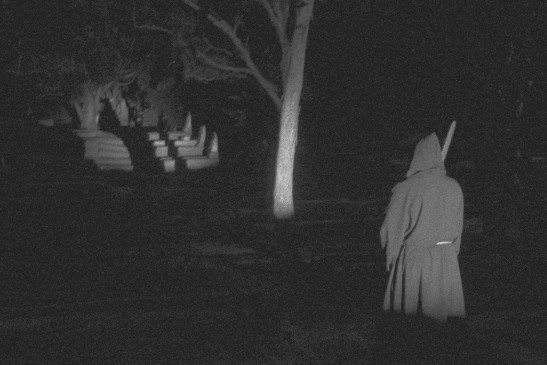
Moon's The Nine Gates is an ecstatic, mystical trip of an album (see our review here). It's a release that deliberately leaves questions unanswered, though I couldn't help but act on the chance to clear some of the fog surrounding the mysteries therein. Here are some of Moon's driving force Miasmyr's thoughts on the occult, what emboldens Australia's metal artists, and why he doesn't have plans to retire any time soon.
(((o))): To start off, you debuted Moon in 2008 after playing in a few different bands. What led you to start a project over which you had complete control rather than collaborate with other people?
Miasmyr: Originally it was a side project for ideas that didn’t suit the bands I was playing in and it was also a platform for experimentation. After a while it developed a sound of its own as I noticed a growing interest from others in hearing it. This led to a few demo/EPs being released and some splits.
(((o))): Both of your full-length releases have a sound that seems insular when compared to the rest of the black metal landscape right now. Is this deliberate? Do you pay much attention to what other people are doing or do you try and block that out during your writing/recording process?
Miasmyr: I’ve got a good idea of what sound I want, but I’m always open to experimentation. I listen to a lot of black metal and various other genres such as doom and ambient but I’ve developed my own style and direction I want to head in being a blend of atmospheric and hypnotic black metal. I haven’t found too much of late that I’ve found striking but I go through periods of listening and taking things in and times of productivity where I like to be absorbed in what I’m working on.
(((o))): How important is lyrical content to you? It seems like your lyrics hold personal and emotional weight for you, based on your vocal performance, but the production makes your voice seem more like a musical instrument or element of the general atmosphere rather than a means to clearly communicate ideas.
Miasmyr: The words are secondary to the expression and effect they have. On earlier recordings I often didn’t use any lyrics as sometimes I found they inhibited the more primal form of expression. I gave more detail to the lyrics on The Nine Gates to give the songs a conceptual backbone unifying the musical themes. Whether you can understand the vocals or not it is intended to serve as guided imagery similar to how I experience much of the black metal I listen to. The instruments sometimes serve as voices themselves giving way to a non-verbal oration. Overall I like to keep details hidden and undefined for stylistic preference.
(((o))): Your music is often described as occult black metal. What personal meaning does "occult" hold for you, both in how you define the word and how the concept of the occult informs your music?
Miasmyr: Ultimately the music serves as guided imagery for astral projection using symbols and analogy to illustrate the shadow world. I don’t follow any specific paradigm but draw from a range of left hand path sources; I don’t like to identify too specifically with any pantheons to emphasize the primordial nature of the content.
(((o))): With Moon being a product that is so singularly of your own expression, how much control do you have over the art design of the albums, merchandise, and photography based around the project? To me, the art ties in so perfectly with the themes of the music - is it important to you that Moon be experienced with senses other than hearing?
Miasmyr: I usually direct the artwork, the visual aesthetic can strongly influence how one interprets the music so I’m always looking for artists who will complement the music appropriately. So far I’ve had the most luck with people I know who have a stronger understanding of where I’m coming from musically and aesthetically, otherwise I look for people who already do a style I think might work. Winterkalt’s minimalist 90s cover for the split with Xerbittert was a good break from the standard artwork I’m used to putting forth, whereas The Nine Gates is a good example of the style I usually go for, its symbols and imagery are integral to the music.
(((o))): At the risk of interfering with the mystical aura of your music, where was The Nine Gates recorded? Is this a studio album or do you have the ability to record your music at home (or a mix of both)? What are the artistic benefits behind the process you use to commit your ideas to a recording?
Miasmyr: Usually I record in a home studio and master the material in a professional studio. Recording at home gives me more time to work on getting the right sound and subtle nuances. On the negative side I would sometimes rather have a system running better and a limited timeframe can sometimes encourage faster production.
(((o))): Has Moon always been a project you expected/wanted to translate to live performance? What are the major differences between how you feel about a song you’ve recorded and how you feel about a song while playing it live with a band?
Miasmyr: I’ve been involved with other bands on the live front for quite a few years. After my output of recordings became more prolific with Moon the band I was in changed over to play those tracks. It was in a way a progression to the next phase in my mind idealistically. This was in part to streamline the output into something more raw and primal. I plan to always play live, it’s where one can connect most directly to an audience and it gives the music another facet. It’s hard to always get the sound we’re after at local gigs since the engineer doesn’t always know what we’re going for. Generally we play the more involved, less ambient tracks live to maintain a strong energy although we maintain its evocative and bleak sound.
(((o))): You are based in Australia, which has been steadily gaining attention in the metal community for the past decade or so for producing high quality metal bands. I personally remember the Pestilentia Australis compilation of Australian black metal bands being a sort of holy grail when I first began listening to the genre - featuring other one-man projects like Striborg and Elysian Blaze. Is there a reason in your mind that there is such a concentration of highly-regarded black metal in your country? Is there anything about your music that you feel is specific to where you come from, geographically or culturally?
Miasmyr: Australia doesn’t have a strong cultural past heritage like places such as Norway and Poland. Black metal doesn’t have a unified sound here as such. Geographically Striborg is in a very green part of Australia and he embraces that in his lifestyle and music whereas I use black metal as a means of communing with the inner world. My home town, Brisbane has offered some strongly unique bands over the past decade or so. From the retro thrash/black bands like Spear of Longinus, and Vomitor, to the obscure black/death of Portal and Impetuous Ritual, each band has something unique to offer and made a bold move to forge their own sound. In a way, not having a past cultural identity has given people in Australia more freedom to go their own way.
(((o))): Has your process changed at all since Moribund began to distribute your music and brought it to a larger audience? Do you feel like there are expectations put on you and your music that weren’t there before as a result of being heard by more people or is it easy to stay true to your original vision and creative process?
Miasmyr: Certainly the aim has been to find a label to fit the music, not the other way around. I’ll continue to do what I do whether there is much interest for it or not. I’m not always overly critical when writing material but when choosing what to be released I don’t want to add to the rubbish.
(((o))): What else do you want to accomplish with Moon? Is there a specific goal you’re trying to reach with your music or is it more of an organic, amorphous path for you? Can you think of anything that, after achieving with this project, would make you say “Okay, I’m done?”
Miasmyr: It’s an ongoing development; my ears and ideals change quite quickly and are somewhat ahead of what I release. I maintain my overall sound and vision though, I don’t think I’ll ever lose interest even when I reach my old man wizard phase therefore I’ll never be “done” with it.
When we first spoke to Sydney instrumental rock outfit sleepmakeswaves two years ago, they were a lot like many other bands playing in local music venues and the occasional national tour. Underneath the water though, the duck legs were paddling away madly and as their album was getting appreciated by fans over the world and a loyal local following had been established, management was busy getting them a support for Karnivool and spots at dunk!festival and South by South West. We caught up with them again at the end of the 2012.
The year had provided both useful experience and an opportunity to support (((o))) favourites 65daysofstatic on their first tour in Australia early 2013. Sleepmakeswaves toured Australia again as headline, this time playing a stack of new songs and some dates next to each other in the same city with a different set each of the two nights. Then it was back to Europe, this time including the UK as they again played support to 65dos, the tour ending in November.
For our third annual catch up I spoke with Alex Wilson who plays bass and laptop, and in part one of this two part interview we talk about why they make music, connecting with fans, the new album, talking at gigs, and how ducks have corkscrew genitals.
One thing that struck me was the way Alex appeared to have slipped back into the real world so smoothly after the tour without signs of that port-euphoria depression we all tend to get to some degree after some big event. He explained that he'd stayed on in Europe for a while after the others (drummer Tim and guitarists Kid and Otto) had left, that he'd got back on a Wednesday and was back at work the next Monday. And when I say “work” I mean the day job:
“But I'm pretty buzzed, you know it was a great trip,in many ways the tour was absolutely rad and I land here and it's summer. Just before I left the weather was starting to turn to shit, so it was pretty amazing.”
When I've seen him at gigs Alex has always struck me as a pretty serious guy when it comes to the band, and as someone who strongly feels you only get success through applying yourself and through hard work:
“Yeah, I think if anything me personally, I probably take it too seriously. One of the big things I learnt on this big tour with 65 was that sometimes playing a show is just like going to the office and sometimes you have a shit day at the office because of reasons outside of your control, and normally you don't really take that all to heart because you don't really care about it and you go home and have three or four glasses of wine and try to forget about it. But you know it's actually the same when you're on a really long tour as well, there are going to be shows where things don't go so well from your perspective and because you do really care about what you're doing it will be like a real disconnect that you feel when you've performed really badly and you've got fans who have been waiting to see you and they come up to you and say it was great, and you feel like a bit of a fraud because you're thinking 'shit, to me that was like a 5/10 show and you're trying to tell me how great I am?' You know it's weird and I think part of that, those are the moments when you shouldn't take it too seriously you know, because you can get really caught up in this serious workflow perfectionist musician kind of thing but at the end of the day it's not actually about that for the fans. Your seriousness should all be in aid of enabling a greater experience for other people and if you end up just getting really worked up over a process of being perfect merely for the sake of it, it's not too productive.
“I think we have always really valued hard work from the perspective of nothing is ever going to get handed to us and even more than that we're going to have to work twice as hard as most other bands in order to get the same opportunities and I mean from the get go we never expected that this would amount to anything so it's always kind of like this idea we've succeeded against the odds and I suppose we really like it too. I know it sounds dumb but for me the rock and roll dream is less about you know snorting lines off groupies' backs, although that would be nice (laughs), and more about the Ian MacKaye from Fugazi thing of loading your own gear and amps and putting your own show on and being 100% behind it in every conceivable way and being a totally different kind of badass in that way, you know what I mean? Like there's integrity and respect from being able to run a show on your own terms than like other bands might need a whole swag of teamsters to it pull off. So yeah, there's your rambling answer to that one.”
Although Alex never expected much he still always wanted something from his music and he feels that every musician who writes songs and gets them out there harbours some kind of ambition. For him, part of that is working hard to try to master his “understanding of the language of music”, and part is gaining recognition for doing that well. Above all though is the desire to connect with others:
“I've always said that I wanted to make records and music that mean as much to other people as my favourite records meant to me. Because like a lot of people I found certain parts of growing up quite difficult and I found good music was a way of feeling you could get a bit of a hug from the universe. The fact that sleepmakeswaves has become for a handful of people that kind of band is incredibly moving to me and I find myself at a loss for words when they come and they have a tattoo of our logo or say that a particular song has helped them through a difficult time in their life or something like that.”
Alex recognises the importance of remaining respectful in responding to this kind of fan adoration and “remembering your roots and where you came from and why you were trying to get there in the first place.”
But not all musicians want to connect with others through their music – many talk about doing it just for themselves and that they don't give a fuck if anyone likes their stuff, which is sometimes true but often bullshit. Alex cites UK solo jazz fusion bassist Squarepusher as someone who genuinely doesn't take an active interest in how well his music sells or what is written about it, but also points out that he himself has so many unfinished demos that only he has heard and it allows him to indulge in other aspects of his compositional output. (We talk about this in more detail in part two of the interview)
To Alex it's when you start spending so much of your money on making music that you start to ask yourself why, and it's clear to him that the reason he does it is to communicate and be respected as a good speaker in his medium, and that this is what most musicians feel. He suggests the reason many musicians say they are doing it only for themselves may be a form of defence mechanism that comes from a fear of being criticised. It took Alex a long time before he felt comfortable with the idea of telling people he's a musician, even for a couple of years after they had played their first shows and it's interesting to hear him talk about that realisation he had become part of the very thing that had given him so much in the past – the gift of music from to other people to make them feel good and get a bit of enjoyment from life.
In any case he feels that they have become confident in trusting their musical instincts in creating music that connects with their audience, and the response to the new material tells them that path they are heading in is the right one. “In the end (he says with a laugh) everyone wants to be liked, and if I didn't I'd probably play black metal or something like that.”
On the topic of the new material the plan is to record in the first few months of 2014 and get the album out in the second half of the year, and the aim is to be able to play it faithfully live which means we are unlikely to hear strings or other instruments. Although those instruments/additional tracks can of course be added live with laptop, Alex explained that; “it would feel very weird to us to put a track that another human being we know played and felt and put that on a backing track and sort of have it played every night at the press of a button when the rest of us are kind of rediscovering those parts and the emotions that go with them every night on stage. It would stick out like a sore thumb – at least to us while we're playing.”
One of the great strengths of instrumental music is the scope it allows you the listener to respond in your own way and also to improvise melodies and other lines in your head as you listen – far more so than for songs with words. One day a record or song can be uplifting, the next melancholic, and another beautifully tragic. Does Alex see a potential market for sleepmakeswaves make-your-own-lyrics-up karaoke?
“I think that's called youtube man” he laughs. “There's a bunch of kids, god bless 'em too, like I think it's really cool, but they've taken a couple of our songs here and they've just been 'I love this song so much that I've written a bunch of vocals over the top', and to me it's really touching and heartfelt – they were never meant to be like that – and at the end of the day those sort of things are really amazing to us.”
To Alex the communication between the band and the listener is not one of active and passive. When you listen to their music he expects you to bring something to it – your imagination.
“I love the idea that someone is taking a song that is meant to be instrumental and coming up with their own melody in their own head and it's one of the most incredibly personal relationships to music that you can have that are inexplicable to other people and are some of the most special, and I suppose one of the big motivating factors behind our band and probably any of the sort of instrumental bands that we share influences with, is the idea that you're trying to connect with people with that aspect of music that's unspoken and unspeakable: those feeling you have that defy rational thought. To me it's the biggest kick that someone can come up to me and talk with me about a song that we wrote that was also a really emotional experience for me to write and with a very particular kind of character to it and it was a very emotional experience for them to listen to it. It was probably a totally different kind of character and we can try to have a conversation about that and get some of the way to understanding each other but we never will. There's always going to be a mystery there, a personal aspect to it that will remain singular to that person, and I don't know why that excites me so much but it really does.”
I don't know about you, the reader, but when I see progressive bands that use dynamics I actually want to hear them, and I've had a couple of shows ruined by the amount of talking going on while bands are playing. Surely people can shut the fuck up for 30-60 minutes? We've learnt not to smoke like chimneys in venues. I was pleasantly surprised when I last saw sleepmakeswaves play at the Evelyn in Melbourne that the crowd fell almost completely silent during the quiet fading outro to '...and so we destroyed everything'. I know it's an unfair topic to talk to bands about, but what's the solution to the problem of chatter?
“Yeah it sucks for everyone doesn't it and it's a real dilemma isn't it because there's no acceptable solution. I'm the guy with the mic and if if I got up and told someone to shut up I could totally ruin the vibe in my own way, maybe call out a dude whose being a little annoying but he's just enjoying the show in his own way and everything like that. I think the only thing you can try and do is try and be good enough that people can't help but shut up when they listen to you. One of the coolest things about the shows we've been doing recently is we felt like we're beginning to get that and they're really special moments for us on stage too. They don't happen all the time and you kinda have to earn them by being really on your game, but when everything's fading down and you've stopped moving, just being able to experience that stillness is pretty amazing, so I suppose we just try and create the environment where that happens rather than try and call people out. Whatever comes, we just want people to feel comfortable appreciating it however they like.”
The way Alex talks about it does give me a new perspective and once again he's focusing on the importance to the band of allowing the punter to respond in their own way, whether its banging your head up the front, standing still up the back, or dancing around as a bunch of kids did once at Byron Bay – something that doesn't happen very often. Post rock can be overly serious and they want to be a band that is serious in their approach to making music but without taking themselves too seriously. He talks about a time they played at Crowbar in Brisbane:
“During a really chill bit in 'gaze' there was this real ocker guy and he came right up to the front and goes 'Fucking sen-sational boys. Sen-fucking-sational', (laughs) and it was a totally red herring kind of moment but one that we're really fond of. He, in a way, didn't know the rules about how you're supposed to listen to that music but got into it in his own way, and we think that was totally cool and still talk about it to this day”.
If Alex was an animal, what would he be?
“OK, see this is an interesting question, because for a long time I wanted to be a duck in the sense that I went to Sydney uni and there's this very awesome pond where all these ducks would hang out and they were all so happy as they would waddle round. They seemed to have just very pleasant lives in the water just eating and floating around except, Gilbert, then I saw this video when I was on holiday this guy makes these films called true facts about animals and I saw “True Facts About The Duck”, and did you know, Gilbert, ducks have corkscrew shaped penises and that duck vaginas are corkscrew but in reverse of the shape of the male duck's penis and the duck vagina has all these false passages in there because male ducks are pretty much like completely incurable rapists. Not only do they have corkscrew dicks but after the mating season finishes the corkscrew dick falls off and it grows back each year in size proportionate to the amount of male competition it has, and after that I was just like 'Fuck! I don't know what I want to be any more, what am I gonna do!' So this question of what animal I want to be opens up this yawning existential bleed, this void that I'm staring into where once there was certainty it's now just crumbling to dust in my hands.”
Needless to say once corkscrew cocks were mentioned there much laughter had. You can see True Facts About The Duck here.
In part two of our interview next week, Alex talks about touring with 65daysofstatic, drinking, fans (again), the future of music, who's the sleepmakeswaves boss of Magic The Gathering, and reveals who is the most impossible member of the band to tour with. Plus plenty more.
In the meantime, you can see the band support Karnivool once again during their Australian tour. Dates on their Facebook page.

Dutch death metal band Hail Of Bullets recently released their third World War 2 inspired album III The Rommel Chronicles, which got reviewed by Andrew Rawlinson. Drummer Ed Warby gave us some insights into the band and their WWII inspiration.
(((o))): Thank you for ding this interview for Ech(((o)))es and Dust. We’re based in the UK where the majority of our readers are based. Can you give us a brief background about who is in the band and the history of the band?
Ed: The band was formed in 2006 by Thanatos main man Stephan Gebédi and his plan was to hand-pick the best man for each spot from people he'd worked with and/or admired. He ended up selecting Paul Baayens (also in Thanatos) on guitar, Theo van Eekelen (ex-Houwitser) on bass, Martin van Drunen (ex-Pestilence, Asphyx) on vocals and yours truly Ed Warby (ex-Gorefest) on drums. Some of us had never played together or even met each other, so instead of the usual tentative rehearsal one might plan we decided to go out on the town instead, figuring if we liked each other the rest would follow. We did, and it did, and so here we are 7 years, scores of shows and 3 full length albums later.
(((o))): What is it about World War 2 that appeals to you so much to form a band based on it?
Ed: Well, the band wasn't really based on WWII or even war in general when we started, only when I presented the first instrumental demos did Martin come up with his Eastern Front concept which we all liked immediately. We didn't have a name yet and although we wanted something "violent" sounding we didn't want to pin ourselves down on something too war-like, which is why we chose Hail Of Bullets, which definitely suits the war concept but not exclusively.
But by now we've definitely become a WWII band, it's simply a subject that suits our music and it's extensive enough to provide inspiration for many more years and albums to come. If we live that long of course.
(((o))): What processes go into choosing the theme of each album and how deep do you research it?
Ed: That process happens largely in Martin's head, he's our master lyricist and chief historian. The Eastern Front on our debut album was something he'd been wanting to do for a long time, so that was easy. Then for the second album we didn't want to repeat ourselves too much so Martin came up with the Pacific and what led up to the Japanese involvement. And this time he felt it would be good to try a slightly different approach and focus on a specific historical figure which became Erwin Rommel. The research he does is incredible, he literally disappears off the map with as many books he can get his hands on and doesn't come up for air until he's devoured them, and only then does he begin writing the actual lyrics which may take another few months.

(((o))): On a similar note was it considered a gamble to base album 3 [The Rommel Chronicles] purely on a German general and have you received any negative feedback for this?
Ed: Back when we did Of Frost And War there was already some risk of being mistaken for Nazi's, but especially in Germany Martin's left-wing political convictions are well-known so we had no trouble whatsoever. Besides, one only needs to read the lyrics for a few minutes to realize what we're about. And it was the same with this album, we're signed to a German label (Metal Blade Europe) so they made sure we didn't do anything commercially stupid, but they trust our judgment. We did have some minor discussions about the artwork and what we could or could not do, so in the end we chose a rather abstract image for it that still manages to convey the theme of the album without actually portraying Rommel.
(((o))): What’s your favourite Tank and why?
Ed: Ahh, that would have to be the Tiger I. I like to compare the band to one of those unstoppable war-machines, crushing everything in its way... it's near-indestructible, heavy as fuck, just a brutal machine!
(((o))): What is the most surprising/interesting fact that you have discovered during your research into an album?
Ed: I can't really name one thing but usually when he's doing his research Martin comes up with all kinds of titbits, and he recounts them with much gusto in the dressing room or on the road. Cool stories about the secret route that Rommel devised which made his division appear almost like ghosts in their swiftness (‘DG-7’ is about that), or the specific details of his forced suicide. I'm not nearly the history-buff Martin is, so for me it's usually very interesting to hear these things.
(((o))): Are there any topics you won’t cover for any reason (E.G. Holocaust)
Ed: That for me would be one, we want to maintain a certain level of "fun" and although we touch on many horrific subjects (whenever we do ‘Tokyo Napalm Holocaust’ the mood gets a little grimmer) I don't think the Holocaust would make a very tasteful subject.
(((o))): Do you plan to stick to World War 2 material or do you have any desire/plans to approach a different subject?
Ed: That's really up to Martin but I think that for now we'll stick to WWII, it suits our music well and there are still tons of topics left to explore.
(((o))): Do you keep track off and enjoy other World War 2 themed bands such as Sabaton or Eastern Front and have you ever thought about putting on a ‘war-torn’ themed gig or festival with bands such as these?
Ed: I don't get Sabaton at all, to be honest. Happy-sounding power metal with war-themed lyrics doesn't make much sense to me. We wanted to name one song on the new album "Ghost Division" but then we found out that Sabaton had already written a cheerful ditty by that name so we had to work our way around it. To each his own, but I don't think we'd belong on the same bill, haha
(((o))): Has being seen as a ‘supergroup’ been a help or a hindrance to your career?
Ed: When we started out it helped in getting our promo heard, but even then we all felt it was a major misnomer. I mean, it's not like we were in Slayer or Metallica before and we all see Hail Of Bullets as just a band (yep, band, not project). To me a supergroup is a bunch of rich and successful guys getting together to record one uninspired album and then dissolve again, not at all how I view this band. But I'm sure we sold some albums thanks to the "featuring so and so" tags, although I like to think those people would have found us anyway. So apart from the first few months neither help nor hindrance, I'd say.
(((o))): You have a long running partnership with Dan Swano with all your albums, how did you get involved with him and is he the only man you consider for the job?
Ed: When we got around to unleashing our first promo we all agreed it had to sound great, we were doing old school death metal but we wanted a "modern" production. It didn't take long for Dan's name to come up, and as luck would have it I'd just befriended Rogga Johansson who was in a band with Dan (Demiurg). I asked him to check with Dan if he'd mix our promo, and he said he would if I'd agree to join Demiurg on drums, which I did of course! Needless to say he did a killer job and even delivered some devastating growls, knowing full well we'd go back to him as soon as we had a record deal (which, partly thanks to Dan's mix, didn't take very long). And 3 albums down the line we're still extremely happy to be working together, it's a stupid cliché but he really feels like a 6th band member.
(((o))): You’re planning to tour again in 2014, will this include the UK?
Ed: Hopefully, yes. The UK has been difficult to break so far but we'll give it another shot if we get the chance. For now we're booking mostly festival appearances and one-offs, actual touring has never really been an option for us due to our regular jobs and other bands, but we'll try to visit as many countries as possible again.

Last week Gary Jackson reviewed the debut EP Zebra Pilot by French rock band Duck Explosion. He was so intrigued by the name that he wanted to find out more, so read all about exploding plastic ducks and French rock music.
(((o))): Hey guys, thanks for doing this interview with us. Can you give us a brief background introduction to the band, like who is who etc?
Wil: Thanks to you and thanks for the great review! We really like it! My name is Wil and I'm the cofounder of the band and I play guitar. Duck Explosion was created by two friends and roommates Jey Bridge and myself. A common passion leads us: ROCK!! 70's rock for one for one and more alternative rock for the other. We create the alchemy, which gives its foundations to the band. Charly Poppins, a singer with heavy metal influences who marks the songs by his hoarse and energetic voice, then joined us. Later we were joined on the bass by Saraswati Inthesky, who is an arranger and a composer of harmonious tones, and finally by drummer Luca who quickly learned to hammer the rhythms of Duck Explosion.
(((o))): Can you give us a brief history of the band please?
Wil: We created the band in March 2010 in a little town. We worked very hard the first year, so we created many songs, and at the end of the first year we decided to play live! The second year we played approximately 40 concerts everywhere in France (Marseille, Paris, Avignon etc.). We learned a lot in this year, but something was missing, which was a release. So we started to think about our first EP Zebra Pilot around September 2012, because we wanted to push our music to another level for our fans. In January 2013 we started to work very hard on the EP and we were back in the studio in April 2013. We finally released Zebra Pilot in October 2013 and now I’m here answering your questions.
(((o))): So fellas, Duck Explosion, you indicated that there was a story behind the name. What’s the story?
Wil: Well, for my roommate’s birthday in August 2010, I bought a gift and it was a plastic duck that used to light up when you slapped it. He decided to put this duck in our rehearsal room, and when we played very loud the duck used to make some lighting and I think this thing then began to become our emblem so we want a name with duck! The ‘Explosion’ part of the name came from the band Jon Spencer Blues Explosion as all the members are huge fans of Jon Spencer so we decide to put ‘Duck’ and ‘Explosion’ together. And at the end of every show we explode a rubber duck!
(((o))): What are the bands influences, musically and outside of music?
Wil: With 5 members with 5 different influences Duck Explosion is a mixture of all these influences. For me it's clearly The Strokes who are my influence for everything, my songs and the sound of my guitar! Charly is a huge metal fan, Jey is really more a 70's rock fan like KISS, Led Zep, and Saraswati likes the alternative stuff like Sonic youth, Dinosaur Jr etc. Our drummer Luca listens to Nine Inch Nails everywhere and all the time, I think at this point it's actually a disease (just joking!).
(((o))): I had written in the EP review that the band were kinda like post-hardcore, is this a fair reflection of the band’s style or would you place yourself somewhere else style wise?
Wil: We don't usually ask ourselves this question as I already said that Duck Explosion is a mixture of different influence and I hope we sound like Duck Explosion. As for the style everybody can hear something different! We basically play Duck Based Explosive Rock!
(((o))): What is the music scene like in France for you guys?
Wil: France is not a rock country, so we try more and more to play outside our own country like playing in Germany and all of the United Kingdom but it's a big thing to organise. So it's hard to do something with this type of music in France. Fortunately some people like Christophe Sousa from Dooweet help the band a lot.
(((o))): What is the best gig or venue you have played in?
Wil: Montfavet near Avignon last September 2012 was a great venue with a great crowd and it was a great show I think. It was a really special show for me personally because one week before the gig I lost my dad, so it was a really emotional concert, but he give me the strength for the show and lot more.
(((o))): Zebra Pilot was a four track release, have you any new material recorded or plans for a full length album?
Wil: We start to think about a six track EP for 2014 and certainly an full length album in 2015. We currently have 15 songs in the planning.
(((o))): What are your future aspirations as a band?
Wil: To play in London at some point would be a dream coming true for us. Besides this to travel for gigs, making some good records, play a lot and most importantly to have a lot of fun with our music. Basically what all bands want I think, but we always keep finding ways to think about our music, as it's maybe the most difficult thing to preserve with the music when you've got some success.
(((o))): Have you any gigs or tours that going to be taking place now or in the future?
Wil: We are playing on January 25th at Orange, which is a nice town. And a lot more gigs are coming quickly. We have our song ‘In the inside’ on the War Machine compilation Dooweet is putting out in the beginning of 2014, and we’re planning to shoot some videos, so stay tuned.
I really enjoyed answering your questions and I wish you all the best. Hopefully we will see you at a future gig!
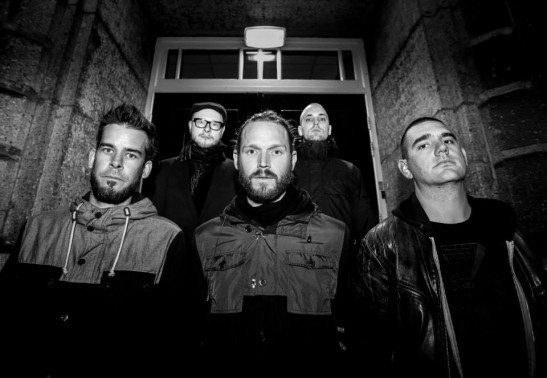
Earlier this month Dutch atmospheric post-metal sludgers SiMÓN released their second album The Inner Traveller, which Gilbert Potts described as "a record that works so well as a whole, that plunges the dirty, dark depths and ascends to uplifting highs, that reaches in and grabs my emotions and paints such a beautiful portrait" in his review. He asked the band some questions to find out more. The answers were given by Ilja Traas (Guitar/Vocals), Bart Heuts (Guitar/Vocals) and Theun Sponselee (Keys/Sounds).
(((o))): What is the most beautiful sound you have ever heard?
Bart: Echoes that you can hear in the Alps in Austria.
Ilja: Waves crashing ashore at the Wadden Islands. Listening to it from my tent as a young kid at the campsite and falling asleep so peacefully. Very soothing.
Theun: The thing that comes to mind is a Fender Rhodes with just the right amount of vibrato. When used correctly it'll melt your soul away in a song.
(((o))): You talk about the uncontrollable urge to express yourself through your art. How do the individual members of the band express themselves and at the same time come up with music you are all happy with?
Bart: We all share the passion for art, any art form that matters, but mostly music in a very broad sense. That’s why we don’t feel limited to a specific genre, but rather motivate ourselves to think outside the box. Mainly to push ourselves down a certain path and see where it leads us. I think mainly because we grew up listening to and being energized by sort of the same heavy music, that’s a foundation to build on and experiment with. Push boundaries individually but also as a band and keep feeding off eachother.
Ilja: We all have our own creative outlets and luckily we are able to at least share one creative and emotional thing together; that is playing with each other in this band. Personally I try not to think too much about my urge, because it comes naturally. Hopefully it will stay that way for as long as I live
(((o))): How much of the art is in the composition, and how much in the performance?
Ilja: I see it as a total package. My view on being in a band is trying to play from the heart and be as creative as possible. If that’s art? Fine by me.
Bart: Has to be 50/50. Composition and performance go hand in hand and are an endless loop, constantly feeding into each other.
(((o))): Is it inevitable that the human race will cause its own extinction?
Ilja: It’s always an interesting subject to philosophise about. In the context of our band it always seemed a big theme, but it has and will always be a metaphor. But I don’t think it will happen anytime soon. All prophecies that have been made are just hilarious to me. One thing that really bothers me still is continuous conflicts around the world, like innocent people getting victimised by war and terrorism. Or typhoons wiping away entire pieces of civilised earth and governments that won’t do shit about these situations, because there is no priority. Or psychopaths walking through shopping malls or schools to randomly fire machine guns at people…etc, etc…
Bart: I don’t think it’s inevitable. I think there is a lot of progress being made since this last decade and awareness is growing, but will it be enough? Guess we’ll find out some day, or not…
Theun: Probably yes, but let's be optimistic and hope for the best, that the human race one day will learn its place and appreciate this planet a bit more instead of ripping it apart. Would be nice, but I guess we'll need a cataclysmic event for that…..with the danger of extinction, so again, probably yes.
(((o))): Does making dark music help you deal with the dark side of humanity?
Bart: I don’t think we’re making dark music. Just because the majority of it is loud and we use a lot of distortion doesn’t make it dark music. I think we have a lot of euphoric, uplifting angles in our songs. Sure there are dark parts in there, but it’s all about finding balance in a wide spectrum of emotions.
Ilja: Dealing with personal humanity that is… I am not making music to change any ones opinion on things. Actually there is a lot of humour within our band; I guess I just don’t like to make happy music. I would prefer to call our album melancholic.
Theun: I think in the first place it helps you to deal with the dark side of yourself. It's an expression of emotions that people normally put away, which is the worst thing you can do. Acknowledge all the right and wrongs within yourself and once you're there you will learn that it's not all light and dark, good or evil etc, it's all those things combined together what makes you being you. And it is all those things that make humanity. And in the end, I think humour can be of great help as well….Wait, this question was about music right?
(((o))): How important was the recording environment to creating your latest album, The Inner Traveller?
Ilja: We recorded the album in De Leidseschouwburg. It is actually the oldest theatre in the Netherlands. Some people say it is haunted during the night. It wasn’t always a pleasant stay during the nights in those weeks of recording. There is over 300 years of history there, so go figure. Listening back to it, it gets me back to that place. You can really hear that majestic vibe.
Bart: When De Leidseschouwburg came up as an option to record the album, it was a blessing and a curse at the same time. It’s an amazing and impressive setting with insanely beautiful acoustics, but at the same time stuff happened that can’t be explained.
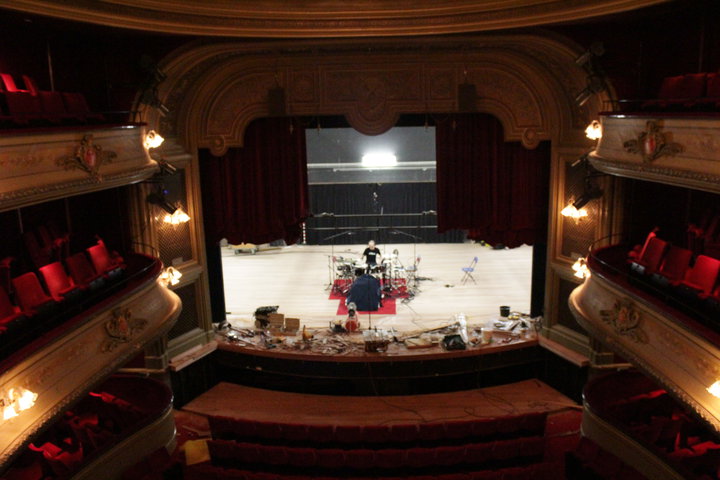
Recording the drums at De Leidseschouwburg
(((o))): In the record you keep the intensity and darkness without making the whole thing doom and sludge by also using melodies, clean vocals and dynamics. I find this makes it more listenable in a wider range of moods. Sometimes too much variation can ruin an album - how do you find the right balance between two contrasting elements?
Ilja: I always like music with contrasts. I come from a 90’s music background, where you had the grunge and crossover metal type stuff, and late 90’s with a lot of interesting bands who reinterpreted hardcore and metal. That decade still appeals most to me. But there isn’t a clear thought behind our songwriting. There is no blueprint. Shit just comes out and it becomes a song within our own expectations of what a good song should have. We don’t want to be just this loud band; being aggressive all the time is kinda boring. So there are these elements of melodies, the clean vocals, the trance parts, showing a vulnerable side as well. They just give a bit more extra to a song. In a not too obvious way I hope.
Bart: I think that’s due to our past in other bands. We have a pretty good idea of how a song is supposed to work, but don’t prefer the pop format for the stuff that we want to do. So without exaggerating too much we try to push our boundaries. Stick to what we know for the most part, but try to push ourselves forward into unknown territories.
(((o))): You craft your songs well as a whole, which means you recognise the importance of bringing the songs to a conclusion. Most artists have trouble with this, especially those not using traditional song structures. Is this something you work at doing well?
Bart: In some cases we have a pretty clear image of how a song should end, even before the rest of it is written, but most of the time we let a song in progress lead us to an end that feels natural and organic. The end of a song on an album to me is just like the end of an episode of a series. It determines where you go from there, and in what state of mind. Each episode/track is a story on its own, but plays an integral part of a bigger picture.
Ilja: I think we have more trouble with the start of an idea. When finally having an idea for a new song it gets us collectively motivated to end it the right way, choosing a path to reach that ultimate climax. We all love to explode in the ending of a song, but it’s a lot of fun trying to hold back sometimes, giving that dramatic feel to our songs.
(((o))): When you play live, do you try to recreate what's on your records, or create something else?
Ilja: We recorded how we play these songs. If you’re making an album, you shouldn’t be too concerned about your live performance, that will distract you from letting your creativity get out the right way. It’s totally about making a piece of art with sound. To express yourself the right way that you actually want, you have to be very critical. Both on a technical and emotional level, that’s craftsmanship.
Bart: Live we don’t feel like replicating the record. We just want to play our songs better and put more physical energy into it.
Theun: Sometimes a song works really well just as it is when you play it live. Sometimes a song needs a work up when played live. And a song remains a living thing, so naturally when you play a song live, you start hearing other things that might work, so you'll try and it keeps evolving on stage. And sometimes a song doesn't work live at all, haha. We've tried to play 'Atmosphere Condensed' in the past, which I think is one of the better songs on the album, but live it's a total mess. We've tried that a couple of times but it didn't have that feeling in a live setting. So that one we haven't played live for a long while. On the other hand, when the urge is there we'll probably pick it up again and see what we can do with it. It remains a challenge to do something with that song, but we'll see.
(((o))): What's the most memorable thing anyone has said to you after playing a set?
Ilja: “I need a drink…”.
Bart: “I was looking at you the entire gig….I couldn’t figure out what’s written on your shirt”.
Theun: “I really like your music”. It's as simple as that. And I don't mean the just-being-nice version, because you notice when somebody really means it and is touched by your music or if somebody is just being polite. And when you see that you made somebody happy with the stuff you just did on a stage is always memorable.
(((o))): What's planned for the band in 2014?
Bart: We’re working on a vinyl release of The Inner Traveller, which is a big thing for us. We’re very excited about that.
Ilja: We’re also aiming to play more live gigs. Furthermore we keep writing new material. There are a lot of new ideas…
Theun: We've have some ideas about some 'special' projects as well, but those are things just in our heads right now and they need work.
(((o))): If you were an animal, what would you want to be?
Ilja: Wolf.
Bart: Spermwhale.
Theun: A bear, chilling in some remote part of Canada or something.
By Grayson Hale
Recently Mutoid Man released their debut album Helium Head (reviewed here) that consists of seven quickfire bursts of hardcore-driven, psychedelic pop metal. Mutoid Man is Ben Koller (of Converge/All pigs Must Die fame) and Stephen Brodsky (of Cave In fame). Grayson Hale had the opportunity to ask Ben some questions about Mutoid Man and the new album.
(((o))): How did the Mutoid Man project come about? I’m aware of the so-called ‘Verge In’ sessions but I believe all of that material was later used in some form or another?
Ben: Steve and I have been playing together off and on for a while now. Verge In was a collaboration between Cave In and Converge that started off promising but then fell by the wayside due to some creative differences a.k.a. too many cooks in the kitchen. Some of the songs eventually became Converge and Cave In songs and some were left to rot. I also played with Steve in Cave In in 2005. We recorded one 2 song cassette and I toured with them in the U.S., Europe and Japan. Steve and I also jammed out an early incarnation of the song ‘Retinas See Rewind’, which ended up on the Cave In Planets of Old EP. When Steve moved to Brooklyn a couple years ago it was only natural that we would start jamming together. We had no real goals or expectations but when the songs started flowing like wine we decided to record them in our rehearsal space and Helium Head is the result of that.
(((o))): Helium Head is quite different from any of your other projects. What inspired the album’s music and imagery? Was there an intentional drive to create something that bears little resemblance to your respective other bands?
Ben: The music on Helium Head is simply what happened naturally when we started jamming together. The only real guidelines were that we wanted it to be weird. We both are inspired by multitudes of musical influnces that range anywhere from 50’s rockabilly to 90’s flannel rock and beyond. The imagery on the record is all due to our friend Santos who has done illustrations for Torche, High on Fire, etc. When Converge was touring with Torche a little while ago Santos was on the road with those guys and I commented to him about how much I liked the Torche Harmonicraft cover art. Coincidentally he then said “oh yeah I did that!” I thought his style was perfect for Mutoid Man so he drew up the Helium Head art and did an amazing job.
(((o))): Releasing a cassette version of the album was a pretty rad idea, I thought it was only super kvlt black metal bands that still did that nowadays! What made you decide to bring such a defunct format out of retirement?
Ben: Our friend Andy over at Robotic Empire offered to do a small run of cassettes and we were super stoked on the idea. I think it’s rad that cassettes and vinyl are coming back in a big way. There’s something magical about a tangible object that has the music on this tiny little strand of long tape inside of it. Some people prefer digital and some prefer old formats so it’s cool to offer up different options for everyone.
(((o))): The artwork for the album is quite brilliant; it really encapsulates the claustrophobic psychedelia of the music. What is it about the Mutoid Man ethos that made you choose Santos for the design?
Ben: Yeah like I said before I loved his work on the Torche album. It has a bit of a Salvador Dali on Peyote vibe that I thought fit the Mutoid aesthetic very well.

(((o))): I thoroughly enjoyed seeing your TV “debut” on the Jimmy Kimmel Show, haha that was priceless! Your enthusiasm is just too great for words. Anyway, that just kind of embodied the very ‘fun’ vibe I get from this album. Was that something you intentionally tried to bring to the music or did it develop naturally? Or am I missing the point completely?
Ben: I get very enthusiastic when I get to see my buddy Chris Maggio play drums. Especially when it’s for the band Sleigh Bells. And seeing it on Jimmy Kimmel, well that’s a triple whammy. We absolutely set out to have fun writing these songs. Our songwriting process revolves heavily around how psyched we get when we’re playing it. There was absolutely no outside influence of any kind telling us what to write so we did whatever the hell we wanted and had fun with it.
(((o))): Are you planning on touring in support of the release?
Ben: Me being on the west coast right now will make it a little bit more difficult but we plan on doing some shows when we can make them work. Our only plan right now is a record release show in Brooklyn at St Vitus this Friday December 13th. Having our new bassist Nick Cageao join the camp has given us even more of a boost to play more shows as well. We will definitely be doing a little bit of touring whenever we can make it work.
![mutoidman_press_web [photo by Yvonne Jukes]](https://www.echoesanddust.com/wp-content/uploads/2013/12/mutoidman_press_web-photo-by-Yvonne-Jukes.jpg) (((o))): What does the future hold for Mutoid Man? Is this a once-off venture or do you hope to take it further?
(((o))): What does the future hold for Mutoid Man? Is this a once-off venture or do you hope to take it further?
Ben: I’m super pumped up on how everything is going so far and the response to the record has been more than we could have hoped for. We have no plans to make this a “once-off” thing and we are already writing songs for a new album. With any luck we can get into the studio sometime next year and have a full LP to dish out to the world.
(((o))): Obviously you’re both involved in other bands, most notably Converge and Cave In. What are your plans for the rest of the year and what might be in store for 2014?
Ben: I’m not sure about Cave In but Converge has plans to start writing songs for our next record and do a little bit of touring. Mutoid Man has plans to play whenever we can and there are talks of getting out to do some West Coast shows at some point. All Pigs Must Die will also be a little bit active and we should have some stuff announced fairly soon.
(((o))): Thanks very much for your time; I’m a huge fan of pretty much everything you guys have put out with your respective projects over the years, so it means a lot! Any last words?
Ben: LOUD NOISES! Thank you very much for the interview! You can keep up with me and Steve on Twitter, Facebook and all that crap: Twitter - @benkoller, @mutoidman, @stephenbrodsky Facebook – facebook.com/mutoidman, facebook.com/benkollerofficial.
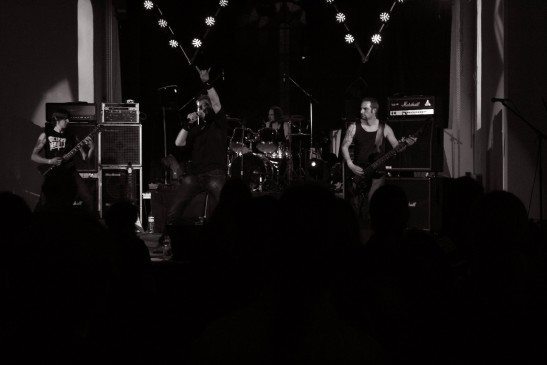
Last week Rob Thompson reviewed the new release Stormcoven by German heavy metal band Mountain Throne and he was very impressed and wanted to find out more. Here is the brief chat Rob had with guitarist A.
(((o))): Thanks for this interview with Ech(((o)))es and Dust. You may not be familiar to readers so would you give us some band history?
A.: Hi! We´re a heavy metal band from the southwest of Germany, formed by me (A., guitar) and drummer J. in 2009. Plans for a band playing this kind of metal existed some time prior to this, but it was only when we hooked up with singer F., whom we knew from shared gigs with our other band (doom metal band Mirror of Deception) and F.’s then band. At that point I had already written lots of songs for this project, so from then on everything was really easy, we just worked out some arrangements and quickly recorded the Serpent´s Heathland EP in 2010. In 2011 we released a split 7” with Procession on Ireland´s Sarlacc Productions, and that´s basically our history. Oh yeah, and we played some rare gigs as well!
(((o))): What's the music scene like in your home town?
A.: Honestly I don´t really know. And I guess for the most part, I probably wouldn´t be interested anyway! I´ll tell you something interesting about the place where I am originally from though: it´s the same village where 1980’s German metal heroes Stormwitch (R.I.P. Harald Spengler) came from. Ha!
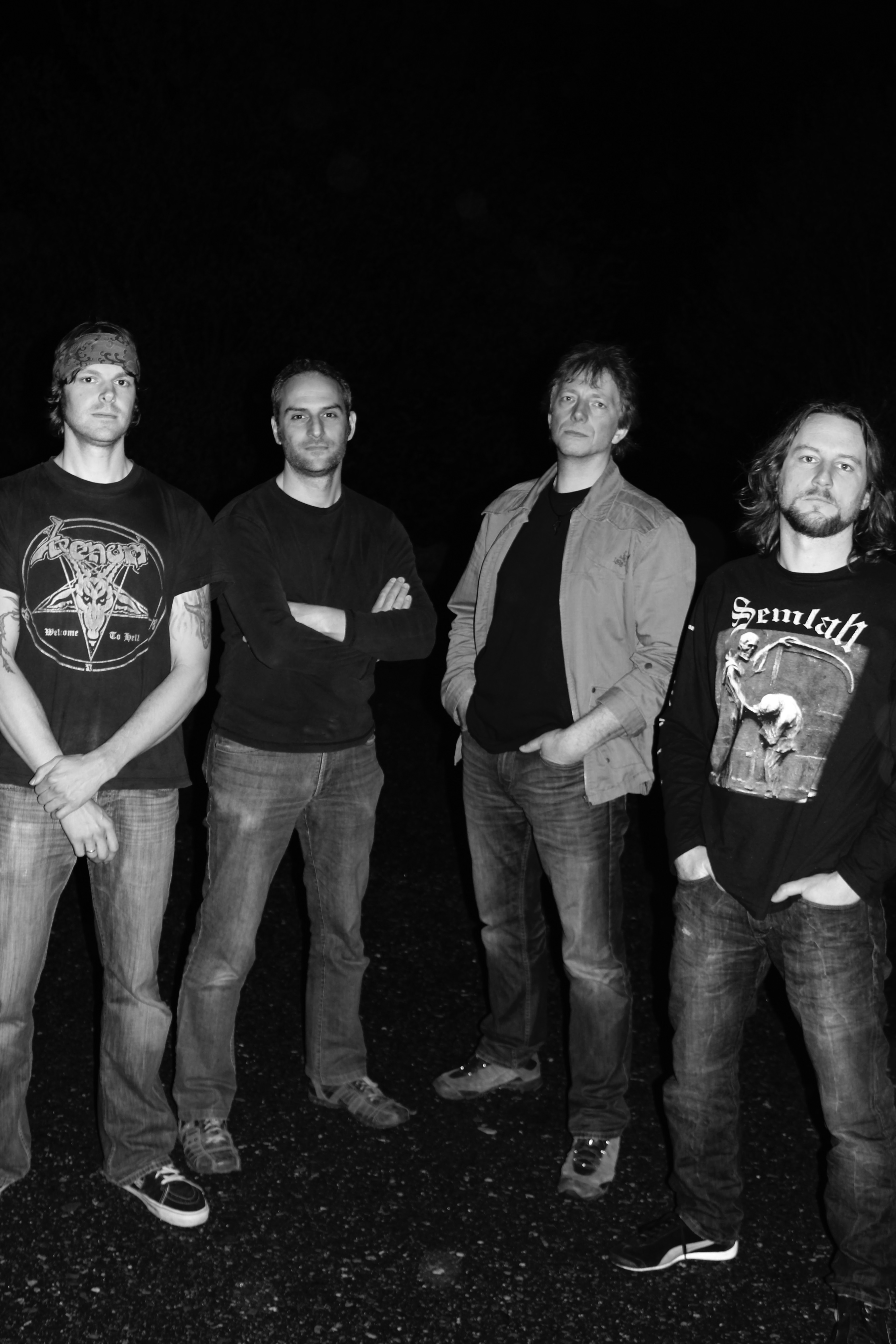 (((o))): Let's talk influences: I detected Mercyful Fate with the attitude of Venom and a touch of early Manowar - is this fair?
A.: Why, of course! Well spotted. All of the bands you named are no doubt important for us and our sound. For me personally though, the Dio-albums of Black Sabbath (especially Heaven and Hell) are probably the most important records. In terms of playing, singing, but also the songs as such and of course the lyrics. Other bands that need to be mentioned are Iron Maiden, Bathory, Scorpions, Pentagram (US), Rainbow, Deep Purple, Cirith Ungol, Trouble, Motörhead, Saint Vitus, Stormwitch etc. Funny you mentioned Mercyful Fate though, as I was thinking exactly about them when writing the verse-riff for ‘Spirits of Fate’.
(((o))): I would like to congratulate you on the album, it is great! Can you tell us something about the recording process?
A.: Thanks! Glad you like the album, as every real metalhead should, haha! Recording was smooth, as usual for us. You know, we´re a really really effective working band. I ususally have finished songs that I´ll send the guys, they work out their drum patterns, vocal- and bass lines, and we take it from there and arrange them. Unfortunately we´re not in a situation (neither in terms of the time we have for recording nor financially) where we are able to record live as a complete band. But since we enter the studio pretty well prepared, it´s usually a walk in the park!
(((o))): The songs are very retro but at the same time sounds fresh, what sort of sound were you trying to achieve?
A.: More or less that way. The songs reflect what I like about metal and heavy rock, so they will sound old, haha! As for the sound, we were aiming for a warm sound, not too much distortion, and to have all instruments audible. You know, in contrast to many modern (especially rock and metal) productions, where you have 800 guitar tracks, a bass buried and forgotten in the mix and awfully sterile drums. Therefore there are usually only 2 guitar tracks per song, maybe some solos have double lines in a few places. On most songs we have a rhythm guitar under the solo, but of course in the live situation this is going to be different with only bass guitar to back the sound. But I like that.
(((o))): How have you found the reaction to Stormcoven so far in the press and from your fans?
A.: Very positive, we´re really happy with the reviews so far. People seem to get our sound, which is nice. People who know us a bit better welcomed the more straightforward songs, a bit less doom metal, and more energy. It seems to get quite some attention too, I’ve been answering lots of interviews like this here with your magazine over the last 2 weeks. So yeah, we´re happy!
(((o))): Does the album have any theme running through it?
A.: Hmm, not really. All songs are about quite different topics. From literary influences to age old myths of the area where I come from, from observations on the many things that are wrong with mankind to the simple and nice things in life, so quite diverse themes actually. Like the promo info sheet said: “Tales about life and death, women and men, man and beast!”
(((o))): So, what would you say was your favourite track, if any?
A.: That’s difficult! The songs work best in the entirety of the album. Although I like the drive of ‘Priestess of the Old’ as well as the joyous theme it deals with…or ’Totem’, that one is quite a heavy rocker where I´m really pleased with the lyrics as well. But really, they are most effective as a unit.
 (((o))): The album cover is very distinctive, what was the idea behind that?
A.: Thanks again. The idea was to reflect the mythical mood that some of the songs carry; other than that it seemed to fit the general mood of the album as well. And of course it is just a part of the complete booklet design, where all these pictures belong together.
(((o))): What plans does the band have for touring? Any UK dates on the cards?
A.: The next gig will be on 14th of December in Erfurt, with Dawn of Winter, Atlantean Kodex and Steelclad. Looking forward a lot, especially since we don´t play a lot of shows. We´d love to play the UK, but thus far there is nothing in the making.
(((o))): Thanks for taking the time out to answer these questions. One last one: what's next for the band?
A.: Thank you for the interest. Now we´ll sit back and enjoy the success of Stormcoven, haha! No, I guess we´ll hopefully play some more shows (promoters interested get in touch please!), new songs are always in the making anyway, so further releases can be expected. I myself am very fond of 7” vinyl. So we´ll see!
Sleazy, violent, dirty and sexually charged, the music of Melbourne foursome Strangers From Now On falls somewhere in that murky area of not quite pub indie rock and not quite burlesque cabaret. At one moment it calls on the bluesy swagger of David Bowie's 'Jean Genie' in opener 'Midnight Town', but slowed right down to sound like 2:00am at The Pony (R.I.P.), while the next track, 'Ugly', borrows the metronomic undercurrent of 'Burrow' by Heirs. Yeah you'll find influences loud and clear as the bass walks hand in hand with the tom-heavy drums while guitar tracks wax and wane with confidence and measured exploration.
But it's the storytelling vocals with improvised delivery of Gabriel Santos that really reach in and grab your attention and emotions. Rather than warbling like so many thousands of poor fucks who think Mariah Carey and Beyonce were onto a good thing not singing actual notes (anyone see Jessica Mauboy at the ARIA's?), Santos uses grace notes, flourishes, and the beautiful tension and restraint in his soft voice to create a unique identity in a world of carbon-copy indie acts. And then there are the screams that provide the contrast that gives the songs their mood swings. The EP is in fact a re-release, and while the instruments were recorded pretty much live, the vocals were added after although the amount of emotion and energy in them suggests otherwise.
I asked guitarist Aidan Kelly what it did for a guitarist to have someone like Santos on vocals: “Well it taught me to be more expressive. One of the things about playing with Strangers is you do have to come up with more weird noises and expressive flourishes and stuff, and I don't think I'd be forced to do that without Gabby”.
The members of Strangers are a busy bunch, with drummer Miranda Holt also playing with The Lost Sunnies and The In The Out, bassist Dan Myles in When Warmth Crashes In and Kelly in Euphoriacs. As he explained, it's not just about having an outlet for other musical taste: “It's really important just to kind of keep your skills up as a musician and if you don't play much with different people, you can't properly progress.” It's also about making sure those other influences don't have too much impact on the band, especially as they all play a part in building the songs from their foundations through jamming; “You don't really want to be forcing your styles onto something that's working well.”
One of the great things about their four-track self-titled EP is that despite the broad influences and variety between songs, there's a clear identity. Then there's the healthy use of contrast, like Santos's angelic voice over the fuzzy, sludgy riffs in 'It's All So Beautiful', and the dynamics throughout. I asked Kelly if there was still hope in the noise wars but he felt it wasn't really the issue people have built it up to be and that there is plenty of dynamic music out there that people appreciate, especially when playing live.
The dark side of life is embraced in the band's songs through every facet - their composition, the playing, production and vocals all add levels of interest and beauty that happy music can't deliver. “It's what everyone really thinks inside really. We're not happy – may as well not pretend. You can't just deny that half of your existence”. The lyrics themselves are pretty dark and disturbing. Take 'Porajmos', which seems to be about one last fuck before being dragged off to be killed as part of the ethnic cleansing alluded to in the title. Was this a metaphor for life, or simply a story about two people? Like you, I'm going to have to use my imagination to work out what Santos is singing about as Kelly was giving nothing away, which is not a bad thing.
And what kind of animal is Strangers? I think I'll defer to a conversation on Twitter later that day:
StrangersFromNowOn: Got asked "if our music was an animal, what would it be" in an interview today. Took me off guard, said penguin.
Honey Badgers: penguins are way too polite. You're more that monkey using a frog to pleasure itself. Rape monkey.
StrangersFromNowOn: yeah and you guys are the frog #bandfeud
Honey Badgers: that's more like it. How do we go from here to Blur/Oasis? #bandfeud
StrangersFromNowOn: arrogant coke binges
Honey Badgers: your shout
The band has just finished recording their follow-up to the EP and they have a couple of dates coming up very soon. Check them out and decide if they're penguins or rape monkeys. I know what I think.
(((O))) FEATURED INTERVIEW
I’ve had some real problems in my lifetime dealing and living with mental health issues. I’ve not really felt comfortable talking about it until more recently. I feel like it’s important to talk about these things because people consider them ‘awkward’ topics. I used writing music as a means to channel it and I felt a lot better for writing music and going to shows and being able to put my time and energy into something I loved so much really helped me.